Can You Calculate Your Due Date According to Ovulation?

The answer is yes. If your menstrual cycle was regular before you conceived it’s possible to determine your due date using ovulation. This is because you must ovulate to get pregnant, and conception typically occurs within 12-24 hours of ovulation. Medical experts, therefore, usually refer back to when you ovulated to determine your due date.
Tracking your due date according to ovulation can offer a more precise estimate, especially for women who chart their cycles or use ovulation predictor kits.

What Is Ovulation?
Ovulation is when a mature egg is released from an ovary [1]. After being released, eggs live for 12-24 hours, however, sperm can survive in the female reproductive tract for 3-5 days. This means that chances of conceiving are high if a couple have sex 2-3 days before ovulation or one day after ovulation.
Early Signs of Pregnancy
Although tender breasts, fatigue, and nausea (morning sickness) are common signs of early pregnancy, a missed period is usually the first definitive indicator for many women.
What many don’t know is that by this stage, women have already been pregnant for 4 weeks. With regular 28-day menstrual cycles, ovulation typically occurs in the middle of the month, on or around day 14, and conception occurs as soon as the egg is fertilised by sperm.
Essentially, once a woman misses a period and discovers that she’s pregnant, the blastocyst [2], which eventually becomes an embryo and then the foetus, has been growing for 2 weeks.
Medically, however, women are considered 4 weeks along due to the gestational period beginning on the first day of her last period.
Other common signs of early pregnancy [3] can include a more frequent need to urinate, increased vaginal discharge, a metallic taste in the mouth, and an aversion to certain foods while craving others.


✨ Trying to Conceive?
Our fertility supplements combine Myo-Inositol with essential vitamins to support healthy hormone balance and regular ovulation.
Shop Now — $36.00✓ Free shipping available | ✓ Trusted by millions of couples worldwide
How to Calculate Your Due Date Using Ovulation
Determining your due date using ovulation is relatively easy once you have a regular 28-day cycle. It does require that you know when you ovulate, which isn’t too difficult once you know how to track it or recognise the changes in your body.
Some women use ovulation predictors to determine the best time of the month to conceive, while others use the basal body temperature method to understand when they are ovulating. Other women look for subtle changes in the body that indicate ovulation.
These can include breast tenderness, side pain in the lower abdomen, or a more slippery vaginal discharge that resembles raw egg whites.
Once you’ve missed a period and confirmed pregnancy, adding 266 days (38 weeks) to your last ovulation date will provide your estimated due date. For example, if you ovulated on August 1st, your due date 266 days later would be April 24th.
Free due date calculators [4] are also widely available online.
Naturally, due dates can vary based on estimated ovulation times and irregular cycles, but only by a week or two. As your pregnancy progresses and you have an ultrasound, your doctor will inform you of any changes to your estimated due date.
Why Is An Ultrasound Used to Calculate Due Dates?
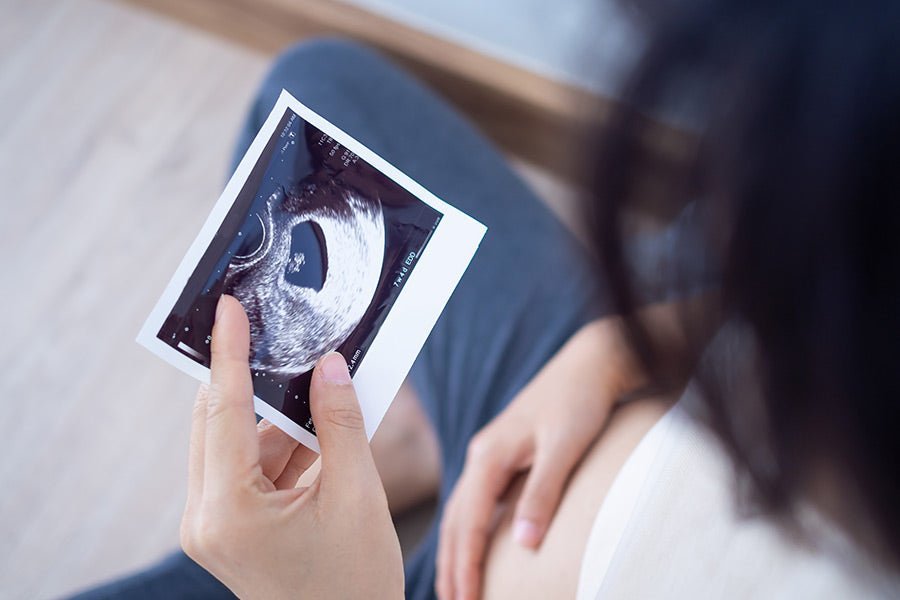
A foetal ultrasound [5] is a normal facet of prenatal care for all women. They are known to accurately predict due dates due to the consistent rates at which babies grow in the first trimester of pregnancy.
Due to their accuracy, foetal ultrasounds are always used to determine due dates regardless of whether a woman’s menstrual cycle was irregular or regular before conceiving.
For instance, when a baby’s measurements on an ultrasound indicate that it is 7 weeks and 4 days, gynaecologists will calculate the due date based on these results, irrespective of when the mother’s last period occurred.
Can Due Dates Using Ovulation and Ultrasounds Differ?
Yes, but not always. Sometimes women with regular cycles will calculate their due date according to their last ovulation only to find that their due date is different once they’ve had an ultrasound.
This can be understandably confusing for expecting mothers, however, it’s normal for ovulation to sometimes occur earlier or later than usual, even for women with regular cycles. However, your gynaecologist will always take the due date determined from your ultrasound.

The Bottom Line
Estimating your due date based on your last ovulation is possible when you have a regular 28-day menstrual cycle before conceiving. By determining your date of ovulation and adding 266 days (38 weeks) you can closely estimate the day or week that you are likely to give birth.
Using your due date according to ovulation can be particularly helpful if your menstrual cycles are irregular or if you conceived through assisted reproductive technology.
Although due dates are possible to predict using ovulation, they are normally confirmed during one or more prenatal ultrasounds. Regardless of when you last ovulated, gynaecologists are more inclined to refer to the baby’s growth measurements in the first trimester to accurately predict due dates.
References
- Mayo Clinic - Getting Pregnant - https://www.mayoclinic.org/healthy-lifestyle/getting-pregnant/expert-answers/ovulation-signs/faq-20058000#
- Cleveland Clinic - What is a Blastocyst? - https://my.clevelandclinic.org/health/body/22889-blastocyst
- NHS - Signs and Symptoms of Pregnancy - https://www.nhs.uk/pregnancy/trying-for-a-baby/signs-and-symptoms-of-pregnancy/
- What to Expect - Free Due Date Calculator - https://www.whattoexpect.com/due-date-calculator/
- Johns Hopkins Medicine - Fetal Ultrasound - https://www.hopkinsmedicine.org/health/treatment-tests-and-therapies/fetal-ultrasoun
🌱 Support Your Fertility Journey
Conceive Plus fertility supplements are clinically formulated to help regulate your cycle and support egg quality.
Shop Fertility Support →Frequently Asked Questions
Recommended by Fertility Experts
Conceive Plus Men's Fertility Support
Designed to support healthy sperm production, motility, and overall male reproductive health with clinically studied nutrients.
Shop Now →How do I calculate my due date from ovulation in the UK?
If you know when you ovulated, you can calculate your estimated due date by adding 266 days (38 weeks) from your ovulation date. This method can be more accurate than using your last menstrual period, particularly if you have irregular cycles. Your midwife will confirm your due date at your NHS dating scan, typically offered between 10 and 14 weeks of pregnancy.
Is the due date from ovulation more accurate than using my last period?
Yes, calculating from ovulation can be more precise because conception occurs within 12-24 hours of ovulation. The NHS typically uses the first day of your last menstrual period (LMP) to estimate due dates, which assumes a 28-day cycle with ovulation on day 14. If your cycles are longer or shorter, knowing your actual ovulation date provides a more reliable estimate.
When will I get my NHS dating scan to confirm my due date?
The NHS offers all pregnant women a dating scan between 10 and 14 weeks of pregnancy, which measures your baby to provide an estimated due date. This scan is considered the most accurate way to determine your due date, as it can be precise to within a few days. Your midwife will arrange this at your booking appointment, usually around 8 to 10 weeks.
Can I use ovulation predictor kits to help calculate when I conceived?
Yes, ovulation predictor kits (OPKs) detect the surge in luteinising hormone that occurs 24-36 hours before ovulation, helping you pinpoint your fertile window. If you've been tracking with OPKs, you'll have a good idea of when you ovulated and conceived. This information can be useful to share with your midwife at your booking appointment.
Why does the NHS say I'm 4 weeks pregnant when I only conceived 2 weeks ago?
The NHS uses gestational age, which counts pregnancy from the first day of your last menstrual period rather than from conception. This means that when you miss your period and get a positive pregnancy test, you're already considered 4 weeks pregnant, even though fertilisation only occurred around 2 weeks earlier. This standardised method helps healthcare professionals track your pregnancy milestones consistently.
What are the earliest signs of pregnancy after ovulation?
Common early pregnancy signs include a missed period, tender breasts, fatigue, nausea, increased urination, and heightened vaginal discharge. Some women also experience a metallic taste in the mouth and sudden food aversions or cravings. However, a missed period is usually the first reliable indicator, and a home pregnancy test can confirm pregnancy from the first day of your missed period.
Should I tell my GP my ovulation date at my first pregnancy appointment?
Yes, sharing your ovulation date with your GP or midwife can be helpful, especially if you have irregular cycles or have been tracking your fertility. While the NHS dating scan will ultimately confirm your due date, knowing when you ovulated helps provide a more accurate initial estimate. This is particularly useful for women who have been trying to conceive and monitoring their cycles closely.
Trusted by Couples in Over 70 Countries
Support Male Fertility From the Inside Out
Male fertility is just as important as female fertility in the conception journey. Conceive Plus Men's range delivers targeted nutritional support to promote healthy sperm and overall reproductive wellbeing.
Shop Men's Range →