Your Odds of Conceiving at Every Point in Your Cycle


During your period
For most women, ovulation starts about two weeks before the start of your period. This means that your period is generally too far ahead of ovulation to make conception from sex during your menstrual cycle possible.Pre-ovulation

✨ Trying to Conceive?
Our fertility supplements combine Myo-Inositol with essential vitamins to support healthy hormone balance and regular ovulation.
Shop Now — $36.00✓ Free shipping available | ✓ Trusted by millions of couples worldwide
Ovulation
Ovulation is the prime time for conception, which is why it’s important to track your cycles using an ovulation kit, monitoring your vaginal discharge, or tracking your temperature. Your body temperature will go up by about half a degree when you’re ovulating, which is a good indicator that it’s time to work on making a baby! Once you’ve been tracking your cycle, you should be able to predict fairly accurately when you’ll be ovulating. The 24-hour window around ovulation is the best time to conceive.Post-ovulation
Eggs only survive for about 12 hours, so you may still be able to get pregnant in the day following ovulation. After that, your chances of conceiving are very low until your next cycle.🌱 Support Your Fertility Journey
Conceive Plus fertility supplements are clinically formulated to help regulate your cycle and support egg quality.
Shop Fertility Support →Frequently Asked Questions
Recommended by Fertility Experts
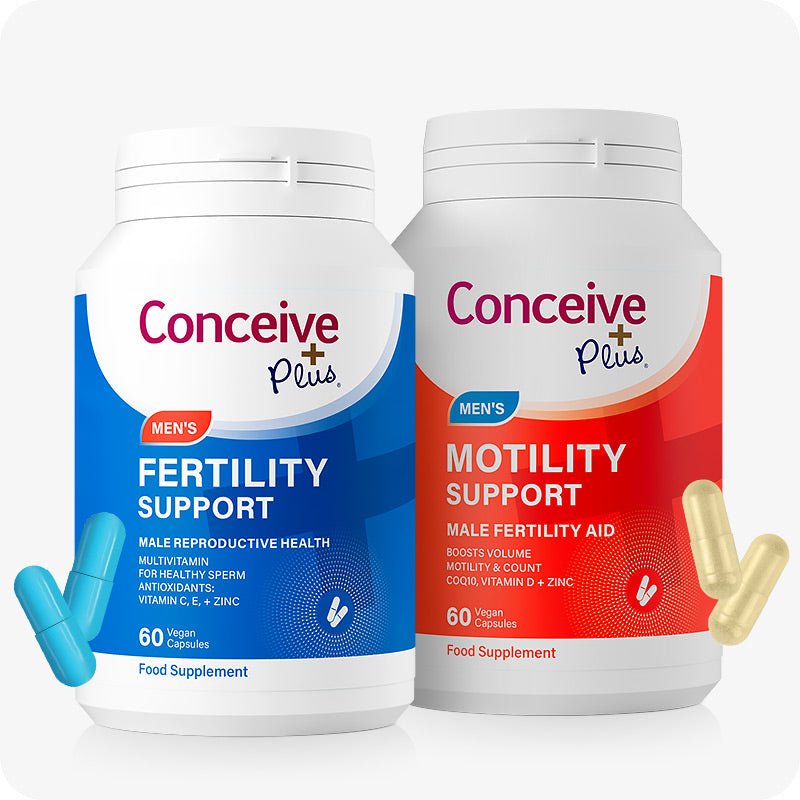
Conceive Plus Men's Fertility Support
Designed to support healthy sperm production, motility, and overall male reproductive health with clinically studied nutrients.
Shop Now →What are the chances of getting pregnant on each day of my cycle?
Your chances of conceiving are highest during your fertile window, which spans the five days before ovulation and the day of ovulation itself. On the day of ovulation, your chances can be as high as 33%, whilst having intercourse two days before ovulation gives you approximately a 25% chance. Outside of this fertile window, your chances drop significantly to near zero.
How do I know when I'm ovulating?
Common signs of ovulation include a slight rise in basal body temperature (around half a degree), changes in cervical mucus to a clear, stretchy consistency similar to egg white, and mild lower abdominal discomfort. The NHS recommends tracking your cycle for several months to identify patterns, and you can also use ovulation predictor kits available from pharmacies to detect the hormone surge that occurs before ovulation.
Can I get pregnant during my period?
Whilst it's unlikely, it's not impossible to conceive during your period, particularly if you have a shorter menstrual cycle. Sperm can survive in the body for up to five days, so if you ovulate early in your cycle, sperm from intercourse during your period could potentially fertilise an egg. However, for most women with regular cycles, ovulation occurs around two weeks before their period begins.
How long should we try before seeing a GP about fertility?
NICE guidelines recommend visiting your GP if you haven't conceived after one year of regular, unprotected intercourse. However, if you're over 36 or have known fertility concerns such as irregular periods or previous pelvic infections, it's advisable to seek advice after six months. Remember, around 1 in 7 UK couples experience ferti
What fertility tests are available on the NHS?
The NHS offers several initial fertility investigations, including blood tests to check hormone levels and ovulation, semen analysis for your partner, and ultrasound scans to examine your ovaries and womb. Your GP can arrange these tests and, if needed, refer you to a fertility specialist. Waiting times for NHS fertility services vary depending on your local Integrated Care Board (ICB), so it's worth checking what's available in your area.
Does having sex every day increase my chances of getting pregnant?
Research suggests that having intercourse every one to two days during your fertile window is optimal for conception. Whilst daily intercourse won't harm your chances, it isn't necessarily more effective than every other day, and may feel less sustainable. The NHS advises couples to focus on regular intimacy throughout the month rather than timing intercourse too precisely, which can add unnecessary stress.
What lifestyle changes can help improve my fertility?
The NHS recommends maintaining a healthy BMI (between 19 and 25), reducing alcohol intake, stopping smoking, and taking folic acid supplements when trying to conceive. Both partners should consider these lifestyle factors, as male fertility can also be affected by smoking, excessive alcohol, and being overweight. Regular moderate exercise and managing stress levels can also support your overall reproductive health.
Trusted by Couples in Over 70 Countries
Support Male Fertility From the Inside Out
Male fertility is just as important as female fertility in the conception journey. Conceive Plus Men's range delivers targeted nutritional support to promote healthy sperm and overall reproductive wellbeing.
Shop Men's Range →