How Likely Is It to Get Pregnant from Precum?
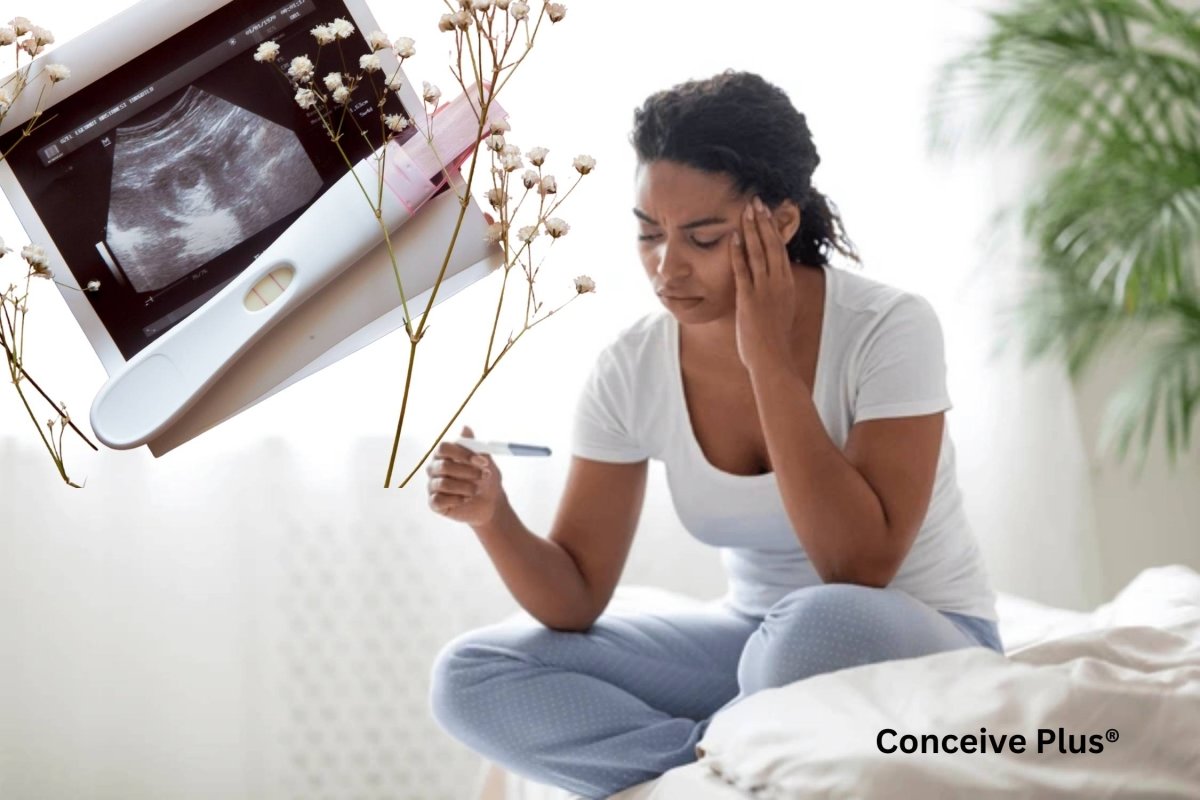

When trying to conceive or avoid pregnancy, one question that comes up a lot is: how likely is it to get pregnant from precum? Although precum normally doesn’t contain sperm, and the probability of getting pregnant from it is minimal, it can happen.
Read on to learn about precum, why it’s different from cum, and how probable is it to get pregnant from precum.

What is Precum?
Many couples wonder how likely is it to get pregnant by pre ejaculation, especially when trying to conceive or avoid pregnancy. Precum, also known as pre-ejaculate, is a clear fluid released from the penis before ejaculation [1]. It is produced by the Cowper’s glands when a man becomes sexually aroused and it serves several purposes.
In addition to serving as a natural lubricant for sex, precum neutralises any acidic residues that could have lingered in the urethra from previous ejaculations. Precum also creates a more friendly environment for sperm to swim.
In contrast to semen, which is released during ejaculation and contains millions of sperm, precum typically contains very few sperm, if any.
So, how likely it is to get pregnant from precum? It’s a tricky one. Keep reading for more understanding.
When Does Pre-Ejaculate Contain Sperm?
Semen (cum) and precum are different. When men ejaculate, semen is released, which contains millions of sperm that swim through the cervix and into the fallopian tubes to fertilise an egg if one has been released by an ovary during ovulation. Precum, on the other hand, does not usually contain sperm.
That said, live sperm are known to linger in the urethra [2] from previous ejaculations and these can find their way into precum. If your partner ejaculated during foreplay, for example, or before you have sex, sperm from this ejaculation could be released into the vagina upon arousal during intercourse.
For instance, studies that analysed precum samples [3] found that 17-41% of the pre-ejaculate samples contained sperm.
If you're curious about what being just a day past ovulation might indicate about your pregnancy status, check out our guide 'One Day Past Ovulation: Are You Already Pregnant?' for further insights.

How Likely Is It to Get Pregnant with Precum?
Because precum, or pre-ejaculate, can sometimes contain sperm, it is technically possible to conceive with precum. While experts consider precum to have a much lower concentration of sperm compared to semen, even minimal amounts of sperm in pre-ejaculate can result in pregnancy.
However, for this to happen, several other factors must also come into play. More on that below.
How Can You Get Pregnant with Precum?
For sperm to be present in precum, a man must have recently ejaculated. The small amount of sperm lingering in the urethra after ejaculation could then be released when a man cums during sex.
For pregnancy to occur, however, the female must have recently ovulated, meaning a mature egg is ready for fertilisation in the fallopian tube. In these cases, the sperm that lingered after a previous ejaculation must also be healthy enough to swim through the cervix and fallopian tube toward the egg.
It’s important to understand that although a released egg only survives for 12-24 hours, healthy sperm can live in the female reproductive tract for 3-5 days. Therefore, although it’s rare, having sex 3-4 days before ovulation occurs can still result in pregnancy from healthy sperm in the precum.
If you're wondering whether ovulation tests will still show positive if you become pregnant, check out our guide 'Will Ovulation Test Be Positive If Pregnant? Understanding The Journey Of Pregnancy' for all the insights.

What Are The Chances of Getting Pregnant without Contraception?
According to the NHS, 8 out of 10 women under the age of 40 who do not use contraception get pregnant each year [4]. Over the age of 40, statistically 1 in 4 women conceive during unprotected sex annually [5].
Whether trying to conceive or avoid pregnancy, how likely is it to get pregnant from pre ejaculation is a poignant question on many couple’s minds. Essentially, anytime ejaculatory fluids (cum or precum) are released in the vagina, there’s a chance that pregnancy can occur if the female is within her fertile window i.e. has recently ovulated.
If pregnancy is not your goal, it’s wise to use some form of contraception. If you are trying to conceive, avoid contraception and embrace ejaculation.
The Bottom Line
How likely is it to get pregnant from precum is a frequent question asked by those hoping to get pregnant as well as those trying to avoid getting pregnant. Although pre-ejaculate is typically known to contain no sperm or dead sperm, it is possible that live and healthy sperm can make their way into precum when a man has recently ejaculated.
In reality, the chances of getting pregnant from precum are low but given the right conditions, it can happen.
References
- Healthline - 13 Facts About Semen and Sperm - https://www.healthline.com/health/semen-vs-sperm
- Briatnanica - Ejaculation - https://www.britannica.com/science/ejaculation
- National Library of Medicine -Sperm content of pre-ejaculatory fluid - https://www.ncbi.nlm.nih.gov/pmc/articles/PMC3564677/
- NHS - Trying to Get Pregnant - https://www.nhs.uk/pregnancy/trying-for-a-baby/trying-to-get-pregnant/
- NHS - Infertility - https://www.nhs.uk/conditions/infertility/
🌱 Explore Conceive Plus
From fertility lubricants to supplements for him and her — discover clinically-tested products trusted by millions of couples worldwide.
Shop All Products →Frequently Asked Questions
Recommended by Fertility Experts
Conceive Plus Men's Fertility Support
Designed to support healthy sperm production, motility, and overall male reproductive health with clinically studied nutrients.
Shop Now →Can you get pregnant from precum without ejaculation?
Yes, it is possible to become pregnant from precum alone, although the risk is considerably lower than with ejaculation. Studies show that 17-41% of pre-ejaculate samples contain sperm, particularly if your partner has ejaculated previously. However, the sperm concentration in precum is typically much lower than in semen, making conception less likely but not impossible.
Is the withdrawal method reliable for contraception in the UK?
The withdrawal method (coitus interruptus) is not considered a reliable form of contraception by the NHS and is not recommended as a primary contraceptive method. It has a failure rate of approximately 20% with typical use, meaning about 1 in 5 couples relying on it will experience an unintended pregnancy within a year. For reliable contraception, the NHS recommends using condoms, hormonal methods, or long-acting reversible contraceptives (LARCs) such as the coil or implant.
What does the HFEA say about natural fertility and conception timing?
The HFEA (Human Fertilisation and Embryology Authority) emphasises that understanding your menstrual cycle and ovulation timing is important for both conception and natural contraception. Ovulation typically occurs 14 days before your next period, and sperm can survive for up to 5 days in the female reproductive tract. If you're concerned about unintended pregnancy or struggling to conceive, the NHS recommends speaking with your GP or a registered fertility clinic for evidence-based guidance.
How long can sperm survive in the female reproductive tract?
Sperm can survive in the female reproductive tract for up to 5 days under optimal conditions, particularly in the cervical mucus around ovulation. This is why the 'fertile window' extends several days before ovulation occurs, not just on the day of ovulation itself. Even a small number of sperm from precum could theoretically result in pregnancy if released during this fertile period.
Should I use additional contraception if relying on withdrawal?
Yes, the NHS strongly recommends using additional contraception alongside the withdrawal method if you wish to avoid pregnancy. Combining withdrawal with another method, such as condoms or a hormonal contraceptive, significantly increases protection against unintended pregnancy. If you're unsure which contraceptive method is right for you, your GP or sexual health clinic can provide personalised advice based on your health and circumstances.
What should I do if I'm worried about an unplanned pregnancy from precum?
If you're concerned about potential pregnancy following unprotected intercourse, you can access emergency contraception (the morning-after pill or copper coil) through your GP, sexual health clinic, or pharmacy—ideally within 72 hours, though some methods are effective up to 5 days. A pregnancy test can be taken from the first day of a missed period for accurate results. If you're unsure, the NHS 111 service or your local sexual health clinic can provide confidential advice and support.
Are there any UK fertility apps or resources to track ovulation accurately?
Whilst various ovulation-tracking apps are available, the NHS recommends discussing fertility tracking with your GP or a registered fertility clinic for personalised guidance. The NHS also provides resources through its Every Bump Begins campaign and local sexual health services. If you're trying to conceive, the NHS suggests having regular unprotected intercourse and contacting your GP if you haven't conceived after 12 months of trying (or 6 months if you're over 36).
Trusted by Couples in Over 70 Countries
Support Male Fertility From the Inside Out
Male fertility is just as important as female fertility in the conception journey. Conceive Plus Men's range delivers targeted nutritional support to promote healthy sperm and overall reproductive wellbeing.
Shop Men's Range →