Sperm Health: The Complete 2026 Guide for Men Trying to Conceive in the UK


Why Sperm Health Matters More Than Most Men Realise
Male factor infertility contributes to approximately 40–50% of all cases of infertility — yet it remains underdiagnosed and underdiscussed. In the UK, around 1 in 7 couples struggle to conceive, and in roughly half of those cases, sperm health is a contributing factor. Despite this, sperm health is rarely a topic men actively think about until a problem arises.
The good news is that sperm health is highly responsive to lifestyle and nutritional changes. Unlike a woman's egg supply — which is fixed at birth — men produce millions of new sperm every day, completing a full sperm production cycle (spermatogenesis) in approximately 74 days. This means that meaningful improvements in sperm quality can often be achieved within 3 months of targeted effort.
This guide covers everything you need to know about sperm health — how it is assessed, what affects it, and what you can do to optimise it.
Understanding the Key Parameters of Sperm Health
Recommended by Fertility Experts
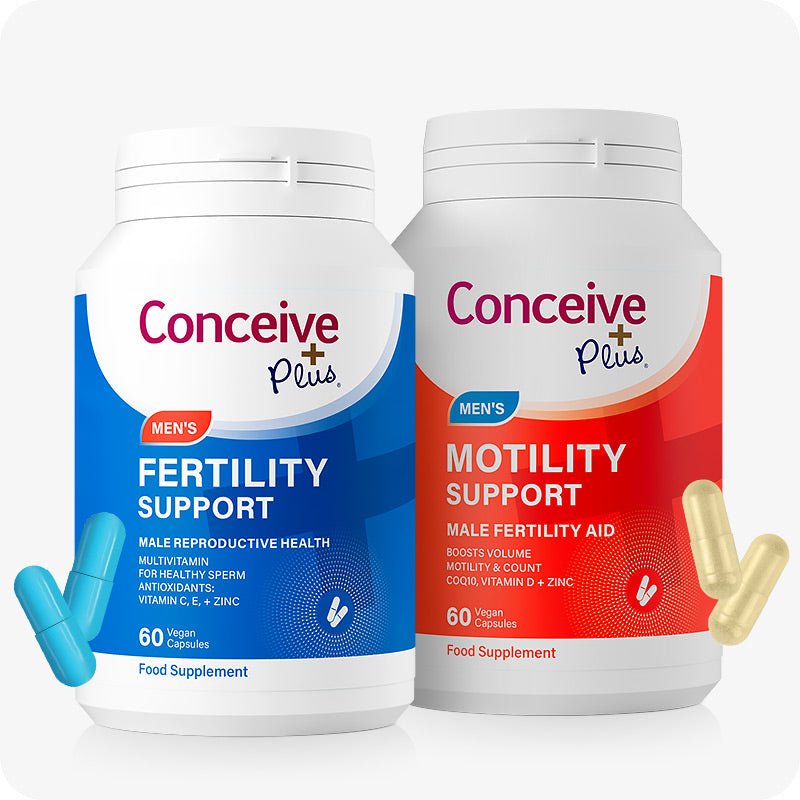
Men's Fertility Support
A comprehensive male fertility supplement providing zinc, selenium, CoQ10, and vitamins C and E — nutrients clinically recognised to support sperm count, motility, and DNA integrity.
Shop Now →When a semen analysis is carried out — the primary test for male fertility — it evaluates several parameters. Understanding what these mean helps you make sense of results and take targeted action.
Sperm count (concentration): The number of sperm per millilitre of semen. The World Health Organization (WHO) defines normal sperm concentration as 16 million per millilitre or more. Low sperm count — known as oligospermia — makes conception more challenging but not impossible.
Total motility: The percentage of sperm that are moving. WHO considers 42% or more of sperm being motile as the reference value. Poor motility (asthenospermia) reduces the sperm's ability to reach and fertilise an egg.
Progressive motility: The percentage of sperm swimming purposefully forward. WHO reference value is 30% or more. This is the subset of motile sperm most capable of navigating the female reproductive tract.
Morphology: The shape and structure of sperm. Only 4% or more of sperm need to have normal morphology according to strict Kruger criteria — a figure that surprises many men. Abnormal morphology (teratospermia) can impair fertilisation.
Volume: The total amount of semen per ejaculation. Below 1.4ml is considered low (hypospermia) and may suggest a blockage or hormonal issue.
DNA fragmentation: Not routinely measured in standard semen analysis but increasingly recognised as important. High sperm DNA fragmentation can cause fertilisation failure, poor embryo quality, and increased miscarriage risk, even when standard parameters appear normal.
What Causes Poor Sperm Health?
A range of factors can negatively impact sperm production and quality. Identifying the relevant causes is the first step toward effective improvement.
Varicocele: An enlargement of the veins within the scrotum that raises testicular temperature — the most common correctable cause of male infertility, present in up to 40% of men being investigated for infertility.
Hormonal imbalances: Low testosterone, elevated FSH or LH, or elevated prolactin can all disrupt sperm production. A hormone panel is an important part of a thorough male fertility assessment.
Infections and inflammation: STIs such as chlamydia and gonorrhoea can damage sperm-producing tissue. Some men harbour subclinical infections that impair sperm without obvious symptoms.
Genetic factors: Y chromosome microdeletions and Klinefelter syndrome (XXY) are among the genetic causes of severely impaired or absent sperm production.
Oxidative stress: When the body produces more free radicals than antioxidants can neutralise, sperm DNA is vulnerable to damage — one of the primary mechanisms behind lifestyle-related sperm impairment.
Lifestyle factors: Smoking, excessive alcohol, recreational drugs, anabolic steroid use, obesity, excessive heat exposure, and sedentary behaviour are all strongly associated with poorer sperm parameters.
Age: While men continue producing sperm throughout life, quality — particularly DNA integrity — declines gradually from the late 30s onward.
Diet and Nutrition for Sperm Health
The link between diet and sperm quality is well established. Men who eat Mediterranean-style diets have consistently better sperm parameters than those consuming highly processed, high-sugar diets. Key nutrients include:
Zinc: Essential for testosterone production, sperm formation, and DNA integrity. Found in oysters, red meat, pumpkin seeds, and legumes.
Selenium: Plays a structural role in the sperm tail. Found in Brazil nuts, fish, and eggs.
Folate: Required for DNA synthesis. Low folate is associated with increased sperm DNA fragmentation.
Vitamin C: A potent antioxidant that protects sperm DNA from oxidative damage. Found in citrus fruits, kiwi, and berries.
Vitamin E: Works synergistically with vitamin C to protect cell membranes. Found in nuts, seeds, and vegetable oils.
Lycopene: A carotenoid in tomatoes and watermelon associated with improved sperm morphology and motility.
Omega-3 fatty acids: DHA is a major structural component of the sperm head and tail membrane. Found in oily fish, walnuts, and flaxseed.
CoQ10: Supports mitochondrial energy production within sperm. Lower levels are associated with reduced motility.
Lifestyle Factors That Affect Sperm Quality
Targeted lifestyle adjustments can produce measurable improvements in sperm health within the 3-month spermatogenesis window.
Stop smoking: Smoking is one of the most damaging habits for sperm health. Evidence consistently links it to reduced count, motility, morphology, and increased DNA fragmentation. Quitting significantly improves sperm parameters within 3 months.
Limit alcohol: Regular heavy drinking reduces testosterone and impairs sperm production. The NHS advises men trying to conceive to limit alcohol intake or avoid it altogether.
Maintain a healthy weight: Obesity is associated with hormonal disruption and poorer sperm parameters. Even modest weight loss can produce meaningful improvements.
Exercise regularly — but not excessively: Moderate exercise supports healthy testosterone levels. However, excessive high-intensity endurance training can temporarily suppress testosterone and sperm production.
Manage testicular temperature: Avoid prolonged hot baths and saunas, tight underwear, laptop use on the lap, and prolonged sitting in heated car seats. Sperm production requires temperature approximately 2°C below core body temperature.
Reduce stress: Chronic stress elevates cortisol, suppressing testosterone and disrupting sperm production. Mindfulness, regular exercise, adequate sleep, and professional support all help.
Review medications: Anabolic steroids, testosterone replacement therapy, some antifungals, and certain antidepressants can impair fertility. Speak with a GP before making changes.
Supplements for Male Fertility: What the Evidence Shows
CoQ10: Multiple randomised controlled trials have shown improvements in sperm count, motility, and morphology with CoQ10 supplementation (200–600mg per day).
Zinc + Folate: A seminal study in Fertility and Sterility found combined zinc and folic acid supplementation significantly increased sperm count in subfertile men.
Vitamin C + Vitamin E: Studies have demonstrated reductions in sperm DNA fragmentation with combined antioxidant supplementation.
L-Carnitine: Supports sperm energy metabolism and has been shown in trials to improve motility and morphology.
Selenium + Vitamin E: A combination shown in research to improve sperm motility and pregnancy rates.
Fertility Testing for Men in the UK
In the UK, sperm health assessment is accessible through both NHS and private routes.
NHS pathway: A GP can refer for semen analysis after 12 months of trying (or 6 months if the woman is over 35). Further investigation including hormone panels is also available on the NHS.
Private testing: Private fertility clinics offer comprehensive assessments including sperm DNA fragmentation testing with shorter waiting times. At-home sperm testing kits are now widely available for initial assessment.
If standard semen analysis returns abnormal results, further investigation — including hormone profiling, genetic testing, and specialist urological review — is warranted.
Frequently Asked Questions
Q: How long does it take for lifestyle changes to improve sperm health?
A: The full sperm production cycle takes approximately 74 days. Most men see meaningful improvements within 3 months of consistent lifestyle and supplement interventions.
Q: Can I get a sperm test done at home in the UK?
A: Yes. Several UK companies offer home sperm testing kits. However, these do not replace a clinical semen analysis, which measures additional parameters including morphology and DNA integrity.
Q: Does varicocele always need surgery?
A: Not always. Varicocele repair is recommended when it is clinically significant and associated with poor semen parameters or fertility difficulties. Your urologist will assess whether intervention is appropriate.
Q: Is it possible to have a normal sperm count but still have fertility issues?
A: Yes. Standard semen analysis may return normal results while sperm DNA fragmentation is high — particularly relevant in unexplained infertility or recurrent miscarriage.
Q: Does wearing boxers versus briefs actually make a difference?
A: Research suggests tight underwear marginally increases scrotal temperature, which may slightly impair sperm production. Switching to boxers is a simple step with a reasonable evidence base.
Q: Can anabolic steroids permanently affect sperm?
A: Anabolic steroid use suppresses sperm production and can cause severe oligospermia. Recovery occurs in most men after stopping, but can take many months and in some cases is not fully complete.
Q: How much alcohol is safe when trying to conceive?
A: The NHS advises limiting alcohol to no more than 14 units per week, but recommends avoiding it altogether when trying to conceive.
Q: Can stress affect sperm quality?
A: Yes. Chronic stress elevates cortisol, which suppresses testosterone and disrupts sperm production. Multiple studies have associated psychological stress with lower sperm parameters.
Q: What is sperm DNA fragmentation and why does it matter?
A: DNA fragmentation refers to damage in sperm genetic material. High fragmentation is associated with reduced fertilisation rates, poor embryo development, and increased miscarriage risk.
Q: When should I see a fertility specialist about sperm health?
A: After 12 months trying without success (or 6 months if the woman is over 35), or if a semen analysis returns abnormal results.
Trusted by Couples in Over 70 Countries
Give Your Sperm Health the Support It Deserves
Conceive Plus Men's range is developed by reproductive health specialists and trusted by men across the UK and beyond. Science-backed nutrition to support count, motility, and morphology — so you can feel confident you're doing everything you can.
Shop Men's Fertility Range →