How to Read an Ovulation Test Strip: A Compassionate Expert Guide (2026)


What if the "faint line" you're staring at isn't a sign of failure, but simply a normal part of your body's complex hormonal rhythm? Unlike a pregnancy test where any second line is a cause for celebration, learning how to read an ovulation test strip requires a more nuanced, comparative approach to your unique biology. It's an art of observation rather than a simple binary result, and getting it right is essential for your peace of mind.
It's deeply exhausting to stand in the bathroom, comparing a tiny strip of paper to a box diagram while wondering if you've missed your chance this month. We understand the anxiety that stems from uncertain results and the pressure of a closing fertile window. You deserve a process that feels like a partnership with your body rather than a monthly source of stress, confusion, and wasted test strips.
This guide provides the clinical precision and empathetic support you need to master your cycle. You'll learn to distinguish between rising LH levels and a true peak, ensuring you can time intercourse with absolute confidence. We'll break down the visual cues of your strips, explain the science of the LH surge, and offer a clear path toward identifying your most fertile days with professional certainty.
Key Takeaways
- Gain a clear understanding of Luteinising Hormone (LH) and its unique role in your cycle. This knowledge helps you interpret the baseline presence of hormones without unnecessary anxiety.
- Master the specific dipping techniques and wait times required for accuracy. Learning how to read an ovulation test strip correctly prevents common mistakes like dye migration or membrane flooding.
- Resolve the confusion of "almost positive" lines by understanding rapid hormonal surges. You'll learn when to increase testing frequency to capture your peak fertile window.
- Optimize your timing for intercourse by identifying your true peak day. This clarity allows you to follow proven strategies like the Sperm Meets Egg Plan with confidence.
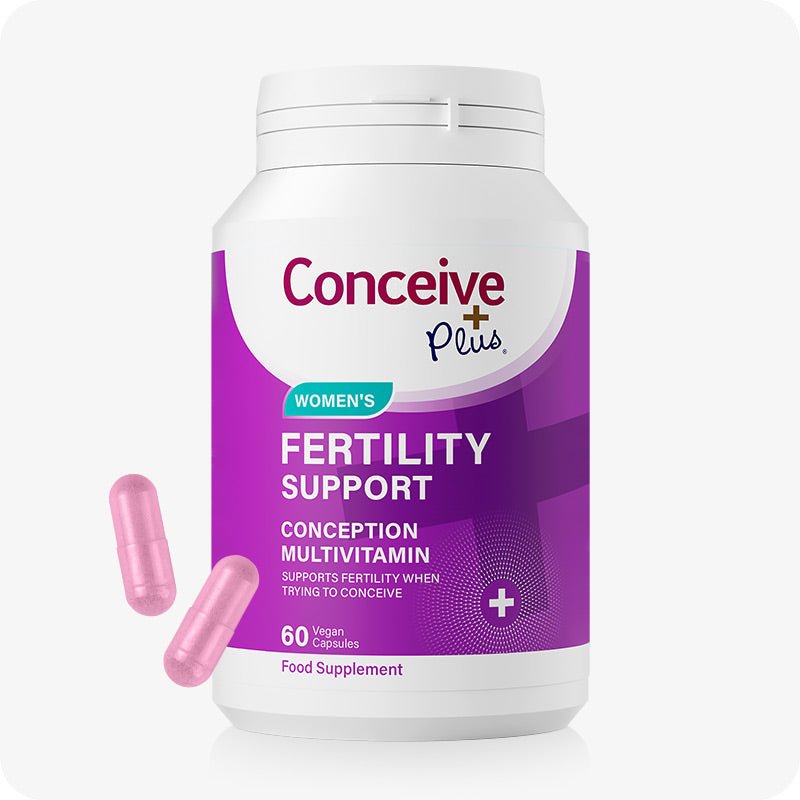
- Support your journey with foundational nutrients like Myo-Inositol and Folic Acid. These ingredients work alongside testing to promote egg quality and more predictable ovulation patterns.
The Science of the Surge: How Ovulation Strips Work
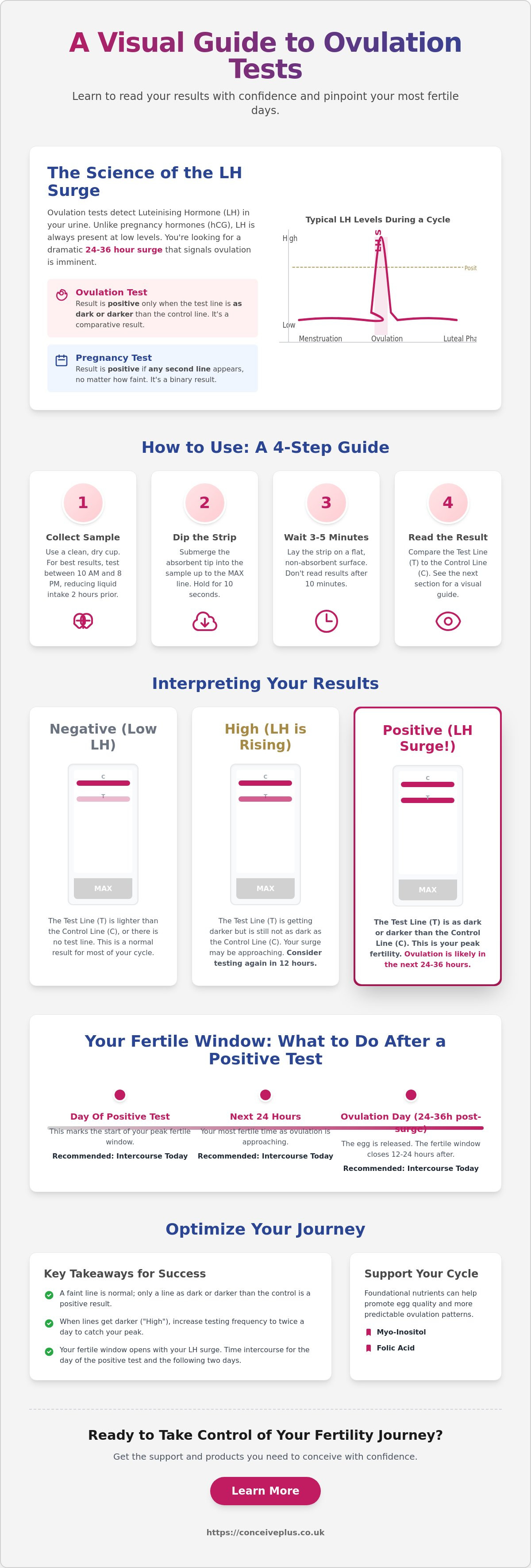
Understanding your body's internal communication begins with Luteinising Hormone (LH). This vital hormone acts as a biological signal, telling your ovaries that it's time to release a mature egg. While many people think LH only appears right before ovulation, it's actually present in your system at low levels throughout your entire menstrual cycle. This is a fundamental difference from hCG, the pregnancy hormone, which only appears after implantation. Because LH is always there, seeing a faint second line on a test is perfectly normal and doesn't necessarily mean you're about to ovulate.
The magic happens during the "surge." This is a sudden, dramatic spike in LH concentration that typically occurs 24 to 36 hours before the egg is released. When you are learning how to read an ovulation test strip, you're looking for this specific surge rather than just the presence of the hormone. A "high" reading indicates your levels are rising, but a "peak" reading is the darkest line you'll see, signaling that ovulation is imminent and your fertile window is wide open.
To better understand these hormonal patterns and see how they appear on a test, watch this helpful video:
Why Ovulation Strips Differ from Pregnancy Tests
Many users find themselves confused because they treat these tests like pregnancy kits. A pregnancy test is binary; if a second line appears, regardless of how light it is, the result is positive. An ovulation prediction kit works differently. It requires a comparative reading where the test line must be as dark as or darker than the control line to be considered positive. Most standard strips use a sensitivity threshold of 25mIU/mL. This means they only show a "peak" once the LH concentration hits that specific medical benchmark, helping you avoid mistaking baseline hormone levels for your fertile window.
Identifying Your Fertile Window
Your fertile window isn't just the day you ovulate. It actually spans about five days leading up to the release of the egg, plus the day of ovulation itself. This happens because healthy sperm can survive inside the reproductive tract for several days, waiting for the egg to arrive. By identifying the start of your LH surge, you can ensure sperm are already present when the egg is released. To get a better sense of when you should start testing each month, you can use an ovulation calculator to track your cycle length and estimate your most fertile days. Mastering how to read an ovulation test strip ensures you don't miss this critical time, providing a sense of control over a journey that often feels unpredictable.
Step-by-Step Guide: How to Read Your Ovulation Test Results
Precision is your ally when you're trying to conceive. To ensure your results are reliable, you must start with the correct dipping technique. Hold the strip by the colored handle and lower it into your urine sample, being extremely careful not to submerge it past the "MAX" line. If you flood the reactive membrane, the dye can't travel smoothly, which compromises the accuracy of ovulation tests. Hold the strip in the liquid for about 10 seconds, then lay it flat on a clean, non-absorbent surface.
Patience is required for the next step. Most manufacturers recommend a wait time of 3 to 5 minutes. During this period, you'll see a pink or purple wash move across the window. This is the dye migration process. Don't try to interpret the result until the background is clear. Understanding how to read an ovulation test strip requires looking at two distinct markers: the Control (C) line and the Test (T) line. The Control line, located furthest from the dipping end, simply confirms the test is functioning. The Test line is what tells the story of your LH levels.
The Golden Rule for ovulation strips is simple but strict. For a result to be positive, the Test line must be as dark as, or even darker than, the Control line. If the Test line is lighter than the Control, your LH surge hasn't reached the necessary threshold yet. This comparative science is the key to identifying your peak fertility with confidence.
Interpreting a Positive Result
Sometimes, you'll witness what's known as a "blazing positive." In these instances, the Test line pulls dye so aggressively that it appears almost immediately, often looking much darker than the Control line. This result suggests that ovulation is likely imminent within the next 12 to 48 hours. Once you've recorded a clear positive, you can stop testing for the remainder of your cycle. Your body has given you the signal you were looking for, and it's time to focus on your fertile window.
Interpreting a Negative Result
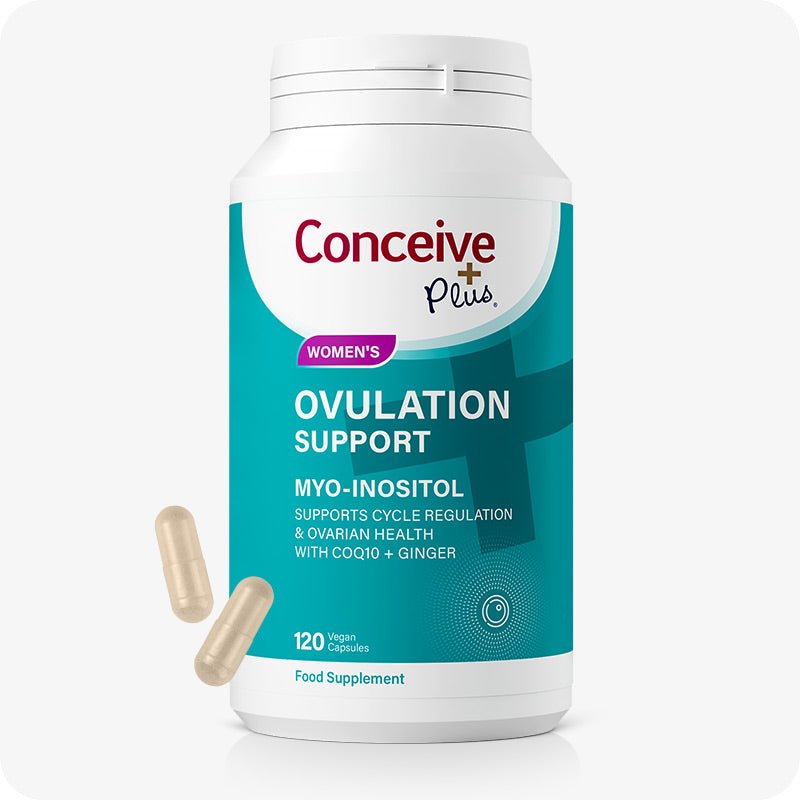
A negative result is often misunderstood and can cause unnecessary worry. Seeing a faint Test line is completely normal; it doesn't mean you're "partially" ovulating. It simply reflects the baseline LH levels that are always present in your body. If you see a very thin, colorless "ghost" or evaporation line after the 10-minute mark, you should ignore it. These are common as the strip dries and don't represent your hormonal status. If you're in your expected fertile window but the result is negative, continue testing once or twice a day until the surge is captured. To support your body's natural rhythms during this phase, you might consider Conceive Plus Ovulation Support as a gentle way to nurture your reproductive health. For those seeking more guidance on their journey, Conceive Plus UK provides a range of supportive tools designed with your goals in mind.
Interpreting Ambiguous Results: Faint Lines and The "Almost" Positive
Few things in the journey toward parenthood are as frustrating as the "almost positive" test result. You've waited the required minutes, only to find a Test line that's dark, but perhaps not quite as dark as the Control line. This ambiguity often leads to "line eye," where you find yourself squinting under different lights to find a match. It's important to remember that LH levels don't always follow a slow, steady climb. For some women, the surge is a "Rapid Onset" event. This means your LH levels might spike and drop within a very narrow window of just 10 to 12 hours. If you only test once a day, you might catch the very beginning or the tail end of the surge, resulting in that confusing, nearly-there line.
One of the most common reasons for a missed or ambiguous surge is actually related to your daily habits. Over-hydration is a frequent culprit. If you've been drinking plenty of water to stay healthy, you might inadvertently dilute your urine. This dilution lowers the concentration of LH, making a true surge appear like a negative result on a standard 25mIU/mL strip. Learning how to read an ovulation test strip with precision means balancing your hydration to ensure the hormone is concentrated enough for the reactive membrane to detect it accurately.
The Impact of Hydration and Timing
While pregnancy tests require First Morning Urine (FMU) for the best results, ovulation tests follow a different set of biological rules. LH is typically synthesized in your body during the early morning hours and takes several hours to appear in your urine. This is why the "10am to 8pm" window is the gold standard for testing. If you use FMU, you might get a false negative because the day's LH hasn't reached your bladder yet. To capture a short surge, try testing twice daily, once in the late morning and once in the early evening. We recommend a two-hour "liquid fast" before you test to keep your urine concentrated and your results clear.
Reading Strips with PCOS or Irregular Cycles
If you're managing Polycystic Ovary Syndrome (PCOS), your experience with testing might feel more complex. PCOS can cause naturally high baseline LH levels, which sometimes leads to "false peaks" or strips that look almost positive for days on end. In these cases, the goal isn't just to find a dark line, but to find the darkest line relative to your usual baseline. Consistency is key here. Tracking your results over several weeks helps you identify your personal "peak" pattern. To help regulate your cycle and support more predictable ovulation, incorporating ovulation support vitamins can be a helpful addition to your daily routine, providing the foundational nutrients your body needs to find its rhythm.
Timing Your Journey: What to Do After a Positive Result
Seeing that dark Test line can feel like a hard-won victory. You've mastered how to read an ovulation test strip, and you now have the biological data needed to move forward with confidence. This "Peak Day" is your starting gun. Because ovulation typically occurs 24 to 36 hours after the LH surge begins, the day you record your positive result and the following 48 hours represent your most fertile window. This is the time to prioritize intimacy, as the egg only remains viable for about 12 to 24 hours after release.
Many couples find success by following the "Sperm Meets Egg Plan" (SMEP). This simple framework suggests having intercourse every other day starting on cycle day 8. Once you identify your surge on a test strip, you switch to having intercourse every day for three consecutive days. Consistency during this post-surge window ensures that healthy sperm are already waiting in the fallopian tubes the moment the egg is released. While you track your hormones, also stay mindful of your cervical mucus. Seeing "egg white" cervical mucus alongside a positive strip is a wonderful secondary sign that your body is fully prepared for conception.
Creating a Sperm-Friendly Environment
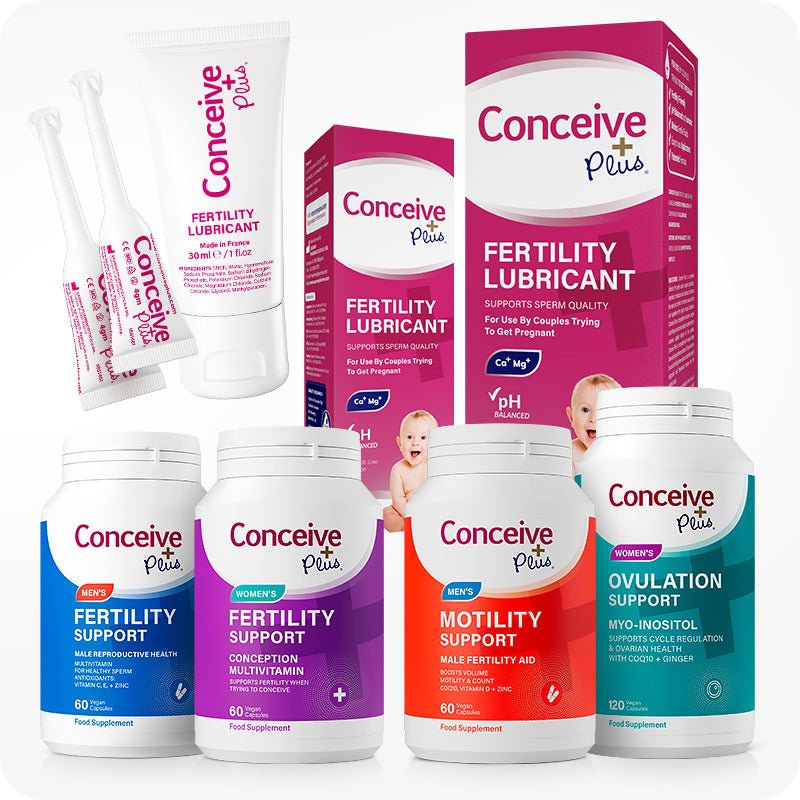
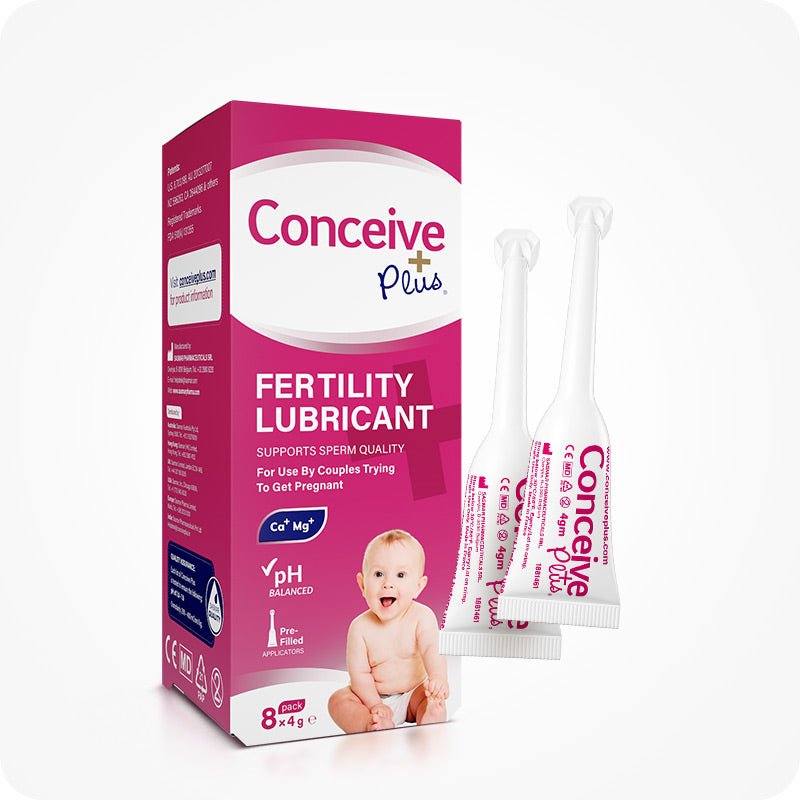
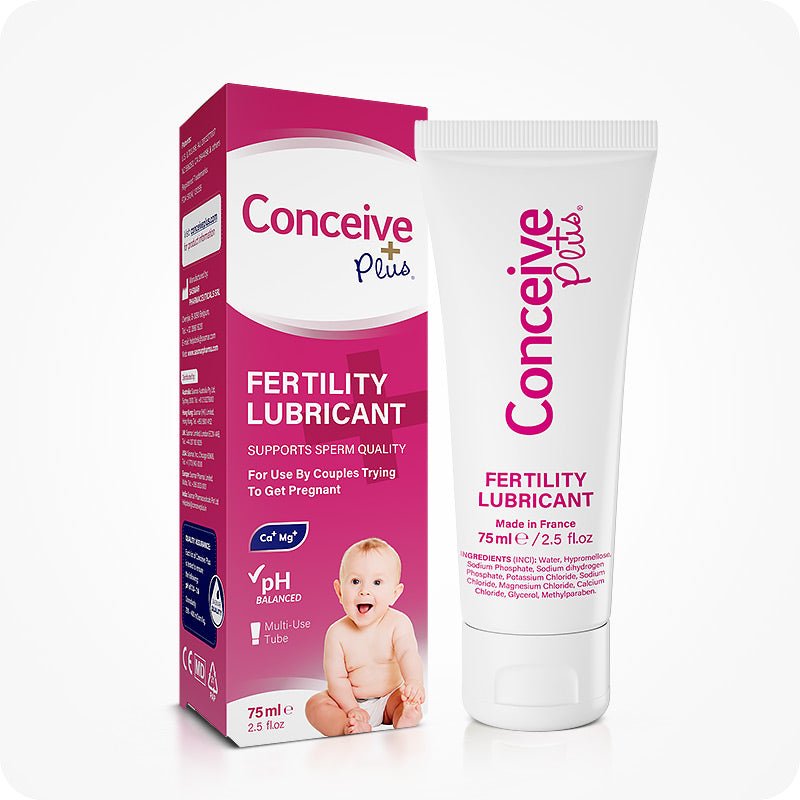
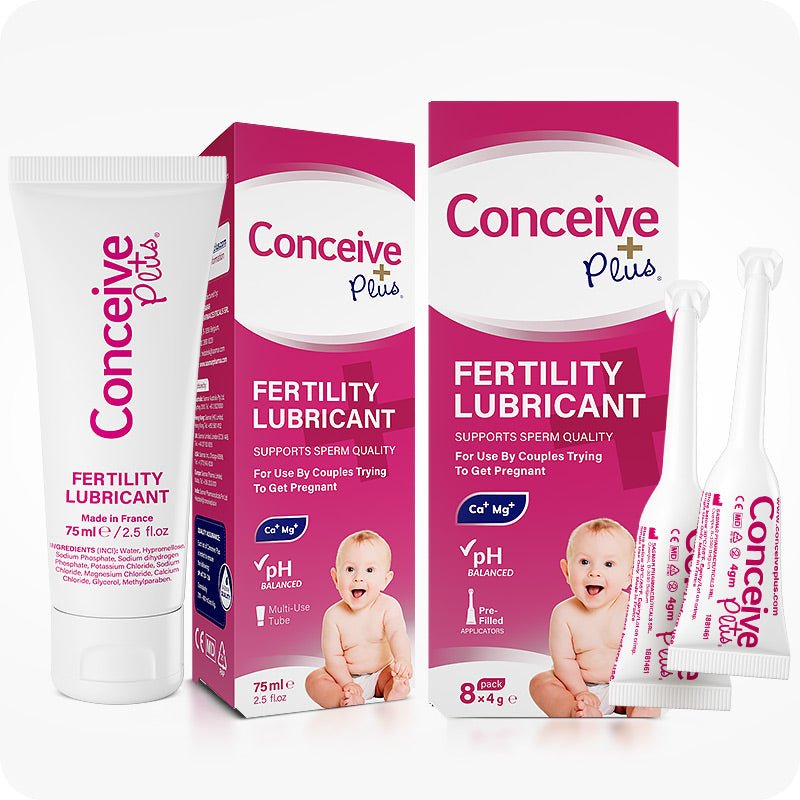
Optimizing your timing is only half of the equation. It's equally important to ensure the environment is supportive for sperm. You might be surprised to learn that many standard, store-bought lubricants can actually hinder your progress. These products often have an osmolality or pH level that is incompatible with sperm, effectively acting as a barrier to motility. To support your journey, we recommend using Conceive Plus Fertility Lubricant during your fertile window. It's specifically formulated to be pH-balanced and contains essential calcium and magnesium ions. This allows it to mimic the body's natural fertile fluids, providing a safe space that supports sperm health and movement.
The "Two-Week Wait" Transition
Once you've confirmed your surge and completed your timed intercourse, you can put the test strips away. Continuing to test after a confirmed peak often leads to unnecessary anxiety, as LH levels can fluctuate or remain slightly elevated for a day or two before dropping. Your body is now moving into the luteal phase, where progesterone rises to support the uterine lining. This marks the beginning of the "two-week wait." To help you navigate the next stage of your journey, you can explore our guide on when to take a pregnancy test for the most reliable results. If you're ready to prepare for your next window, you can explore our fertility-friendly lubricant range to ensure you have everything you need for the month ahead.
Optimising Conception: Supporting Your Fertile Window Naturally
Mastering the technical side of your cycle is an empowering first step, but it's helpful to remember that test strips are simply a window into your internal health. While knowing how to read an ovulation test strip gives you the data to time intercourse, the foundation of a successful journey lies in your overall reproductive well-being. Think of the strips as the map and your body's health as the engine; both must work in harmony to reach your destination. Supporting your body naturally ensures that when you do detect that surge, your system is in the best possible position to support a healthy egg and a potential pregnancy.
Clinical research highlights the importance of specific nutrients like Myo-Inositol and Folic Acid in promoting regular ovulation and egg quality. These ingredients are particularly beneficial for those who experience irregular cycles or find that their test results are often ambiguous. By providing your body with targeted support, you can help encourage more predictable LH patterns, making it much easier to identify your peak fertile days. Taking a holistic approach that balances nutrition, gentle stress management, and expert-backed supplements creates a "safe space" for conception to occur.
Nutritional Support for Healthy Ovulation
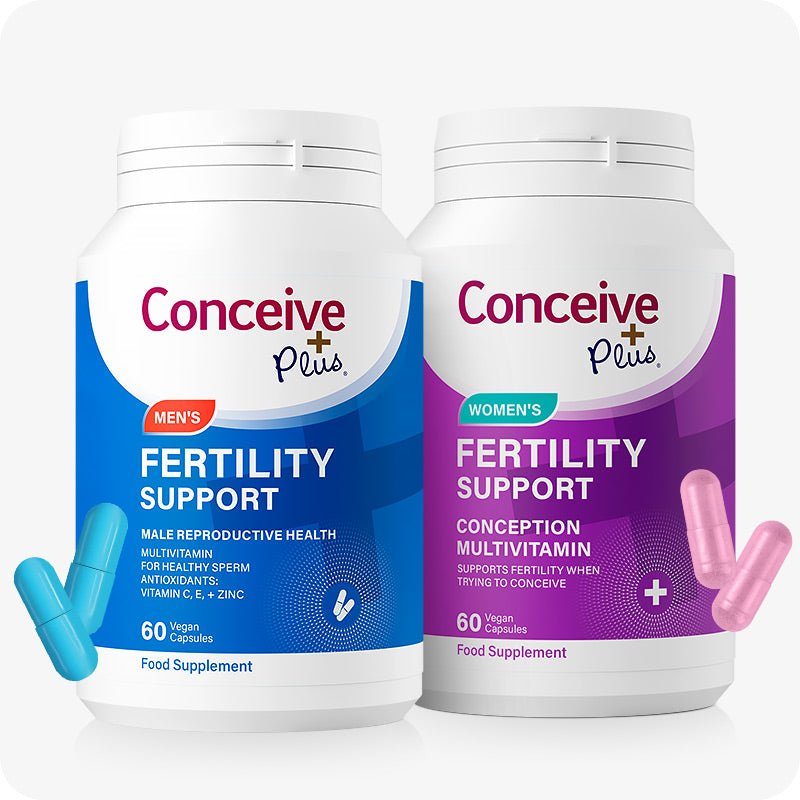
Fertility is a shared journey, and the nutritional health of both partners plays a significant role in the outcome. For women, vitamins that support hormonal balance are essential, while for men, nutrients like Zinc and Selenium are vital for maintaining sperm motility and DNA integrity. To simplify this process, many couples choose comprehensive care through the His and Hers Fertility Support deal. This partnership approach ensures that both of you are receiving the foundational support needed to optimize your fertile window together.
Next Steps if You Don’t See a Surge
If you've been diligently learning how to read an ovulation test strip but haven't detected a surge after several months, please don't lose heart. It's perfectly normal to experience an occasional "anovulatory" cycle where an egg isn't released, especially during times of high stress or illness. Sometimes, the issue is as simple as the sensitivity of the strips you're using. You might consider trying a different brand or checking if your current strips have a 25mIU/mL threshold that is too high for your personal baseline.
However, there are times when professional guidance is the most supportive next step. You should consider consulting your GP or a fertility specialist if you notice any of the following patterns:
- Your menstrual cycles are consistently shorter than 21 days or longer than 35 days.
- You've been tracking for six months without ever seeing a positive result.
- You have a known history of PCOS or endometriosis that might be affecting your LH levels.
To help regulate your cycles and provide your body with the nutrients it needs to find its rhythm, incorporating Conceive Plus Ovulation Support can be a gentle and effective way to move forward. Remember, you aren't alone in this process, and seeking help is a proactive way to honour your goals and your health.
Empowering Your Path to Parenthood
Mastering how to read an ovulation test strip is more than a technical skill; it's a way to listen to your body's unique hormonal language. By understanding the difference between baseline LH presence and a true peak surge, you've gained the clarity needed to optimize your timing with confidence. You now know that identifying the surge is just the beginning, and creating the right environment for conception is equally vital for your success.
As you move from tracking to action, ensure you're giving your body every clinical advantage. Maximise your chances with the Conceive Plus UK Fertility Starter Kit. Our patented formula, developed by Sasmar Pharmaceuticals, has been trusted by millions of couples since 2008. It is clinically tested for sperm safety and motility, providing the supportive environment your journey requires during those most fertile days.
You have the tools and the expertise to navigate this chapter of your life with quiet confidence. We're honored to stand beside you as a reliable partner on your path toward a new beginning.
Frequently Asked Questions
Can I get a positive ovulation test and not ovulate?
Yes, it's possible to experience an LH surge without the subsequent release of an egg. This is sometimes called a "false start," where the body prepares for ovulation but doesn't complete the process due to factors like high stress or hormonal imbalances. Because how to read an ovulation test strip only measures the hormone signal and not the physical egg release, you might use other tracking methods to confirm the event.
Why is my ovulation test strip always faint?
Seeing a faint line is a normal, negative result because Luteinising Hormone is present in your system throughout your entire cycle. Unlike pregnancy tests, these strips aren't "yes or no" indicators based on the mere presence of a line. A faint line simply means your LH hasn't reached the surge threshold yet. You should continue testing until the Test line matches or exceeds the intensity of the Control line.
Does a positive ovulation test mean I am definitely fertile?
A positive result confirms that you are in your most fertile window, but it doesn't guarantee conception. Fertility depends on a complex harmony of factors, including egg quality and sperm motility. While the test identifies the optimal timing for intercourse, ensuring a supportive environment is equally important. Using a sperm-friendly lubricant can help maintain the conditions needed for the sperm to reach the egg during this window.
Can I use an ovulation test to find out if I am pregnant?
You shouldn't use an ovulation strip to confirm pregnancy because it's not designed to detect hCG. While the LH and hCG molecules are structurally similar and can sometimes cause cross-reactivity, an ovulation test cannot distinguish between the two accurately. For a reliable result, always use a dedicated pregnancy test once your period is late to ensure you're getting the correct clinical information for your personal journey.
What is the best time of day to take an ovulation test strip?
The optimal time to test is between 10 am and 8 pm. When you are learning how to read an ovulation test strip, you'll find that LH is typically produced in the early morning and takes several hours to reach a detectable concentration in your urine. This is why testing in the afternoon provides a clearer picture than using first morning urine. Try to test at the same time each day.
How many days after a positive ovulation test should I have sex?
You should have intercourse on the day of your positive result and for the following two days. Since sperm can live for several days inside the reproductive tract, having them present before the egg is released maximizes your chances. This 48 to 72-hour window after your surge is the most vital time for conception, as the egg only remains viable for a short period after ovulation.
Can drinking too much water affect my ovulation test results?
Yes, excessive fluid intake can dilute the LH in your urine and lead to a false negative result. If your urine is too clear, the concentration of the hormone may fall below the detection threshold of the strip. We recommend a two-hour "liquid fast" before you plan to take your test to ensure your sample is concentrated enough for an accurate reading.
What if the test line is darker than the control line?
A test line that is darker than the control line is a "blazing positive" and indicates your LH peak. This result means your body is at its highest hormonal surge, and ovulation is likely to occur within the next 12 to 36 hours. It's an excellent sign that your fertile window is at its maximum, and you can stop testing for the remainder of your current cycle.
Trusted by Couples in Over 70 Countries
Support Male Fertility From the Inside Out
Male fertility is just as important as female fertility in the conception journey. Conceive Plus Men's range delivers targeted nutritional support to promote healthy sperm and overall reproductive wellbeing.
Shop Men's Range →