Ovulation Tracking UK: Your Complete Guide to Pinpointing Your Fertile Window


Ovulation Tracking in the UK: How to Find Your Fertile Window and Maximise Your Chances of Conceiving
Whether you've just started trying to conceive or you've been on the journey for a while, understanding and tracking your ovulation is one of the most powerful steps you can take. Studies consistently show that couples who time intercourse to the fertile window significantly improve their per-cycle conception rates—yet surveys suggest fewer than 40% of women accurately identify when they ovulate.
This comprehensive guide covers every ovulation tracking method available in the UK, how to interpret your results, how to combine methods for maximum accuracy, and how products like Conceive Plus can support you during the fertile window.
Why Ovulation Tracking Matters
The human egg is viable for fertilisation for only 12–24 hours after ovulation. Sperm, however, can survive in the female reproductive tract for up to 5 days when optimal cervical mucus is present. This means your true fertile window—the days when unprotected intercourse can result in pregnancy—is roughly 5–6 days per cycle, ending at ovulation.
Missing the fertile window by even a day or two means missing that cycle entirely. For couples trying naturally, this can extend the time to conception by months. For those with irregular cycles, ovulation can be unpredictable, making tracking even more valuable.
Method 1: Ovulation Predictor Kits (OPKs)
OPKs detect the surge in luteinising hormone (LH) that triggers ovulation approximately 24–36 hours before the egg is released. They are the most widely used ovulation tracking tool in the UK and are available at Boots, Superdrug, and online retailers.
How to Use OPKs
- Start testing 3–4 days before your expected ovulation (Day 10–11 for a 28-day cycle)
- Test at the same time each day, ideally between 10am and 8pm
- Avoid drinking large amounts of fluid for 2 hours before testing (to concentrate urine)
- Look for a test line darker than or equal to the control line to indicate a positive
Digital vs Standard OPKs
Digital OPKs (Clearblue Advanced, for example) display a smiley face for positive results, eliminating line-reading ambiguity. Standard strip OPKs (e.g., Wondfo, Femometer) are cheaper and can be used in higher quantities for more comprehensive cycle mapping.
OPK Limitations
- Women with PCOS may have chronically elevated LH, producing multiple "false positives"
- Some women have a short or missed LH surge that standard OPKs don't catch
- OPKs predict ovulation but don't confirm it has occurred
Method 2: Basal Body Temperature (BBT) Charting
Basal body temperature rises by 0.2–0.5°C after ovulation due to the thermogenic effect of progesterone. Tracking this shift allows you to confirm that ovulation has occurred—though it's retrospective rather than predictive.
How to Chart BBT
- Take your temperature immediately upon waking, before getting up, eating, or drinking
- Use a basal thermometer accurate to 0.1°C (standard clinical thermometers are insufficient)
- Record at the same time each day (±30 minutes)
- Note disturbances: illness, alcohol, disrupted sleep, and travel can skew readings
Over 2–3 cycles, a pattern usually emerges. The temperature shift after ovulation—confirmed by 3 consecutive higher readings—identifies when you ovulated. Combined with OPKs, BBT charting helps you understand your unique cycle pattern.
Method 3: Cervical Mucus Monitoring
Cervical mucus (CM) changes in consistency, quantity, and appearance throughout the menstrual cycle in response to oestrogen and progesterone:
- Post-period: Dry or minimal discharge
- Pre-ovulation: Creamy, white, or cloudy
- Peak fertility: Clear, slippery, stretchy—resembling raw egg whites (EWCM)
- Post-ovulation: Thick, cloudy, or absent (progesterone effect)
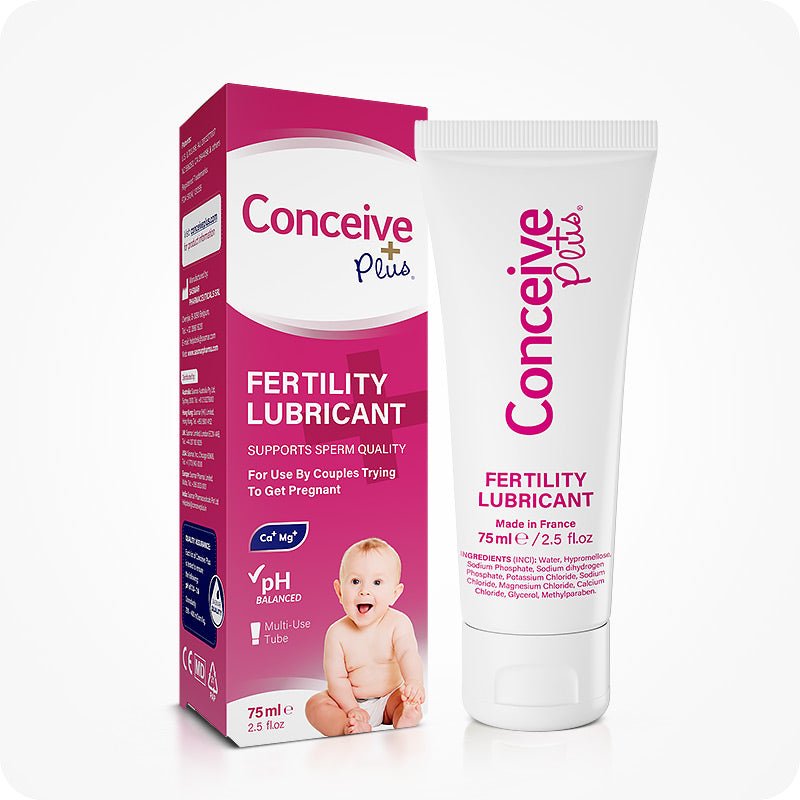
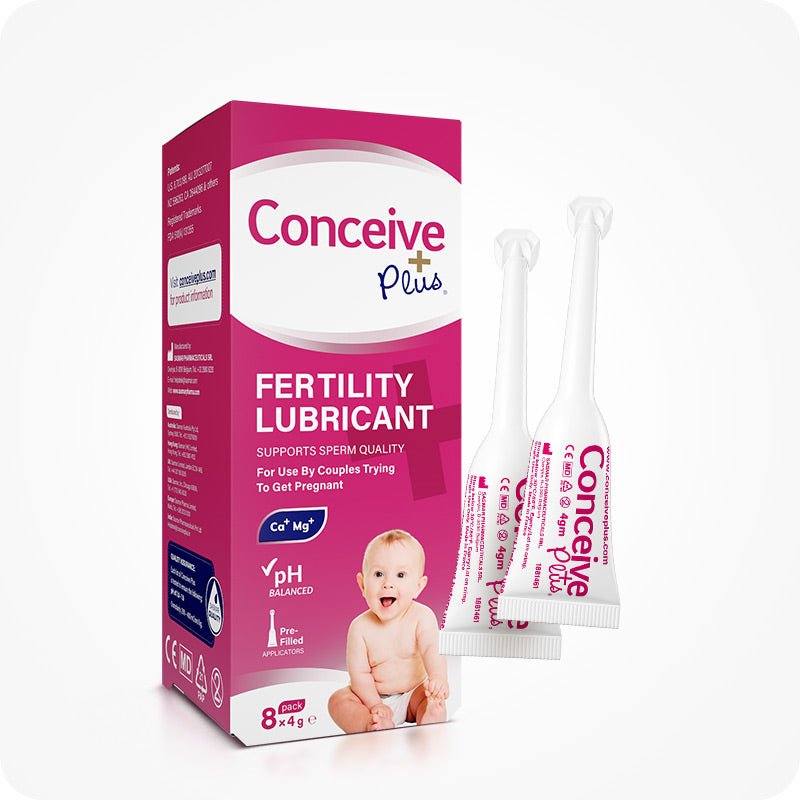
Peak EWCM is the most fertile phase—it creates a channel for sperm survival and motility. If you're using a lubricant during this time, it should mimic the properties of EWCM: slightly alkaline pH, isotonic, and non-spermicidal. Conceive Plus is formulated to complement rather than disrupt this natural environment.
Method 4: Fertility Monitors
Devices like the Clearblue Fertility Monitor track both oestrogen and LH, giving broader fertile window detection (typically 6 days rather than 2). More advanced wearables like the Ava Bracelet track multiple physiological signals (resting pulse rate, skin temperature, HRV) to predict and confirm ovulation.
These are more expensive but useful for women with irregular cycles or those who want to build a detailed picture of their hormonal pattern over time.
Method 5: Progesterone Blood Testing
A Day 21 progesterone test (adjusted for cycle length—taken 7 days after estimated ovulation) can confirm whether ovulation actually occurred. A result above 30 nmol/L strongly suggests ovulation. This test is available through your GP if you've been trying to conceive for 6–12 months, or privately through online services like Medichecks or Thriva.
Combining Methods for Maximum Accuracy
The fertility awareness method (FAM) combines OPKs + BBT + CM monitoring for the most comprehensive picture. Many women add a monitor for additional data. This "sympto-thermal" approach achieves the highest accuracy in identifying the fertile window and is endorsed by the NHS as a method for those who want to understand their cycle in depth.
Conceive Plus vs Pre-Seed: Supporting Your Fertile Window in the UK
During the fertile window, natural lubrication often increases. However, some women experience insufficient natural cervical mucus due to age, medication (antihistamines, clomiphene, some antidepressants), hormonal imbalance, or stress. In these cases, a sperm-safe lubricant is essential.
Conceive Plus is widely available in the UK and is specifically formulated for use during the fertile window. Unlike Pre-Seed, which simply mimics fertile cervical mucus, Conceive Plus adds calcium and magnesium ions that actively support sperm capacitation—the biochemical preparation sperm undergo before fertilisation. Both are sperm-safe, but Conceive Plus offers this additional biological support.
Apply Conceive Plus 5–10 minutes before intercourse during your OPK-positive days for maximum impact.
Irregular Cycles and Ovulation Tracking
Irregular cycles (common in PCOS, thyroid disorders, and perimenopause) make ovulation prediction more challenging. Strategies include:
- Using OPKs for a broader window (starting Day 8 or earlier)
- Serial tracking across multiple cycles to identify your personal range
- Progesterone testing to confirm ovulation occurred
- Speaking with your GP about thyroid function and hormonal assessment if cycles are consistently erratic
When to See Your GP About Ovulation
The NHS recommends seeking GP assessment after:
- 12 months of regular unprotected intercourse without conception (age <35)
- 6 months if you are 35 or older
- Any age if you have irregular or absent periods, known PCOS, previous pelvic surgery, or a history of STIs that may have affected the tubes
Your GP can arrange hormonal blood tests, a semen analysis for your partner, and ultrasound assessment of the ovaries and uterus.
Clinically formulated to be sperm-safe, pH-balanced, and enriched with fertility-supporting calcium and magnesium ions.
Shop Conceive Plus in the UK →
Frequently Asked Questions: Ovulation Tracking UK
How do I know when I'm ovulating?
The most reliable signs are a positive OPK (LH surge), the presence of egg-white cervical mucus, and a BBT shift. Using two or more methods together gives the most accurate picture.
Can I get OPKs on the NHS?
OPKs are not routinely prescribed by the NHS. They are available over the counter at pharmacies and online without prescription. Progesterone blood testing is available through your GP.
How long does ovulation last?
The egg itself is viable for only 12–24 hours. However, with sperm surviving up to 5 days in fertile-quality cervical mucus, your fertile window is approximately 5–6 days ending at ovulation.
Do OPKs work with PCOS?
OPKs can be unreliable in PCOS due to chronically elevated LH. Quantitative OPKs (that measure LH level rather than giving a binary result), fertility monitors tracking oestrogen as well as LH, and BBT charting tend to give more useful information in PCOS.
What does fertile cervical mucus look like?
Peak fertile mucus is clear, slippery, and can be stretched between two fingers without breaking—often described as resembling raw egg whites. Its presence typically indicates you are 1–3 days from ovulation.
Can stress affect ovulation?
Yes. Physiological and psychological stress can disrupt the hypothalamic-pituitary-ovarian axis, delaying or preventing ovulation. Chronic stress may shorten the luteal phase and affect progesterone levels. Stress reduction is a meaningful—if underrated—part of TTC optimisation.
Should I use a lubricant during the fertile window?
If you use a lubricant during the fertile window, it must be sperm-safe. Standard lubricants (KY Jelly, Durex, etc.) have been shown to impair sperm motility. Use a fertility-specific lubricant like Conceive Plus, which is pH-balanced and isotonic to protect sperm.
Can I ovulate more than once per cycle?
Releasing more than one egg per cycle is possible (it can happen within 24 hours of the initial ovulation—the basis for fraternal twins). However, a second ovulation in the same cycle more than 24 hours after the first is extremely rare. Each cycle has essentially one ovulation event.
Conceive Plus is the UK's trusted sperm-safe fertility lubricant—supporting thousands of couples on their TTC journey every month.
Learn More About Conceive Plus UK →