Ovulation Tracking: The Complete Guide to Timing Conception in 2026


Ovulation Tracking: The Complete Guide to Timing Conception in 2026
Ovulation tracking is one of the most powerful tools available to couples trying to conceive. Understanding when you ovulate—and precisely timing intercourse around that window—can dramatically increase your monthly chances of pregnancy. Whether you're using ovulation predictor kits (OPKs), basal body temperature (BBT) charting, cervical mucus monitoring, or the latest AI-powered fertility apps, this guide covers every evidence-based method available in 2026. Ovulation tracking is not just for those struggling to conceive—it's a science-backed approach that gives every TTC couple a real advantage.
The science is clear: couples who practise active ovulation tracking and time intercourse accordingly have conception rates nearly double those of couples having unprotected intercourse at random intervals. If you're not tracking ovulation, you may be missing your fertile window entirely in some cycles.
Why Ovulation Tracking Matters: The Fertile Window Explained
The fertile window in each menstrual cycle is surprisingly short. An egg survives only 12–24 hours after ovulation—meaning conception must occur within that narrow timeframe. Sperm, however, can survive in the female reproductive tract for 3–5 days under optimal cervical mucus conditions. This means the theoretical fertile window spans approximately 6 days: the 5 days before ovulation and the day of ovulation itself.
Research from the landmark Wilcox et al. study in the New England Journal of Medicine found that:
- The highest conception probability (36%) occurs on the day before ovulation
- The day of ovulation itself carries a 25% conception probability per cycle
- Two days before ovulation: 31% probability
- Three days before: 15%, Four days before: 14%, Five days before: 10%
- Conception is virtually impossible outside the 6-day window
These statistics make ovulation tracking the single most important action you can take to optimise your conception chances. Without it, you may be trying on days with near-zero probability of success.
Method 1: Ovulation Predictor Kits (OPKs) — The Gold Standard
Discover Conceive Plus — scientifically formulated, clinically tested, trusted worldwide.
→ Shop Conceive Plus Now
OPKs detect the luteinising hormone (LH) surge that triggers ovulation approximately 24–48 hours before an egg is released. They are the most popular and reliable method of ovulation tracking for most women. LH surges rapidly from baseline to peak over 14–26 hours, making consistent daily testing important.
How to use OPKs correctly for ovulation tracking:
- Start testing 3–4 days before your expected ovulation (day 11 for a 28-day cycle; day 8 for shorter cycles)
- Test at the same time each day—ideally between 10am–8pm when LH is naturally higher
- Reduce fluid intake for 2 hours before testing to avoid diluting the sample
- A positive result (test line as dark or darker than control line on strip tests) means the LH surge is underway—ovulation will follow in 24–48 hours
- Begin having intercourse the day you see a positive OPK and continue for 2 days after
- Consider testing twice daily (morning and evening) as LH surges can begin and peak within 24 hours
Digital vs strip OPKs for ovulation tracking:
Digital OPK tests (Clearblue Advanced, etc.) give clear digital results and additionally detect oestrogen rise (a second hormonal indicator) before the LH surge, extending ovulation tracking window to 4+ days instead of just the LH peak. Strip tests are cost-effective—many women track with both, using the digital for clear results and strips for frequent testing. Smartphone apps that photograph and analyse OPK strips (such as Premom) now achieve near-lab accuracy at low cost.
Method 2: Basal Body Temperature (BBT) Charting
Basal body temperature is your resting body temperature measured first thing in the morning before any activity. After ovulation, progesterone causes a sustained rise of 0.2–0.4°C that persists until your next period. Tracking this temperature shift across cycles provides powerful ovulation tracking data.
BBT charting tips for accurate ovulation tracking:
- Take temperature at the same time every morning (within 30 minutes) before getting up or speaking
- Use a digital basal thermometer accurate to 0.01°C (not a standard clinical thermometer)
- For ovulation tracking via BBT, vaginal temperature is slightly more consistent than oral
- Look for a sustained rise (3+ consecutive days) above your pre-ovulation baseline temperature
- BBT confirms ovulation has already occurred—combine with OPKs for prospective prediction
- Disrupted sleep (under 3 consecutive hours), alcohol, fever, and travel affect readings—note these on your chart
- Track for 2–3 cycles to identify your personal pattern before relying on it for ovulation tracking
Wearable thermometers (Tempdrop, Trackle) that record temperature passively during sleep have significantly improved BBT-based ovulation tracking by removing the need for alarm-precise morning readings.
Method 3: Cervical Mucus Monitoring
Cervical mucus changes throughout the cycle under oestrogen and progesterone influence. Tracking these changes—called the Billings Ovulation Method or Creighton Method in formal fertility awareness systems—provides real-time information about fertile status that complements other ovulation tracking tools.
The cervical mucus progression for ovulation tracking:
- Post-period (Days 1–5): Menstruation masks mucus
- Dry phase (Days 5–9 typical): Dry or minimal discharge—lowest fertility
- Pre-ovulation (Days 9–12 typical): Creamy, white or yellow, sticky—not yet fertile
- Approaching ovulation (Days 11–13 typical): Wetter, clearer, stretchy—increasingly fertile
- Peak fertility (ovulation, Days 13–15 typical): Egg white consistency—clear, slippery, stretches 5+ cm between fingers (called EWCM—egg white cervical mucus)—maximum fertility signal
- Post-ovulation: Returns to thick, sticky, or dry as progesterone dominates
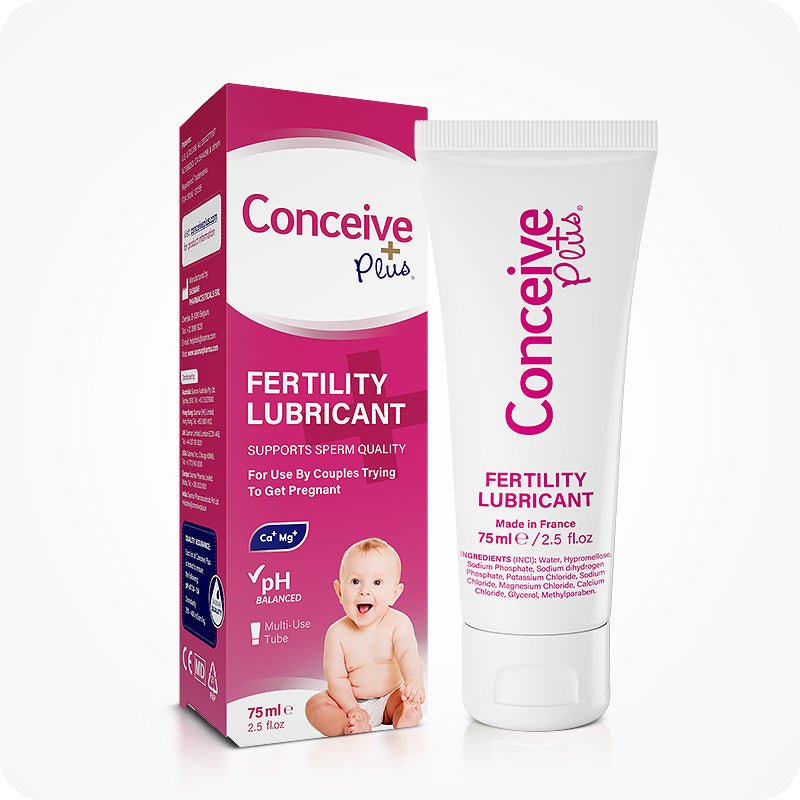
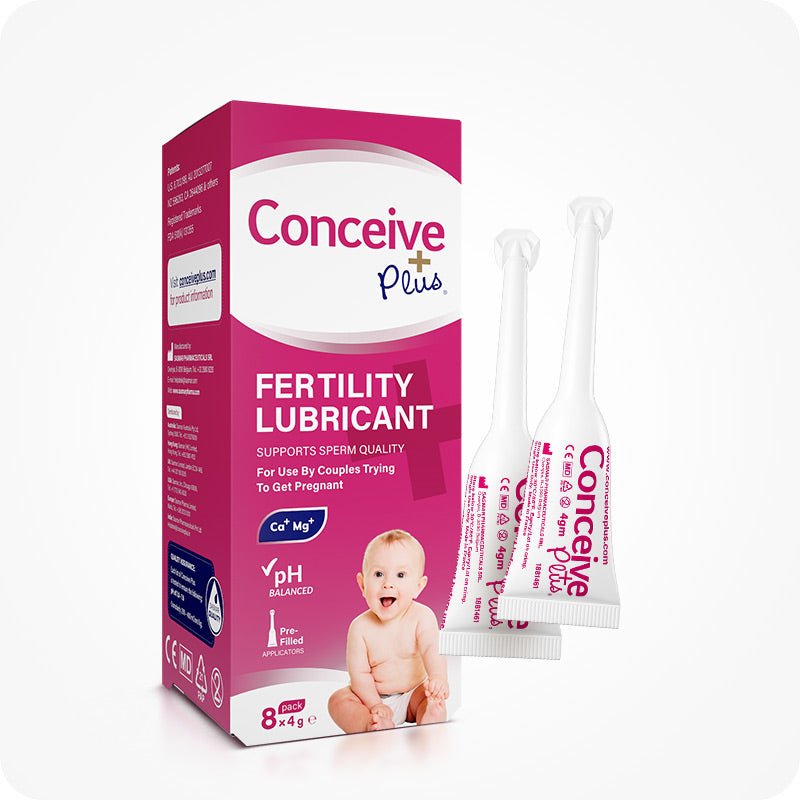
EWCM is the most reliable natural fertile sign for ovulation tracking. However, some women produce insufficient cervical mucus—particularly those with PCOS, thyroid issues, those who have taken Clomid, or those approaching perimenopause. When natural mucus is inadequate, a sperm-friendly lubricant like Conceive Plus can provide the optimal environment for sperm survival during your tracked fertile window.
Method 4: Fertility Apps and AI-Powered Ovulation Tracking
2026 has seen a major leap in AI-powered ovulation tracking technology. Apps now use machine learning trained on millions of cycles to predict ovulation windows with significantly improved accuracy. Notable options:
- Natural Cycles: FDA approved fertility app using BBT-based ovulation tracking with algorithm-driven personalised predictions
- Clue: AI-enhanced cycle prediction with symptom tracking integration
- Premom: Integrated OPK reading and cycle analysis—photograph your strips for automatic result interpretation
- Ava bracelet: Wearable that passively monitors 5 physiological parameters for ovulation tracking without daily testing
- Oura Ring: Temperature-based ovulation tracking via continuous skin temperature monitoring
Best practices for app-based ovulation tracking:
- Input data consistently for at least 2–3 cycles before trusting predictions
- Combine app predictions with OPK testing for the highest accuracy ovulation tracking
- Calendar apps (showing "average" ovulation day) are not ovulation tracking—they're cycle averaging. Use algorithm-based apps only
- Period-tracking apps that don't use biological data beyond menstruation have poor ovulation tracking accuracy
Irregular Cycles and Ovulation Tracking Challenges
Women with irregular cycles—including PCOS, thyroid dysfunction, recent hormonal contraceptive use, or perimenopause—face distinct ovulation tracking challenges:
- OPK testing must begin earlier (day 8–9) and continue longer—potentially through day 20+
- PCOS can cause falsely elevated baseline LH, making standard OPK interpretation unreliable. Digital OPKs tracking the LH surge pattern rather than threshold are more accurate for PCOS ovulation tracking
- Anovulatory cycles (cycles without ovulation) are common in PCOS. BBT charting reveals these as cycles without a clear temperature shift
- Thyroid dysfunction disrupts cycle regularity and ovulation—treat the underlying condition first
- Post-pill cycles can take 3–6 months to regularise for reliable ovulation tracking
Combining Ovulation Tracking Methods for Maximum Accuracy
The most accurate conception approach combines multiple ovulation tracking methods:
- Foundation (daily): Cycle-tracking app for baseline pattern and prediction
- Primary OPK tracking: Test from day 10 onwards (or day 8 for shorter cycles)
- Daily awareness: Note cervical mucus quality each morning
- Confirmation: BBT charting to confirm ovulation occurred (especially in early cycles)
- Optimisation: Use Conceive Plus fertility lubricant during timed intercourse to maximise sperm survival and function
Couples using this comprehensive ovulation tracking and timed-intercourse approach consistently report the highest per-cycle conception rates.
Ovulation Tracking and Lubricants: Why It Matters
When ovulation tracking confirms your fertile window and you're having intercourse at precisely the right time, the last thing you want is for a lubricant to reduce your sperm's motility. Research shows common lubricants reduce sperm motility by 60–90%. Conceive Plus is formulated to match the pH and osmolality of fertile cervical mucus—providing the optimal sperm environment during your tracked fertile window. Its unique Ca²⁺/Mg²⁺ formula also supports sperm capacitation, the critical process that enables fertilization.
When to See a Doctor If Ovulation Tracking Isn't Working
Seek medical advice if:
- OPKs consistently show no LH surge after 3+ cycles of proper ovulation tracking
- Cycles are consistently shorter than 21 days or longer than 35 days
- No BBT shift visible after 3+ cycles of charting
- You've been using proper ovulation tracking and timed intercourse for 12 months (6 months if over 35) without success
- You have symptoms suggesting PCOS, thyroid dysfunction, or premature ovarian insufficiency
- Periods are very irregular or infrequent (fewer than 8 periods per year)
Frequently Asked Questions: Ovulation Tracking
Q1: When exactly during the fertile window should we have intercourse?
The highest pregnancy rates occur with intercourse 1–2 days before ovulation. Using OPK-based ovulation tracking, have intercourse when you first see a positive test and continue every 1–2 days for the next 2 days. Sperm are already present and waiting when the egg releases.
Q2: Can stress affect ovulation tracking results?
Yes. Significant physical or emotional stress can delay or suppress ovulation entirely. Stress can also cause secondary LH surges that appear as positive OPK results without actual ovulation following. BBT charting helps confirm whether a true ovulation occurred after a positive OPK in your ovulation tracking.
Q3: How accurate are OPKs for ovulation tracking?
When used correctly, OPKs are 97–99% accurate at detecting the LH surge. However, they confirm the hormonal trigger was present—not that ovulation definitely occurred. Combining OPKs with BBT charting in your ovulation tracking provides both prospective detection and retrospective confirmation.
Q4: Does Conceive Plus affect ovulation tracking test results?
Conceive Plus does not affect hormonal tests or OPK results. It's a lubricant applied vaginally and doesn't interfere with LH detection in urine-based ovulation tracking tests.
Q5: How long does ovulation tracking typically take to lead to conception?
For healthy couples under 35 practising accurate ovulation tracking and timed intercourse, the average time to conception is 3–4 cycles. The first cycle of ovulation tracking often reveals a fertile window that was previously missed entirely.
Q6: Can I use OPKs with PCOS for ovulation tracking?
Yes, but standard strip OPKs can show false positives in PCOS due to elevated baseline LH. For PCOS ovulation tracking, use digital OPKs like Clearblue Advanced that track the LH surge pattern rather than absolute threshold—or consider advanced hormone tracking apps that account for PCOS patterns.
Q7: What if I never see egg white cervical mucus in my ovulation tracking?
Some women produce less EWCM due to hormonal factors, cervical surgery, or Clomid use. In this case, use OPKs as your primary ovulation tracking method and use Conceive Plus to support sperm survival in the absence of adequate natural mucus. The sperm-friendly formula ensures the vaginal environment is hospitable regardless of cervical mucus quality.
Q8: How long should we try with ovulation tracking before seeking help?
Under 35: try for 12 months of active ovulation tracking and timed intercourse before referral. Over 35: seek evaluation after 6 months. Over 40: consult a reproductive specialist within 3 months. If ovulation tracking consistently shows no detectable ovulation, seek evaluation sooner regardless of age.
Q9: Is ovulation tracking suitable for everyone?
Ovulation tracking is appropriate for almost all couples trying to conceive. It's particularly valuable for those with irregular cycles, couples over 35, and anyone who wants to understand their reproductive health. The main limitation is when ovulation itself is absent—in which case ovulation tracking reveals this important diagnostic information.
Q10: Can ovulation tracking be emotionally stressful?
For some couples, intensive ovulation tracking becomes psychologically demanding. If tracking is causing significant anxiety, consider simplifying to OPKs only (without BBT charting and app monitoring simultaneously). The goal of ovulation tracking is to help, not cause distress. Work with what feels sustainable for you.
Join thousands of couples who have chosen Conceive Plus. Quality you can trust, results you can feel.
→ Explore Conceive Plus Products