Fertility Supplements: What Works, What Doesn't, and What the Science Really Says


Fertility Supplements: What Works, What Doesn't, and What the Science Really Says
Walk into any pharmacy or health food shop in the UK and you'll find an overwhelming array of supplements promising to boost fertility. From folic acid to CoQ10, from zinc to omega-3s, the fertility supplement market has exploded — and with it, a great deal of confusion about what's actually worth taking. As the NHS waiting lists for fertility treatment grow longer and more couples seek natural ways to support conception, it's worth examining the evidence carefully.
This guide cuts through the marketing noise to tell you what the research actually shows about fertility supplements for both women and men. We'll look at the nutrients with strong clinical evidence, those with promising but preliminary data, and the ones you might want to think twice about — so you can make informed decisions about your reproductive health.
Understanding Why Nutrition Matters for Fertility
Before diving into specific supplements, it's worth understanding why nutritional status affects fertility in the first place. Reproduction is one of the most metabolically demanding processes the body undertakes. The development of eggs and sperm requires a constant supply of specific micronutrients as cofactors for enzymatic reactions, antioxidants to protect delicate genetic material, and structural components for cell membranes and DNA.
The UK National Diet and Nutrition Survey consistently shows that a significant proportion of the British population falls short of optimal levels of key micronutrients including vitamin D, magnesium, iodine, and selenium — all of which have established roles in reproductive health. Moreover, the standard Western diet, high in processed foods and low in nutrient-dense whole foods, creates a state of micronutrient insufficiency that can impair fertility without causing overt deficiency symptoms.
It's also important to note that fertility supplements work best as part of a broader approach to reproductive health that includes a nutritious diet, healthy weight, limited alcohol, and no smoking. No supplement can compensate for significant lifestyle factors that impair fertility.
Folic Acid and Folate: The Non-Negotiable
If there is one fertility supplement with near-universal scientific consensus, it is folic acid (or its more bioavailable form, methylfolate). The NHS recommends that all women trying to conceive take 400mcg of folic acid daily, and this recommendation is based on robust evidence.
Folic acid plays multiple roles in fertility and early pregnancy:
- It's essential for DNA synthesis and cell division — critical processes during early embryonic development
- It reduces the risk of neural tube defects (such as spina bifida) by up to 70%
- Adequate folate supports the development of the placenta
- Emerging research suggests folate may improve egg quality and reduce the risk of chromosomal abnormalities
An important caveat: up to 40% of the population carries a genetic variant (MTHFR polymorphism) that impairs their ability to convert synthetic folic acid into its active form. For these individuals, methylfolate (or 5-MTHF) supplements are more effective. A simple blood test or genetic test can identify whether you have this variant.
For men, folate is also important. Studies show that adequate folate intake is associated with lower rates of sperm DNA damage, and some research suggests that supplementation may improve sperm count and motility in men with deficiency.
Support Your Fertility Journey
Conceive Plus is scientifically formulated to support reproductive health for both partners. Trusted by fertility specialists worldwide.
Explore Our Products →Vitamin D: The Sunshine Vitamin Britain Desperately Needs
Given the UK's latitude and notoriously overcast climate, vitamin D deficiency is extraordinarily common here — studies suggest that up to 40% of the UK population is deficient, and this figure rises to nearly 70% in winter months. This is particularly relevant to fertility, because vitamin D receptors are found in the ovaries, uterus, and testes, and the vitamin plays important roles throughout the reproductive system.
The evidence linking vitamin D to fertility is compelling:
- A meta-analysis of 11 studies found that vitamin D-sufficient women undergoing IVF had significantly higher clinical pregnancy rates than deficient women
- Vitamin D modulates the immune response in the uterus, which may support implantation
- It plays a role in follicular development and egg quality
- In men, vitamin D receptors are found on sperm, and adequate levels are associated with better motility and morphology
- Vitamin D deficiency is common in women with PCOS and endometriosis, both of which affect fertility
The NHS recommends all adults in the UK take a vitamin D supplement of at least 400 IU (10mcg) daily between October and March. However, for individuals who are already deficient, higher doses — typically 1,000–4,000 IU — are often required to restore optimal levels. A simple blood test (25-hydroxyvitamin D) can establish your current status. Most fertility specialists recommend aiming for levels of 50–80 nmol/L.
CoQ10: The Energy Molecule for Egg and Sperm Quality
Coenzyme Q10 (CoQ10) is one of the most exciting developments in fertility nutrition over the past decade. CoQ10 is a fat-soluble antioxidant that plays a central role in cellular energy production within the mitochondria — the powerhouses of every cell in the body.
Eggs (oocytes) have the highest concentration of mitochondria of any cell in the human body, because the initial cell divisions of a fertilised embryo rely entirely on mitochondrial energy before the embryo's own genes switch on. CoQ10 is critical to this mitochondrial function, and research shows that levels decline with age — which is one reason egg quality decreases as women get older.
The evidence for CoQ10 supplementation in fertility is growing:
- A randomized controlled trial in women with "poor ovarian response" found that CoQ10 supplementation (600mg daily for 60 days before IVF) significantly improved egg numbers, embryo quality, and pregnancy rates
- A large observational study found that women with higher CoQ10 levels had better ovarian reserve markers
- For men, a Cochrane review found that CoQ10 supplementation improved both sperm motility and morphology
Typical supplementation doses in fertility research range from 200–600mg daily. It's worth noting that ubiquinol (the reduced form of CoQ10) may be better absorbed than ubiquinone, particularly in individuals over 40. CoQ10 should ideally be taken with food containing fat to improve absorption.
Zinc: Essential for Both Partners
Zinc is arguably the single most important mineral for male fertility. It's found in high concentrations in the testes, and it's essential for:
- Testosterone synthesis
- Sperm production (spermatogenesis)
- Sperm motility and morphology
- Protecting sperm DNA from oxidative damage
UK dietary surveys show that a significant proportion of men fail to meet the recommended daily intake of zinc (9.5mg for adult men). Oysters are the richest food source, but red meat, poultry, beans, nuts, and seeds also contribute. Vegetarian and vegan men are at higher risk of zinc deficiency because plant-based zinc is less bioavailable.
Multiple randomised trials have shown that zinc supplementation improves sperm parameters in men with low zinc status. A meta-analysis of zinc and antioxidant supplementation in male factor infertility found significant improvements in sperm count, motility, and morphology, and — importantly — in pregnancy rates.
For women, zinc supports follicular development, egg quality, and progesterone production. Most comprehensive preconception supplements include 7.5–15mg of zinc.
Omega-3 Fatty Acids: Anti-inflammatory Support for Reproductive Health
The omega-3 fatty acids DHA (docosahexaenoic acid) and EPA (eicosapentaenoic acid), found primarily in oily fish, are essential for fertility and pregnancy. The average British diet is significantly deficient in omega-3s, as fish consumption has declined sharply over recent decades.
Omega-3 fatty acids support fertility through multiple mechanisms:
- They form the structural component of cell membranes, including eggs and sperm — adequate DHA improves the fluidity and function of these membranes
- They reduce systemic inflammation, which can impair implantation and contribute to conditions like endometriosis and PCOS
- DHA is incorporated into the developing brain and nervous system from very early pregnancy; ensuring adequate levels before conception optimises fetal brain development
- Omega-3s support healthy blood flow to the reproductive organs
- For men, DHA is essential for sperm tail formation and motility; low DHA is associated with poor sperm morphology
The NHS recommends eating 2 portions of fish per week (one oily) when trying to conceive. For those who don't eat fish, algae-based omega-3 supplements provide DHA and EPA from the same original source (it's the algae that fish eat to accumulate omega-3s in the first place). The recommended preconception dose is typically 500–1,000mg of combined DHA/EPA daily.
What Doesn't Work (or Lacks Sufficient Evidence)
The fertility supplement market is rife with products making claims that outpace the science. Here's an honest assessment of some commonly marketed supplements:
Royal Jelly
Popular in East Asian fertility traditions and gaining traction in the UK, royal jelly (secreted by bees to nourish queen bees) is claimed to improve egg quality. The evidence in humans is very limited, consisting mainly of small uncontrolled studies. There is no high-quality clinical trial evidence supporting royal jelly for human fertility.
Agnus Castus (Vitex/Chaste Tree Berry)
This herbal supplement is widely sold in UK health shops for "hormonal balance" and irregular cycles. Some small studies suggest it may support progesterone levels and regular ovulation in women with mild luteal phase deficiency. However, the evidence is not consistent, and it should not be used during fertility treatment without medical advice.
DHEA
Dehydroepiandrosterone (DHEA) has shown promise in improving ovarian response in women with poor ovarian reserve, particularly in IVF preparation. However, it should only be used under medical supervision, as it can have androgenic side effects and is not appropriate for all women.
Inositol
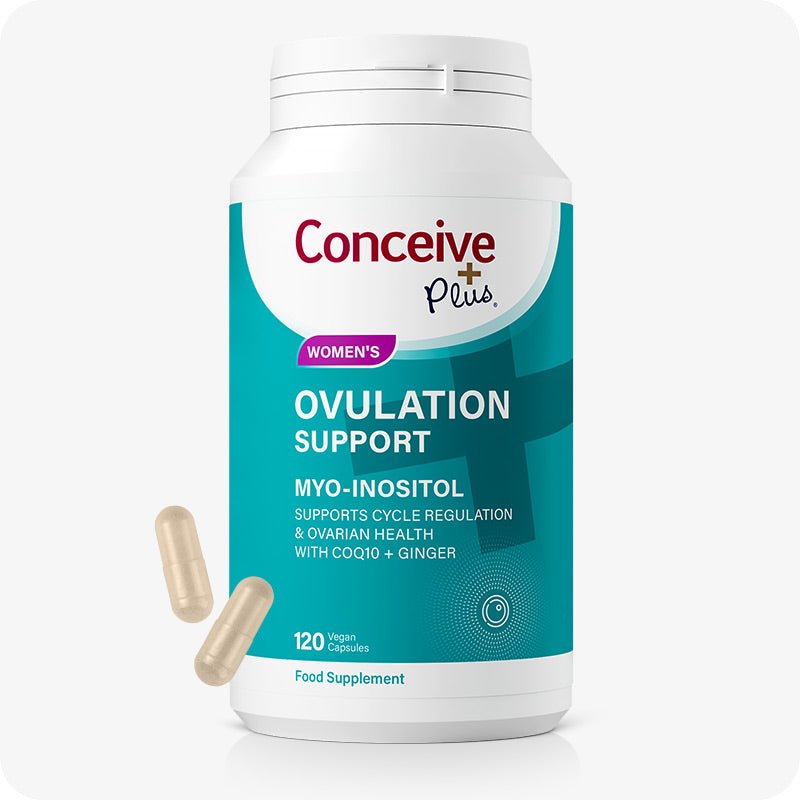
Myo-inositol and D-chiro-inositol deserve mention as having genuine clinical evidence, particularly for women with PCOS. Multiple randomised trials show that inositol supplementation improves insulin sensitivity, ovulation frequency, and hormonal profiles in PCOS. It's increasingly recommended by fertility specialists for this specific condition.
Ready to Take the Next Step?
Conceive Plus products are designed with reproductive science in mind — gentle, effective, and trusted by couples worldwide.
Shop Now →Frequently Asked Questions
How long should I take fertility supplements before trying to conceive?
Most fertility specialists recommend starting preconception supplements at least three months before trying to conceive. This is because eggs take approximately 90 days to mature through their final growth phase (folliculogenesis), and sperm take about 74 days to develop. The supplements you take today will have their maximum impact on reproductive cells that develop over the coming three months. Starting with folic acid early is particularly important, as neural tube closure occurs very early in pregnancy — before most women know they are pregnant.
Should men take fertility supplements too?
Absolutely. Male factor infertility contributes to approximately 40–50% of fertility challenges, and sperm quality is highly responsive to nutritional status. Key supplements for men include zinc, selenium, CoQ10, vitamin C, vitamin E, and folate. These antioxidants protect sperm from oxidative damage during the 74-day development period. Men should start supplementing at least 3 months before trying to conceive.
Are fertility supplements safe?
The supplements with strong clinical evidence — folic acid, vitamin D, omega-3s, zinc, and CoQ10 — are generally very safe at recommended doses. However, fat-soluble vitamins (A, D, E, K) can accumulate to potentially harmful levels if taken in excessive doses. Vitamin A in particular is teratogenic in high doses; preconception supplements should contain beta-carotene (pro-vitamin A) rather than retinol. Always check for interactions with any medications you take and discuss all supplements with your GP or fertility specialist.
Can I get all the fertility nutrients I need from food alone?
In theory, a perfectly balanced diet of varied, nutrient-dense whole foods could provide all necessary fertility nutrients. In practice, this is very difficult to achieve consistently. The UK's food system, soil depletion over decades, and the realities of modern life mean that even health-conscious individuals commonly fall short of optimal levels of vitamin D, folate, omega-3s, and various minerals. A high-quality preconception supplement provides nutritional insurance while you work on improving your diet.
Is a combined preconception supplement better than individual supplements?
For most people, a well-formulated preconception multivitamin/mineral supplement offers the most convenient and cost-effective approach. It ensures you're covering the essential bases without needing to manage multiple separate products. You may want to add specific supplements on top — such as CoQ10 if you're over 35, omega-3 DHA if you don't eat fish, or inositol if you have PCOS — based on your individual circumstances.
My partner and I both have fertility challenges. Will supplements make a difference?
Supplements can meaningfully support fertility, but they're not a substitute for medical investigation and treatment of underlying conditions. If you've been trying for 12 months without success (or 6 months if either partner is over 35), see your GP for a referral to a fertility specialist. Supplements work best as complementary support alongside appropriate medical care, not as a replacement for it.
Does the form of folic acid (folic acid vs methylfolate) matter?
It can. Approximately 40% of people have a variant in the MTHFR gene that reduces their ability to convert synthetic folic acid to its active form (methylfolate). For these individuals, taking methylfolate (5-MTHF) directly is more effective. Many premium preconception supplements now use methylfolate rather than folic acid for this reason. If you've had pregnancy complications related to neural tube defects or have a family history of MTHFR variants, it's worth getting tested and discussing the appropriate form with your GP.
Should I stop taking supplements once I become pregnant?
Most preconception supplements transition naturally into prenatal supplements. Folic acid, vitamin D, omega-3 DHA, and iron are all important throughout pregnancy. However, some supplements that are appropriate preconception may not be studied for safety in pregnancy — CoQ10 at high doses, herbal supplements, and DHEA, for example, should be discussed with your midwife or obstetrician. Your preconception regimen will likely evolve into a pregnancy support regimen rather than stopping entirely.
What about iodine? I don't see it mentioned much.
Iodine is an underappreciated nutrient in UK preconception care. It's essential for thyroid hormone production, and thyroid hormones regulate metabolism, energy, and reproductive hormones. Iodine deficiency in pregnancy is associated with reduced cognitive development in the child. The UK is a mildly iodine-deficient country, and dairy consumption (traditionally the main iodine source in the UK diet) has declined. Women planning pregnancy should ensure adequate iodine intake, either through diet (dairy, seafood) or via a supplement containing at least 150mcg of iodine.
Are more expensive supplements better?
Not necessarily, but quality does matter. Things to look for in a quality fertility supplement include: nutrients in their most bioavailable forms (methylfolate rather than folic acid; magnesium glycinate rather than magnesium oxide; zinc picolinate rather than zinc oxide), absence of unnecessary fillers and allergens, third-party testing for purity and potency, and transparent labelling showing actual doses rather than "proprietary blends." Price is not a perfect proxy for quality, but very cheap supplements often use inferior ingredient forms that are less well absorbed.