Ovulation Calculator: Finding Your Most Fertile Days in 2026


What if the most critical five days of your month aren't the ones you've been circling on your calendar? For many, the journey toward parenthood feels like a race against a clock that's constantly changing its rhythm. If you've felt the sting of a negative test or the exhaustion of counting days, using a precise ovulation calculator can transform your approach from guesswork into a science-backed strategy. It's about more than just numbers; it's about reclaiming a sense of control over your own biology.
We understand that irregular cycles and the fear of missing your fertile window can create a heavy emotional burden. You're looking for clarity in a sea of data and symptoms. This guide will show you how to accurately identify your peak fertility by combining digital tools with the physical signs your body is already sending. We'll explore the latest 2026 insights into cycle tracking, explain why over-the-counter tests are now 99% accurate in detecting the LH surge, and provide a clear roadmap to help you optimize your chances of natural conception.
Key Takeaways
- Learn how an ovulation calculator estimates the release of a mature egg from the ovary, a biological event that typically occurs 12 to 16 days before your next period starts.
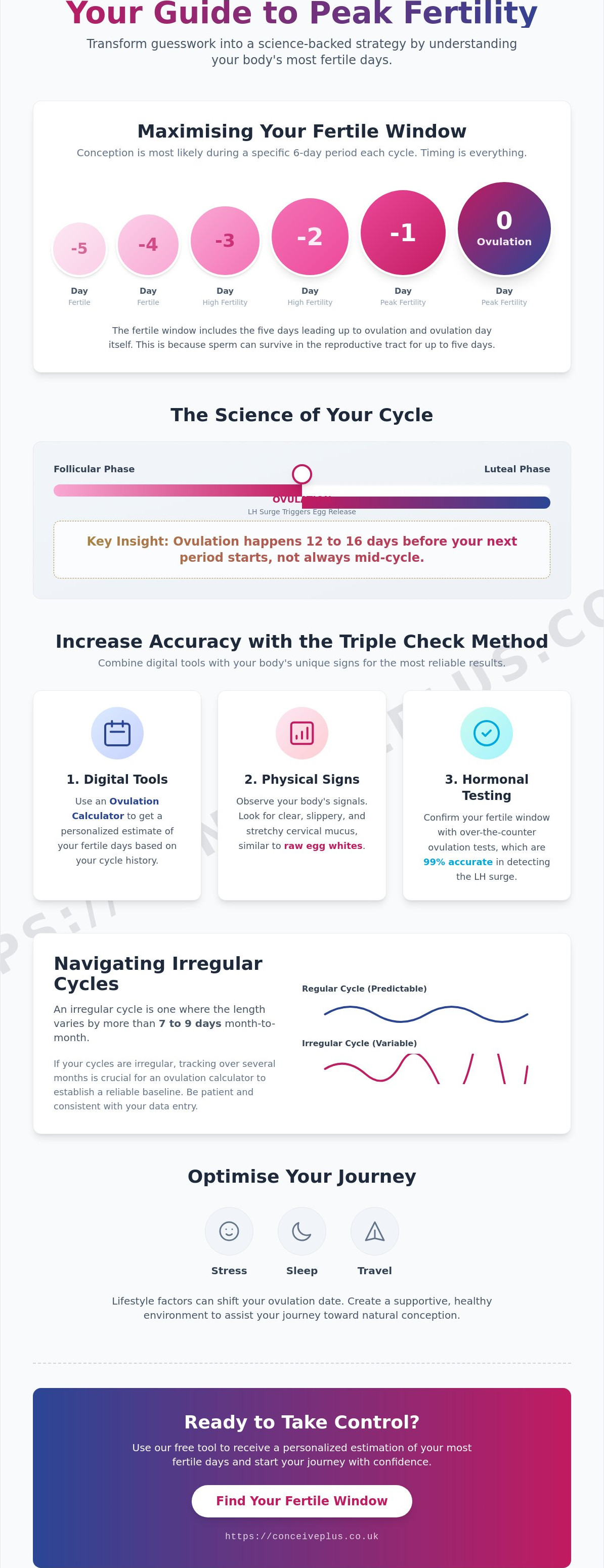
- Discover the Triple Check method to increase tracking accuracy by combining digital tools with your body's unique physical symptoms and biological signs.
- Understand why the five days leading up to ovulation are the most vital for conception and how sperm longevity impacts your timing strategy.
- Find supportive guidance for navigating irregular cycles, especially when your period start dates vary by more than seven to nine days.
- Explore actionable ways to optimize your fertile window by creating a supportive environment that assists your journey toward natural conception.
Understanding the Ovulation Calculator: A Guide to Your Fertile Window
An ovulation calculator serves as a digital compass for your reproductive health, utilizing your personal menstrual history to estimate the specific days when your body is most prepared for conception. Ovulation is the biological process where a mature egg is released from the ovary, which typically occurs between 12 and 16 days before your next period begins. This process is driven by a surge in Luteinising Hormone (LH), a chemical signal that tells the ovary it's time to release the egg. Identifying this moment is vital because the "fertile window" is relatively brief, making precise timing the most influential factor in your journey toward a natural pregnancy. Without this surge, the egg remains in the follicle, so understanding the hormonal triggers is just as important as knowing the dates.
To visualize how these biological shifts happen within your body, watch this helpful video:
The Science of the Menstrual Cycle
Your cycle is divided into two primary stages: the follicular phase and the luteal phase. The follicular phase starts on the first day of your period (Day 1) and lasts until ovulation, while the luteal phase follows immediately after and continues until your next period. Accurately identifying Day 1, the first day of full menstrual flow, is the foundation of effective tracking. Many women use fertility awareness methods to better understand these shifts, as the regularity of your cycle directly impacts how well a digital tool can predict your peak days. If your cycle length varies significantly month to month, the predictive power of any ovulation calculator relies more heavily on consistent data entry over several months to establish a reliable baseline.
How the Calculator Estimates Your Dates
While many textbooks describe a standard 28-day cycle, real-world biology is rarely that uniform. Most calculators use a mathematical algorithm to find the "midpoint" of your cycle as a starting reference, but this is an estimate rather than a clinical guarantee. Factors like stress, sleep, or travel can shift your ovulation date, meaning the window of opportunity might open earlier or later than expected. For a more tailored experience, using the Conceive Plus Ovulation Calculator allows you to input your specific cycle details to receive a personalized estimation of your most fertile days. This personalized approach helps move beyond generic averages, providing a clearer path for your unique conception journey. By comparing your calculated dates with physical symptoms, you create a more complete picture of your fertility.
Identifying Physical Signs of Ovulation Beyond the Calculator
While an ovulation calculator provides an excellent baseline for your journey, your body often provides real-time data that no algorithm can perfectly predict. Every woman's cycle is subject to change based on lifestyle factors like stress, sleep, or travel, meaning a purely mathematical approach might miss the subtle shifts in your unique biological rhythm. To gain the highest level of certainty, we recommend the "Triple Check" method. This approach combines the estimates of an ovulation calculator with observable physical symptoms and hormonal testing. Physical signs are biological confirmations of the mathematical estimates provided by a calculator. By watching for these cues, you can move from a general estimate to a confirmed window of opportunity.
Cervical Mucus Changes
Your body naturally prepares for conception by changing the environment of the reproductive tract. As oestrogen levels rise in the days leading up to the egg's release, they signal the cervix to produce fluid that supports sperm transport and longevity. This specific discharge, often called "egg-white" cervical mucus (EWCM), is clear, slippery, and stretchy. It feels similar to raw egg whites and is a primary indicator of high fertility. In contrast, non-fertile discharge is typically thick, white, or sticky, which serves to protect the uterus by acting as a barrier. Tracking these changes daily helps you identify exactly when your fertile window is opening.
Basal Body Temperature (BBT) and LH Surges
Hormonal shifts also affect your resting metabolism and urine chemistry. Basal Body Temperature (BBT) tracking involves using a highly sensitive thermometer to record your temperature immediately upon waking, before any physical activity. A slight, sustained rise of about 0.2 to 0.5 degrees Celsius confirms that ovulation has already occurred. While BBT is a retrospective tool, Ovulation Predictor Kits (OPKs) provide a proactive "final call" by detecting the Luteinising Hormone (LH) surge in your urine. This surge typically happens 24 to 48 hours before the egg is released, giving you a clear signal to prioritize intercourse. For those looking to support their body's natural processes during this time, incorporating fertility-friendly support can help create a more receptive environment for conception.
Combining these three data points—calculator dates, mucus consistency, and hormonal tests—removes the anxiety of "missing the day." It allows you to trust the science while remaining in tune with your body’s unique voice, ensuring you feel empowered rather than overwhelmed by the numbers.
Maximising Your 'Fertile Window': The 6-Day Concept
Understanding the timing of your cycle is one thing, but knowing how to act on that data is where the real transformation happens. While an ovulation calculator helps you pinpoint the day an egg is released, the actual opportunity for conception spans a six-day period known as the fertile window. This window includes the five days leading up to ovulation and the day of ovulation itself. This biological grace period exists because of a significant difference in lifespan between the two reproductive cells: while a released egg only survives for 12 to 24 hours, healthy sperm can live within the female reproductive tract for up to five days. This means the days leading up to the egg's release are often more critical than the day after.
For the best chance of success, Understanding Your Fertile Window requires a shift in perspective. Instead of waiting for a positive test result to begin trying, clinical evidence suggests that having intercourse every one to two days throughout these six days is optimal. This strategy ensures that a "waiting party" of sperm is already present in the fallopian tubes the moment the egg is released. It removes the stress of having to be perfectly precise on a single afternoon, offering a more relaxed and sustainable approach to conception.
Sperm Survival and the Fertile Window
The success of this six-day window relies heavily on the quality of the vaginal environment. During your most fertile days, your body naturally shifts its pH balance to become more alkaline, which protects sperm from the usually acidic vaginal canal. This shift is essential for maintaining sperm motility, which is their ability to swim effectively toward the egg. If the environment is too harsh, sperm survival rates drop significantly, even during your peak days. You can explore our essential guide to sperm-friendly support to learn how to optimize these conditions and ensure the best possible environment for your journey.
Peak Fertility vs. High Fertility
It's helpful to distinguish between "High" and "Peak" fertility days when using an ovulation calculator. High fertility refers to the early days of your window when oestrogen is rising, while Peak fertility covers the two days of the LH surge and the day of ovulation itself. While Peak days offer the highest statistical probability, High fertility days are equally important building blocks for success. We recognize that "Peak" days can sometimes bring unwanted emotional pressure or performance anxiety for couples. By focusing on the entire six-day window, you can maintain intimacy and connection without feeling like your relationship is governed solely by a calendar. This holistic view fosters a sense of partnership and shared hope throughout the process.
Navigating Irregular Cycles and Tracking Challenges
Managing an irregular cycle can feel like trying to solve a puzzle with moving pieces. In a clinical context, a cycle is considered irregular when the variation between your shortest and longest cycle is more than seven to nine days. Common factors like Polycystic Ovary Syndrome (PCOS) or high levels of cortisol from chronic stress often disrupt the hormonal dialogue between the brain and the ovaries, leading to unpredictable timing. Because of these fluctuations, an ovulation calculator requires at least three months of consistent data to establish a reliable average and identify your unique patterns. If cycles are consistently outside the 21–35 day range, professional consultation is recommended.
Accuracy Limitations of Digital Tools
It's helpful to remember that digital calculators are primarily estimators rather than detectors. They predict based on past behavior, but they cannot see what is happening inside your body in real time. This leads to a risk of "late ovulation," where the egg is released days after the calculator predicted. In some cases, you might experience "silent" ovulation, where physical signs are subtle or absent despite a calculator's prediction. If you rely solely on an app, you might stop trying just as your window is actually opening. To confirm if your tracking and timing were successful, using a high-quality pregnancy test about two weeks after your suspected ovulation provides the definitive biological answer you need.
Support for Irregular Ovulation
The journey toward a more predictable fertile window often starts with targeted nutritional support and lifestyle adjustments. Clinical research highlights the role of Myo-Inositol and Folic Acid in improving insulin sensitivity and promoting regular egg release, particularly for those with hormonal imbalances. Establishing a consistent sleep routine and reducing inflammatory triggers can also help stabilize your cycle over time. For those managing specific challenges like PCOS, our PCOS Support Vitamins are formulated with these key ingredients to assist in restoring cycle regularity and supporting overall reproductive health.
Taking proactive steps to understand your cycle is a powerful act of self-care that builds confidence. You can explore our full range of fertility-focused solutions to find the right support for your unique path. By combining expert-led products with a deeper understanding of your body's signals, you create a more resilient and informed approach to your conception goals.
From Tracking to Conception: Optimising Your Fertile Days
Once your ovulation calculator has pinpointed your fertile window, your focus shifts from gathering data to taking intentional action. Identifying these dates is a vital first step, but success often depends on what happens within those specific days. You're moving from a phase of passive tracking into a period of active conception support, where the goal is to create the most receptive biological environment possible. This transition requires a balance of scientific precision and gentle self-care, treating your body with the respect and expertise it deserves. It's about ensuring that every factor, from your internal nutrition to the physical environment, is aligned with your goal.
Creating a Sperm-Friendly Environment
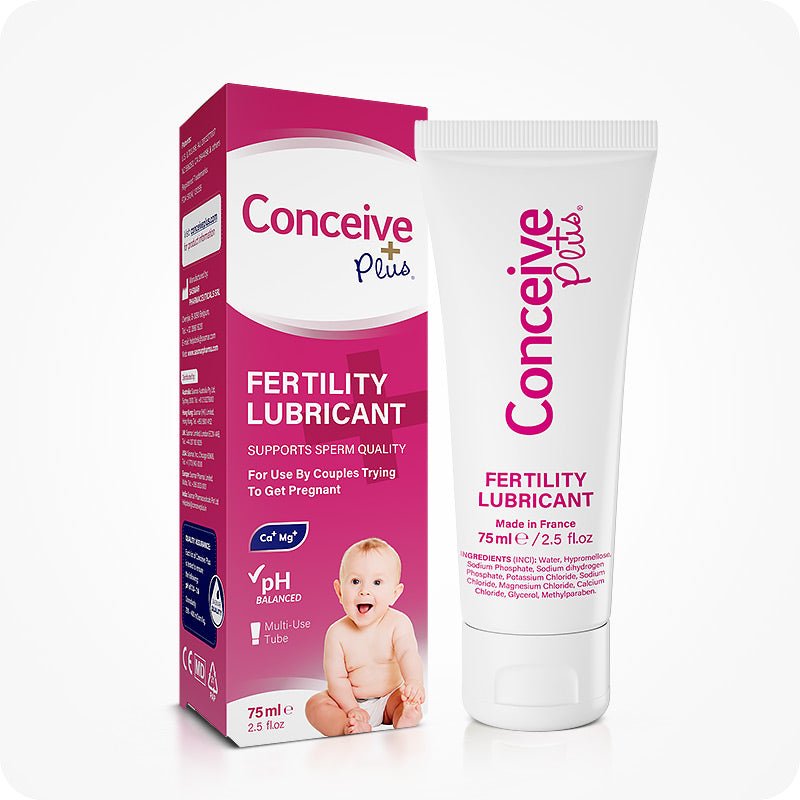
Many couples don't realize that standard personal lubricants can actually hinder their progress. Most everyday products have a low pH and high osmolality, which can act as a chemical barrier that slows down or even damages sperm. Using Conceive Plus Fertility Lubricant during your fertile days provides a solution that mimics your body's natural fluids. This specialized lubricant includes essential calcium and magnesium ions, which are scientifically recognized for their role in supporting sperm viability and motility. By choosing a formula specifically designed for conception, you ensure that your efforts during the peak window are fully supported rather than accidentally obstructed.
Targeted Nutritional Support for Ovulation
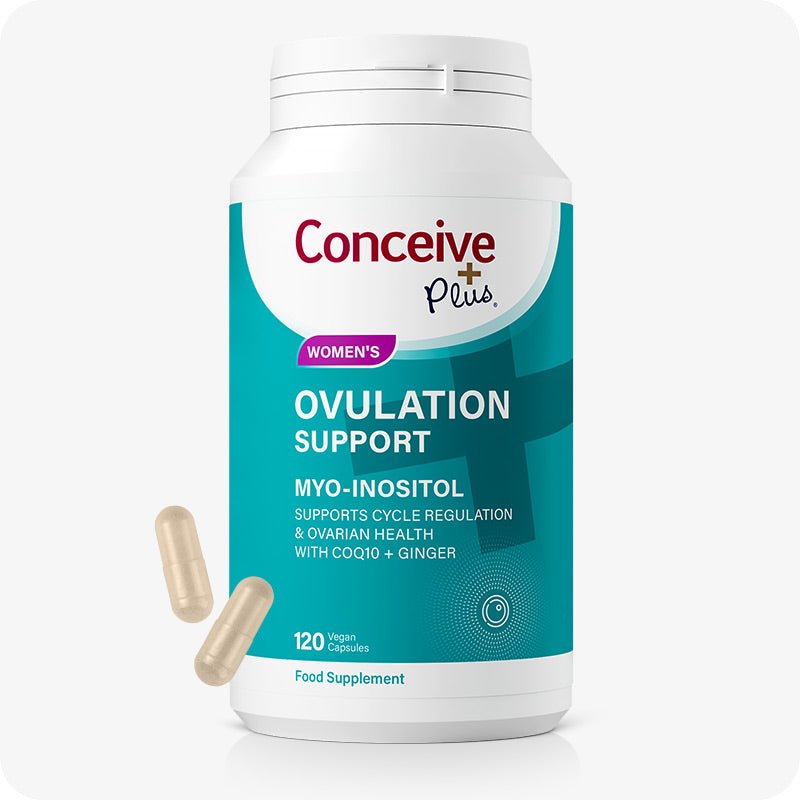
Preparation for your calculated fertile days should also include internal support. There's a direct link between specific micronutrients and egg quality during the follicular phase, which is the critical time leading up to the egg's release. Optimizing this environment is a shared journey, so it's highly beneficial when both partners consider Fertility Support Bundles to enhance their overall reproductive health together. Additionally, incorporating Ovulation Support Supplements can help prepare your body for the specific dates your ovulation calculator has identified. This proactive approach ensures that when the window opens, your body is nutritionally primed for the best possible outcome.
Adopting a "Compassionate Expert" mindset means trusting the tools you've used while remaining patient with the process. It's about being informed without being overwhelmed by the pressure of a single day. By combining the data from your tracking with active environmental and nutritional support, you're giving your body a resilient foundation for natural conception. This journey is a partnership between you and your biology, and every small, supportive step brings you closer to your goal with confidence and clarity.
Empowering Your Path to Parenthood
You've moved from the confusion of day-counting to a clear understanding of your body's biological signals. By combining the data from an ovulation calculator with physical cues like cervical mucus and LH surges, you've established a reliable "Triple Check" for your cycle. You now know that the lead-up to ovulation is just as vital as the day itself, and that supporting your body with the right environment can make all the difference. It's about turning knowledge into a supportive partner for your fertility goals.
Since 2008, millions of couples have relied on our expertise to guide their journey. Our patented formula with essential ions is recommended by fertility clinics worldwide because it respects the delicate science of human conception. You're not just tracking dates; you're optimizing every possible factor for success. Use the Conceive Plus Ovulation Calculator to find your fertile window today and move forward with clinical confidence and compassionate support. Your goal is within reach, and we're here to walk beside you every step of the way.
Frequently Asked Questions
How accurate are ovulation calculators if I have a 28-day cycle?
An ovulation calculator is highly effective for those with a consistent 28-day cycle because it aligns with the standard mathematical model of human reproduction. It provides a reliable baseline by estimating that ovulation occurs on Day 14. While this is a strong starting point, it's still a prediction rather than a biological confirmation. Your body may still shift its timing due to minor lifestyle changes, so we recommend using the calculator alongside physical signs for the most certain results.
Can I get pregnant if I have intercourse the day after the calculator says I ovulated?
Conception is less likely but still possible the day after your predicted ovulation. Since a released egg can survive for up to 24 hours, intercourse within this timeframe might still lead to success if the egg was released late in the previous day. However, your peak fertility window usually closes quickly once the egg begins to break down. Focusing your efforts on the days leading up to ovulation remains the most effective strategy for natural conception.
Why does my ovulation calculator date keep changing every month?
Your calculator dates change because the tool is designed to adapt to the actual length of your previous cycles. Most women experience slight variations in their cycle length from month to month, and the ovulation calculator uses this new data to refine its next prediction. This flexibility is actually a benefit; it ensures the tool isn't stuck on a generic 28-day average that doesn't reflect your body's current rhythm.
What is the best time of day to use an ovulation predictor kit alongside a calculator?
The most effective time to use an ovulation predictor kit is typically between 10:00 AM and 8:00 PM. Unlike pregnancy tests that require first morning urine, Luteinising Hormone (LH) is usually synthesized in the morning and takes several hours to appear in your urine. Testing twice a day, once in the late morning and once in the early evening, can help you catch a short LH surge that a single test might miss.
Can stress cause the ovulation calculator to be wrong?
Stress can impact the accuracy of an ovulation calculator by delaying your body's hormonal triggers. When you're under significant pressure, your brain may postpone the LH surge that causes the egg to be released, effectively pushing your fertile window back. Since a calculator relies on historical data, it won't know your cycle is delayed until after the fact. This is why tracking physical symptoms is a vital backup during stressful months.
Does an ovulation calculator work for women with PCOS?
Calculators are often less reliable for women with PCOS due to the frequent cycle irregularities associated with the condition. PCOS can cause multiple LH surges where the body tries to ovulate but doesn't succeed, which can confuse digital tools and testing kits. While a calculator can still help you track your cycle history, we suggest using it as part of a broader fertility plan that includes targeted nutritional support to help encourage more regular ovulation.
How many days after my period ends should I start using the calculator?
You should begin using the calculator as soon as your period starts, as the first day of full flow is considered Day 1 of your cycle. Accurately recording this start date allows the tool to calculate the length of your follicular phase and predict your upcoming fertile window. Most tools will then advise you to begin more intensive tracking or testing around Day 10 or 11, depending on your average cycle length.
Is it possible to ovulate twice in one menstrual cycle?
It's not possible to have two separate ovulation events at different times in a single cycle. While hyperovulation can occur, where two or more eggs are released, this happens within the same 24-hour window. Once ovulation is complete, the rise in progesterone prevents any further eggs from being released until the next cycle begins. Any feelings of "double ovulation" are usually related to different physical symptoms occurring at various stages of the luteal phase.