Ovulation Tracking: The Complete Guide to Knowing Your Fertile Window


Ovulation Tracking: The Complete Guide to Knowing Your Fertile Window
Ovulation tracking is one of the most powerful tools available to couples trying to conceive. By identifying the precise fertile window in each menstrual cycle, you dramatically increase your chances of conception — regardless of whether you've been TTC for one month or one year. This comprehensive guide covers every ovulation tracking method available, how to interpret the data, and how to maximise your fertile window once you've found it.
The basic biology: every cycle, one egg is released from the ovary and remains viable for just 12–24 hours. However, sperm can survive in fertile cervical mucus for up to 5 days, meaning the true fertile window spans approximately 5–6 days ending at ovulation. Ovulation tracking helps you identify this window with precision — and precision is everything when trying to conceive.
Why Ovulation Tracking Makes Such a Difference
Many couples underestimate the importance of timing. Research published in Human Reproduction found that couples who accurately identified their fertile window and timed intercourse accordingly had conception rates up to 3× higher than those who relied on calendar-based estimates alone.
The problem with the "day 14" assumption: textbooks teach us that ovulation occurs on day 14 of a 28-day cycle. In reality, research shows that fewer than 30% of women ovulate on day 14. Ovulation can occur anywhere from day 10 to day 22 — even in women with seemingly regular cycles. This variability is why ovulation tracking is so valuable.
Ovulation tracking matters because:
- It removes guesswork from the most critical phase of your cycle
- It reveals cycle irregularities that might otherwise go unnoticed
- It reduces the stress of wondering "are we timing this right?"
- It provides data your GP or fertility specialist can use if you need further investigation
- It empowers you with knowledge about your own body's rhythms
Method 1: Ovulation Predictor Kits (OPKs) — The Most Popular Ovulation Tracking Tool
Ready to give your TTC journey every advantage? Conceive Plus products are clinically formulated for conception. Shop Conceive Plus now →
Ovulation predictor kits (OPKs) work by detecting the luteinising hormone (LH) surge that triggers ovulation. LH rises sharply 24–48 hours before ovulation, making it an excellent early-warning signal for your fertile window.
How to use OPKs for accurate ovulation tracking:
- Begin testing from day 10 of your cycle (or earlier if your cycles are short)
- Test at the same time each day — afternoon (between 2 PM and 6 PM) tends to capture the LH surge most reliably
- Avoid drinking large amounts of fluid for 2 hours before testing, as dilute urine can affect readings
- A positive result (test line as dark or darker than the control) indicates your LH surge — ovulation typically follows within 12–36 hours
- Plan to have intercourse on the day of the positive result and the day after
Types of OPKs:
- Standard line OPKs: Most affordable; results require interpretation (test line vs control line comparison). Brands like Wondfo and One Step are popular for cost-effective daily testing
- Digital OPKs: Display a clear "peak" or "high" fertility indicator — eliminates ambiguity. Clearblue Digital is widely trusted in the UK
- Dual-hormone digital OPKs: Detect both estrogen (rising before LH) and LH, providing a longer fertile window indication — typically 4 days of "high" fertility followed by 1–2 days of "peak" fertility. The Clearblue Advanced Digital Ovulation Test is the gold standard in this category
Method 2: Basal Body Temperature (BBT) Charting
Basal body temperature (BBT) is your resting temperature measured first thing in the morning before any activity. After ovulation, rising progesterone causes a sustained temperature rise of 0.2–0.5°C — a hallmark of the post-ovulatory phase.
How BBT ovulation tracking works:
- Take your temperature each morning at the same time before getting out of bed or speaking
- Use a thermometer accurate to two decimal places (0.01°C)
- Record readings in a chart or app daily
- Look for a sustained rise of at least 0.2°C above your pre-ovulatory average, maintained for at least 3 days — this confirms ovulation has occurred
Important limitation: BBT confirms ovulation after it has occurred — meaning it's retrospective data. For TTC purposes, BBT is most useful for:
- Identifying your typical ovulation day over several cycles so you can better predict future fertile windows
- Confirming that ovulation is actually occurring each cycle
- Assessing the length of your luteal phase (the phase after ovulation; ideally 12–16 days)
Combine BBT with OPKs for the most comprehensive ovulation tracking picture: OPKs alert you that ovulation is coming, while BBT confirms it happened.
Method 3: Cervical Mucus Monitoring
Cervical mucus changes throughout the menstrual cycle under the influence of oestrogen and progesterone. Learning to read these changes is a free and highly informative method of ovulation tracking.
What to look for:
- After period: Dry or minimal discharge — low fertility
- Pre-ovulation: Sticky, white, or cloudy mucus — lower fertility
- Approaching ovulation: Creamy, lotion-like mucus — increasing fertility
- Peak fertile days: Clear, stretchy, raw egg-white consistency (EWCM — egg white cervical mucus) — highest fertility; sperm survival is maximised in EWCM
- Post-ovulation: Returns to sticky or dry — fertility declining
The presence of egg-white cervical mucus is one of the most reliable signs of peak fertility. Many women who master cervical mucus observation find they can predict their fertile window within a day or two without any equipment at all.
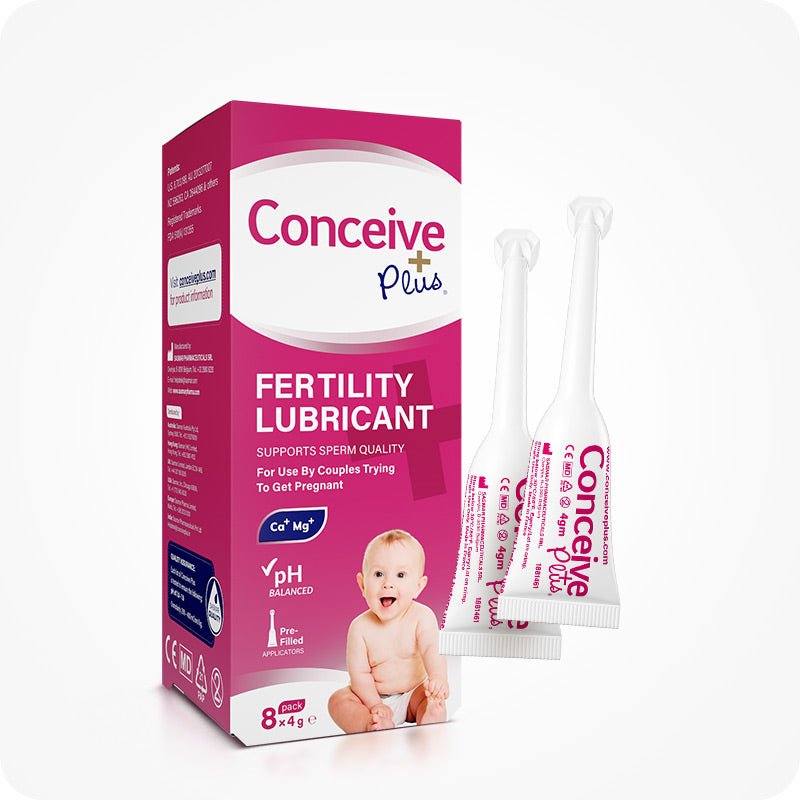
Note: Factors like hormonal contraceptives (in the months after stopping), certain medications, and low oestrogen can disrupt cervical mucus production. Using a fertility-friendly lubricant like Conceive Plus can help if cervical mucus quality or quantity is insufficient, without harming sperm.
Method 4: Wearable Fertility Monitors
Advanced wearable devices are revolutionising ovulation tracking for women who want continuous, algorithmic cycle intelligence:
OvuSense: A vaginal probe worn overnight that measures core body temperature throughout the night (not just a single morning reading). Its algorithm interprets the data to predict ovulation 24 hours in advance and confirm it. Studies show 99% accuracy in ovulation confirmation. Particularly valuable for women with PCOS or irregular cycles.
Natural Cycles: An FDA-cleared app that pairs with a dedicated BBT thermometer and uses an algorithm to classify days as red (fertile) or green (not fertile). Initially developed as a contraceptive method, it's equally used for conception planning.
Tempdrop: A wearable armband that measures temperature continuously overnight. Its algorithm learns your unique physiological patterns and provides retrospective ovulation confirmation. Excellent for women who can't take their temperature at a consistent time each morning.
Clearblue Connected Fertility Monitor: Analyses urinary LH and oestrogen to identify up to 6 fertile days per cycle. The Connected version syncs with a smartphone app for easy data management.
Method 5: Hormone Testing and Ultrasound Monitoring
For women working with a fertility clinic or GP, more precise ovulation tracking methods are available:
Blood hormone testing: A day 21 progesterone test (or 7 days post-ovulation if cycles are longer) confirms whether ovulation occurred in the preceding cycle. FSH, LH, and oestradiol tested on day 2–3 of the cycle assess ovarian reserve and baseline hormonal environment.
Follicular tracking ultrasound (follicle scan): A transvaginal ultrasound performed several times during the follicular phase monitors the growth of follicles. When the dominant follicle reaches approximately 18–22mm, ovulation is imminent. This is the most precise form of ovulation tracking and is routinely used in medicated and IUI cycles.
How to Combine Methods for Optimal Ovulation Tracking
The most accurate ovulation tracking approach combines multiple methods:
- Use OPKs from day 10 onwards (or earlier for shorter cycles) to catch the LH surge
- Monitor cervical mucus daily to add a second independent sign of approaching ovulation
- Chart BBT each morning to confirm ovulation occurred and assess luteal phase length
- Log everything in an app — Fertility Friend, Clue, or Ovia provide excellent charting interfaces and pattern recognition
When OPK turns positive AND you observe egg-white cervical mucus, that's your signal: intercourse today and tomorrow gives you the highest probability of conception.
Maximising Your Fertile Window Once Found
Identifying your fertile window through ovulation tracking is step one. Step two is making the most of it:
Intercourse timing:
- Have intercourse every 1–2 days throughout the fertile window (2–3 days before ovulation through the day of ovulation)
- Daily intercourse during the fertile window is also effective and doesn't harm sperm counts in men with normal parameters
- Don't skip the days before ovulation — sperm waiting in the fallopian tubes on the day of ovulation has excellent outcomes
Support sperm survival with the right lubricant:
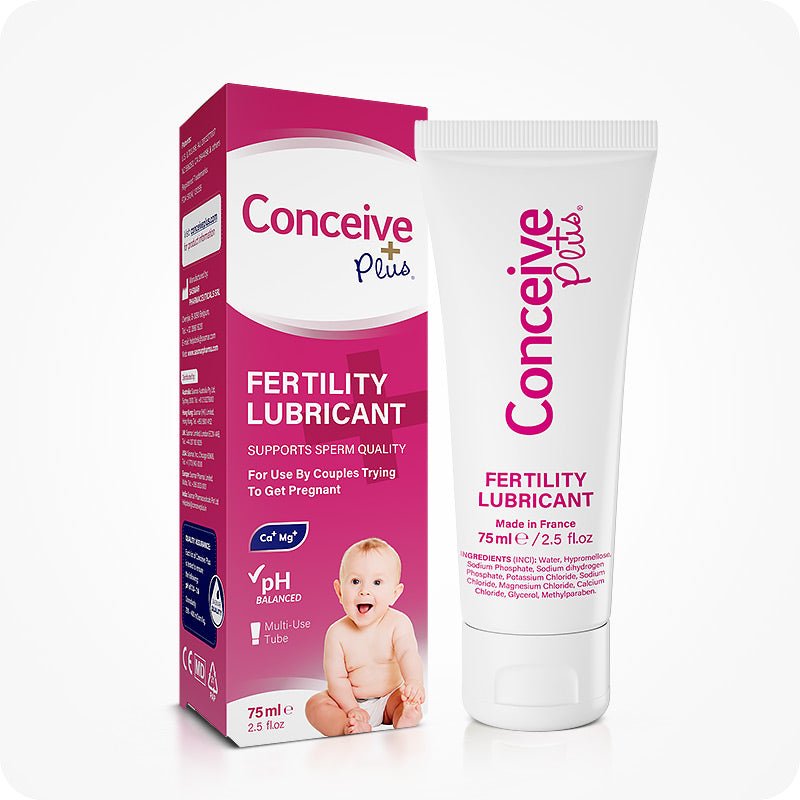
If you use lubrication during intercourse, this is critical: most lubricants significantly damage sperm. Conceive Plus fertility lubricant is the only lubricant formulated with the calcium and magnesium ions naturally present in cervical mucus — making it the ideal complement to your ovulation tracking efforts. While you're working hard to time intercourse perfectly, don't let the wrong lubricant undermine it.
Post-intercourse:
There's no evidence that lying flat for any specific period after intercourse improves conception rates, though many couples feel better doing so. What matters far more is the timing and the health of sperm and egg.
Special Considerations: Ovulation Tracking with Irregular Cycles
Irregular cycles make calendar-based prediction unreliable — but they make ovulation tracking even more valuable, not less. Women with irregular cycles (PCOS, thyroid issues, perimenopause, or post-contraceptive hormonal fluctuation) should:
- Test with OPKs for a longer window — potentially from day 8 until ovulation is detected
- Consider LH strip tests over digital OPKs for longer-duration monitoring (more cost-effective)
- Track BBT to identify ovulation retrospectively and build a picture across cycles
- Consult a GP or fertility specialist if cycles are consistently longer than 35 days or shorter than 21 days, as anovulation (not ovulating) may be a factor
Inositol supplementation has good evidence for improving ovulation regularity in women with PCOS. Conceive Plus women's fertility supplements include myo-inositol as a key ingredient for this reason.
Frequently Asked Questions About Ovulation Tracking
Q: How long does it take to conceive once I start ovulation tracking?
A: For most couples under 35 with no underlying fertility issues, conception occurs within 6 cycles of accurate ovulation tracking and well-timed intercourse. Age and individual fertility factors influence this timeline significantly.
Q: Can I get pregnant without tracking ovulation?
A: Yes, many people conceive without formal tracking — particularly those with very regular cycles who happen to time intercourse near ovulation by chance. However, tracking dramatically improves efficiency, especially if you've been TTC for several months without success.
Q: Is it normal for OPKs to show multiple peaks in one cycle?
A: Some women — particularly those with PCOS — show multiple LH surges as the body attempts to ovulate, sometimes successfully and sometimes not. If you consistently see multiple peaks without a clear BBT rise, it's worth investigating with a GP.
Q: How do I know if I'm actually ovulating and not just getting LH surges?
A: BBT charting is your best home confirmation: a sustained rise of 0.2°C+ above your pre-ovulatory baseline, maintained for 3+ days, indicates ovulation occurred. A day 21 blood progesterone test (or 7 days post-OPK peak) is the most reliable medical confirmation.
Q: Does stress affect ovulation?
A: Yes — significant physical or psychological stress can delay or suppress ovulation by disrupting the hormonal signals between the brain and ovaries. This is one reason cycles often become irregular during periods of high stress. If you notice your cycles becoming less predictable, it's worth reviewing stress levels alongside any physical causes.
Q: Can I do ovulation tracking while breastfeeding?
A: Breastfeeding suppresses ovulation in many women (lactational amenorrhea). If you're breastfeeding and have resumed periods, ovulation tracking can work, but cycles may be irregular initially. If you haven't had a period and are relying on breastfeeding for contraception, know that this protection decreases as breastfeeding frequency drops.
Q: What's the best app for ovulation tracking in the UK?
A: Fertility Friend (comprehensive charting), Natural Cycles (FDA/CE cleared algorithm), Clue (excellent period and symptom tracking), and Ovia Fertility (integrates OPK and BBT data) are all highly regarded. Natural Cycles has UK CE clearance as a fertility awareness method.
Q: Should I use OPKs or a fertility monitor?
A: OPKs are sufficient for most women with regular cycles. Fertility monitors like the Clearblue Connected provide a longer fertile window detection (6 days vs 2 days) and are particularly helpful for women whose cycles are longer or irregular, or who want more data without the interpretation effort of line-reading OPKs.
Q: How does cervical position factor into ovulation tracking?
A: Some women incorporate cervical position checks (high, soft, open cervix indicates fertility; low, firm, closed indicates non-fertile phase) into their tracking practice. While it requires some practice to assess reliably, it adds another confirmatory sign to combine with OPKs and BBT.
Q: If I had a positive OPK, when should I have intercourse?
A: Immediately — the day of the positive OPK and the following day are your two highest-probability days. If you also noticed egg-white cervical mucus, that further confirms peak fertility. Don't wait for a second positive OPK — timing is the priority.
Conclusion: Ovulation Tracking Is Your Fertility Superpower
Ovulation tracking transforms trying to conceive from an uncertain, stressful experience into an informed, empowering one. Whether you choose OPKs, BBT charting, cervical mucus monitoring, or a combination of all three, the data you gather each cycle brings you closer to understanding your body and maximising your conception chances.
Pair your ovulation tracking with a fertility-friendly lubricant to ensure that when you're having well-timed intercourse, every physiological factor is working in your favour. Conceive Plus lubricant is formulated to support sperm survival in the same conditions that fertile cervical mucus creates — making it the ideal complement to your ovulation tracking practice.
Conceive Plus products are available across the UK and are trusted by couples at every stage of the TTC journey. From lubricants to supplements to educational resources, Conceive Plus is designed to support you from the very first day you decide to try.
Ready to give your TTC journey every advantage? Conceive Plus products are clinically formulated for conception. Shop Conceive Plus now →