Ovulation Tracking: The Complete Guide for Women Trying to Conceive


Ovulation Tracking: The Complete Guide for Women Trying to Conceive
Understanding your cycle is one of the most powerful steps you can take when trying to conceive. Effective ovulation tracking can significantly boost your chances by identifying the precise window when conception is possible. This comprehensive guide covers every method available — from simple temperature charting to advanced hormone monitors — and explains how Conceive Plus supports healthy ovulation from within.
Why Ovulation Tracking Matters for Conception
An egg is viable for just 12–24 hours after ovulation. Sperm, however, can survive in the female reproductive tract for 3–5 days. This means your fertile window is approximately 5–6 days per cycle — the 5 days before ovulation and the day of ovulation itself.
Research from the National Institute of Environmental Health Sciences (NIEHS) found that couples who correctly identified and timed intercourse around their fertile window had pregnancy rates of 33–36% per cycle — nearly three times higher than those using no tracking method.
Without ovulation tracking, most couples estimate their fertile window incorrectly by an average of 3–5 days, significantly reducing their per-cycle conception odds.
Method 1: Basal Body Temperature (BBT) Charting
Ready to take the next step in your fertility journey?
Shop Conceive Plus →Your basal body temperature rises by approximately 0.2–0.5°C after ovulation due to the thermogenic effect of progesterone. By charting your temperature each morning (before getting out of bed), you can confirm that ovulation has occurred.
How to do it:
- Take your temperature at the same time each morning, ideally after 3–4 hours of uninterrupted sleep
- Use a basal thermometer (reads to 0.1°C accuracy)
- Record temperatures in an app or on paper for at least 2–3 cycles
- Look for the sustained rise of at least 0.2°C that persists for 3+ days
Limitation: BBT confirms ovulation after the fact — the best intercourse timing has already passed. Use it alongside predictive methods for maximum benefit.
Method 2: Cervical Mucus Monitoring
Under oestrogen influence in the days approaching ovulation, cervical mucus becomes increasingly fluid, clear, and stretchy — often described as resembling raw egg whites. This "fertile quality" mucus acts as a sperm transport medium, allowing sperm to survive and swim toward the fallopian tubes.
Progression through your cycle:
- Post-period (dry phase): Little or no mucus; hostile to sperm
- Pre-ovulatory: Sticky, cloudy, white or yellow — low fertility
- Peak fertile: Clear, slippery, stretchy (spinnbarkeit) — egg-white consistency; highest fertility
- Post-ovulatory: Returns to sticky/dry under progesterone influence
Studies show that the Creighton Model (cervical mucus tracking) achieves pregnancy rates comparable to OPK-based timing when used consistently and correctly.
Method 3: Ovulation Predictor Kits (OPKs)
LH-based ovulation tests detect the hormonal surge that triggers egg release 24–36 hours before ovulation. This is the most accurate at-home predictive method currently available.
Types available in the UK:
- Urine strip tests (e.g., Femometer, Easy@Home) — economical, effective
- Digital single-hormone tests (e.g., Clearblue Digital) — clear smiley face result
- Dual-hormone digital monitors (e.g., Clearblue Advanced, Mira) — track both oestrogen and LH for a broader fertile window
For women with irregular cycles or PCOS, dual-hormone monitors are significantly more reliable than single-threshold LH strips.
Method 4: Wearable Ovulation Trackers
Modern wearables such as the Oura Ring, Ava bracelet, and Apple Watch (with Tempdrop sensors) track multiple physiological parameters — resting heart rate, skin temperature, respiratory rate, heart rate variability — and use algorithms to predict and confirm ovulation.
A 2020 clinical validation study of the Ava bracelet found it correctly identified 5.3 fertile days per cycle with 89% accuracy in detecting peak fertility — substantially better than calendar-only methods.
Method 5: Combining Methods for Maximum Accuracy
No single method is perfect for every woman. The highest conception rates come from combining complementary approaches:
- Use a cycle app (such as Flo, Clue, or Natural Cycles) to track cycle length and predict your fertile window
- Begin OPK testing from the predicted start of your fertile window
- Monitor cervical mucus as a secondary real-time indicator
- Confirm with BBT to verify ovulation occurred and refine your predictions
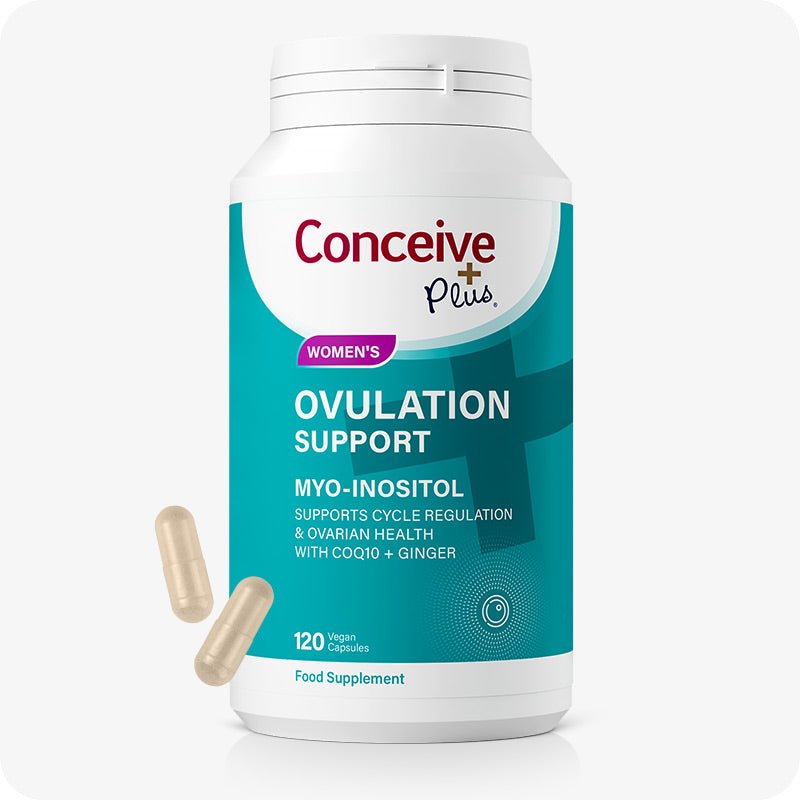
Accurate ovulation tracking tells you when you're fertile — but healthy ovulation depends on hormonal balance from within. Conceive Plus Ovulation Support contains Myo-Inositol, D-Chiro Inositol, folate, and vitamin D to support regular, healthy ovulation. Trusted by thousands of women across the UK.
Shop Conceive Plus Ovulation Support →
Ovulation Tracking with Irregular Cycles
If your cycles vary by more than 7 days, calendar and app-based predictions become less reliable. For irregular cycles, the following adaptations are recommended:
- Start OPK testing earlier: Begin on day 6–8 regardless of expected cycle length
- Test twice daily: LH surges can be brief; once-daily testing misses up to 8% of surges
- Use a quantitative monitor: Devices like Mira measure actual hormone concentrations, letting you see whether LH is rising, peaking, or falling
- Consider inositol supplementation: Myo-Inositol has clinical evidence for restoring more regular ovulation cycles, particularly in PCOS
Signs That Ovulation Is Approaching
Your body provides physical signals that ovulation is near. Learning to recognise them adds an extra layer to your ovulation tracking practice:
- Increased libido: Oestrogen naturally boosts desire around ovulation — evolution's way of promoting conception
- Mittelschmerz: A brief, one-sided twinge or cramp in the lower abdomen as the follicle releases the egg (experienced by ~20% of women)
- Breast tenderness: Can begin around ovulation due to hormonal shifts
- Bloating: Oestrogen causes water retention around the mid-cycle peak
- Heightened senses: Some women report sharper smell and taste perception at ovulation
- Lighter spotting: A small amount of mid-cycle spotting is normal in some women
Nutrients That Support Healthy Ovulation
Effective ovulation tracking is only part of the equation — the quality of ovulation itself matters. Key nutrients known to support ovulatory function include:
Myo-Inositol (4,000 mg/day)
Improves FSH receptor sensitivity, insulin signalling, and ovulation frequency. Multiple meta-analyses confirm benefits particularly for PCOS-related anovulation.
D-Chiro Inositol (100 mg/day)
At the 40:1 Myo:DCI ratio, reduces androgens and improves ovulation quality in clinical trials.
Methylfolate (400–800 mcg/day)
Essential for DNA synthesis in the maturing follicle and for preventing neural tube defects — should be started at least 3 months before conception.
Vitamin D3 (1,000–2,000 IU/day)
UK studies show widespread vitamin D deficiency, particularly in winter months. Deficiency is linked to anovulation and reduced IVF success rates.
CoQ10 (200–600 mg/day)
Ubiquinol form preferred. Supports mitochondrial energy production in developing eggs — particularly important for women over 35.
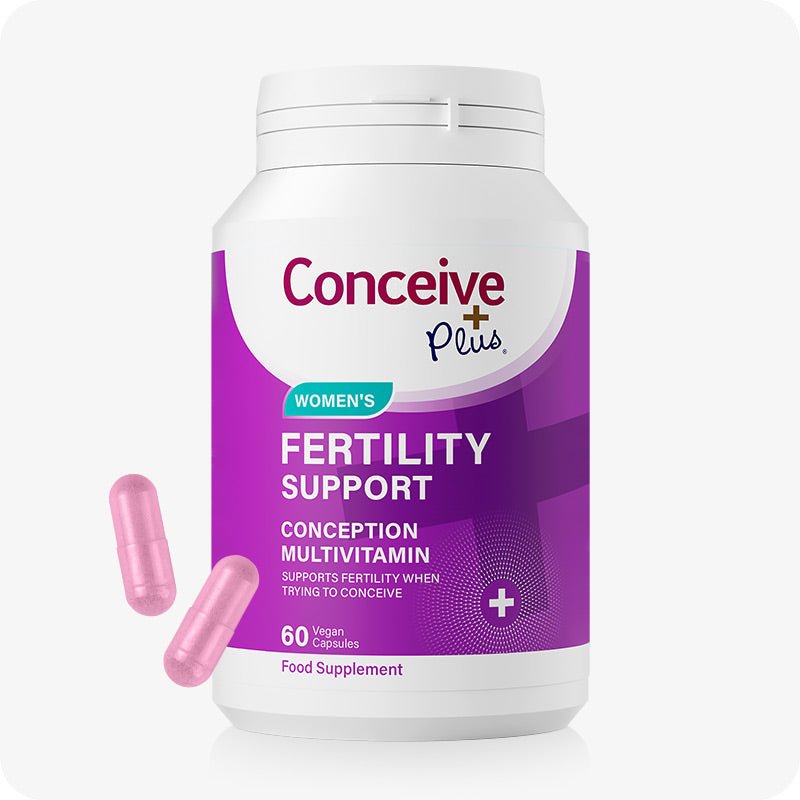
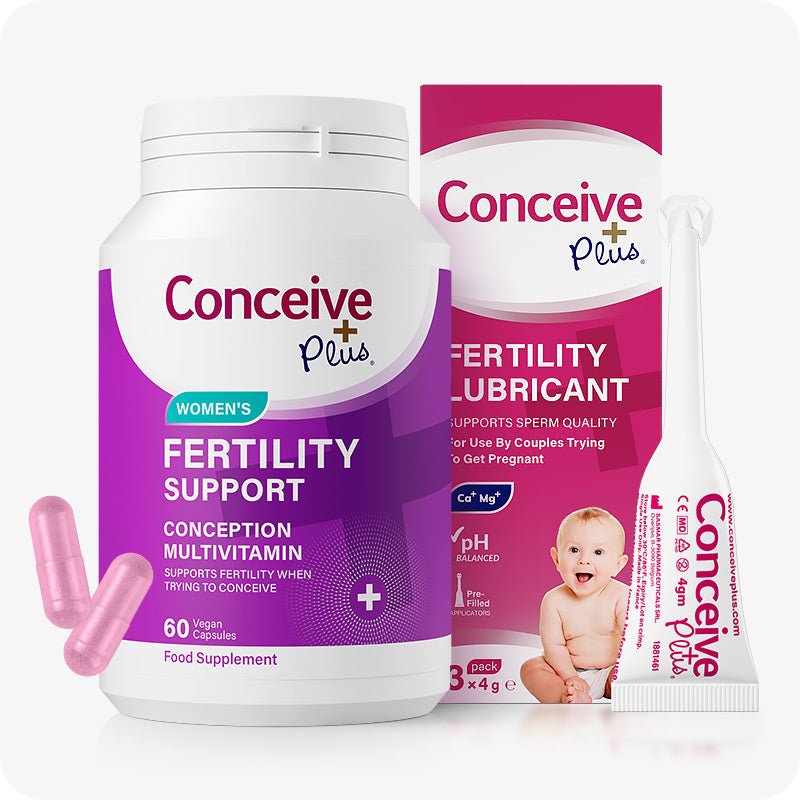
Conceive Plus Ovulation Support and Women's Fertility Support combine these evidence-based nutrients in clinically relevant doses, making daily supplementation straightforward for busy women.
Frequently Asked Questions About Ovulation Tracking
When should I start ovulation tracking?
Ideally, start tracking as soon as you decide to try for a baby — giving yourself 2–3 cycles to understand your personal pattern before actively trying improves your timing precision.
Can I track ovulation while on hormonal birth control?
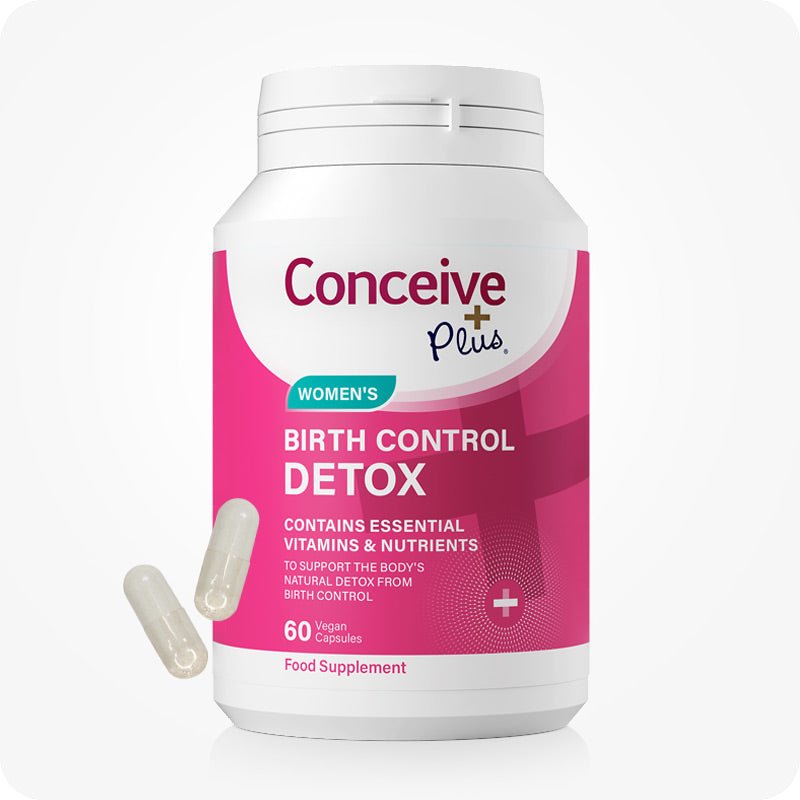
No — hormonal contraception suppresses ovulation, so OPKs and BBT will not reflect natural cycles. After stopping hormonal contraception, allow 1–3 cycles for your natural rhythm to return before relying on tracking data.
How accurate are period tracking apps at predicting ovulation?
Apps are roughly 54% accurate for women with regular cycles. They're a helpful planning tool but should be confirmed with physical ovulation tests for reliable results.
What if I get multiple days of positive OPK results?
This is common in women with PCOS or elevated baseline LH. A quantitative monitor (like Mira) will show the true peak rather than a sustained positive. Inositol supplementation may help normalise LH patterns over time.
Is it possible to ovulate without symptoms?
Yes — many women ovulate without any noticeable physical signs. This is why objective measurement (OPKs, BBT) is more reliable than symptom-spotting alone.
Does stress affect ovulation timing?
Significantly. Psychological or physical stress activates cortisol pathways that can suppress or delay the LH surge. This is why your fertile window may shift in stressful months, making real-time testing more important than calendar prediction.
Can I get pregnant without detecting my LH surge?
Yes — some surges are brief and easily missed, especially with once-daily testing. Twice-daily testing during your likely peak window significantly reduces the chance of missing it.
How many cycles of trying before I should see a doctor?
NHS guidance recommends seeking fertility advice after 12 months of regular unprotected intercourse if under 35, or 6 months if 35 or older.
Combine precise ovulation tracking with Conceive Plus supplements formulated to support every stage of your cycle — from follicle development to healthy ovulation. Conceive Plus is trusted by fertility clinics and TTC communities across the UK.
Explore the Full Conceive Plus Range →
Start Your Journey with Conceive Plus
Join thousands of couples who've trusted Conceive Plus to support their fertility naturally. Science-backed. Clinically formulated.
Explore All Products →