Ovulation Tracking: The Complete Guide to Finding Your Fertile Window


Ovulation Tracking: The Complete Guide to Identifying Your Fertile Window
Understanding ovulation is the single most impactful thing a couple can do to improve their chances of conception naturally. Yet many couples trying to conceive (TTC) are surprised to discover that the fertile window is just 5–6 days per cycle — and that pinpointing it accurately makes an enormous difference. This comprehensive guide covers every method of ovulation tracking, from the simplest body awareness techniques to advanced digital tools, so you can find your fertile window with confidence.
Why Ovulation Tracking Matters More Than Most People Think
The biology of conception is less forgiving than fertility myths suggest. A mature egg survives for just 12–24 hours after ovulation. Sperm, however, can survive in the reproductive tract for up to 5 days in hospitable cervical mucus. This means the practical fertile window — the days when intercourse can lead to conception — extends from about 5 days before ovulation to 24 hours after.
Research from the National Institute of Environmental Health Sciences followed 221 healthy women and found that conception only occurred when intercourse happened during a 6-day window ending on the day of ovulation. Day of ovulation alone accounted for the highest probability (33%). Two days before ovulation: 27%. Three days before: 16%. Outside this window: effectively zero.
The implication: a couple having intercourse twice a week on a random schedule may miss the fertile window entirely in some cycles. Ovulation tracking removes that uncertainty.
Method 1: Basal Body Temperature (BBT) Charting
Ready to boost your fertility journey? Explore Conceive Plus — trusted by thousands of couples worldwide.
Basal body temperature — your resting temperature taken first thing in the morning before any activity — rises by approximately 0.2–0.5°C (0.4–1.0°F) after ovulation due to the thermogenic effect of progesterone. Charting this rise over time allows you to confirm that ovulation occurred and, over several cycles, predict when it's likely to occur next.
How to Chart BBT Accurately
- Use a basal thermometer (reads to 0.01°C), not a standard oral thermometer
- Take your temperature at the same time every morning, before getting out of bed, speaking, or drinking anything
- After 3 nights of uninterrupted sleep of at least 3 consecutive hours
- Record in an app (Fertility Friend, Ovia, Kindara) or on a paper chart
- The sustained rise (confirmed after 3 consecutive elevated readings) confirms ovulation has occurred
Limitation: BBT tells you ovulation happened — it doesn't predict it in real time. You're most fertile in the days before the temperature rise, so BBT is most useful for predicting future cycles based on historical patterns, and for confirming ovulation occurred.
Method 2: Ovulation Predictor Kits (OPKs)
Ovulation predictor kits detect the surge in luteinising hormone (LH) that triggers ovulation approximately 24–36 hours before it occurs. They're more actionable than BBT charting because they give advance warning rather than confirmation after the fact.
Types of OPKs
- Traditional line tests: A test line as dark or darker than the control line indicates a positive (LH surge). These are highly accurate but require some skill in reading line intensity progression.
- Digital OPKs: Display a smiley face or "Peak" reading, eliminating interpretation ambiguity. Clearblue Advanced tracks both oestrogen (identifies the 4-day fertile window) and LH (identifies peak day).
- Connected devices: Mira, Inito, and others pair with apps to give precise hormone level readings and personalised predictions.
OPK Tips for Accuracy
- Test in the early afternoon (between noon and 2 PM) when LH is most concentrated in urine
- Reduce fluid intake for 2 hours before testing
- Start testing several days before expected ovulation (typically day 9–10 for a 28-day cycle)
- Test twice daily during the likely surge window — LH surges can be brief
- PCOS can cause multiple false positives due to chronically elevated LH
Method 3: Cervical Mucus Monitoring
Cervical mucus changes dramatically throughout the menstrual cycle, and learning to read these changes is one of the most reliable and free methods of ovulation tracking available. The changes are driven by oestrogen and progesterone and directly reflect your fertility status.
The Cervical Mucus Pattern
- Post-period (days 1–5 approximately): Dry or minimal discharge
- Early follicular (days 6–9): Sticky, thick, white or cream-coloured mucus — not fertile
- Pre-ovulatory (days 10–13): Creamy, lotion-like, increasing in volume — approaching fertility
- Peak fertility (1–2 days before and day of ovulation): Clear, slippery, stretchy — resembling raw egg white. This "egg white cervical mucus" (EWCM) is the hallmark of peak fertility. It can stretch several centimetres between your fingers.
- Post-ovulatory (luteal phase): Abrupt return to thick, sticky, or dry — conception window closed
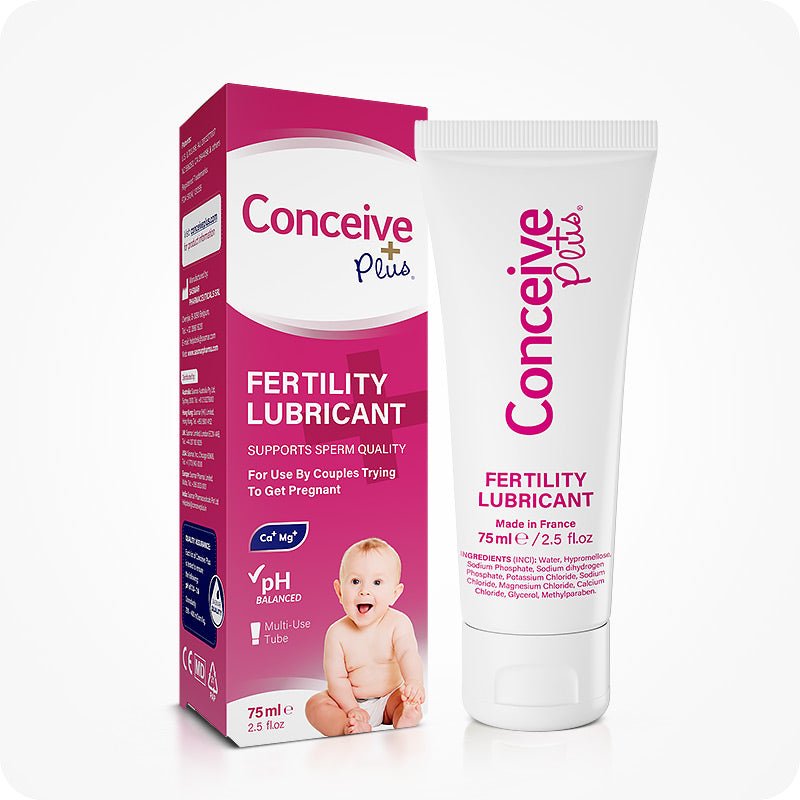
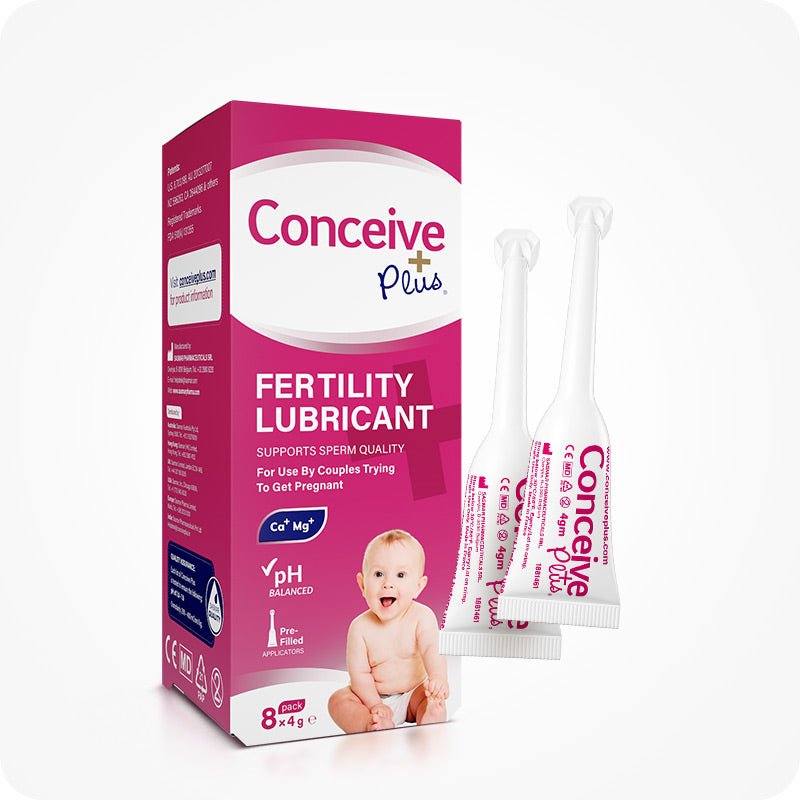
For couples where cervical mucus is reduced (due to dehydration, antihistamines, clomiphene citrate, or hormonal conditions), Conceive Plus fertility lubricant provides a biocompatible substitute that mimics fertile cervical mucus — matching its pH (7.0–8.5) and creating a supportive medium for sperm survival and transport.
Support your fertile window: Conceive Plus fertility lubricant is clinically formulated to mimic fertile cervical mucus — sperm-safe, pH-balanced, and enriched with calcium and magnesium ions. Available with free delivery across the UK.
Method 4: Cycle Length Tracking and Calendar Method
For women with regular cycles, predicting ovulation from cycle length is a reasonable starting point. In a textbook 28-day cycle, ovulation occurs on day 14. In reality, most women's cycles vary between 24 and 35 days, and ovulation typically occurs 14 days before the next period — not necessarily on day 14 of the cycle.
Formula: Ovulation day ≈ Cycle length − 14
- 24-day cycle: ovulation around day 10
- 28-day cycle: ovulation around day 14
- 35-day cycle: ovulation around day 21
This is a rough estimate — it assumes the luteal phase is consistently 14 days, which varies from 10–16 days between women. Use it to narrow your OPK testing window rather than as a definitive prediction.
Method 5: Wearable Fertility Monitors
A new generation of wearable devices provides continuous hormonal and physiological tracking without the need for daily urine tests:
- Tempdrop: A wearable armband that measures BBT continuously during sleep, correcting for waking time and sleep disruptions — useful for shift workers and those with variable wake times
- Oura Ring: Tracks resting heart rate, temperature, and HRV; some integrations predict fertile windows though it's not primarily a fertility device
- Ava Bracelet: Clinically validated for detecting the fertile window by measuring multiple physiological parameters simultaneously; detects an average of 5.3 fertile days per cycle
Method 6: Hormone Testing with Blood or Urine
At-home hormone panels (Mira, Proov, LetsGetChecked) offer more sophisticated testing beyond basic LH strips:
- Progestin metabolite (PdG) testing: Confirms that ovulation actually occurred and that progesterone levels are adequate to support implantation — particularly useful for women who ovulate but have a luteal phase defect
- Oestrogen (E3G) testing: Identifies the rise in oestrogen that precedes LH surge, extending the detectable fertile window earlier
- FSH testing: Day 3 FSH gives a rough indication of ovarian reserve — elevated FSH suggests diminished reserve
- AMH testing: Anti-Müllerian hormone is the most reliable marker of ovarian reserve; home blood test kits are available in the UK
Fertility Apps: Useful Tool or Misleading Shortcut?
Fertility apps have proliferated rapidly, and their quality varies enormously. Some (Clue, Glow, Natural Cycles) use algorithms to predict ovulation from cycle length history and symptom logging. Others (Fertility Friend, Kindara) are primarily charting tools that require you to input BBT and cervical mucus data.
Key considerations:
- Apps that predict ovulation from cycle length alone have accuracy rates similar to the calendar method — useful but not reliable for irregular cycles
- Apps that incorporate BBT, LH, and mucus data are significantly more accurate
- Natural Cycles is the only CE-marked fertility app in Europe; it has a 93% typical-use effectiveness rate as contraception (though for TTC purposes, the goal is maximising, not avoiding, fertile window identification)
- Avoid over-relying on any single data point — the most accurate picture combines multiple methods
Signs of Ovulation: What Your Body Tells You
Beyond tests and trackers, many women experience physical ovulation signs:
- Mittelschmerz: A one-sided pelvic twinge or cramp at ovulation (felt by about 20% of women)
- Breast tenderness: Often begins or intensifies around ovulation due to rising progesterone
- Increased libido: Oestrogen peaks just before ovulation and naturally increases sexual desire
- Cervical position changes: The cervix becomes higher, softer, and more open during the fertile window (SHOW: Soft, High, Open, Wet)
- Bloating: Mild bloating from follicular growth is common
- Light spotting: Some women experience light spotting (ovulation spotting) at ovulation
When Ovulation Tracking Reveals a Problem
Tracking is valuable not just for timing but for identifying potential fertility issues:
- No LH surge detected: May indicate anovulatory cycles (no ovulation). Common in PCOS. Warrants medical evaluation.
- No BBT rise: Consistent with anovulation
- Very short luteal phase (under 10 days): Luteal phase defect — may impair implantation
- Irregular cycles (varying by 7+ days): Suggests hormonal irregularity; worth investigating
- No egg white cervical mucus: May indicate low oestrogen or cervical mucus issues
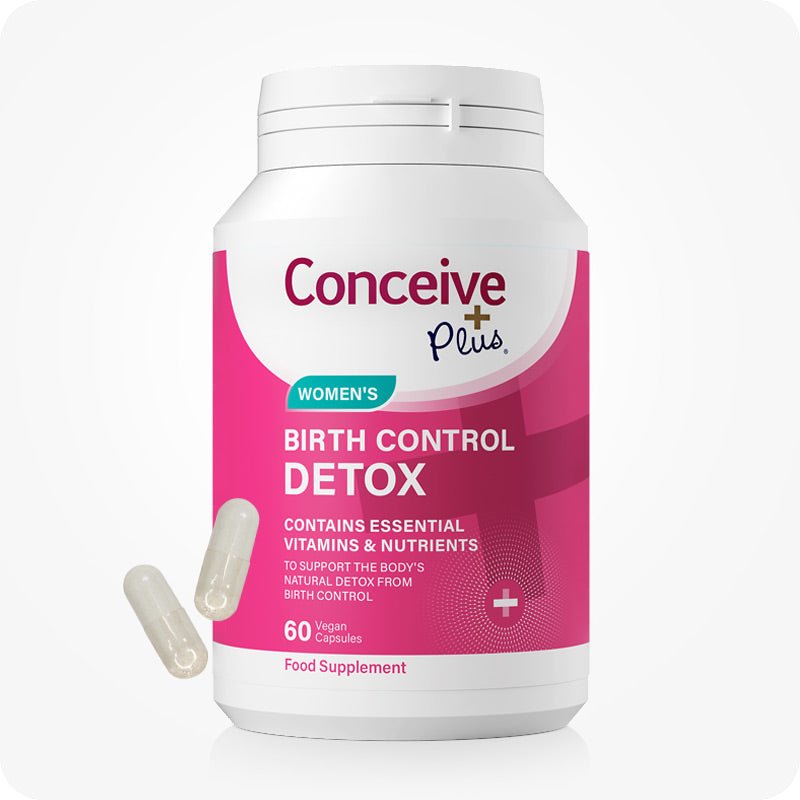
Complete your conception toolkit: Combine accurate ovulation tracking with Conceive Plus products — fertility lubricant to support the fertile window and women's supplements to support reproductive health year-round.
Frequently Asked Questions: Ovulation Tracking
Q: How many months does it typically take to get pregnant when tracking ovulation?
A: In couples under 35 with no known fertility issues, approximately 80–90% conceive within 12 months of trying. When ovulation is being tracked and intercourse is timed correctly, this number improves — some studies suggest ovulation-timed couples have a 20–30% higher chance of conception per cycle. Median time to conception with tracking is typically 3–6 months.
Q: Can stress delay ovulation?
A: Yes. Psychological and physical stress affects the hypothalamic-pituitary-ovarian axis and can delay or suppress ovulation. This is one reason why stress management is consistently recommended in fertility guidance — it's not just emotional wellbeing advice; it has physiological relevance.
Q: I got a positive OPK but my temperature hasn't risen yet. When should I have intercourse?
A: The positive OPK predicts ovulation in the next 24–36 hours. Have intercourse on the day of the positive OPK and the following day. This gives the best chance of sperm being in the right place when the egg arrives.
Q: Is it possible to ovulate twice in one cycle?
A: The dominant follicle typically releases one egg per cycle, though both ovaries can occasionally release one each — this results in fraternal (non-identical) twins. Two separate ovulations in a single cycle (superfoetation) is extremely rare in humans. Most women who observe two LH surges have had a failed ovulation attempt followed by a successful one.
Q: My cycles are very irregular (24–40 days). Can I still track ovulation?
A: Yes, but you'll need to test more frequently and rely on direct indicators (OPKs and cervical mucus) rather than cycle length predictions. OPK testing from day 8 onwards, combined with cervical mucus monitoring, is the most practical approach for highly variable cycles. A gynaecologist can investigate the underlying cause of the irregularity.
Q: Does Conceive Plus lubricant affect OPK or pregnancy test results?
A: No. Conceive Plus fertility lubricant does not affect urine-based OPK or pregnancy test results. It can be used freely during intercourse without interfering with your tracking methods.
Q: How long before my period does ovulation occur?
A: Typically 12–16 days before the next period, with 14 days being the statistical average. This is why tracking from the expected end of your cycle backward is more reliable than counting forward from the start.
Q: Is it normal to have egg white discharge for several days?
A: Some women produce EWCM for 1–5 days. Quantity and duration vary significantly between individuals. Extended EWCM does not mean extended ovulation — ovulation is a single event, but the mucus that supports sperm survival can persist for several days either side.
Conclusion: Make Every Cycle Count
Ovulation tracking transforms TTC from a guessing game into a targeted strategy. The methods outlined here — BBT, OPKs, cervical mucus monitoring, and wearables — can be combined for maximum accuracy, or used individually based on your lifestyle and preferences. The key insight is that precision matters: a few days' difference in timing is the difference between a conception cycle and a missed one.
Pair your tracking practice with Conceive Plus fertility lubricant to ensure the fertile window environment is as welcoming as possible for sperm — and consider Conceive Plus fertility supplements to support the underlying hormonal health that makes regular ovulation possible. Together, these tools give you the best possible foundation for the pregnancy you're working towards.
Ready to boost your fertility journey? Explore Conceive Plus — trusted by thousands of couples worldwide.