Ovulation Tracking: Your Complete Guide to Identifying Your Fertile Window and Maximising Conception Chances


Ovulation Tracking: Your Complete Guide to Identifying Your Fertile Window and Maximising Conception Chances
Understanding when you ovulate is arguably the single most important piece of knowledge in natural conception. Research consistently shows that the majority of couples who struggle to conceive are simply not timing intercourse correctly — not because anything is medically wrong, but because ovulation is more variable than most people realise. This comprehensive guide to ovulation tracking will equip you with everything you need to identify your fertile window with confidence.
The Biology of Ovulation: What's Actually Happening
Ovulation is the release of a mature egg (oocyte) from a follicle in the ovary. This event typically occurs once per cycle, around the midpoint — but "midpoint" is where many assumptions go wrong.
The 28-day cycle with Day 14 ovulation is a statistical average, not a biological law. Studies of menstrual cycle data from thousands of women have found that ovulation timing varies enormously:
- Only about 10–15% of women with 28-day cycles actually ovulate on Day 14
- In cycles ranging from 23–35 days, ovulation typically occurs 12–16 days before the next period — not necessarily at the midpoint
- Even in the same woman, ovulation can shift by 3–5 days between cycles
- Stress, illness, travel, and dietary changes can all delay ovulation
An egg is only viable for 12–24 hours after release. Sperm, by contrast, can survive in the female reproductive tract for up to five days in the presence of fertile-quality cervical mucus. This creates a fertile window of approximately five to six days — the five days before ovulation and ovulation day itself — with the two days immediately before ovulation being the most fertile.
The Luteinising Hormone Surge: Your Body's Ovulation Signal
Know Your Fertile Window with Confidence
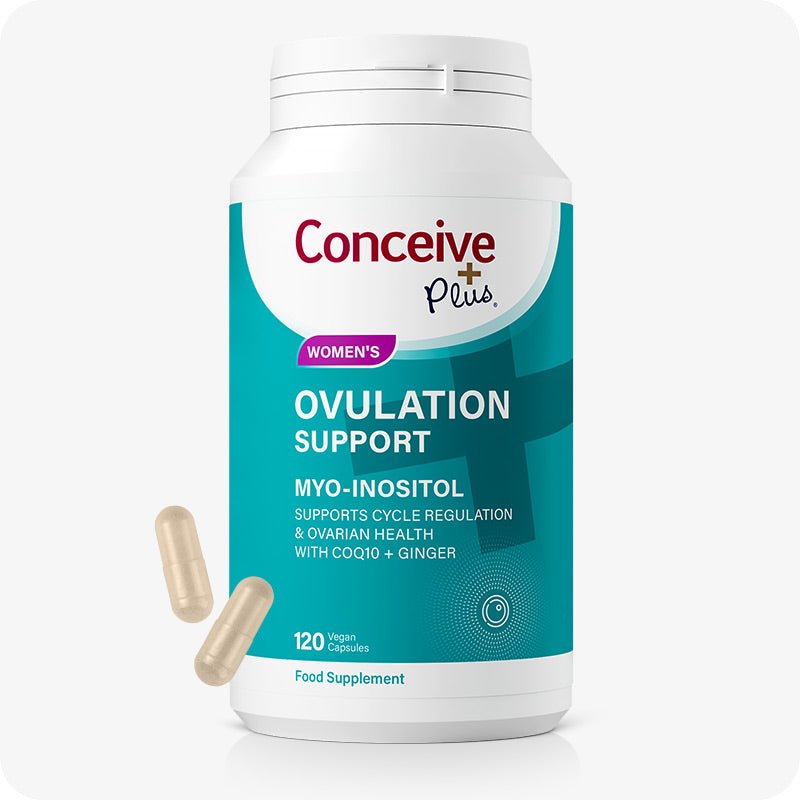
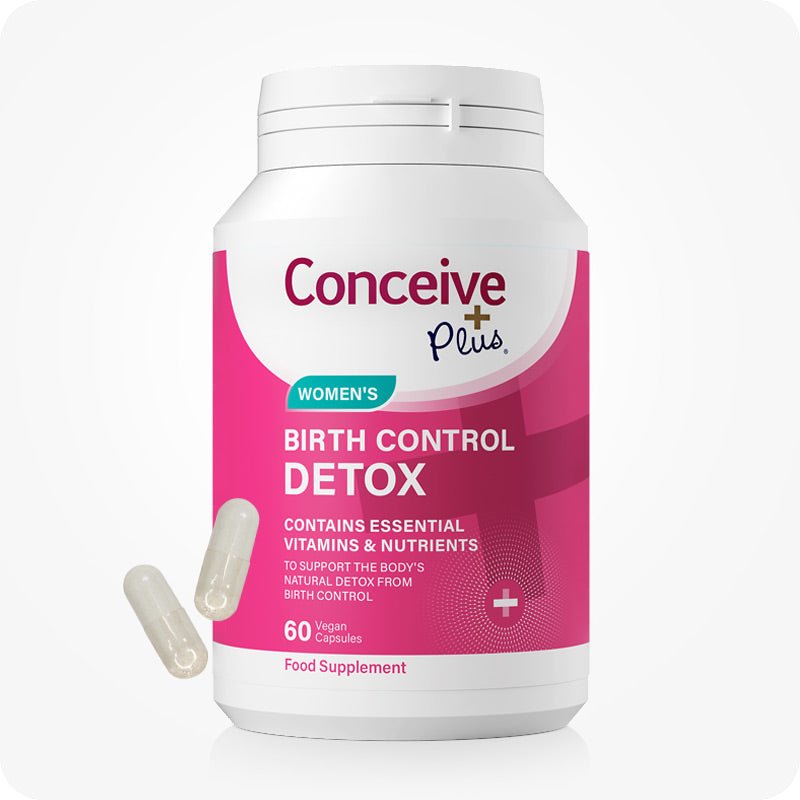
Conceive Plus Ovulation Support is formulated to help regulate your cycle and support optimal hormone balance. Combined with accurate tracking, it gives you the best possible insight into your most fertile days.
The most reliable biochemical signal of impending ovulation is the LH (luteinising hormone) surge. Approximately 24–36 hours before ovulation, the pituitary gland releases a large pulse of LH that triggers the final maturation and release of the egg. This surge is detectable in urine, making it the basis of all ovulation predictor kits (OPKs).
Understanding how to use OPKs correctly dramatically improves their reliability:
- Test at the right time of day: LH is typically highest in the early afternoon. Test between 10am and 8pm, ideally around the same time each day.
- Limit fluid intake beforehand: Don't drink large amounts of water in the two hours before testing — dilute urine can produce false negatives.
- Start testing at the right cycle day: If your cycle is typically 28 days, start testing on Day 10–11. For longer cycles, subtract 17 from your typical cycle length to find your start day.
- Understand "positive": A positive OPK means the test line is as dark or darker than the control line, or that the digital test shows a smiley face.
Basal Body Temperature Tracking
Basal body temperature (BBT) is your resting temperature taken first thing in the morning before any activity. After ovulation, rising progesterone causes a sustained temperature rise of approximately 0.2–0.5°C (0.4–1.0°F) that persists until your period.
BBT tracking has important limitations: the temperature rise occurs after ovulation, meaning it confirms ovulation has happened but doesn't predict it in real time. However, charting BBT over several months allows you to identify your individual ovulation pattern and predict future cycles more accurately.
For accurate BBT tracking:
- Use a dedicated basal thermometer (reads to two decimal places)
- Take your temperature at the same time every morning, before getting up or speaking
- After at least 4 hours of continuous sleep
- Chart in an app (Fertility Friend, Kindara, Natural Cycles) to visualise the biphasic pattern
- Note disruptions: illness, alcohol, travel, or disturbed sleep shift BBT readings
Cervical Mucus Observation: Nature's Own Ovulation Tracker
Cervical mucus is produced by glands in the cervix and changes dramatically in texture, appearance, and quantity throughout the menstrual cycle under hormonal influence. Learning to observe and interpret cervical mucus patterns is a powerful — and entirely free — method of fertility awareness.
The typical progression through a cycle:
- Post-period dry phase: Little to no mucus; the vaginal sensation is dry or sticky
- Transitional mucus: Creamy, white, or yellow; lotion-like texture; not sperm-friendly
- Fertile mucus: Increasingly clear, slippery, and stretchy; the classic "egg white cervical mucus" (EWCM) that can be stretched between two fingers without breaking. This is your peak fertility signal.
- Post-ovulation: Mucus returns to sticky or dry as progesterone rises
Digital and Wearable Ovulation Tracking Technology
Technology has transformed ovulation tracking in recent years. Options now range from simple smartphone apps to sophisticated wearable devices:
Cycle Tracking Apps
Apps like Clue, Flo, and Natural Cycles use cycle length history to predict fertile windows. Their accuracy improves with consistent data input over multiple cycles. Natural Cycles is the only algorithm-based fertility tracking app that has received regulatory clearance as a contraceptive, giving some indication of the precision achievable with consistent data.
Advanced OPK Systems
Digital OPK systems (such as Clearblue Advanced) track both LH and oestrogen, identifying a wider fertile window by detecting the rise in oestrogen that precedes the LH surge. These systems display a flashing smiley face (high fertility) before the solid smiley face (peak fertility/LH surge detected), giving couples a longer identified fertile window of typically 4–6 days.
Wearable BBT Devices
Devices like Tempdrop and the Oura ring measure temperature continuously or semi-continuously, removing the need for manual morning temperatures. Algorithms within these devices identify the biphasic temperature shift associated with ovulation, often with greater accuracy than manual charting.
Hormone Monitor Devices
Devices like the Clearblue Fertility Monitor and Mira Fertility Tracker use quantitative hormone testing to track both oestrogen and LH throughout the cycle. Unlike standard OPKs that give binary positive/negative results, these monitors provide hormone level data over multiple cycles, allowing personalised fertile window identification.
Combining Methods: The Gold Standard Approach
The most accurate ovulation tracking comes from combining multiple methods — a practice sometimes called the "sympto-thermal method" or "fertility awareness method" (FAM). By corroborating OPK results with BBT charts and cervical mucus observations, you gain confidence from multiple independent indicators.
A practical combined approach for one cycle:
- From cycle day 1, begin tracking cervical mucus consistency daily
- From day 10 (or earlier for short cycles), begin daily OPK testing
- Every morning before rising, take and record BBT
- Note when cervical mucus becomes egg-white in quality
- When OPK becomes positive, you're within 24–36 hours of ovulation
- Time intercourse on the day of positive OPK and the day before/after
- Confirm ovulation retrospectively with the BBT temperature rise
Irregular Cycles and Ovulation Tracking Challenges
For women with irregular cycles — including those with PCOS, thyroid conditions, or perimenopause — ovulation tracking becomes more challenging but also more valuable. Standard day-counting approaches are unreliable when cycles vary significantly, making direct hormone testing through OPKs essential.
Women with PCOS face an additional complication: LH levels may be chronically elevated, causing multiple false-positive OPK readings throughout the cycle. In this case, quantitative monitors that track actual LH levels can be more helpful. BBT charting remains valuable, as a genuine biphasic shift confirms that actual ovulation has occurred.
Frequently Asked Questions About Ovulation Tracking
How soon after a positive OPK should I have intercourse?
Aim to have intercourse on the day of the positive OPK and the day after. The egg is released approximately 24–36 hours after the LH surge begins, so having intercourse slightly before and at the time of release maximises the chance that viable sperm are present when the egg arrives.
Can I get pregnant without tracking ovulation?
Yes — many couples conceive without formal tracking. However, having intercourse every 2–3 days throughout the cycle naturally ensures that sperm are present during the fertile window. Tracking becomes more valuable if you've been trying for several months without success, if your cycles are irregular, or if you're over 35.
Why am I getting multiple positive OPKs over several days?
Multiple positive OPK days can occur if your LH surge is prolonged, you have PCOS with elevated baseline LH, or you're testing at varying times of day. If positives persist for more than four or five days, consult a doctor to check for PCOS or LH irregularities.
My BBT never rises — does that mean I'm not ovulating?
Not necessarily — some women genuinely ovulate but show a very subtle temperature rise that can be hard to detect. However, consistently flat BBT charts over multiple cycles may indicate anovulatory cycles and warrants investigation. A progesterone blood test on Day 21 of a 28-day cycle can confirm whether ovulation occurred.
Do fertility apps accurately predict ovulation?
App-based predictions rely on past cycle data and are estimated, not measured. Their accuracy varies considerably by the quality and quantity of data entered and by individual cycle regularity. Apps are a useful starting point, but combine them with direct hormone testing (OPKs) for greater reliability.
Can stress delay ovulation?
Yes. Psychological and physiological stress can suppress the HPG (hypothalamic-pituitary-gonadal) axis, delaying or preventing ovulation. If you notice repeated ovulation delay correlating with stress, addressing lifestyle factors — sleep quality, exercise intensity, and stress management — may help regulate your cycle.
I ovulate on Day 20+ of my cycle. Is that normal?
Late ovulation exists on a spectrum. Consistently ovulating after Day 21 may be associated with reduced luteal phase length, which can impact implantation. A luteal phase shorter than 10 days may make it harder for a fertilised egg to implant successfully. If you consistently ovulate late with a short luteal phase, discuss this with a reproductive specialist.
Can I use ovulation tracking as contraception?
Fertility awareness methods (FAM) can be used as contraception, but they require very careful and consistent practice. The failure rate with typical use is higher than hormonal methods. Natural Cycles is FDA-cleared and has published typical-use failure rates, making it the most validated app-based contraception option.
What's the difference between OPKs and the Clearblue Fertility Monitor?
Standard OPKs only detect the LH surge (1–2 days before ovulation). The Clearblue Fertility Monitor tracks both oestrogen and LH, identifying a wider fertile window of typically 4–6 days. It also builds a personalised hormone profile over multiple cycles, improving its predictions with each cycle.
How many cycles does it typically take to conceive when tracking ovulation?
Statistics from large population studies show that among couples having well-timed intercourse, approximately 30% conceive in the first cycle, 60% within three cycles, 80% within six cycles, and 90% within one year. If you haven't conceived after 12 cycles of timed intercourse (or 6 cycles if you're over 35), seek evaluation from a reproductive specialist.
Take Control of Your Fertility
Whether you're just starting out or have been trying for a while, Conceive Plus offers science-backed supplements to support your hormonal health and fertility.