Sperm Health and Motility: The Complete Science-Based Guide to Boosting Male Fertility in 2026


Understanding Sperm Health: Why Motility Matters
Sperm health is a cornerstone of male fertility, and among its key parameters — count, morphology, and motility — it is motility that often serves as the single most important predictor of fertility outcomes. Motility refers to the ability of sperm to move effectively through the female reproductive tract to reach and fertilise the egg. Without adequate motility, even a high sperm count may not translate into successful conception.
The World Health Organization (WHO) publishes reference values for semen analysis, most recently updated in 2021. According to these benchmarks, healthy sperm motility is defined as 42% or more progressively motile sperm. Progressive motility — the forward movement of sperm in a straight line or large circles — is the type needed to navigate the cervical mucus and travel through the uterus to the fallopian tubes.
Globally, male factor infertility contributes to approximately 40–50% of all infertility cases, and declining sperm counts across Western nations have been well-documented. A landmark 2022 meta-analysis published in Human Reproduction Update confirmed that total sperm counts have declined by more than 50% over the past 50 years among men in North America, Europe, Australia, and New Zealand.
The Biology of Sperm Motility: What Makes Sperm Move
🔬 Support Sperm Health with Science
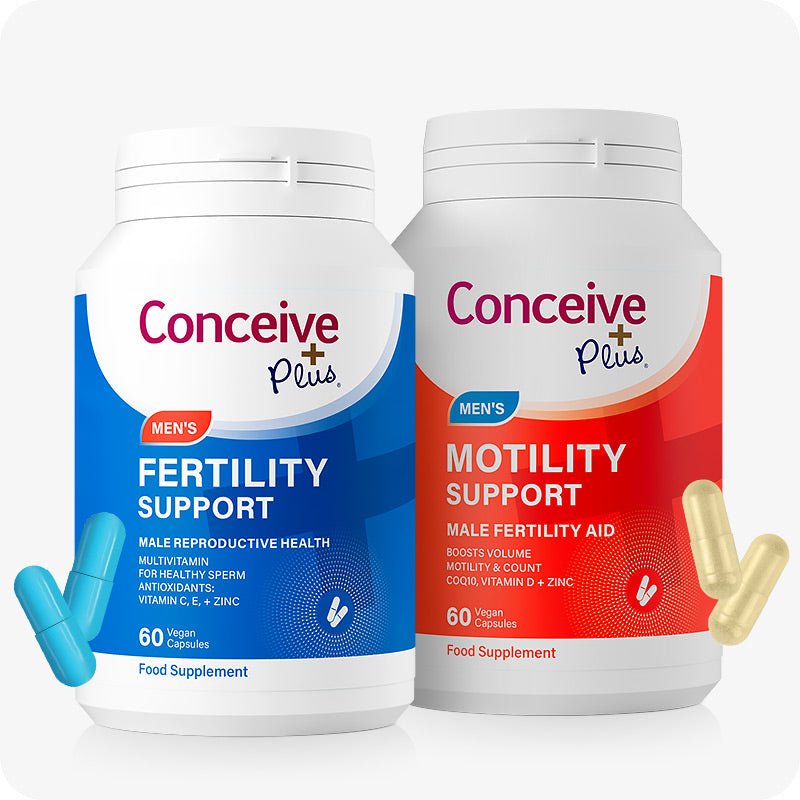
Every sperm cell needs the right nutrients. Conceive Plus Men's Fertility Support delivers zinc, selenium, CoQ10, and L-carnitine at clinically studied doses. Learn more →
Sperm motility is powered by the flagellum — the tail of the sperm cell — which contains a sophisticated internal structure called the axoneme. The axoneme is composed of microtubules arranged in a characteristic "9+2" pattern, surrounded by dense fibres and a sheath of mitochondria that supply the energy needed for movement.
The mitochondria in the midpiece of the sperm generate adenosine triphosphate (ATP), the energy currency of the cell, through oxidative phosphorylation. This ATP fuels the dynein motor proteins that cause the microtubules in the flagellum to slide past one another, creating the whip-like motion that propels the sperm forward. Any disruption to this energy production pathway — whether from oxidative stress, nutritional deficiencies, environmental toxins, or genetic factors — can impair motility.
Reactive oxygen species (ROS) play a particularly important role. At low levels, ROS are essential for normal sperm function, including capacitation (the final maturation process sperm undergo in the female tract) and the acrosome reaction (which enables sperm to penetrate the egg). However, when ROS levels become excessive due to oxidative stress — caused by factors such as smoking, pollution, poor diet, or inflammation — they damage the sperm's DNA, cell membrane, and mitochondria, leading to reduced motility.
The concept of sperm DNA fragmentation has emerged as a critical marker of fertility potential. Even when motility appears normal on conventional analysis, high DNA fragmentation can reduce pregnancy rates and increase the risk of miscarriage. A 2023 systematic review in Andrology found that couples where the male partner had high DNA fragmentation had significantly lower IVF and ICSI success rates.
Key Nutrients That Support Sperm Motility and Health
Nutrition plays a fundamental role in sperm production and quality. Spermatogenesis — the process of sperm cell development — takes approximately 74 days and requires a consistent supply of specific nutrients to produce healthy, motile sperm. Here are the nutrients with the strongest clinical evidence:
Zinc: Perhaps the most critical mineral for male fertility, zinc is essential for sperm formation, membrane integrity, and motility. A 2023 meta-analysis of 28 studies found that men with higher zinc levels had significantly higher sperm motility and concentration. The recommended intake for male fertility is 15–30 mg per day.
Selenium: This trace mineral is incorporated into selenoproteins that protect sperm from oxidative damage. Glutathione peroxidase, a selenium-dependent enzyme, is a key antioxidant in the male reproductive tract. Studies show selenium supplementation can improve sperm motility by 10–15% in men with low baseline levels.
Coenzyme Q10 (CoQ10): As a critical component of the mitochondrial electron transport chain, CoQ10 directly supports ATP production in sperm. Multiple randomised controlled trials have demonstrated that CoQ10 supplementation improves sperm motility, concentration, and morphology. A 2022 meta-analysis found an average increase of 16% in progressive motility with CoQ10 supplementation.
L-Carnitine: This amino acid derivative transports fatty acids into mitochondria for energy production. The epididymis (where sperm mature) contains the highest concentration of L-carnitine in the body. Supplementation has been shown to improve sperm motility, particularly in men with asthenozoospermia (low motility).
Vitamin D: Vitamin D receptors are present throughout the male reproductive tract. Men with adequate vitamin D levels have been shown to have better sperm motility and morphology. A 2024 study found that vitamin D supplementation improved sperm motility by 12% in deficient men.
Omega-3 Fatty Acids: The sperm cell membrane is rich in DHA (docosahexaenoic acid), an omega-3 fatty acid essential for membrane fluidity and flexibility — properties that directly affect motility. Omega-3 supplementation has been shown to improve sperm count and motility in multiple trials.
Lifestyle Factors That Impact Sperm Motility
Beyond nutrition, numerous lifestyle factors influence sperm health. Understanding these can help men take proactive steps to improve their fertility:
Scrotal Temperature: The testes function optimally at 2–4°C below body temperature. Elevated scrotal temperature — from hot baths, saunas, tight underwear, prolonged sitting, or laptop use — can impair sperm production and motility. A 2023 study found that men who used saunas 2–3 times per week had a 30% reduction in sperm motility that persisted for up to 3 months.
Exercise: Moderate physical activity improves sperm quality, while excessive endurance training can have negative effects through increased scrotal temperature and oxidative stress. The optimal exercise pattern for male fertility appears to be moderate aerobic exercise 3–5 times per week combined with resistance training.
Sleep: Sleep duration and quality affect hormone production, including testosterone and the gonadotropins that drive spermatogenesis. Men sleeping fewer than 6 hours per night have been shown to have 25% lower sperm counts than those sleeping 7–8 hours.
Stress: Chronic stress elevates cortisol, which suppresses testosterone production and can impair sperm quality. A 2022 study found that men with high perceived stress scores had 38% lower sperm motility than those with low stress.
Alcohol and Smoking: Both are well-established negative factors for sperm health. Smoking reduces sperm motility by an average of 13%, while heavy alcohol consumption (>14 units/week) can reduce motility by up to 20%.
Medical Conditions Affecting Sperm Motility
Several medical conditions can impact sperm motility, and identifying these is crucial for effective treatment:
Varicocele: This condition — enlarged veins in the scrotum — is the most common correctable cause of male infertility, affecting 15–20% of all men and up to 40% of men with infertility. Varicoceles increase scrotal temperature and cause oxidative stress, both of which impair sperm production and motility. Surgical correction (varicocelectomy) improves sperm parameters in 60–80% of cases.
Infections: Sexually transmitted infections, prostatitis, and epididymitis can all impair sperm motility through inflammation and oxidative damage. Treating underlying infections often restores sperm quality.
Hormonal Imbalances: Low testosterone, elevated prolactin, and thyroid disorders can all affect sperm production. A thorough hormonal evaluation is an essential part of male fertility testing.
Genetic Conditions: Y-chromosome microdeletions, Klinefelter syndrome, and cystic fibrosis gene mutations can cause severe sperm motility issues. Genetic testing may be recommended for men with very low or absent sperm motility.
How Conceive Plus Men's Fertility Support Can Help
Given the complex nutritional demands of sperm production — and the widespread prevalence of dietary insufficiencies in key nutrients — a comprehensive male fertility supplement can provide the targeted nutritional foundation that optimised sperm health requires.
Conceive Plus Men's Fertility Support is specifically formulated to address the nutritional requirements of spermatogenesis. Each serving provides clinically relevant doses of zinc, selenium, CoQ10, L-carnitine, vitamin D, vitamin C, vitamin E, and folate — all nutrients with demonstrated roles in supporting sperm count, motility, morphology, and DNA integrity.
The formulation is designed to be taken consistently for at least 3 months (one full spermatogenesis cycle) to allow measurable improvements in sperm quality. Clinical studies using similar comprehensive formulations have reported improvements in sperm motility of 15–30% after 3–6 months of supplementation.
When to See a Specialist
If you and your partner have been trying to conceive for 12 months (or 6 months if your partner is over 35) without success, both partners should undergo fertility evaluation. For men, this begins with a semen analysis — a simple, non-invasive test that assesses count, motility, morphology, and other parameters.
If your semen analysis shows low motility (<42% progressive motility), a fertility specialist may recommend additional testing including hormone panels, DNA fragmentation testing, genetic screening, and physical examination for varicocele.
The good news is that many causes of low sperm motility are treatable. With lifestyle modifications, targeted supplementation, medical treatment of underlying conditions, and assisted reproductive techniques when needed, the vast majority of couples facing male factor infertility can achieve their goal of parenthood.
Frequently Asked Questions
Q: How long does it take to improve sperm motility?
A: One full spermatogenesis cycle takes approximately 74 days. Most studies showing improvement in sperm parameters use a minimum of 3 months of intervention before reassessment.
Q: Can low sperm motility be reversed?
A: In most cases, yes — particularly when the cause is related to lifestyle factors, nutritional deficiencies, or treatable medical conditions like varicocele or infection.
Q: What is considered low sperm motility?
A: The WHO 2021 reference value defines normal as 42% or more progressively motile sperm. Values below this threshold are considered low motility (asthenozoospermia).
Q: Does diet really affect sperm motility?
A: Absolutely. Multiple studies show that men who follow a healthy dietary pattern rich in fruits, vegetables, whole grains, and healthy fats have significantly better sperm parameters than those consuming processed, high-fat diets.
Q: Can stress affect sperm motility?
A: Yes. Chronic stress elevates cortisol, which suppresses testosterone and can directly impair sperm production and motility. Stress management should be part of any male fertility plan.
Q: Is it possible to get pregnant naturally with low motility?
A: Yes, depending on the severity. Even with motility below 42%, natural conception is possible, particularly if other sperm parameters are normal. Working with a specialist to optimise all factors improves the odds.
Q: Does mobile phone use affect sperm motility?
A: Some studies suggest that carrying a mobile phone in the front pocket may be associated with reduced sperm motility, likely due to electromagnetic radiation. Keeping phones away from the groin area is a prudent precaution.
Q: How does Conceive Plus Men's Fertility Support compare to other supplements?
A: Conceive Plus is formulated with clinically studied nutrients at evidence-based doses, with third-party testing for purity and potency.
Q: Can I take Men's Fertility Support alongside other medications?
A: Always consult your healthcare provider before starting any new supplement, particularly if you are taking prescription medications.
Q: Is there an ideal age for male fertility?
A: While men produce sperm throughout life, sperm quality — including motility and DNA integrity — begins to gradually decline after age 40. Optimising health and nutrition early supports better outcomes.
Start Your Fertility Journey Today
Understanding sperm health is the first step. Taking action is the next. Conceive Plus is here to support you with products backed by science.
Not sure where to start? Take our Fertility Quiz.