Sperm Health Explained: Everything You Need to Know to Improve Male Fertility


Sperm health sits at the heart of male fertility, yet it remains one of the most misunderstood aspects of reproductive medicine. Research consistently shows that male factor issues contribute to roughly half of all cases where couples struggle to conceive — and yet men are often the last to be investigated. Understanding what healthy sperm looks like, what can go wrong, and what men can do to actively improve their sperm quality is one of the most empowering things any couple can do on their conception journey.
What Makes a Sperm Cell Healthy?
A healthy sperm cell is a marvel of biological engineering — one of the smallest cells in the human body yet one of the most complex in its function. It must survive the hostile environment of the female reproductive tract, navigate a journey equivalent to a human swimming the length of several football pitches, and ultimately penetrate and fertilise an egg. To accomplish this, a sperm needs four essential qualities: adequate quantity, excellent motility, normal morphology, and intact DNA.
Each sperm is composed of three main parts. The head contains the nucleus, which houses 23 chromosomes — half the genetic material needed to create a new human being. The acrosome, a cap-like structure at the tip of the head, contains enzymes that help the sperm penetrate the egg's outer shell (zona pellucida). The midpiece is packed with mitochondria that generate the ATP energy needed to power the tail. The tail (flagellum) propels the sperm forward with a whip-like motion at approximately 3 mm per minute — remarkable given the scale of the cell.
The World Health Organization's 2021 reference values define the thresholds below which male fertility may be compromised. These are: sperm concentration ≥16 million/ml, total motility ≥42%, progressive motility ≥30%, and normal morphology ≥4% using Kruger's strict criteria. However, it is important to understand that these are lower reference limits derived from fertile men — not optimal values. Many fertility specialists consider these minimum thresholds rather than targets to aim for.
Sperm Motility: Why How Sperm Swim Matters
Support Your Sperm Health Today
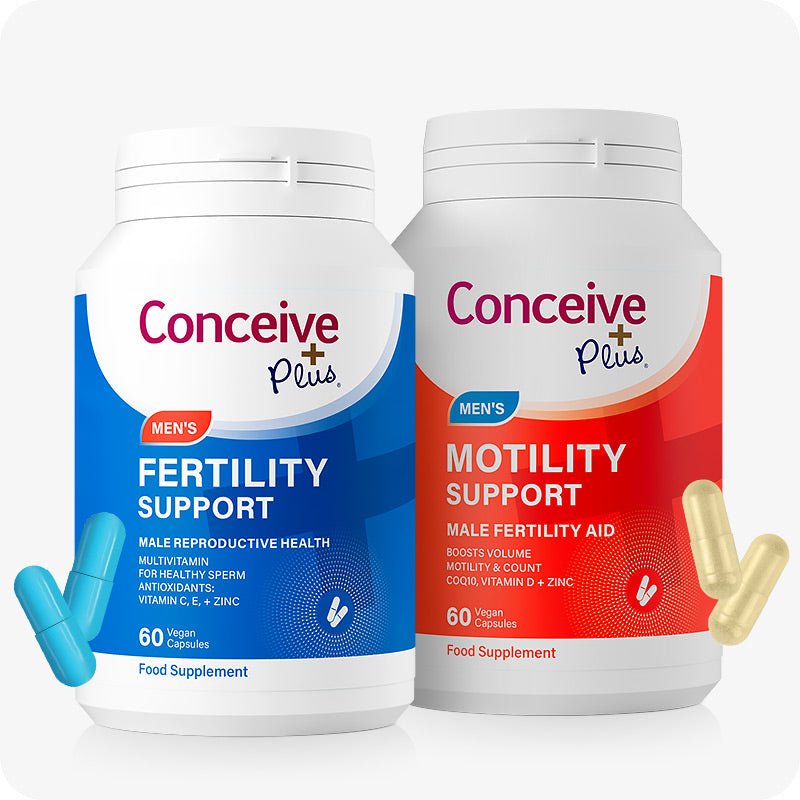
Conceive Plus Men's Fertility Support is formulated with clinically studied nutrients including CoQ10, zinc, selenium, and vitamin C — designed to support healthy sperm count, motility, and morphology.
Of all sperm parameters, motility may be the most critical for natural conception. Sperm that cannot swim effectively cannot reach the egg, regardless of how many are produced. The female reproductive tract is not a passive tunnel — sperm must actively navigate cervical mucus, the uterine cavity, and the fallopian tubes, guided by chemical signals (chemotaxis), changes in fluid currents (rheotaxis), and temperature gradients (thermotaxis).
Clinicians distinguish between different grades of motility. Progressive motility describes sperm swimming in a straight line or large circles — this is the type most useful for fertilisation. Non-progressive motility refers to sperm that move but not in a directed manner (e.g., moving in very tight circles). Immotility means the sperm are not moving at all. Sperm from a fertile ejaculate should have at least 30% progressive motility.
Poor motility — asthenozoospermia — can result from many factors, including oxidative stress, mitochondrial dysfunction, infections, structural abnormalities in the flagellum, antisperm antibodies, or varicocele. It is particularly responsive to targeted nutritional interventions, especially antioxidants such as CoQ10 and vitamin C, and energy-supporting nutrients like L-carnitine.
An important subtype of motility testing is the hyperactivation assessment. Before fertilisation, sperm undergo a process called capacitation in the female reproductive tract, during which their swimming pattern changes to a vigorous, whip-like motion called hyperactivation. This asymmetric beating pattern is essential for penetrating the egg. Failure to hyperactivate can cause fertilisation failure even when standard motility appears normal.
Morphology: The Importance of Sperm Shape
Sperm morphology refers to the physical structure and appearance of sperm cells — essentially how normal they look under a microscope. Using Kruger's strict criteria, which are the most rigorous classification system available, a normal sperm must have a smooth oval head measuring 3–5 μm in length and 2–3 μm in width, a well-defined acrosome covering 40–70% of the head, no neck or midpiece defects, and a single uncoiled tail of uniform width.
In practice, most men produce a surprisingly large proportion of abnormal-looking sperm — even in fertile men, fewer than half of sperm typically meet Kruger's strict criteria for normality. The WHO lower reference limit for normal morphology is just 4%, which means that if only 4 out of every 100 sperm have a normal form, this is still within the reference range for fertile men.
Common morphological defects include: large or small heads; pyriform (pear-shaped) heads; round heads (globozoospermia, associated with acrosomal absence); double heads; bent or coiled tails; and midpiece abnormalities. Poor morphology, known as teratozoospermia, can impair the ability of sperm to penetrate the egg's zona pellucida even if the sperm are present in adequate numbers and swimming well.
It is worth noting that morphology has a complex relationship with fertility outcomes. In IVF cycles using ICSI (intracytoplasmic sperm injection), where a single normal-looking sperm is selected manually and injected directly into an egg, morphology has less impact on fertilisation rates than in natural conception or standard IVF. However, selecting sperm at very high magnification (IMSI — intracytoplasmic morphologically selected sperm injection) has been proposed to further improve outcomes in men with severe teratozoospermia.
Sperm Count: Understanding Numbers and What They Mean
Sperm count refers to the total number of sperm present in an ejaculate, which is calculated by multiplying the concentration (sperm per ml) by the total volume of semen. The WHO 2021 reference limits are a sperm concentration of at least 16 million per ml and a total sperm count of at least 39 million per ejaculate.
Conditions are named as follows: oligozoospermia (low count, below the reference threshold); severe oligozoospermia (typically defined as fewer than 5 million sperm per ml); cryptozoospermia (extremely low numbers, found only after centrifugation); and azoospermia (no sperm found in the ejaculate). Azoospermia may be obstructive (blocked vas deferens or epididymis) or non-obstructive (failure of the testes to produce sperm).
A single semen analysis result should always be interpreted cautiously. Sperm production varies considerably between ejaculations and can be affected by many transient factors including recent illness, fever, stress, and ejaculation frequency. Clinicians typically recommend at least two semen analyses performed 2–4 weeks apart before drawing firm conclusions about a man's baseline fertility.
Diet plays a significant role in sperm count. A 2020 systematic review in Nutrients found that diets rich in processed foods, trans fats, and refined sugars were associated with lower sperm counts, while diets rich in fruits, vegetables, fish, and whole grains were associated with better parameters. Obesity is also associated with lower sperm count, possibly through conversion of testosterone to oestrogen in fat tissue.
DNA Fragmentation: The Hidden Factor in Sperm Health
One of the most significant advances in understanding sperm health over the past two decades has been the recognition that conventional semen analysis parameters — count, motility, morphology — do not tell the whole story. A man can have apparently normal semen parameters on standard testing and still have significantly impaired fertility due to high levels of sperm DNA fragmentation.
DNA fragmentation refers to single- or double-strand breaks in the DNA molecules packed inside the sperm's head. Some degree of DNA damage is present in all sperm, but when the level exceeds certain thresholds, it can impair the sperm's ability to successfully fertilise an egg, contribute to early embryo development failure, and significantly increase the risk of miscarriage.
The sperm DNA fragmentation index (DFI) is considered optimal when below 15%. A DFI of 15–25% is borderline, and above 25–30% is associated with significantly reduced natural conception rates and worse ART outcomes. Notably, even with high fragmentation, IVF using ICSI can sometimes succeed because the egg's repair mechanisms can correct single-strand breaks after fertilisation. However, double-strand breaks are much harder to repair and more clinically significant.
Causes of high DNA fragmentation include: advanced age; smoking; exposure to environmental pollutants and pesticides; prolonged scrotal heat exposure; varicocele; genital tract infections; and, paradoxically, excessive reactive oxygen species (ROS) produced by the sperm themselves (particularly in men with high levels of leucocytes — white blood cells — in the semen, a condition called leukospermia). Antioxidant therapy is considered first-line treatment for elevated fragmentation due to oxidative stress.
Improving Sperm Health: Evidence-Based Strategies
The three-month sperm production cycle means that the decisions a man makes today will be reflected in the sperm he produces approximately 90 days from now. This makes the window before trying to conceive an ideal time to implement improvements. Here are the strategies with the strongest evidence base:
- Quit smoking: Perhaps the single most impactful change a man can make. Smoking increases ROS, raises DFI, reduces count and motility, and impairs morphology. Studies show measurable improvements within 3–6 months of cessation.
- Achieve a healthy weight: Obesity is associated with elevated oestrogen (from aromatisation in fat tissue), lower testosterone, higher scrotal temperatures, and increased oxidative stress. Even modest weight loss in obese men has been shown to improve sperm parameters.
- Limit alcohol: Chronic heavy alcohol use disrupts the HPG axis and impairs sperm production. Reducing to occasional, moderate consumption is advisable when trying to conceive.
- Exercise moderately: Moderate aerobic and resistance exercise improves testosterone, reduces oxidative stress, and supports healthy sperm. Avoid excessive endurance training or cycling for prolonged periods.
- Reduce scrotal heat: Avoid hot baths, saunas, tight underwear, and laptop-on-lap use when trying to conceive.
- Eat an antioxidant-rich diet: Prioritise colourful vegetables and fruits, nuts, seeds, oily fish, and lean proteins. Reduce ultra-processed foods, trans fats, and refined sugars.
- Manage stress: Chronic stress raises cortisol and suppresses testosterone. Mindfulness, physical activity, adequate sleep, and addressing major life stressors can all help.
- Targeted supplementation: Evidence supports CoQ10 (200–600 mg/day), L-carnitine (2–3 g/day), zinc, selenium, folate, vitamin C and E, omega-3 DHA, and vitamin D — particularly in men with suboptimal parameters or confirmed deficiencies.
When to Seek Help: Investigations and Treatments Available
In the UK, NICE guidelines recommend that couples should see their GP if they have not conceived after 12 months of regular unprotected sex. If the female partner is over 35, or if there are known risk factors for male fertility problems, assessment should begin sooner — ideally at 6 months.
Male fertility assessment typically begins with a semen analysis. If this reveals abnormalities, further investigations may include hormone blood tests (FSH, LH, testosterone, prolactin), scrotal ultrasound, genetic testing (karyotype and Y-chromosome microdeletion analysis), and sperm DNA fragmentation testing. These investigations help identify whether there is a treatable underlying cause.
Treatment options depend on the cause. Varicocele repair can significantly improve sperm parameters. Hormonal treatments can address deficiencies in FSH or testosterone. Infections can be treated with antibiotics. Surgical sperm retrieval is available for men with obstructive azoospermia. For cases not amenable to specific treatment, IVF with ICSI offers high success rates even with very low sperm numbers.
Frequently Asked Questions About Sperm Health
How often should I ejaculate when trying to conceive?
There is a balance to strike. Very frequent ejaculation (multiple times daily) can temporarily reduce sperm concentration, though the total count per ejaculate may remain adequate. Conversely, prolonged abstinence (more than 5–7 days) can lead to accumulation of older sperm with higher DNA fragmentation, even if total count is higher. For most couples, having intercourse every 1–2 days during the fertile window (around ovulation) strikes the best balance between maintaining sperm concentration and ensuring fresh, high-quality sperm. For men with known motility problems, more frequent ejaculation may be beneficial as it ensures freshly produced sperm are available.
Can supplements genuinely improve sperm quality?
Yes, for many men — particularly those with suboptimal parameters or nutritional deficiencies. The strongest evidence exists for antioxidant combinations (vitamin C + E), CoQ10, L-carnitine, zinc, selenium, and omega-3 fatty acids. A large 2019 Cochrane review found that antioxidant supplementation was associated with significantly increased live birth rates and pregnancy rates in couples undergoing ART. The effect is likely greatest in men whose sperm quality is already compromised by oxidative stress — which is a very common finding. For men with already-excellent parameters, the benefit may be smaller. Supplements work best as part of a comprehensive approach including diet and lifestyle optimisation.
Is varicocele always worth treating?
Varicocele — enlarged veins in the scrotum — is a controversial topic in reproductive medicine because not all varicoceles cause fertility problems. However, when a varicocele is clinically palpable, associated with abnormal semen parameters, and the couple has unexplained or male factor infertility, treatment (surgical ligation or embolisation) has been shown in randomised controlled trials to improve sperm parameters and increase natural pregnancy rates. The European Association of Urology guidelines support varicocele repair in men with clinical varicocele and abnormal semen parameters, particularly if the couple is trying to conceive naturally or with IUI. The evidence for IVF outcomes post-varicocele repair is less clear.
Does diet affect sperm DNA fragmentation specifically?
Yes. Diets high in antioxidants reduce the oxidative stress that causes DNA strand breaks in sperm. A 2012 study in Fertility and Sterility found that men with high dietary antioxidant intake had significantly lower DFI compared to those with low intake. Processed meat consumption has been associated with higher fragmentation, while fish consumption is associated with lower levels. Folate-rich diets support DNA methylation and repair processes. The Mediterranean diet pattern, in particular, has been associated with lower fragmentation rates in several observational studies. Dietary antioxidant supplementation provides an additional, targeted way to reduce ROS and protect sperm DNA integrity.
Can I check my sperm health at home?
At-home sperm tests have improved significantly. Products like YO, ExSeed, and similar devices can measure sperm concentration and motility using smartphone-attached microscopes. These can serve as useful screening tools. However, they cannot assess morphology, DNA fragmentation, volume, or other clinically important parameters. A full clinical semen analysis performed at an accredited andrology laboratory remains the gold standard. If an at-home test reveals clear abnormalities, that is a prompt to seek professional assessment sooner rather than later. A normal at-home result does not guarantee fertility — it just provides some initial reassurance.
What effect does cycling have on sperm health?
This is a nuanced area. Regular moderate cycling is associated with good overall health and is unlikely to be harmful. However, prolonged or intense cycling — particularly on a traditional narrow saddle — may raise scrotal temperature, cause perineal pressure on blood vessels and nerves, and be associated with increased DNA fragmentation in some studies. The evidence is mixed, and recreational cycling at moderate intensity is unlikely to cause significant harm. If a man cycles for several hours daily (competitive or commuter cycling), it may be worth varying activity, using a proper cycling saddle designed to minimise perineal pressure, and wearing looser shorts during a period of active conception attempts.
How does age affect sperm quality in men?
Male fertility does decline with age, though less dramatically than female fertility. After age 40, studies consistently show reductions in sperm motility and morphology, and increases in DNA fragmentation. De novo mutations — spontaneous genetic mutations not inherited from either parent — accumulate in sperm stem cells at a rate of approximately two additional mutations per year after age 20. These are linked to increased rates of certain conditions in offspring, including autism spectrum disorder, schizophrenia, and achondroplasia (dwarfism). Time-to-pregnancy is longer for couples where the male partner is over 40. While age cannot be reversed, maintaining excellent lifestyle habits — diet, exercise, weight, smoking cessation — can partially offset age-related sperm quality decline.
What is leukospermia and should I be concerned?
Leukospermia refers to the presence of elevated white blood cells (leucocytes) in the semen — specifically, more than 1 million white blood cells per millilitre (pyospermia). White blood cells produce reactive oxygen species as part of their immune function, and in the genital tract, this oxidative burst can damage nearby sperm and significantly increase DNA fragmentation. Leukospermia may indicate a genital tract infection or inflammation (prostatitis, seminal vesiculitis, epididymitis) and should be investigated. Treatment depends on the underlying cause — if an infection is confirmed, antibiotics are appropriate. If no infection is found, the condition may be managed with anti-inflammatory medication and antioxidant supplementation.
Can natural conception occur with very poor sperm parameters?
Yes, although the probability decreases as parameters worsen. Many couples have conceived naturally with counts well below the WHO reference limits, or with poor motility or morphology. The relationship between semen parameters and fertility is probabilistic — not deterministic. A man with 5 million sperm per ml (well below the reference of 16 million) still has millions of sperm in a single ejaculate, and it only takes one to fertilise an egg. That said, poor parameters significantly prolong time-to-pregnancy and reduce monthly conception probability. If parameters are severely impaired and the couple has been trying for some time, assisted reproduction technologies (IUI, IVF/ICSI) can dramatically improve the odds.
How do sexually transmitted infections affect sperm health?
STIs can have significant and sometimes permanent effects on sperm health. Chlamydia and gonorrhoea are of greatest concern — both can cause epididymitis (inflammation of the epididymis) and, if untreated, scarring that can obstruct sperm transport pathways. Chlamydia has also been shown to directly damage sperm DNA and impair motility. Trichomonas vaginalis can induce reactive oxygen species in semen. HPV has been associated with reduced motility and increased fragmentation in some studies. All men planning to conceive should be screened for common STIs, and both partners should be treated if an infection is found. Prompt treatment minimises the risk of structural damage and long-term fertility impact.
Support Your Sperm Health Today
Conceive Plus Men's Fertility Support is formulated with clinically studied nutrients including CoQ10, zinc, selenium, and vitamin C — designed to support healthy sperm count, motility, and morphology.