Stress and Fertility: The Science-Backed Guide to Managing Cortisol for Better Conception Outcomes


The Stress-Fertility Connection: What the Science Says
The relationship between stress and fertility has been a subject of scientific inquiry for decades, and the evidence is increasingly clear — chronic stress can significantly impair a woman’s ability to conceive. A landmark prospective study published in Fertility and Sterility followed 274 women trying to conceive and found that those with the highest levels of alpha-amylase, a biomarker of stress, were 29% less likely to achieve pregnancy each cycle compared to women with lower levels.
The biological mechanism centres on cortisol, the body’s primary stress hormone. When cortisol levels remain chronically elevated, the hypothalamic-pituitary-ovarian (HPO) axis — the finely tuned hormonal cascade that controls ovulation — becomes disrupted. The brain essentially decides that a stressed environment is not safe for reproduction, and ovulation is delayed or suppressed.
This is not a modern phenomenon — it’s an evolutionary survival mechanism. When our ancestors faced famine, threats, or environmental danger, the body prioritised survival over reproduction. Today, the same ancient circuits are activated by modern stressors: work pressure, financial worry, relationship strain, and the emotional toll of trying to conceive itself.
How Chronic Stress Disrupts Ovulation and Menstrual Regularity
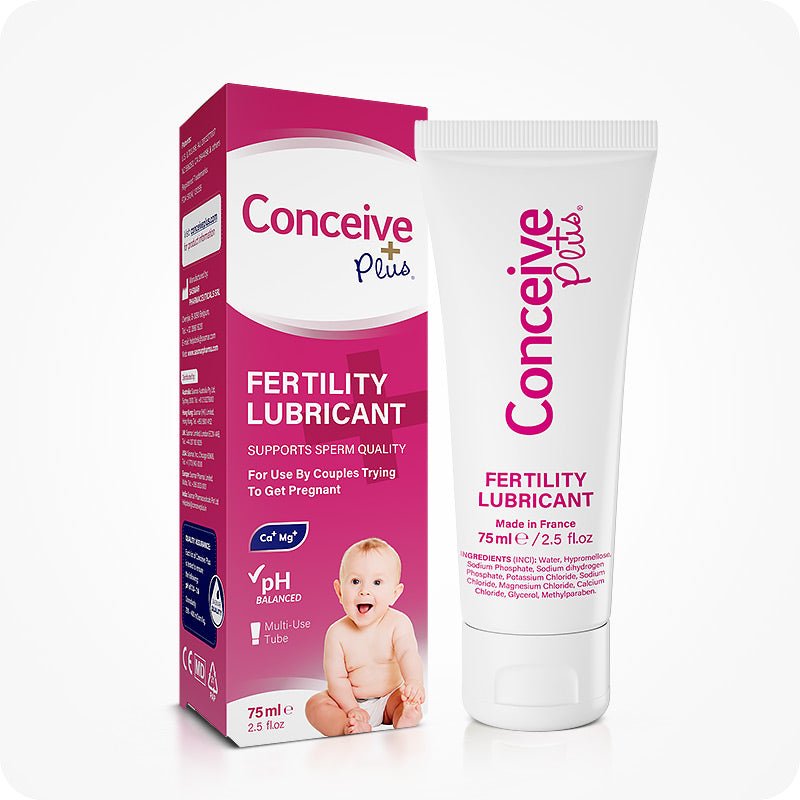
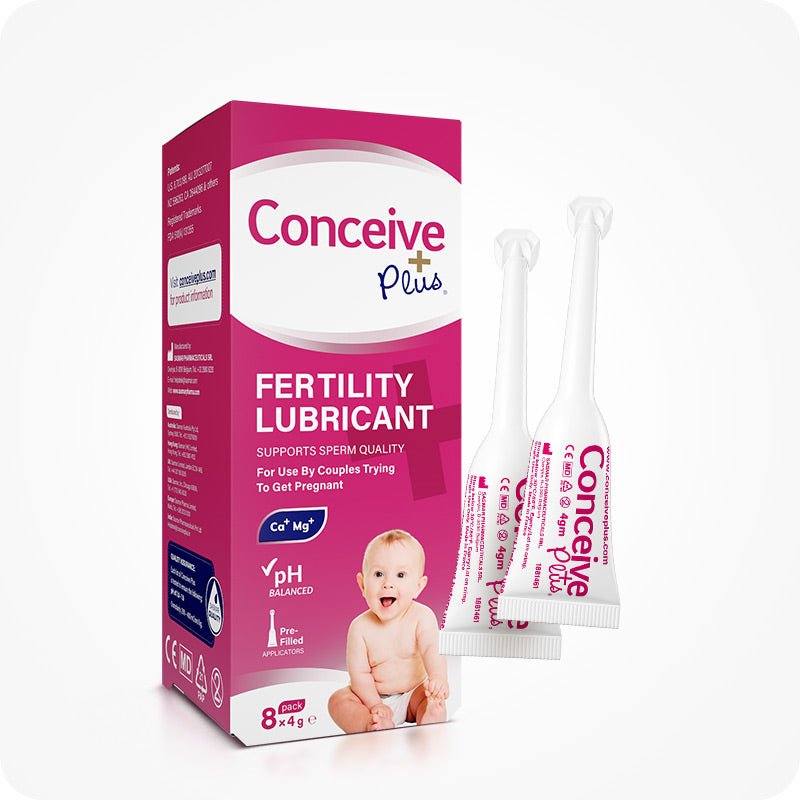
Support Your Fertility Journey with Conceive Plus Fertility Lubricant
Every step of your conception journey deserves the right support. Shop Conceive Plus Fertility Lubricant →
Support Your Fertility Journey with Conceive Plus Fertility Lubricant
Every step of your conception journey deserves the right support. Shop Conceive Plus Fertility Lubricant →
The impact of chronic stress on the menstrual cycle is well-documented. Elevated cortisol suppresses gonadotropin-releasing hormone (GnRH) from the hypothalamus, which in turn reduces luteinising hormone (LH) and follicle-stimulating hormone (FSH) from the pituitary. Without adequate LH and FSH, follicles don’t develop properly and ovulation may not occur.
Research from the National Institutes of Health demonstrates that women with high perceived stress levels are twice as likely to experience anovulatory cycles. Even when ovulation does occur, the luteal phase — the period between ovulation and the next period — may be shortened, reducing the window for implantation.
What’s particularly important to understand is the compounding effect. The stress of infertility creates more stress, which further impairs fertility — a vicious cycle that many couples find themselves trapped in. A study in Human Reproduction found that women who reported high distress about their fertility journey had a 13% lower pregnancy rate per IVF cycle compared to those who reported lower distress levels.
Breaking this cycle doesn’t mean eliminating stress entirely — which is both unrealistic and unnecessary — but rather managing the body’s stress response so that cortisol levels remain within a conception-friendly range.
Stress and Male Fertility: An Often-Overlooked Factor
While much of the conversation around stress and fertility focuses on women, the male partner’s stress levels matter equally. A comprehensive study of 744 couples found that men with high stress levels had significantly lower sperm concentration, motility, and morphology compared to less-stressed men.
The mechanism mirrors the female experience: elevated cortisol interferes with the hypothalamic-pituitary-gonadal (HPG) axis in men, reducing testosterone production and impairing spermatogenesis. High stress has also been linked to increased sperm DNA fragmentation, which can affect embryo development and increase miscarriage risk.
A study from Columbia University presented at the American Society for Reproductive Medicine found that men reporting two or more stressful life events in the past year had a 38% lower chance of achieving pregnancy with their partner. This underscores why fertility is truly a couple’s concern — optimising both partners’ stress levels improves outcomes for both.
Practical Strategies to Lower Cortisol and Support Fertility
Managing stress for fertility is not about adding more to your plate — it’s about making strategic changes that reduce the body’s stress burden. Here are evidence-based approaches that have shown measurable impacts on conception rates.
Mindfulness and Meditation: A randomised controlled trial from the University of Massachusetts Medical School found that women who participated in an 8-week mindfulness programme had significantly lower cortisol levels and higher pregnancy rates (44%) compared to the control group (20%). Just 15 minutes of daily meditation can begin reshaping the body’s stress response.
Sleep Optimisation: Sleep and cortisol have a bidirectional relationship — poor sleep raises cortisol, and high cortisol disrupts sleep. Aim for 7–9 hours of quality sleep with consistent bedtimes. A study in Sleep Medicine found that women with irregular sleep patterns had 36% higher evening cortisol levels and lower pregnancy rates.
Yoga and Gentle Exercise: While moderate exercise is beneficial for fertility, high-intensity training can actually elevate cortisol. Yoga, particularly restorative and Hatha styles, has been shown to reduce salivary cortisol by 30% after just one session, making it an ideal exercise choice during the conception journey.
Acupuncture: Several studies suggest that acupuncture can lower cortisol levels and improve pregnancy rates in women undergoing fertility treatment. A meta-analysis of 20 trials found that acupuncture was associated with a 35% increase in pregnancy rates, likely mediated through stress reduction and improved uterine blood flow.
Social Support: Isolation amplifies stress. Connecting with a partner, friends, family, or a fertility support group provides emotional buffering. Research from the Journal of Psychosomatic Obstetrics & Gynecology found that women with strong social networks had measurably lower cortisol and higher conception rates.
The Role of Fertility Lubricant in Reducing TTC-Related Stress
One often-overlooked source of stress in the conception journey is the physical experience of timed intercourse. When conception becomes a scheduled activity rather than a spontaneous expression of intimacy, it can create significant relationship pressure. The right fertility-friendly lubricant can alleviate one practical concern — knowing that the product you’re using supports rather than hinders sperm health.
Many commercial lubricants have been shown to impair sperm motility by up to 60–100% due to inappropriate pH, osmolality, and chemical additives. A quality fertility lubricant is formulated to match the pH and osmolality of fertile cervical mucus, creating a sperm-friendly environment rather than a hostile one.
This matters because every cycle counts, and removing variables that could negatively affect sperm function reduces one source of worry. When couples know they’re using a clinically tested product, the confidence boost can itself reduce stress levels.
When Stress Becomes Fertility Anxiety: Recognising the Signs
There’s a difference between everyday stress and the specific anxiety that develops around trying to conceive. Fertility anxiety manifests as obsessive cycle tracking, compulsive pregnancy testing, avoidance of social situations involving pregnant friends, and intrusive thoughts about never conceiving.
Research from the European Society of Human Reproduction and Embryology found that approximately 25–30% of women trying to conceive experience clinically significant anxiety related to their fertility journey. Recognising when normal concern has crossed into anxiety is the first step toward getting the right support.
Signs to watch for include: irregular sleep caused by fertility worry, avoiding sexual intimacy except during the fertile window, checking online fertility information for more than 2 hours per day, and feeling that your sense of identity has been consumed by the goal of conceiving.
If you recognise these patterns, consider speaking with a fertility counsellor or a therapist who specialises in reproductive health. Cognitive behavioural therapy has been shown to be particularly effective for fertility-related anxiety, with one study reporting a 62% reduction in anxiety scores after 8 sessions.
Ready to Take the Next Step?
Trusted by thousands of couples worldwide, Conceive Plus Fertility Lubricant is designed to work with your body — not against it. Explore the full range of Conceive Plus products tailored to your unique fertility journey.
Frequently Asked Questions About Stress and Fertility
Ready to Take the Next Step?
Trusted by thousands of couples worldwide, Conceive Plus Fertility Lubricant is designed to work with your body — not against it. Explore the full range of Conceive Plus products tailored to your unique fertility journey.
Q: Can stress alone cause infertility?
A: Stress alone rarely causes complete infertility, but it can significantly delay conception, increase time-to-pregnancy, and reduce the effectiveness of fertility treatments.
Q: How long does it take for stress reduction to improve fertility?
A: Studies show that cortisol levels can begin to normalise within 2–4 weeks of consistent stress management practice, and improvements in cycle regularity can follow within 2–3 cycles.
Q: Does stress affect IVF success rates?
A: Yes. A meta-analysis of 14 studies found that women with high stress before and during IVF had approximately 15–20% lower pregnancy rates compared to women with lower stress levels.
Q: Should I stop exercising to reduce stress while TTC?
A: No, but adjust intensity. Gentle exercise like walking, yoga, and swimming supports both stress reduction and fertility. High-intensity training that elevates cortisol for extended periods should be moderated.
Q: Can stress affect sperm quality?
A: Yes. Elevated cortisol in men is associated with lower sperm concentration, reduced motility, and increased DNA fragmentation. Stress management should be a couple’s priority.
Q: What is the best relaxation technique for fertility?
A: Mindfulness meditation has the strongest evidence base, with multiple RCTs showing pregnancy rate improvements. Yoga, progressive muscle relaxation, and guided imagery also show benefits.
Q: Does taking a break from trying to conceive help?
A: Often yes. A planned break of 2–3 months can reduce cortisol levels, improve relationship satisfaction, and some studies suggest higher pregnancy rates upon resuming attempts.
Q: Can fertility apps increase stress?
A: For some women, constant monitoring and tracking can paradoxically increase anxiety. If tracking makes you feel more stressed rather than more in control, consider a less intensive approach.
Q: Does workplace stress affect fertility?
A: Yes. Women in high-demand, low-control work environments show higher cortisol patterns and longer time-to-pregnancy in multiple epidemiological studies.
Q: Can stress cause early miscarriage?
A: While stress does not directly cause most miscarriages, very high cortisol levels in early pregnancy have been associated with a modest increase in miscarriage risk in some studies.