Male Fertility and Sperm Health: A Complete Guide for Men Trying to Conceive


Male Fertility and Sperm Health: A Complete Guide for Men Trying to Conceive
When couples struggle to conceive, the focus often falls on the female partner—but male factor infertility accounts for approximately 40–50% of all fertility challenges. Understanding male fertility and sperm health is not just important; it's essential for any couple serious about improving their chances of conception.
This comprehensive guide covers everything men need to know about sperm health: what affects it, how to measure it, and—critically—what you can do to meaningfully improve it. Whether you've just started trying to conceive or have been at it for a while, this information could change your outcome.
Understanding Sperm: The Basics
Sperm are among the most specialised cells in the human body. Produced in the testes through a process called spermatogenesis, they take approximately 72–90 days to fully mature. This means that the lifestyle choices you make today affect the quality of the sperm you'll produce in the next 2–3 months.
A standard semen analysis evaluates four key parameters:
- Count (Concentration): Normal is ≥16 million sperm per millilitre (WHO 2021 reference ranges)
- Total Motility: ≥42% of sperm should be moving
- Progressive Motility: ≥30% should be moving forward in a straight line
- Morphology: ≥4% should have normal shape (Kruger strict criteria)
Falling below these thresholds—whether in count (oligospermia), motility (asthenospermia), or morphology (teratospermia)—can significantly reduce the chances of natural conception.
What Damages Sperm Health
Ready to support your fertility journey? Explore the full Conceive Plus range at https://conceiveplus.co.uk. Trusted by fertility specialists worldwide.
Modern life is not particularly friendly to sperm production. Multiple factors—many of them controllable—can compromise sperm parameters:
Heat Exposure
Sperm production requires a temperature 2–4°C below core body temperature—that's why the testes are external to the body. Laptops on laps, long hot baths, tight underwear, and jobs requiring prolonged sitting can all raise scrotal temperature enough to impair spermatogenesis. Studies have found that raising scrotal temperature by just 1°C can reduce sperm concentration by up to 40%.
Oxidative Stress
Sperm cells are uniquely vulnerable to oxidative damage because they carry very little cytoplasm and therefore have minimal antioxidant defences. Reactive oxygen species (ROS)—generated by smoking, pollution, poor diet, and certain medical conditions—can damage sperm DNA, membranes, and motility apparatus. Elevated oxidative stress is found in 25–40% of infertile men.
Smoking
Cigarette smoking consistently reduces sperm count by 15–20%, motility by 10–15%, and increases DNA fragmentation. The effect is dose-dependent—the more you smoke, the greater the damage. Crucially, the damage is largely reversible: quitting smoking typically restores sperm parameters within one full spermatogenesis cycle (approximately 3 months).
Alcohol
Chronic alcohol consumption reduces testosterone levels and damages Leydig cells, which produce testosterone. Even moderate drinking (more than 14 units per week) is associated with reduced sperm quality in some studies. Heavy drinking dramatically impairs all sperm parameters.
Obesity
Adipose tissue (body fat) converts testosterone to oestrogen, disrupting the hormonal balance essential for sperm production. Men with a BMI over 30 show significantly lower sperm concentration and motility, and higher rates of DNA fragmentation.
Stress
Chronic psychological stress elevates cortisol, which suppresses GnRH (gonadotropin-releasing hormone) and consequently reduces LH, FSH, and testosterone—the hormones that drive sperm production. Multiple studies link high stress with reduced sperm count and motility.
Nutritional Deficiencies
Zinc, selenium, folate, vitamin C, vitamin D, CoQ10, and L-carnitine are all essential for optimal sperm production and function. Deficiencies in any of these nutrients can impair sperm parameters—sometimes dramatically.
How to Measure Your Sperm Health
The first step for any man in a TTC couple who has been trying for 6–12 months without success should be a semen analysis. There are two main options:
Clinic-Based Semen Analysis
This is the gold standard. A comprehensive laboratory analysis evaluates count, motility (total and progressive), morphology, volume, pH, and liquefaction. Results typically take 24–72 hours. Most fertility clinics in the UK offer this test, and it can be done through your GP referral.
At-Home Sperm Tests
Several at-home tests are now available that measure sperm concentration and motility using smartphone-connected devices. While not as comprehensive as laboratory analysis, they're useful for initial screening. Look for tests that measure motility, not just count—motility is often a more critical factor for natural conception.
One important caveat: a single semen analysis can be affected by short-term factors (recent illness, stress, abstinence period). If your first result is abnormal, repeat the test after 2–3 months of lifestyle improvements before drawing conclusions.
Key Nutrients for Sperm Health
The evidence base for nutritional support of male fertility is substantial. Here are the most researched and effective nutrients:
CoQ10 (Coenzyme Q10)
CoQ10 is a powerful mitochondrial antioxidant found in high concentrations in the sperm midpiece—the engine room of sperm motility. Multiple randomised controlled trials have shown that CoQ10 supplementation (200–600mg daily) significantly improves sperm concentration, motility, and morphology. A meta-analysis of 6 RCTs found CoQ10 improved total motility by 9.4%.
Zinc
Zinc is perhaps the single most important mineral for male fertility. It's present in high concentrations in seminal fluid, required for testosterone synthesis, and essential for sperm maturation. Zinc deficiency is consistently associated with reduced sperm count, motility, and testosterone levels. Recommended intake for TTC men: 15–25mg daily.
Selenium
Selenium is a component of selenoproteins essential for sperm tail structure and motility. Selenium deficiency causes spermatogenic arrest. Combined supplementation with selenium and vitamin E has been shown to improve morphology and reduce DNA damage.
L-Carnitine
L-carnitine is the primary fuel source for sperm mitochondria. It's highly concentrated in the epididymis, where sperm mature, and plays a direct role in motility. Clinical trials show L-carnitine supplementation (2–3g/day) significantly improves total and progressive motility in oligoasthenozoospermic men.
Folate (Vitamin B9)
Folate is essential for DNA synthesis and repair—critical in rapidly dividing cells like developing sperm. Low folate intake is associated with increased sperm DNA fragmentation and aneuploidy. Men should take methylfolate (the active form) rather than synthetic folic acid for optimal bioavailability.
Vitamin D
Vitamin D receptors are present in the testes and epididymis. Deficiency is associated with reduced motility and morphology. Men with optimal vitamin D levels (75–125 nmol/L) consistently show better sperm parameters than deficient men.
Lifestyle Changes That Make a Real Difference
No supplement programme works in isolation. The evidence points clearly to lifestyle as the foundation of sperm health:
- Exercise: Moderate aerobic exercise (30–45 minutes, 3–5 times per week) improves testosterone levels and antioxidant capacity. However, excessive endurance exercise (ultra-running, heavy cycling) can paradoxically reduce sperm quality.
- Diet: The Mediterranean diet pattern—rich in fruits, vegetables, whole grains, fish, and olive oil—is consistently associated with better sperm quality. Processed foods, trans fats, and high sugar intake are associated with worse outcomes.
- Sleep: Testosterone production peaks during deep sleep. Chronic sleep deprivation (less than 7 hours) significantly reduces testosterone and impairs sperm production.
- Weight: Achieving and maintaining a healthy BMI (18.5–24.9) optimises the testosterone-to-oestrogen ratio essential for spermatogenesis.
- Ejaculation frequency: For most men, abstaining for 2–5 days before the fertile window produces the best combination of count and motility. Longer abstinence increases count but reduces motility.
Environmental and Occupational Hazards
Environmental factors deserve specific attention as sperm quality has declined significantly over the past 50 years—with male sperm counts falling by approximately 59% between 1973 and 2011 according to a major meta-analysis by Levine et al. (2017).
Key exposures to minimise:
- Endocrine-disrupting chemicals (EDCs): BPA (plastics), phthalates (personal care products), pesticides, and parabens can mimic or block hormones. Use glass or stainless steel containers, choose paraben-free products, and wash fruits and vegetables thoroughly.
- Heavy metals: Lead, cadmium, and mercury have dose-dependent toxic effects on sperm. Occupational exposure is the main risk; monitoring through blood tests is advisable for high-risk workers.
- Anabolic steroids and SARMs: Exogenous testosterone from any source—including prescribed TRT—causes profound suppression of the body's own testosterone production and can result in azoospermia (zero sperm count). Recovery can take 12–18 months after stopping.
When to Seek Medical Help
If a semen analysis reveals abnormal parameters, the next step is a referral to a urologist or andrologist. Possible underlying causes include:
- Varicocele: Varicose veins in the scrotum, present in 40% of infertile men, impair sperm production through heat and oxidative stress. Surgical repair often significantly improves parameters.
- Hormonal imbalances: Low FSH, LH, or testosterone can be identified through blood tests and treated with medication.
- Infections: Chlamydia, gonorrhoea, and other infections can cause sperm antibodies or block the vas deferens. Often treatable with antibiotics if caught early.
- Genetic factors: Y chromosome microdeletions and Klinefelter syndrome are identifiable through genetic testing.
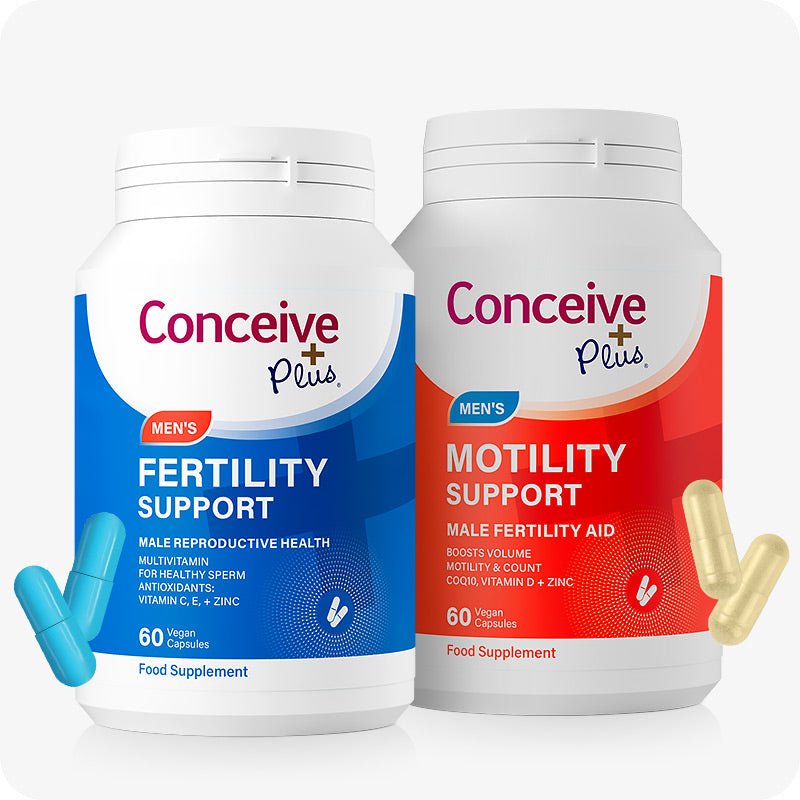
Supporting your fertility journey with a quality male fertility supplement alongside medical evaluation makes sense for most men. Conceive Plus offers a comprehensive male fertility formula with clinically supported doses of zinc, selenium, CoQ10, L-carnitine, folate, and vitamin D—available at conceiveplus.co.uk/collections/fertility-supplements.
Frequently Asked Questions About Male Fertility
Q: How long does it take to improve sperm quality?
Spermatogenesis takes approximately 72–90 days, so lifestyle and supplement changes need at least 3 months to show full effect in a semen analysis.
Q: Can stress alone cause infertility in men?
Chronic severe stress can significantly impair sperm parameters, but rarely causes complete infertility. Stress reduction is one component of a broader approach.
Q: Does age affect male fertility?
Yes, but less dramatically than female fertility. From age 40, sperm quality declines gradually—with reduced motility, increased DNA fragmentation, and higher rates of chromosomal abnormalities. Men can father children into old age, but reproductive risks increase after 45.
Q: Is a normal sperm count enough?
Not necessarily. Motility and morphology are equally important. A man with 50 million sperm/mL but 10% motility may have more difficulty conceiving than one with 20 million/mL and 65% motility.
Q: What is DNA fragmentation and should I test for it?
Sperm DNA fragmentation (SDF) measures damage to the genetic material within sperm. High SDF is associated with miscarriage, failed IVF cycles, and poor embryo development. Standard semen analysis doesn't measure SDF—it requires a specific test (DFI). Consider testing if you've had recurrent miscarriages or failed IVF cycles.
Q: Can supplements alone fix a low sperm count?
Supplements work best as part of a comprehensive approach including lifestyle changes. They won't overcome structural problems like varicocele or genetic conditions, but they can meaningfully improve parameters in men with lifestyle-related suboptimal fertility.
Q: Is it safe to take multiple fertility supplements?
An all-in-one male fertility formula is generally safer and more convenient than combining individual supplements, as it's designed to avoid excessive doses. Always check total nutrient intake if combining multiple products.
Q: Does wearing boxers instead of briefs really help?
The evidence is mixed, but studies do show marginally higher sperm concentration in men who wear boxers. The scrotal cooling effect is real—it just may be modest in practice.
Q: Can cycling damage sperm?
Heavy cycling (more than 5 hours per week on a bicycle) is associated with reduced sperm parameters, likely due to a combination of heat, pressure, and vibration. Moderate cycling is generally fine.
Q: When should we seek IVF vs. keep trying naturally?
NICE guidelines in the UK recommend referral for fertility assessment after 12 months of regular unprotected intercourse (6 months if the woman is over 36). Men with severely abnormal semen analysis results—particularly very low count or motility—should be referred earlier. IVF with ICSI is highly effective for severe male factor infertility.
Taking Action: A 90-Day Male Fertility Plan
Given the 90-day sperm maturation cycle, a structured 3-month plan gives you the best chance of meaningful improvement before your next semen analysis:
Month 1 — Foundation: Stop smoking, reduce alcohol to under 7 units/week, start a Mediterranean-style diet, begin a quality male fertility supplement.
Month 2 — Optimise: Add moderate exercise (3x/week), focus on sleep quality (7–9 hours), reduce heat exposure (switch to boxers, avoid long baths), manage stress actively (meditation, exercise, or professional support).
Month 3 — Sustain and Test: Maintain all changes, repeat semen analysis at end of month, review results with GP or urologist if needed.
Start your supplement journey with Conceive Plus male fertility formula—available online at conceiveplus.co.uk/collections/fertility-supplements. Designed specifically for men trying to conceive, with clinically supported doses of every key nutrient your sperm need to thrive.
Ready to support your fertility journey? Explore the full Conceive Plus range at https://conceiveplus.co.uk. Trusted by fertility specialists worldwide.