Ovulation Tracking: The Complete Guide for TTC Couples


Ovulation Tracking: The Complete Guide for TTC Couples
Understanding ovulation tracking is arguably the single most important step a couple can take when trying to conceive. Your fertile window is just 5–6 days long each cycle, and intercourse timed outside of it simply won't result in pregnancy. This guide covers every method, from body awareness to advanced monitors, and shows you how to use them together for the best outcomes.
Whether you're just starting out or have been tracking for several cycles, mastering ovulation tracking will help you understand your unique cycle, identify potential issues early, and maximise your chances of conception each month.
Why Ovulation Tracking Matters
Many couples are surprised to learn that even with perfectly timed intercourse, a healthy couple under 35 has roughly a 20–25% chance of conception per cycle. This figure assumes accurately identifying the fertile window. Without proper ovulation tracking, many couples miss their window entirely — particularly those with irregular cycles.
Research published in the New England Journal of Medicine (Wilcox et al., 1995) confirmed that conception only occurs when intercourse falls within the six-day window ending on the day of ovulation. Days outside this window yielded zero pregnancies across all 625 cycles studied.
This evidence underscores a critical point: it's not about how often you have sex — it's about when.
Method 1: Basal Body Temperature (BBT) Tracking
Ready to optimise your fertility journey? Explore Conceive Plus ovulation support →
Basal body temperature is your body temperature at complete rest, taken first thing in the morning before any movement. After ovulation, progesterone causes a sustained temperature rise of 0.2–0.5°C (0.4–1.0°F) that persists until your next period.
How to track BBT:
- Take your temperature at the same time every morning before getting out of bed
- Use a basal thermometer (accurate to 0.1°C)
- Record readings in an app or chart
- Look for the sustained rise — this confirms ovulation has occurred
Important limitation: BBT only confirms ovulation retrospectively. By the time your temperature rises, you're typically past your fertile window. BBT is best used over several cycles to identify your ovulation pattern and predict future cycles, rather than as a real-time indicator for timed intercourse.
Method 2: LH Surge Testing (Ovulation Predictor Kits)
Ovulation Predictor Kits (OPKs) detect the surge of luteinising hormone (LH) in urine that triggers ovulation. The LH surge typically precedes ovulation by 24–36 hours, giving you advance notice of your most fertile time.
How to use OPKs effectively:
- Begin testing 3–4 days before your expected ovulation date
- Test at the same time each day (mid-morning is often recommended — not first thing)
- Avoid excessive fluid intake before testing, as this dilutes urine
- A positive result (test line as dark as or darker than the control) means ovulation is likely within 24–36 hours
- Have intercourse on the day of the positive OPK and the following day
Limitation: Some women experience LH surges without ovulating (anovulatory cycles), particularly those with PCOS. An OPK positive doesn't guarantee ovulation occurred. Combining OPKs with BBT tracking addresses this gap.
Method 3: Cervical Mucus Monitoring
Oestrogen levels rise in the lead-up to ovulation, causing characteristic changes in cervical mucus (CM). Learning to read these changes gives you real-time, hormone-driven information about your fertility.
The CM progression:
- Post-period: Dry or little discharge
- Early follicular phase: Sticky, white or cream-coloured mucus
- Approaching ovulation: Creamy, lotion-like discharge increases
- Peak fertile window: Clear, stretchy, raw egg white mucus (EWCM) — can stretch 5–10cm between fingers
- Post-ovulation: Returns to thick, sticky, or dry
Egg white cervical mucus is the hallmark of peak fertility. It nourishes and channels sperm toward the cervix, and sperm can survive in EWCM for up to 5 days. Intercourse during EWCM days — even before the LH surge — can result in conception.
Method 4: Fertility Monitors
Advanced fertility monitors (such as Clearblue Advanced Digital, Mira, or KEGG) track multiple hormones — typically LH and oestrogen, sometimes progesterone — to identify your full fertile window rather than just the LH peak.
These devices are particularly useful for:
- Women with irregular cycles who need a broader tracking window
- Couples who've been TTC for 3+ months with timed intercourse
- Those who want to confirm both oestrogen rise (fertile window start) and LH peak (ovulation imminent)
- Women with PCOS or other cycle irregularities
High-end monitors like Mira can track FSH, LH, oestrogen, and progesterone simultaneously, providing a comprehensive hormonal picture across your cycle. Research has shown that cycle-monitoring devices that detect both oestrogen and LH identify up to 2 additional fertile days compared to LH-only strips — potentially doubling the effective window for timed intercourse.
Method 5: Ovulation Tracking Apps
Dedicated fertility apps (Clue, Ovia, Premom, Kindara, Natural Cycles) consolidate your data — cycle length, BBT, OPK results, CM observations — and use algorithms to predict your fertile window.
Apps are most accurate when they have several cycles of data to work with. Early predictions (first 1–2 cycles) should be treated as estimates only. When combined with OPK testing, apps become significantly more reliable.
Some apps now incorporate AI pattern recognition, which can identify irregular cycles, anovulatory patterns, or luteal phase defects that might otherwise go unnoticed.
Understanding Your Fertile Window: The Key Numbers
The fertile window consists of:
- The day of ovulation (highest probability)
- The day before ovulation (very high probability)
- 2 days before ovulation (high probability)
- 3 days before ovulation (moderate probability)
- 4 days before ovulation (lower probability)
- 5 days before ovulation (lowest probability)
Sperm survive 3–5 days in fertile cervical mucus; the egg survives only 12–24 hours after release. This means intercourse on the day before or the day of ovulation gives the highest probability, but having sperm present earlier — waiting for the egg — is also effective.
The optimal TTC strategy: have intercourse every 1–2 days throughout the fertile window. There's no benefit to abstaining to "save up" sperm — daily ejaculation actually improves sperm DNA integrity in most men.
Supporting Ovulation Naturally with Conceive Plus
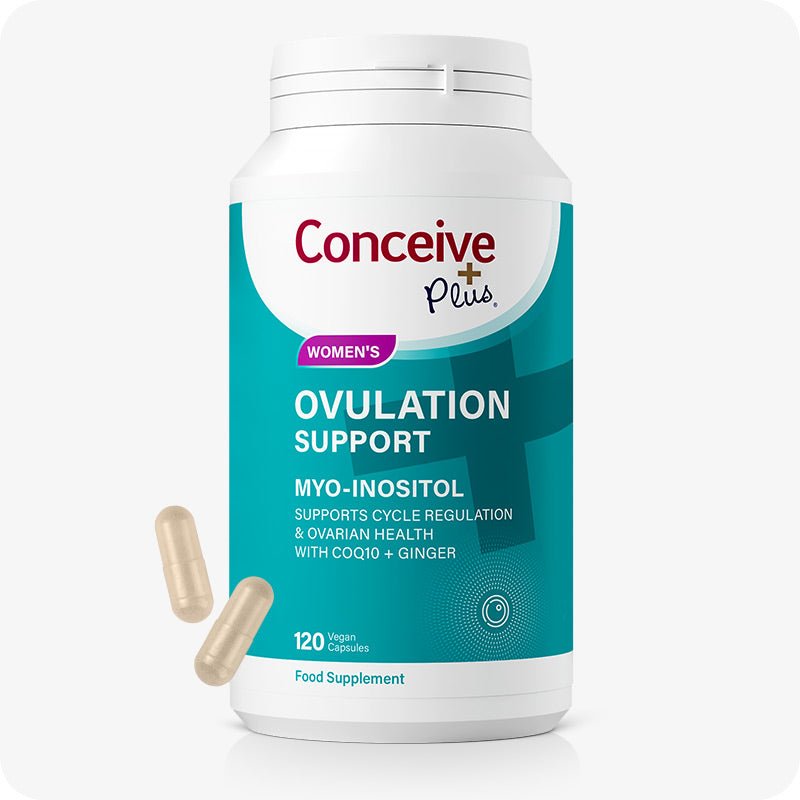
Effective ovulation tracking tells you when — but ovulation support supplements can help with the "whether." Conceive Plus Ovulation Support is formulated with Myo-Inositol, a compound extensively studied for its role in follicle development and ovulatory function, particularly in women with PCOS or irregular cycles.
Clinical research (including a Cochrane systematic review) confirms that Myo-Inositol supplementation in women with PCOS significantly improves ovulation frequency, reduces LH levels, and improves oocyte quality. The supplement works by improving insulin sensitivity in ovarian tissue — addressing the root cause of anovulation in many women.
Paired with accurate ovulation tracking, Conceive Plus Ovulation Support gives your body the biological tools to produce a mature, healthy egg at the right time.
Frequently Asked Questions: Ovulation Tracking
Q: How long does ovulation last?
A: Ovulation itself is instantaneous — the follicle releases the egg in seconds. But the egg remains viable for 12–24 hours. Your fertile window extends before ovulation due to sperm survival (up to 5 days).
Q: Can I ovulate twice in one cycle?
A: Superfetation (ovulating twice) is extremely rare. However, multiple eggs can be released within a 24-hour window (fraternal twins occur this way). You cannot ovulate a second time later in the same cycle.
Q: My OPK is always positive — what does this mean?
A: Persistently high LH can indicate PCOS or premature ovarian insufficiency. If OPKs are always positive or never clearly positive, consult your GP or a fertility specialist.
Q: I have irregular cycles — can I still track ovulation?
A: Yes, but you'll need to start testing earlier and test for longer each cycle. A fertility monitor that tracks multiple hormones is often more useful than simple OPK strips for irregular cycles.
Q: What if I can't detect EWCM?
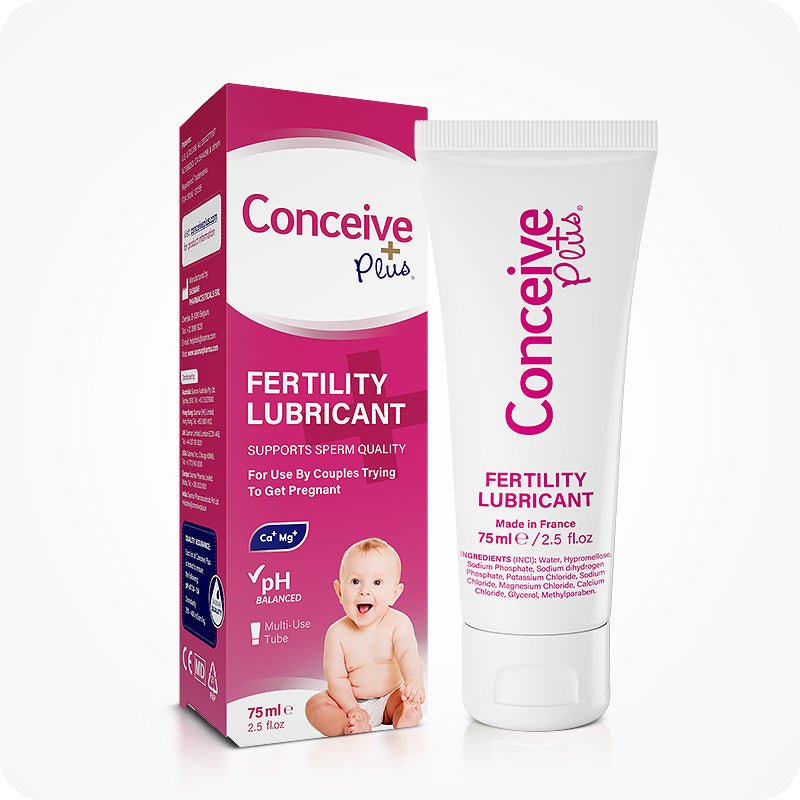
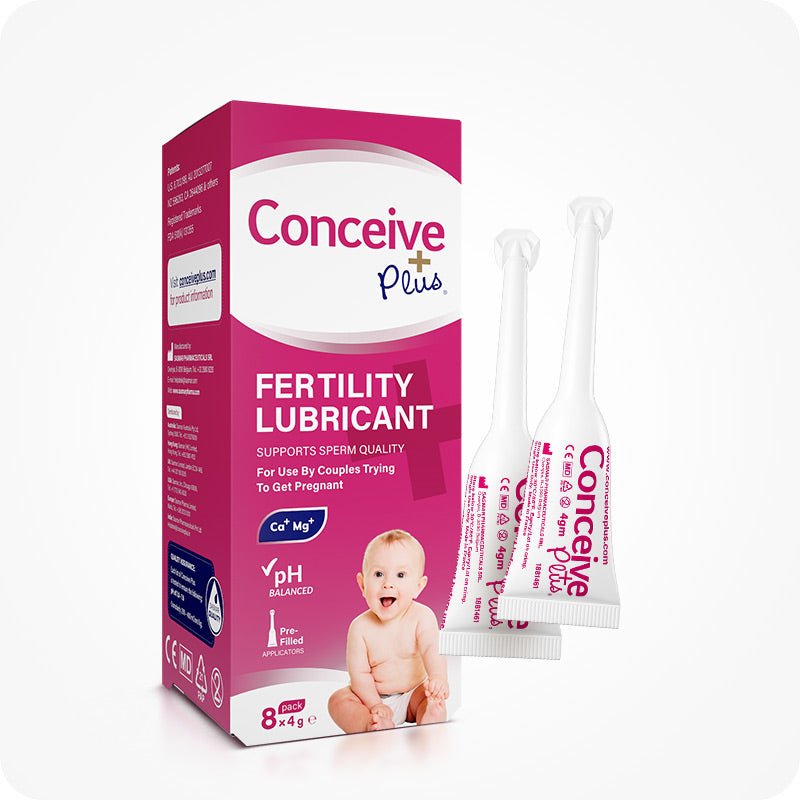
A: Some women produce less cervical mucus due to age, medication, or hormonal factors. A sperm-safe fertility lubricant like Conceive Plus can supplement or replace cervical mucus to support sperm survival during intercourse.
Q: Does stress affect ovulation?
A: Yes. Elevated cortisol can suppress GnRH pulsatility, disrupting LH/FSH signalling and delaying or preventing ovulation. Managing stress through exercise, sleep, and mindfulness is part of fertility optimisation.
Q: How many cycles of tracking do I need before seeing a doctor?
A: Current NICE guidelines recommend that women under 35 try for one year before seeking fertility investigation; over 35, six months. However, if tracking reveals anovulatory cycles, very irregular periods, or other concerns, consult a GP sooner.
Q: Can tracking ovulation replace contraception?
A: Fertility awareness methods have variable efficacy as contraception when used as the only method. They are not recommended as a primary contraceptive without proper training in the Sympto-Thermal or Sensiplan methods.
Q: Does weight affect ovulation?
A: Yes, significantly. Both underweight (BMI <18.5) and overweight (BMI >30) can disrupt hormonal regulation of ovulation. Adipose tissue converts androgens to oestrogen, disrupting the feedback loop necessary for regular ovulation.
Q: Is it normal for ovulation to occur on different days each cycle?
A: Yes — ovulation timing varies by several days even in women with regular cycles. Tracking multiple biomarkers (BBT + OPK + CM) gives the most accurate real-time picture of each individual cycle.
Mastering ovulation tracking transforms your TTC journey from guesswork into a data-informed strategy. Combine multiple methods, understand your cycle's unique patterns, and support your fertility biology with the right supplements and lubricants. The knowledge you gain each cycle moves you closer to conception.
Start Your Conceive Plus Journey Today
Clinically formulated. Trusted by fertility specialists worldwide.
Shop Now →