Ovulation Tracking: The Complete Guide to Identifying Your Fertile Window


Why Ovulation Tracking Matters
Understanding when you ovulate is the most important information for anyone trying to conceive. The fertile window spans approximately six days: the five days before ovulation and the day of ovulation itself. Sperm can survive up to five days in the female reproductive tract, but the egg survives only 12-24 hours. This narrow window makes precise timing essential. NEJM research confirms that conception probability increases from essentially zero outside the fertile window to approximately 20-30% on ovulation day. Yet only about 30% of women ovulate on textbook day 14. Cycle lengths and ovulation timing vary, making accurate tracking essential for maximising your chances each cycle.
Ovulation Predictor Kits (OPKs)
OPKs detect the LH surge occurring 24-36 hours before ovulation. When the test line is as dark as the control line, expect ovulation within the next day or two. Digital OPKs remove subjectivity, and advanced monitors tracking both LH and oestrogen metabolites give 4-7 days of fertile window warning. Best practices include testing in late morning or early afternoon, avoiding fluids for 2-4 hours before testing. Women with irregular cycles may need extended testing or fertility monitors that track oestrogen as well.
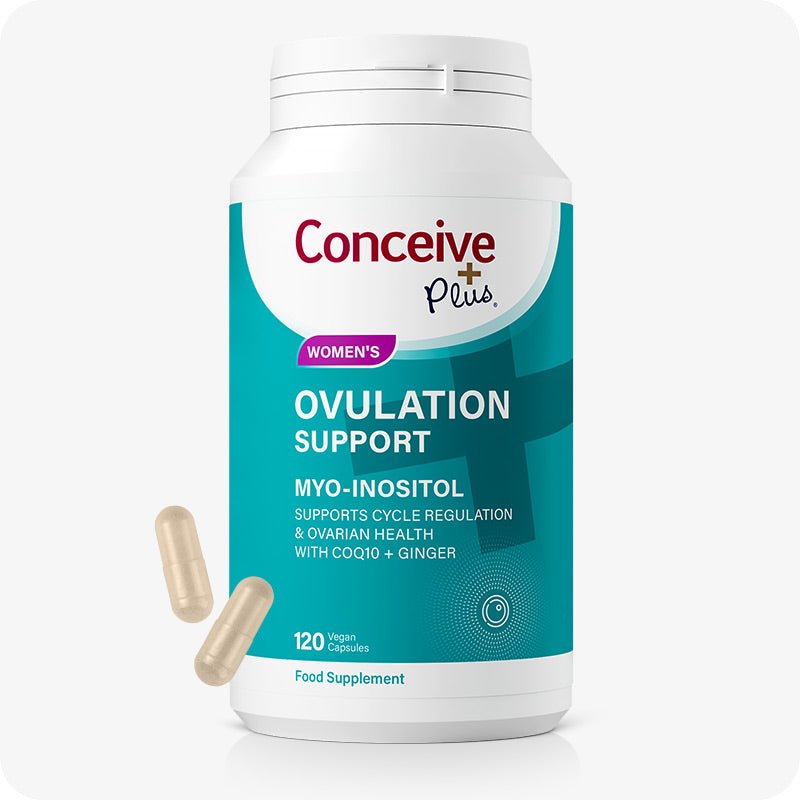
💙 Conceive Plus Ovulation Support — clinically-formulated inositol blend with myo- and d-chiro-inositol (40:1 ratio), folate and vitamin D3 for hormonal balance and regular cycles. Learn more →
Basal Body Temperature (BBT) Charting
BBT charting confirms that ovulation has occurred. After ovulation, progesterone raises BBT by 0.3-0.5 degrees Celsius. This sustained rise confirms ovulation, but it tells you after the fact — meaning the fertile window has already passed. BBT is most valuable when combined with OPKs or cervical mucus observation. For accurate readings, take your temperature immediately upon waking after at least three hours of uninterrupted sleep. Wearable sensors tracking temperature continuously throughout the night offer a convenient alternative.
Cervical Mucus: Your Body's Natural Signal
Cervical mucus changes through the cycle in response to rising oestrogen. After menstruation, mucus is scant and sticky, transitioning to creamy, then to the hallmark of peak fertility: clear, slippery, stretchy mucus resembling raw egg white. This fertile mucus channels sperm through the cervix and can keep them alive for up to five days. Research in Human Reproduction shows women tracking cervical mucus have pregnancy rates of 67-77% within three cycles. It is free, requires no equipment, and provides real-time fertility information that no other method can match.
Fertility Monitors and Technology
Advanced fertility monitors tracking both E3G (oestrogen metabolite) and LH can provide up to 5-7 days of fertile window notice. These are particularly valuable for women with irregular cycles. Wearable trackers measuring skin temperature and heart rate variability offer passive monitoring. While no device is 100% accurate, combining OPKs, BBT, cervical mucus, and monitors provides the most complete picture of your fertile window.
Nutritional Support for Regular Ovulation
For women with irregular cycles, addressing underlying hormonal imbalances can help restore regular ovulation. Myo-inositol supplementation significantly improves ovulation rates in women with PCOS or hormonal imbalance. Maintaining a healthy body weight is one of the most effective ways to support regular ovulation — both underweight and overweight women have higher anovulation rates. Stress reduction also plays a meaningful role, as elevated cortisol can suppress the hypothalamic-pituitary-ovarian axis. Incorporating mindful movement, adequate sleep, and relaxation techniques helps maintain hormonal balance for regular cycles.
Frequently Asked Questions
What is the best method to track ovulation?
Combining OPKs, cervical mucus observation, and BBT charting gives the most complete picture of your fertile window.
How long does an egg stay fertile after ovulation?
Approximately 12-24 hours. That is why timing intercourse to the days before and including ovulation is critical.
Do ovulation predictor kits work for PCOS?
Standard OPKs are less reliable for PCOS due to chronically elevated LH. Advanced monitors tracking oestrogen and LH are more useful.
Can stress delay ovulation?
Yes, high stress can delay or suppress ovulation. Managing stress through mindfulness and adequate sleep supports regular cycles.
What time of day is best for OPK testing?
Late morning to early afternoon (10 AM to 2 PM) is generally recommended for best accuracy.
💙 Ready to support your journey? Conceive Plus Ovulation Support — clinically-formulated inositol blend with myo- and d-chiro-inositol (40:1 ratio), folate and vitamin D3 for hormonal balance and regular cycles. Shop now →