Sperm Health Supplements: The Complete Guide for Men Trying to Conceive in the UK


Sperm Health Supplements: The Complete Guide for Men Trying to Conceive in the UK
Sperm health is central to conception success — yet it's often the last thing men think about when a couple starts trying to conceive. The reality is stark: sperm quality has declined significantly over the past four decades. A landmark 2017 study in Human Reproduction Update found that sperm counts in Western men have fallen by more than 50% since the 1970s, and the decline continues. For couples in the UK experiencing difficulty conceiving, male factor infertility contributes in approximately 40–50% of cases.
The encouraging news is that sperm health is highly responsive to targeted interventions. Unlike eggs — which are present from birth and cannot be regenerated — sperm are produced continuously in a cycle of approximately 72–74 days. This means that changes you make today in nutrition, lifestyle, and supplementation will be reflected in measurably improved sperm quality within 3 months.
This guide covers everything UK men need to know about sperm health supplements: what the clinical evidence supports, which nutrients matter most, what to look for when choosing a supplement, and how to build a complete protocol that gives your swimmers the best possible chance.
Why Sperm Quality Matters Beyond Sperm Count
Standard semen analysis measures sperm count, motility (movement), and morphology (shape). But these parameters only tell part of the story. A growing area of research focuses on sperm DNA fragmentation — damage to the genetic material carried within each sperm cell — which can be present even when standard semen parameters appear normal.
Sperm with high DNA fragmentation may successfully fertilize an egg but lead to failed implantation, early miscarriage, reduced IVF and ICSI success rates, and longer time to pregnancy even with normal semen analysis. The primary cause of sperm DNA fragmentation is oxidative stress — directly addressable through targeted supplementation.
Coenzyme Q10: Motility and DNA Protection
Ready to take action? Conceive Plus has supported over 2 million couples worldwide on their fertility journey. Shop the full Conceive Plus range →
CoQ10 serves a dual role in sperm health: powering sperm motility as an essential component of mitochondrial ATP production, and acting as a potent antioxidant protecting sperm DNA. Sperm cells are unusually vulnerable to oxidative stress due to their high polyunsaturated fatty acid content and limited antioxidant capacity.
A 2013 Cochrane review found that CoQ10 supplementation significantly improved sperm concentration and motility. A 2019 randomised controlled trial in Andrology showed meaningful improvements in all three major semen parameters with 200–300 mg CoQ10 daily over 26 weeks.
Recommended dose: 100–300 mg/day. Men over 40 may benefit from ubiquinol (the active reduced form).
Zinc: The Testosterone and Spermatogenesis Mineral
Zinc is essential for testosterone synthesis, sperm production, and sperm membrane stability. The testes are one of the highest zinc-concentration tissues in the human body. UK dietary surveys suggest a meaningful proportion of men consume below the Reference Nutrient Intake for zinc — particularly those following plant-heavy diets, where phytate content reduces zinc bioavailability.
For men with borderline sperm parameters, correcting zinc status is often one of the highest-yield interventions available. Choose zinc citrate or glycinate for best absorption. Dose: 15–25 mg/day.
Selenium: Essential Antioxidant for UK Men
Selenium is a component of glutathione peroxidase — the enzyme that neutralizes hydrogen peroxide in sperm cells. Low selenium is independently associated with reduced sperm motility and increased DNA fragmentation. Critically for the UK: selenium intake has declined significantly following the shift from North American wheat (selenium-rich) to European wheat (selenium-poor) in bread production. Supplemental selenomethionine (100–200 mcg/day) corrects this gap effectively.
L-Carnitine: Fuel for Sperm Swimming
L-Carnitine is concentrated in the epididymis where sperm mature and is directly involved in the energy metabolism powering sperm flagellar movement. Multiple randomised controlled trials show that L-carnitine supplementation (1–2 g/day) significantly improves sperm motility, with the strongest evidence in men with asthenospermia (poor motility).
Vitamin D: The UK Priority Nutrient
Vitamin D receptors are present on sperm and in Leydig cells (which produce testosterone). Given the UK's limited sunlight exposure, vitamin D deficiency is extremely prevalent — Public Health England recommends supplementation for the entire UK population during autumn and winter. For men trying to conceive, optimising vitamin D to 75–100 nmol/L (serum 25-OH) is associated with improved testosterone, sperm motility, and morphology.
Methylfolate: The Overlooked Male Fertility Nutrient
While folate supplementation is universally recommended for women, its importance for male fertility is underappreciated. Folate is essential for DNA synthesis and methylation in developing sperm. Men with low folate show higher rates of sperm DNA aneuploidy (abnormal chromosome numbers). Choose methylfolate (5-MTHF) over folic acid for the same MTHFR-related reasons that apply to women — approximately 40% of the UK population carries MTHFR variants that impair folic acid conversion.
Building a Complete UK Sperm Health Protocol
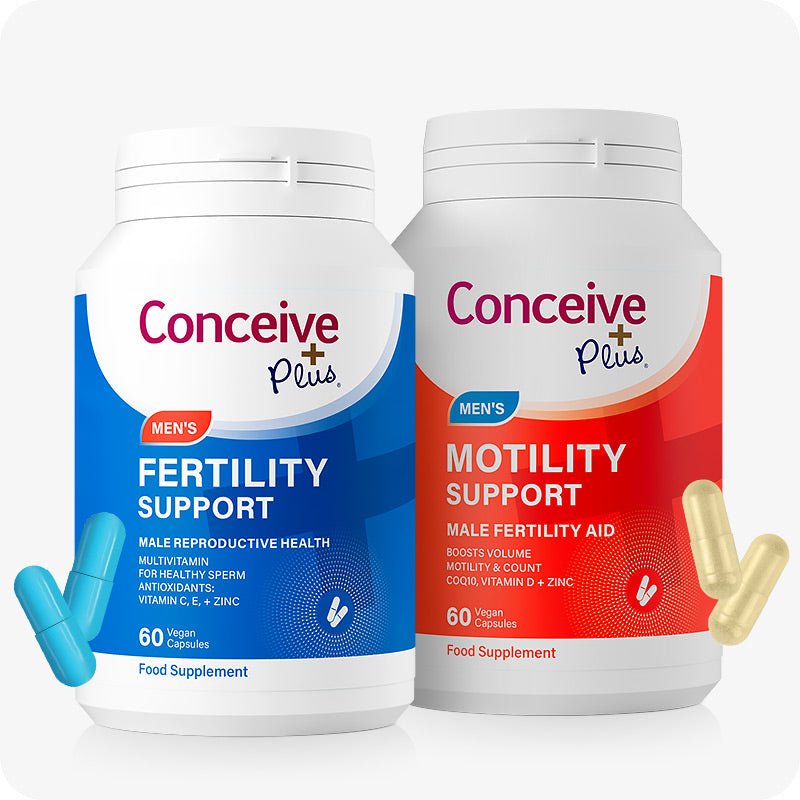
Rather than sourcing individual supplements, a well-formulated male fertility supplement provides the full evidence-based nutrient profile in a single product. Conceive Plus Men's Fertility Support provides CoQ10, zinc, selenium, L-carnitine, and methylfolate in clinically relevant dosages — available in the UK at conceiveplus.co.uk.
Also address lifestyle factors:
- Heat: Switch to loose cotton underwear; avoid prolonged laptop heat on lap
- Alcohol: Reduce to within NHS guidelines or eliminate during TTC period
- Smoking: The single highest-yield change for male smokers — quit now
- Exercise: Moderate regular exercise boosts testosterone; extreme endurance training can suppress it
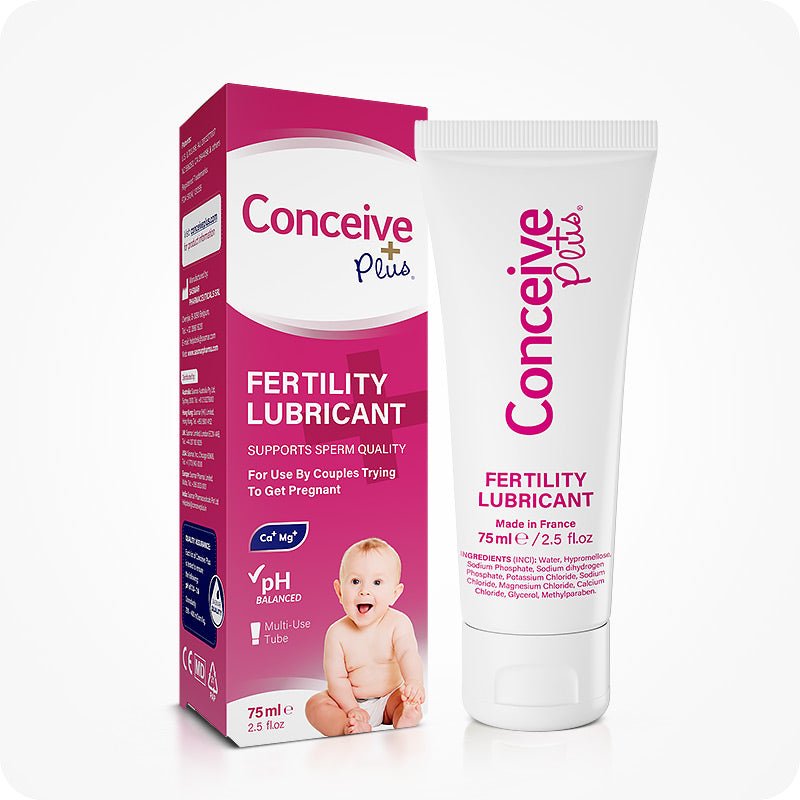
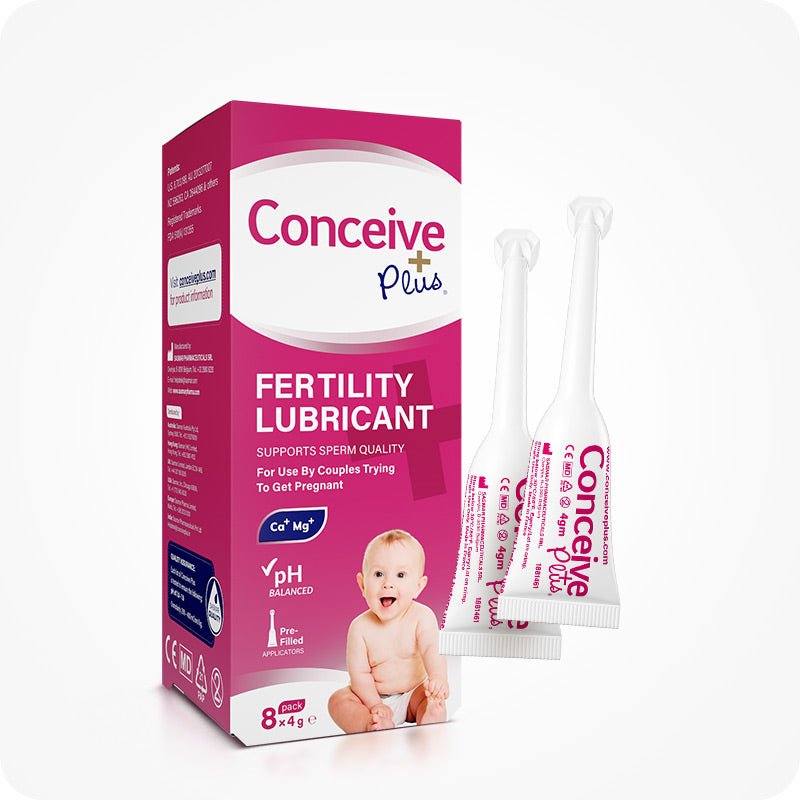
- Lubricant: Use Conceive Plus fertility lubricant (sperm-safe pH and osmolality) rather than standard lubricants that impair sperm motility
Frequently Asked Questions: Sperm Health Supplements UK
How long should I take sperm health supplements before trying to conceive?
Start at least 3 months before actively trying to conceive — this covers the full spermatogenesis cycle (72–74 days). Starting earlier gives more time for meaningful improvement.
Can I get sperm health supplements on the NHS?
Generally, no. Supplements for fertility optimisation are not routinely prescribed on the NHS. Quality supplements from reputable brands like Conceive Plus are available to purchase and represent good value relative to the potential benefit.
Is there evidence that supplements improve IVF outcomes for men?
Yes. A 2019 trial found that antioxidant supplementation (CoQ10, vitamin E, selenium, zinc, folate) for 3 months before IVF significantly reduced sperm DNA fragmentation and improved fertilization rates. Conceive Plus Men's Fertility Support covers the key antioxidant nutrients in this evidence base.
What's the best diet for sperm health?
A Mediterranean-style diet consistently shows the strongest association with better sperm quality. Key features: high vegetable, fruit, legume, and whole grain intake; olive oil as primary fat; moderate oily fish; limited processed meat, trans fats, and refined sugar. The antioxidants in colourful produce (lycopene in tomatoes, quercetin in onions, lutein in leafy greens) directly benefit sperm quality.
Does cycling affect sperm health?
Prolonged cycling on narrow seats can impair sperm production through heat and pressure effects. Recreational cycling appears safe; competitive cyclists training for many hours per week may want to use cushioned cycling shorts and take breaks.
Can stress cause low sperm count?
Chronic stress increases oxidative stress in seminal plasma, which is harmful to sperm DNA integrity. Managing stress — through regular exercise, adequate sleep, and evidence-based techniques — is worth doing for its indirect benefits to testosterone levels and sperm quality.
Should both partners supplement when trying to conceive?
Absolutely. Fertility is a couple's issue. Conceive Plus offers separate targeted supplements for men and women — addressing the distinct nutritional needs of each partner's reproductive biology.
Is CoQ10 safe long-term?
CoQ10 has an excellent safety profile. Studies have used CoQ10 continuously for up to 12 months without adverse effects. It is generally considered safe to continue through a fertility journey.
What's the difference between CoQ10 and Ubiquinol?
CoQ10 (ubiquinone) is the oxidised form; Ubiquinol is the active, reduced form. The body converts ubiquinone to ubiquinol, but this conversion efficiency declines with age. Men over 40 may benefit from choosing ubiquinol directly. Standard CoQ10 is appropriate for men under 35–40.
How do I know if my lubricant is safe for sperm?
Unless your lubricant is specifically tested and certified as sperm-safe (like Conceive Plus), it should be avoided during the fertile window. Most popular brands — as well as saliva and coconut oil — are significantly sperm-toxic due to their pH, osmolality, or chemical composition.
Conclusion: Invest in Your Sperm Health
A complete protocol — CoQ10, zinc, selenium, L-carnitine, methylfolate, vitamin D, lifestyle optimisation, and a sperm-friendly lubricant like Conceive Plus — represents the best evidence-based approach for UK men. Conceive Plus makes this simpler with a dedicated Men's Fertility Support supplement designed for exactly this purpose. Shop Conceive Plus Men's Fertility Support at conceiveplus.co.uk →
Start your Conceive Plus journey today. Join millions of couples who have trusted Conceive Plus to support their fertility naturally. Explore all Conceive Plus products →