Unexplained Infertility: Understanding the Diagnosis and Finding Your Path to Parenthood


What Is Unexplained Infertility?
Unexplained infertility is one of the most frustrating diagnoses a couple can receive. After months of testing — blood work, semen analysis, ultrasound scans, and perhaps a hysterosalpingogram — you are told that everything looks "normal." And yet, pregnancy has not happened. For many, this contradictory experience is more distressing than a clear diagnosis, because there is no obvious target to address.
Unexplained infertility affects approximately 15–30% of couples seeking fertility treatment, according to the World Health Organization. It is defined as the failure to conceive after 12 months of regular unprotected intercourse (or six months for women over 35) when standard fertility investigations return normal results for both partners.
The term "unexplained" does not mean there is no cause — it means the cause has not been identified with current testing methods. Fertility is extraordinarily complex, involving hormonal signals, egg and sperm quality, implantation factors, and immune interactions that routine testing may not capture. Understanding this nuance is the first step toward regaining a sense of control.
What Standard Fertility Testing Actually Covers
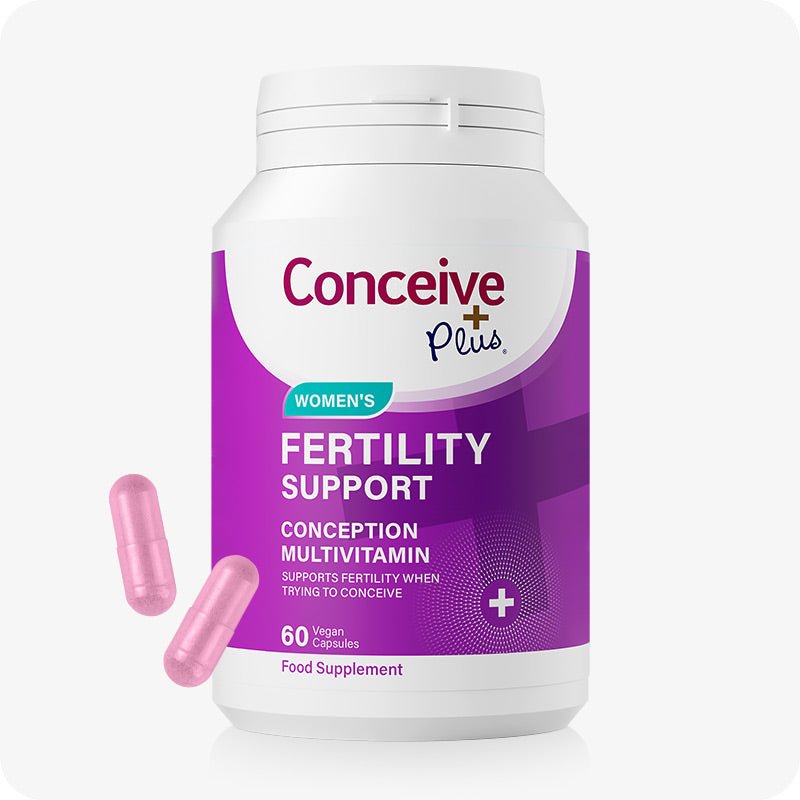
Nourish Your Body with Conceive Plus Women's Fertility Support
Our Women's Fertility Support formula delivers myo-inositol, methylated folate, CoQ10, vitamin D, and zinc in one daily serving — covering the key nutrients for hormone balance, egg quality, and implantation. Shop Women's Fertility Support
To understand unexplained infertility, it helps to know what standard testing includes — and, critically, what it leaves out. For women, testing typically includes ovulation confirmation (usually via blood progesterone or LH testing), ovarian reserve assessment (AMH and FSH levels), thyroid function, and a pelvic ultrasound. Tubal patency is assessed with an HSG or HyCoSy. For men, a standard semen analysis checks sperm count, motility, and morphology.
What these tests do not capture is extensive. They do not assess egg quality at the cellular level — the intricate meiotic divisions that determine whether an egg can be fertilised and develop normally. They do not evaluate sperm DNA integrity, which can be compromised even when count and motility are normal. They do not examine the endometrial microbiome or immune factors that may prevent implantation. A study in Reproductive Biomedicine Online found that up to 40% of couples with unexplained infertility had abnormal sperm DNA fragmentation when tested with advanced assays, despite normal standard semen analysis.
Potential Hidden Causes of Unexplained Infertility
Researchers have identified several possible contributors that fall outside routine testing. Sperm DNA fragmentation is one of the most studied: when sperm DNA is damaged, fertilisation rates and embryo development can be affected even when traditional semen parameters appear normal. A meta-analysis of 17 studies found that couples with high sperm DNA fragmentation had significantly lower pregnancy rates, both naturally and with IVF.
Implantation failure is another area of active research. The endometrium must be receptive for only a narrow window — approximately four to five days — and subtle timing mismatches can prevent embryo attachment. Newer tests like the endometrial receptivity array (ERA) assess gene expression in the uterine lining to identify whether the window of implantation is shifted, though the clinical utility of ERA remains debated.
Immune factors may also play a role. Natural killer (NK) cells, which are part of the body's immune defence, are present in the uterine lining and may affect implantation if overactive. Thyroid autoimmunity — even in women with normal thyroid function — has been linked to unexplained infertility in several studies.
Luteal phase deficiency, where the uterine lining does not develop adequately after ovulation, is another possible but controversial diagnosis. While its clinical significance is debated, some studies suggest that progesterone support in the luteal phase may benefit women with unexplained infertility.
Evidence-Based Next Steps After Diagnosis
Receiving an unexplained infertility diagnosis does not mean you are out of options. In fact, many couples with this diagnosis go on to conceive, both naturally and with treatment. A landmark study in the British Medical Journal followed couples with unexplained infertility and found that 40–50% conceived naturally within three years without any intervention. However, given that many couples do not want to wait that long, several evidence-based approaches are available.
Lifestyle optimisation should be the first step. A 2022 systematic review in Fertility and Sterility found that women who made three or more lifestyle modifications — including balanced nutrition, stress reduction, and moderate exercise — had significantly higher pregnancy rates regardless of their diagnosis.
For couples ready to pursue treatment, the standard progression is often:
- Supervised ovulation induction with timed intercourse — using letrozole or clomiphene citrate combined with ovulation tracking
- Intrauterine insemination (IUI) — where prepared sperm is placed directly into the uterus around ovulation, often combined with mild ovarian stimulation
- In vitro fertilisation (IVF) — particularly with ICSI (intracytoplasmic sperm injection) when male factors are suspected
A randomised trial in The Lancet comparing treatment strategies for unexplained infertility found that IUI with ovarian stimulation achieved a 33% live birth rate after three cycles, while IVF achieved a 46% live birth rate after three cycles. The choice depends on individual circumstances, financial considerations, and personal preferences.
Nutritional Support for Unexplained Infertility
When routine testing cannot identify a cause, nutritional optimisation becomes one of the most actionable strategies available. Targeted supplementation can improve egg quality, sperm quality, and the uterine environment — addressing many of the subtle factors that standard tests miss.
Coenzyme Q10 (CoQ10) is one of the most researched supplements for fertility. A study in the Journal of Clinical Endocrinology and Metabolism found that women who took 600 mg of CoQ10 daily for two months had significantly higher clinical pregnancy rates in subsequent IVF cycles compared to placebo. For men, CoQ10 supplementation has been shown to improve sperm motility by up to 40% in clinical trials.
Omega-3 fatty acids, particularly DHA, support egg membrane health and have been linked to improved embryo development. A study in Reproductive Biology and Endocrinology found that women with higher blood levels of omega-3s had better ovarian reserve markers and higher pregnancy rates.
Conceive Plus Women's Fertility Support and Men's Fertility Support formulations are designed to address the full spectrum of nutritional needs for conception. The women's formula combines myo-inositol, methylated folate, CoQ10, vitamin D, and zinc — nutrients that support hormone balance, egg quality, and implantation. The men's formula provides CoQ10, zinc, selenium, and L-carnitine to support sperm integrity and motility. By covering both partners, these supplements address the hidden nutritional gaps that may contribute to unexplained infertility.
Managing the Emotional Impact of Unexplained Infertility
The emotional burden of unexplained infertility is often heavier than that of a diagnosed condition. When you have a clear diagnosis, you can research, plan, and take action. Without one, you may feel stuck in limbo — uncertain whether to wait, treat, or escalate. The lack of closure can breed anxiety, self-doubt, and strain on relationships.
A study in the European Journal of Obstetrics and Gynecology found that women with unexplained infertility reported higher levels of psychological distress than those with diagnosed causes. This is partly because the unknown can feel more threatening than the known, and partly because friends and family may not understand why "nothing is wrong" yet pregnancy has not happened.
It is important to give yourself permission to seek emotional support. Counselling, fertility support groups, and couples therapy can provide space to process these feelings without judgment. Many couples find that reframing the diagnosis — from "there's nothing wrong" to "we haven't found the cause yet" — helps shift the narrative from helplessness to proactive exploration.
Build Your Fertility Foundation
Whether you're preparing for IVF or supporting natural conception, Conceive Plus has the clinically researched nutrients you need. Shop the Full Women's Range
Frequently Asked Questions About Unexplained Infertility
Q: Can you get pregnant naturally with unexplained infertility?
A: Yes. Studies show that 40–50% of couples with unexplained infertility conceive naturally within three years. The chances are higher for younger couples and those who have been trying for less time.
Q: Does unexplained infertility get worse over time?
A: Age-related fertility decline is separate from the unexplained diagnosis. While the underlying factors may not worsen, the impact of ageing on egg quality means that earlier intervention becomes more important over time.
Q: Should I see a specialist for unexplained infertility?
A: Yes, particularly a reproductive endocrinologist who can offer advanced testing beyond standard work-ups. Specialists can also discuss treatment options like IUI and IVF that may bypass unidentifiable barriers to conception.
Q: Does weight affect unexplained infertility?
A: Yes. Both underweight (BMI below 19) and overweight (BMI above 30) are associated with reduced fertility, even when other tests are normal. Achieving a healthy BMI improves pregnancy outcomes in couples with unexplained infertility.
Q: Can stress cause unexplained infertility?
A: While stress alone does not cause infertility, it can affect hormone balance and reduce the frequency of intercourse. High stress levels are associated with lower pregnancy rates across all fertility diagnoses.
Q: How long should I try IUI before moving to IVF for unexplained infertility?
A: Most clinicians recommend three to four cycles of IUI with ovarian stimulation before considering IVF. If IUI has not resulted in pregnancy after four cycles, the likelihood of success with further IUI cycles declines significantly.
Q: Can supplements help with unexplained infertility?
A: Growing evidence suggests that targeted supplementation — including CoQ10, myo-inositol, omega-3s, zinc, and folate — can improve egg and sperm quality, addressing factors that standard tests may not detect.
Q: Is there a genetic component to unexplained infertility?
A: Some genetic variants affecting hormone receptors, immune function, and cell division may contribute. Genetic testing is not yet standard but is an area of active research.
Q: What tests should I ask for beyond the standard work-up?
A: Consider asking about sperm DNA fragmentation testing, endometrial receptivity analysis, thyroid antibody testing, and vitamin D levels. Discuss these options with your fertility specialist.
Q: Can unexplained infertility resolve on its own?
A: For some couples, yes. Time-to-pregnancy data suggests that a significant percentage of couples with unexplained infertility conceive without any treatment, particularly within the first two years of trying.