Age and Fertility: What Every Woman Needs to Know About Her Reproductive Timeline in 2026


Understanding the Age-Fertility Connection
One of the most well-established facts in reproductive medicine is the relationship between age and fertility. Unlike men, who produce sperm throughout their lives, women are born with a finite number of eggs. This ovarian reserve diminishes with age both in quantity and quality, creating a biological timeline that every woman should understand.
At birth, a female baby has approximately one to two million eggs. By puberty, this number has already declined to around 300,000 to 500,000. By age 37, most women have fewer than 25,000 eggs remaining, and by menopause typically around age 51 fewer than 1,000 remain. But the decline is not just about quantity; egg quality also deteriorates with age, increasing chromosomal abnormalities.
A landmark study in Fertility and Sterility analysed over 6,000 cycles and found that the chance of pregnancy per cycle peaks at about 35% at age 27. This rate remains relatively stable until about age 35, after which it declines more steeply. By age 40, the per-cycle rate drops to approximately 8 to 10%.
Ready to Take the Next Step?
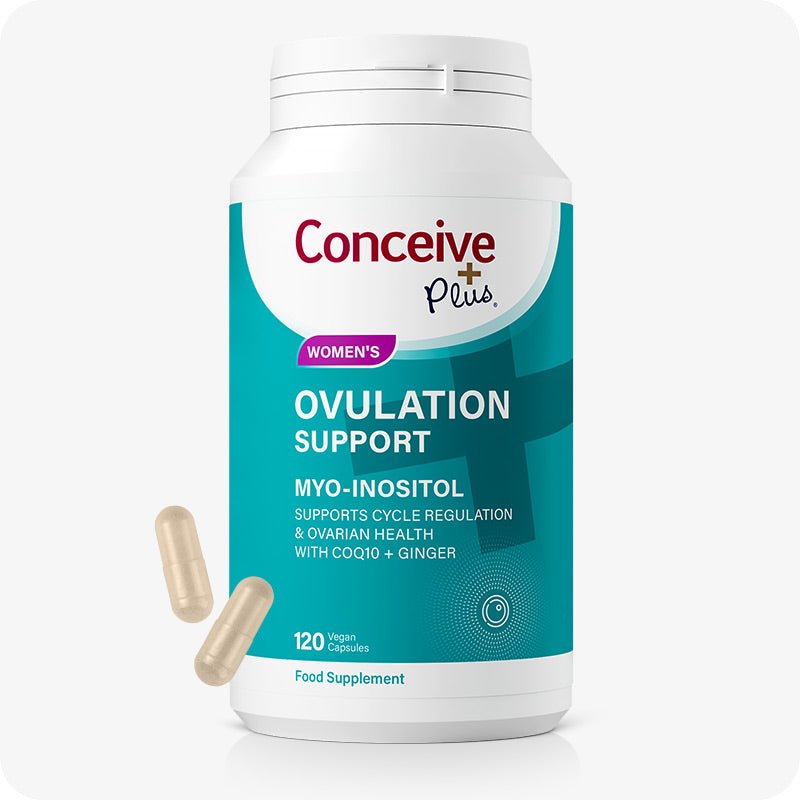
Support your fertility at every stage with Conceive Plus Ovulation Support formulated with myo-inositol and folic acid for hormonal balance.
Shop Conceive Plus Ovulation SupportHow Age Affects Egg Quality and Ovarian Reserve
Egg quality is the single most important factor in female fertility. For women under 35, approximately 50 to 60% of eggs are chromosomally normal. By age 40, this drops to approximately 20 to 30%. By age 43, fewer than 10% are likely normal. This chromosomal decline is the primary reason miscarriage rates increase with age from approximately 10 to 15% under 35 to roughly 33% at age 40.
Ovarian reserve can be assessed through biomarkers like Anti-Mullerian hormone and antral follicle count. While these tests cannot predict future fertility with certainty, they help women understand where they stand on their reproductive timeline.
Fertility in Your 20s, 30s, and 40s
Your 20s: Peak fertility with a 25 to 30% chance of conceiving per cycle. Only about 5% of women have not conceived after one year.
Early to Mid 30s: Fertility remains good with per-cycle rates of approximately 20%. By age 34, approximately 10 to 15% of women experience difficulty conceiving after one year.
Late 30s: Per-cycle rates fall to approximately 15% by age 35. Approximately one in three women aged 35 to 39 will take more than a year to conceive. Fertility specialists recommend women over 35 seek evaluation after six months.
Your 40s: Per-cycle rates drop to 5 to 8% by age 40 and less than 3% by age 43. However, many women in their early 40s do conceive successfully with assisted reproductive technologies.
Fertility Preservation Options
For women not ready to conceive, egg freezing has become increasingly viable. With modern vitrification, egg survival rates exceed 90% in experienced centres. The ideal age for egg freezing is the late 20s to early 30s. Freezing 15 to 20 mature eggs at age 35 gives approximately a 70 to 80% chance of at least one live birth.
Lifestyle Factors That Support Fertility
A fertility-supportive diet emphasises colourful fruits and vegetables, healthy fats, lean proteins, and low-glycaemic carbohydrates. Maintaining a healthy body weight is crucial. Smoking is particularly damaging women who smoke reach menopause one to four years earlier and have a 43% lower fertility rate.
When to Seek Help
Under 35: try naturally for 12 months before evaluation. Age 35 to 40: seek evaluation after six months. Over 40: consider immediate evaluation. A standard workup includes blood tests, pelvic ultrasound, and semen analysis.
Frequently Asked Questions
1. At what age does fertility peak? Mid-to-late 20s.
2. When does fertility start to decline? Gradual decline begins around age 30, with a more pronounced drop after 35.
3. Can I improve egg quality at 37? A healthy lifestyle and nutrient-rich diet may support optimal egg health.
4. Does male age affect fertility? Yes, advanced paternal age is associated with decreased sperm quality.
5. Can I get pregnant naturally after 40? Yes, about one in three women over 40 who actively try will conceive within a year.
6. What is the best age to freeze eggs? Late 20s to early 30s.
7. Does IVF bypass age-related decline? IVF cannot reverse egg quality decline.
8. How can I check my fertility? Ovarian reserve testing provides information about remaining egg supply.
9. Does having regular periods mean good fertility? Regular periods suggest regular ovulation but do not guarantee egg quality.
10. Can I slow my biological clock? A healthy lifestyle, normal BMI, not smoking, and stress management help protect fertility.
Your Journey to Parenthood Starts Here
Support your fertility at every stage with Conceive Plus Ovulation Support formulated with myo-inositol and folic acid for hormonal balance.
Explore Conceive Plus Ovulation Support