Ovulation Tracking: The Complete Guide to Your Fertile Window and Cycle Timing


Ovulation Tracking: The Complete Guide to Your Fertile Window and Cycle Timing
Ovulation tracking is one of the most powerful tools available to anyone trying to conceive. Understanding exactly when you ovulate — and which methods give you the most accurate information — can transform your approach to conception and significantly reduce the time it takes to get pregnant. Whether you're in your first month of trying or have been on this journey for a while, mastering ovulation tracking puts you in control of the process.
This guide covers everything you need to know: the science of ovulation, the most reliable tracking methods, how to read the signs your body gives you, and how to time intercourse for the greatest chance of conception.
What Is Ovulation and Why Does It Matter?
Ovulation is the moment when a mature egg is released from one of the ovaries and travels down the fallopian tube toward the uterus. This event occurs roughly once per menstrual cycle and is the only time during the cycle when conception is possible.
The egg remains viable — capable of being fertilised — for just 12 to 24 hours after release. Sperm, however, can survive in the female reproductive tract for up to 5 days under the right conditions. This asymmetry is crucial: it means the days before ovulation are often more important for conception than ovulation day itself.
Research published in the New England Journal of Medicine by Wilcox and colleagues found that 90% of pregnancies in a given cycle resulted from intercourse that occurred within the 6-day window ending on ovulation day. The highest probability of conception came from intercourse on the two days immediately before ovulation.
This is why ovulation tracking — identifying your personal ovulation day with precision — is so valuable.
The Menstrual Cycle: A Roadmap
Support your fertility journey with Conceive Plus
Our fertility supplements and sperm-safe lubricants are trusted by couples across the UK — formulated with the nutrients and pH balance that support conception.
Shop Fertility Supplements →Before diving into tracking methods, it helps to understand what's happening hormonally throughout the cycle:
- Follicular Phase (Days 1–13 in a 28-day cycle): FSH (follicle-stimulating hormone) from the pituitary gland stimulates follicles in the ovaries. One dominant follicle develops and produces increasing amounts of oestrogen.
- LH Surge: When oestrogen peaks, it triggers a surge of luteinising hormone (LH) from the pituitary. This LH surge is what causes ovulation — typically 24–36 hours after the surge begins.
- Ovulation (around Day 14): The dominant follicle ruptures and releases the egg.
- Luteal Phase (Days 15–28): The empty follicle becomes the corpus luteum, which produces progesterone to prepare the uterine lining for implantation. If no fertilisation occurs, progesterone drops and menstruation begins.
This is the textbook model. In reality, cycle length and ovulation timing vary considerably from woman to woman — and even from cycle to cycle in the same woman. This variability is precisely why ovulation tracking matters.
Ovulation Predictor Kits (OPKs): The Most Reliable Real-Time Method
Ovulation predictor kits detect the LH surge in urine. Since ovulation follows the LH surge by 24–36 hours, a positive OPK tells you that ovulation is imminent — giving you a precise window for intercourse.
How to Use OPKs Correctly
- Start testing from Day 10 of your cycle (or 4–5 days before your expected ovulation date)
- Test at the same time each day — afternoon (between 12pm and 8pm) is optimal, as LH is typically secreted in the morning and takes a few hours to appear in urine
- Limit fluid intake in the 2 hours before testing to avoid diluting the sample
- A positive result shows a test line as dark or darker than the control line
Types of OPKs
- Standard strip tests: Affordable and widely available; require visual interpretation of line darkness
- Digital OPKs: Give a clear "smiley face" or "positive" readout, removing interpretation uncertainty; more expensive per use
- Advanced digital monitors: Track both LH and oestrogen, identifying a longer fertile window; highest cost but most comprehensive
OPKs are the gold standard for real-time ovulation tracking. For most couples trying to conceive, strip OPKs offer an excellent balance of accuracy and cost-effectiveness when used correctly.
Basal Body Temperature (BBT) Charting
Basal body temperature is your body's lowest resting temperature, measured first thing in the morning before any activity. After ovulation, progesterone causes a sustained rise in BBT of approximately 0.2°C to 0.5°C (0.4°F to 1°F) that persists until the next menstrual period.
How to Chart BBT
- Take your temperature every morning at the same time, immediately upon waking — before getting up, eating, or drinking
- Use a basal thermometer (reads to two decimal places) rather than a standard thermometer
- Record readings in a dedicated app (such as Fertility Friend or Ovia) or on graph paper
- After 2–3 cycles, you'll identify a clear pattern of pre- and post-ovulation temperatures
BBT Limitations
BBT charting is retrospective — the temperature rise confirms that ovulation has already occurred, rather than predicting it. Illness, alcohol, poor sleep, and early waking can all affect readings. Despite these limitations, BBT is valuable for pattern recognition over multiple cycles and for confirming ovulation occurred.
Cervical Mucus Monitoring
The cervix produces mucus throughout the menstrual cycle, and its consistency changes predictably in response to oestrogen and progesterone levels. Observing these changes can help identify the fertile window without any equipment.
The Cervical Mucus Progression
- Post-period (Days 5–9): Dry or minimal discharge
- Early follicular (Days 9–11): Sticky, thick, white or yellowish mucus — not particularly sperm-friendly
- Pre-ovulatory (Days 11–13): Creamy, lotion-like mucus — sperm can survive here for several days
- Fertile/ovulatory (Days 13–15): Clear, stretchy, slippery mucus resembling raw egg white — this "egg white cervical mucus" (EWCM) is the most fertile sign and the ideal environment for sperm
- Post-ovulation (Days 15+): Returns to sticky or dry as progesterone rises
EWCM is the body's most visible sign of peak fertility. Intercourse during days when EWCM is present — combined with OPK testing — provides the best possible targeting of the fertile window.
Fertility Tracking Apps: Digital Support for Cycle Awareness
Fertility tracking apps have become increasingly sophisticated, using inputted data (period dates, OPK results, BBT, symptoms) to predict fertile windows. Popular options include:
- Natural Cycles: The first FDA-cleared contraceptive app; also has a "plan a pregnancy" mode; uses BBT as its primary data point
- Clue: Comprehensive cycle tracker with fertility window prediction; pairs well with manual OPK input
- Ovia Fertility: Designed specifically for TTC; accepts OPK, BBT, and symptom data
- Fertility Friend: Beloved by the TTC community for detailed BBT charting and algorithm-based ovulation detection
Apps work best as a complement to physical testing methods rather than as standalone predictors. Cycle prediction algorithms are only as accurate as the historical data they're based on — for irregular cycles, OPKs remain essential.
Wearable Fertility Monitors
A newer category of ovulation tracking tools, wearable fertility monitors offer continuous physiological data without daily urine testing. Options include:
- Tempdrop: A wearable arm device that tracks BBT overnight, accounting for wakeup time variations that affect standard thermometer readings
- Ava Bracelet: Tracks five physiological signals including resting heart rate, skin temperature, breathing rate, HRV, and perfusion; claims 5.3 fertile days identified per cycle with 89% accuracy
- Oura Ring: Originally a sleep and HRV tracker; its Cycle Insights feature uses temperature data to predict the fertile window
Wearables offer the advantage of passive data collection, which is particularly helpful for women with irregular sleep patterns that make standard BBT charting unreliable.
Signs of Ovulation: What Your Body Tells You
Beyond the measurable indicators above, some women experience physical symptoms around ovulation:
- Mittelschmerz: A mild, one-sided pelvic ache that occurs during or just before ovulation. Studies suggest 20–25% of women experience this.
- Breast tenderness: Increased sensitivity around ovulation due to hormonal shifts
- Heightened libido: Evolutionarily, desire peaks around ovulation — a useful built-in signal
- Light spotting: Occasionally, the rupture of the dominant follicle causes minor spotting
- Bloating or fullness: Some women notice slight abdominal bloating as follicles mature
These symptoms are not reliable predictors on their own — they vary considerably between individuals and cycles — but they can be useful confirmatory signals alongside OPK testing.
Ovulation Tracking With Irregular Cycles
For women with irregular cycles — including those with PCOS, thyroid conditions, perimenopause, or post-pill cycle adjustment — ovulation tracking requires additional strategies:
- Start OPK testing earlier: Begin testing from Day 8–9 to catch an early LH surge; if your cycles are long, test until Day 25 or beyond
- Use a wider OPK supply: Irregular cycles may mean more testing sticks per cycle
- Consider a digital monitor: Devices that track oestrogen alongside LH identify a broader window and are particularly useful for PCOS, where LH levels can be chronically elevated (causing false positives on standard OPKs)
- Prioritise cervical mucus monitoring: Since cycle day-based timing is less reliable with irregular cycles, EWCM observation becomes more important
- Confirm ovulation with BBT: A sustained temperature rise 3 days in a row confirms that ovulation occurred
How Conceive Plus Supports Ovulation and Timing
Once you've identified your fertile window, ensuring that intercourse is as sperm-friendly as possible is the next priority. This is where Conceive Plus makes a difference.
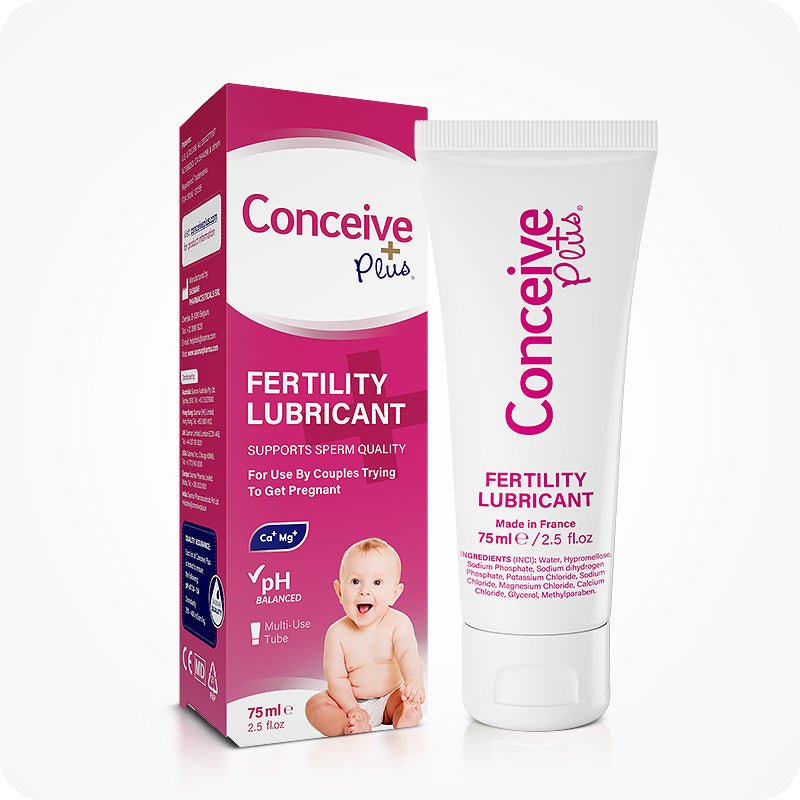
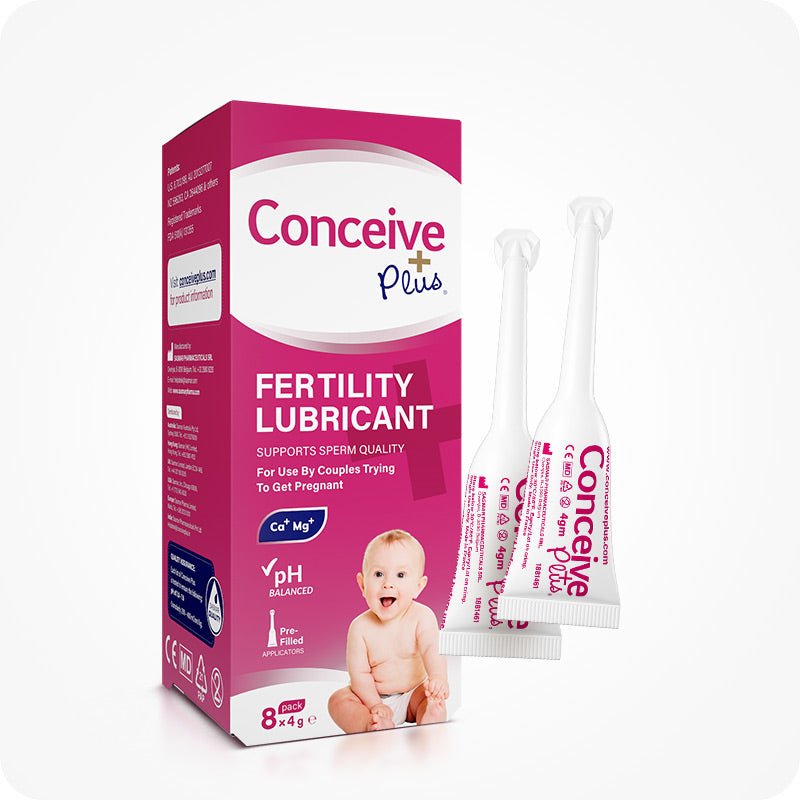
Standard lubricants can significantly harm sperm — studies have found reductions in motility of 60–100% with common brands. Conceive Plus is specifically formulated to be sperm-safe: isotonic, pH-balanced (7.2), and enriched with calcium and magnesium ions that support sperm function.
For couples who experience vaginal dryness during intercourse — which is common and doesn't necessarily correlate with fertility — Conceive Plus eliminates the need to choose between comfort and conception safety. Use it during your fertile window at every attempt.
Explore the Conceive Plus fertility supplement range to support your overall fertility while you're tracking and timing. Our fertility supplements for women and men are designed to work alongside your cycle tracking efforts for comprehensive conception support.
Frequently Asked Questions About Ovulation Tracking
Q: How do I know if my OPK positive is real?
A: A true LH surge shows the test line as clearly as dark or darker than the control line. Faint lines throughout the cycle are normal — only a definitive dark line constitutes a positive.
Q: I have a 35-day cycle — when do I ovulate?
A: You likely ovulate around Day 21, but this varies. The luteal phase is relatively fixed (12–14 days), so count back 14 days from your expected period to estimate ovulation. OPK testing confirms the actual date.
Q: Can stress delay ovulation?
A: Yes. Significant physical or emotional stress can suppress LH secretion, delaying or preventing ovulation in a given cycle. If you experience a longer-than-usual cycle during a stressful period, this is a common cause.
Q: I'm not getting a positive OPK — am I ovulating?
A: Not necessarily. You may be missing the surge by testing at the wrong time, using a diluted sample, or starting too late. Try testing twice daily (morning and mid-afternoon) and ensure you haven't drunk large amounts of fluid before testing. If cycles are long, extend testing beyond Day 20.
Q: My BBT chart shows no clear temperature rise — what does this mean?
A: An unclear chart doesn't necessarily mean you're not ovulating. Poor sleep, illness, or inconsistent timing can blur the pattern. Try a wearable device (Tempdrop or Ava) for more robust BBT data collection.
Q: Is it normal to ovulate on different days each cycle?
A: Yes, some variation is completely normal. Most women ovulate within a 3–5 day range from cycle to cycle. Significant variation (more than 7 days) can indicate hormonal irregularities worth discussing with a GP.
Q: Can I ovulate more than once per cycle?
A: Typically, no — once progesterone rises after ovulation, it suppresses further LH surges. However, it's possible to ovulate twice within a 24-hour window (releasing two eggs), which can lead to fraternal twins. Secondary ovulation in a separate window later in the cycle is not physiologically normal.
Q: How soon after coming off hormonal contraception will I ovulate?
A: For most women, ovulation resumes within 1–3 cycles after stopping hormonal contraception. Some women ovulate in the first cycle; others may take several months to regularise. OPK testing is the best way to confirm when your cycle returns to its natural pattern.
Q: Does ovulation always happen from the same ovary?
A: No. Which ovary releases the egg each cycle is essentially random. Some women notice consistent left or right-sided Mittelschmerz that suggests a preference, but this isn't universal.
Q: At what age does ovulation become less predictable?
A: Ovarian reserve begins declining in the mid-30s, and cycle changes typically become noticeable in the early-to-mid 40s as perimenopause approaches. However, many women continue ovulating regularly well into their 40s.
Building Your Ovulation Tracking System
The best tracking approach combines multiple methods for maximum accuracy:
- Track your cycle length over 2–3 months to establish your baseline
- Start OPK testing 4–5 days before your expected ovulation date
- Observe cervical mucus daily from menstruation through ovulation
- Record BBT daily if you're a consistent early riser, or use a wearable device
- Log everything in a fertility tracking app
- Have intercourse every 1–2 days from the start of your fertile window through ovulation day
Ovulation tracking is not about perfection — it's about eliminating guesswork and making informed decisions about timing. Combined with the right supplements and a sperm-safe environment, it gives you every possible advantage in your conception journey.
For comprehensive conception support, explore the Conceive Plus range — trusted by couples across the UK on their path to pregnancy.
Support your fertility journey with Conceive Plus
Our fertility supplements and sperm-safe lubricants are trusted by couples across the UK — formulated with the nutrients and pH balance that support conception.
Shop Fertility Supplements →