Ovulation Tracking: The Complete Guide for UK Couples Trying to Conceive


Ovulation Tracking: The Complete Guide for UK Couples Trying to Conceive
Whether you've just started trying to conceive or have been on the journey for a while, understanding ovulation is one of the most powerful tools available to you. Ovulation tracking allows couples to identify the precise window of peak fertility — the days when conception is most likely — and time intercourse accordingly. In this comprehensive guide, we cover every method available in the UK, how they work, and how to combine them for the most accurate picture of your cycle.
Fertility research consistently shows that timed intercourse — based on confirmed ovulation tracking — can double or even triple conception rates in any given cycle compared to untracked "trying." Given that the fertile window spans only 5–6 days per cycle, precision matters enormously.
Understanding the Female Fertility Cycle
Before diving into tracking methods, it's important to understand what's actually happening in your cycle. The average cycle is 28 days, but normal cycles range from 21 to 35 days. Ovulation — the release of a mature egg from the ovary — typically occurs 14 days before your next period, not 14 days after your last one.
Key cycle phases:
- Follicular phase (Days 1–14): FSH stimulates follicle development; oestrogen rises
- Ovulation (around Day 14): LH surge triggers egg release; egg survives 12–24 hours
- Luteal phase (Days 15–28): Progesterone rises; uterine lining thickens
Sperm can survive in the female reproductive tract for up to 5 days, which is why intercourse in the days before ovulation is often more effective than intercourse on ovulation day itself. This is the basis for the fertile window.
Ovulation Predictor Kits (OPKs): The Most Popular Method
Ready to support your fertility journey? Shop Conceive Plus →
Ovulation predictor kits detect the luteinising hormone (LH) surge that occurs 24–36 hours before ovulation. They are widely available in UK pharmacies and online, and are the most common first-line method for couples tracking ovulation.
How to Use OPKs Effectively
- Start testing from Day 10 of a 28-day cycle (earlier for shorter cycles)
- Test at the same time each day — afternoon (2–4pm) tends to catch the LH surge earliest
- Reduce fluid intake 2 hours before testing to concentrate the urine
- A positive result (test line as dark or darker than control) indicates ovulation within 24–36 hours
Digital OPKs (like Clearblue Advanced) also detect oestrogen rises earlier in the cycle, extending the identified fertile window from 2 days to up to 6 days.
Basal Body Temperature (BBT) Charting
After ovulation, progesterone causes a small but measurable rise in resting body temperature — typically 0.2°C. By tracking this temperature every morning before getting out of bed, you can confirm that ovulation has occurred.
BBT charting is confirmatory rather than predictive — it tells you ovulation has happened, not that it's about to. It's most useful when combined with OPKs or cervical mucus monitoring. Over 2–3 cycles, your charts may reveal a pattern that helps predict your ovulation day in advance.
You'll need a basal thermometer accurate to 0.1°C. Regular digital thermometers are not sensitive enough.
Cervical Mucus Monitoring
As ovulation approaches, cervical mucus changes in a predictable pattern driven by rising oestrogen:
- Post-period: Dry or tacky
- Pre-ovulation: White/creamy, lotion-like
- Peak fertility: Clear, stretchy, egg-white consistency (EWCM)
- Post-ovulation: Dry again or thick/sticky
Egg-white cervical mucus is the most fertile — it provides the ideal medium for sperm to travel and survive. When you observe EWCM, you're in or entering your fertile window. This method is free, requires no equipment, and provides real-time information about your cycle.
Fertility Monitors and Apps
Dedicated fertility monitors (like the Clearblue Fertility Monitor) track multiple hormones across the cycle and build a personalised picture of your fertility pattern over time. They're more expensive upfront but more accurate for women with irregular cycles.
Fertility apps like Natural Cycles (the only CE-marked contraception/conception app in the EU), Clue, Flo, and Kindara help you log symptoms, temperatures, and test results in one place. Natural Cycles uses an algorithm validated in clinical trials; others are predictive tools that improve with more data.
When to Seek Medical Support in the UK
If you've been trying to conceive for 12 months (or 6 months if over 35) without success, speak to your GP. They can:
- Arrange Day 21 progesterone blood test to confirm ovulation
- Check AMH (anti-Müllerian hormone) for ovarian reserve
- Refer to NHS fertility services or private clinics
- Screen for conditions like PCOS, endometriosis, or thyroid disorders that affect ovulation
The NICE fertility guidelines (CG156) recommend referral after 1 year of trying, or earlier if there are known risk factors.
Supporting Your Fertile Window With Conceive Plus
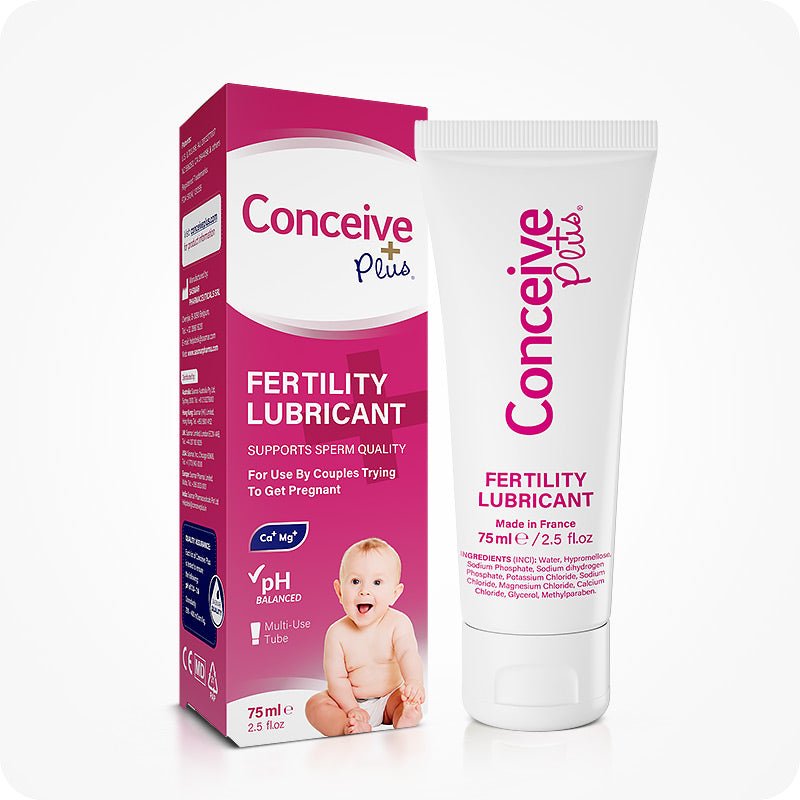
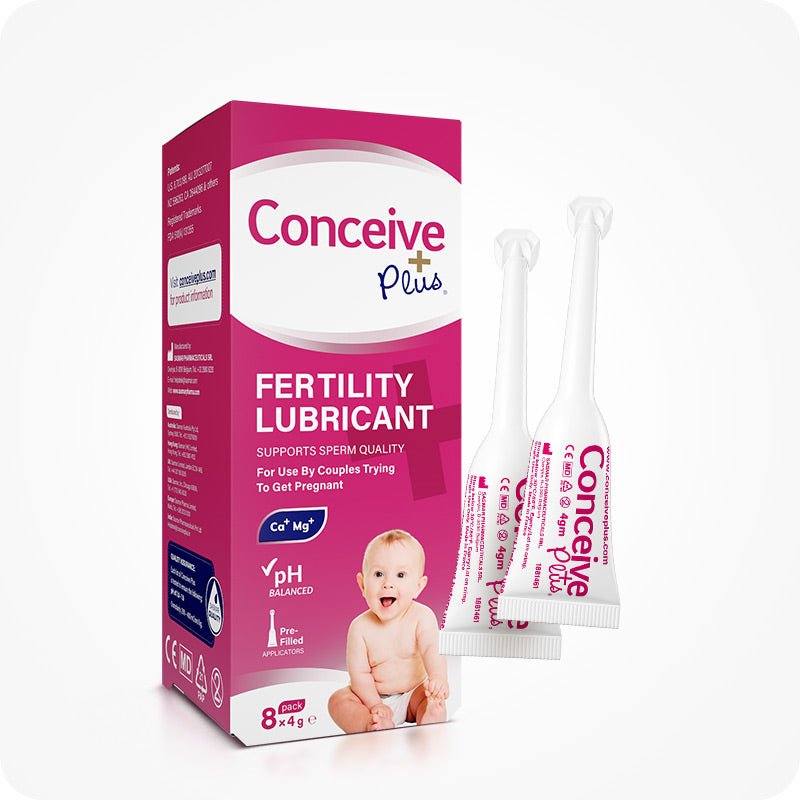
Once you've identified your fertile window, maximise every encounter by using a fertility-friendly lubricant. Regular lubricants — including popular products like KY Jelly — can reduce sperm motility by up to 87% within 30 minutes. Conceive Plus is specifically formulated to be safe for sperm: pH-balanced, iso-osmotic, and enriched with calcium and magnesium ions that support sperm capacitation.
Use Conceive Plus internally with the applicator 15 minutes before intercourse on your fertile days for the best results.
Frequently Asked Questions: Ovulation Tracking
Q: How long is the fertile window?
A: The fertile window is typically 5–6 days: the 5 days before ovulation plus ovulation day. Sperm can survive in the reproductive tract for up to 5 days.
Q: Can I ovulate more than once per cycle?
A: Multiple ovulation can occur, but it happens within a 24-hour window. You cannot ovulate twice in the same cycle at separate times.
Q: What if my OPK is never positive?
A: If you test daily and never see a positive, you may have missed the surge (it can be brief), have anovulatory cycles, or have a condition like PCOS causing multiple LH peaks without true ovulation. See your GP for a Day 21 progesterone test.
Q: Is it normal for ovulation to vary cycle to cycle?
A: Yes. Even in regular cycles, ovulation can shift by a few days. Stress, illness, travel, and diet can all affect timing. This is why tracking monthly — rather than assuming a fixed date — is so valuable.
Q: Do I need to use OPKs and BBT charting?
A: Not necessarily. OPKs alone are highly effective for timing intercourse. BBT adds confirmation. The combination gives you the most complete picture, especially useful if you have irregular cycles.
Q: Can ovulation tracking help if I have PCOS?
A: PCOS makes tracking more challenging because LH levels may already be elevated, causing false positives on standard OPKs. Progesterone-based tracking (BBT or Day 21 test) or digital monitors that measure oestrogen as well as LH are better suited to PCOS cycles.
Q: How accurate are fertility apps?
A: Accuracy varies significantly. Algorithm-based apps using actual temperature data (like Natural Cycles) are more accurate than those relying purely on calendar predictions. No app alone is as reliable as OPK testing in cycles with ovulation variations.
Q: Does stress affect ovulation?
A: Yes. Chronic stress elevates cortisol, which can suppress GnRH, LH, and FSH — potentially delaying or preventing ovulation. Managing stress through regular exercise, sleep, and mindfulness supports reproductive hormonal balance.
Support your fertility journey with Conceive Plus. Explore the full range →