PCOS and Fertility: Understanding Polycystic Ovary Syndrome and Your Chances of Conceiving


PCOS and Fertility: Understanding Polycystic Ovary Syndrome and Your Chances of Conceiving
Polycystic Ovary Syndrome (PCOS) is one of the most common hormonal disorders affecting women of reproductive age, yet it remains widely misunderstood and frequently misdiagnosed. For the millions of women living with PCOS in the UK — estimated at around 1 in 10 — the diagnosis can feel like a barrier between them and their dream of starting a family. The reality, however, is far more hopeful than many women initially believe.
PCOS affects approximately 10–15% of women of reproductive age worldwide, making it the leading cause of anovulatory infertility — infertility caused by a failure to ovulate regularly. But here's the crucial fact that often gets lost in the worry and uncertainty: the vast majority of women with PCOS can and do conceive, either naturally or with appropriate medical support. PCOS is not an infertility sentence. It is a manageable condition.
This comprehensive guide explores everything you need to know about PCOS and fertility: what the syndrome actually is, how it affects your hormones and reproductive cycle, what treatment options are available in the UK, and the lifestyle changes and supplements that can significantly improve your chances of conceiving.
What Is PCOS? Understanding the Basics
Polycystic Ovary Syndrome is an endocrine (hormonal) disorder characterised by a combination of symptoms that affect the ovaries and ovulation. Despite its name, "polycystic" can be somewhat misleading — not all women with PCOS have cysts on their ovaries, and not all women with ovarian cysts have PCOS.
The condition is typically diagnosed based on the Rotterdam Criteria, which requires at least two of the following three features:
- Irregular or absent periods — caused by infrequent or absent ovulation (oligoovulation or anovulation)
- Hyperandrogenism — elevated levels of male hormones (androgens), either detected by blood test or clinically manifested as excess hair growth (hirsutism), acne, or scalp hair thinning
- Polycystic ovaries on ultrasound — ovaries containing 12 or more follicles measuring 2–9mm in diameter, or an increased ovarian volume
It's important to understand that PCOS is a syndrome — a collection of symptoms — rather than a single disease with one cause. This is why the condition presents so differently from woman to woman, and why treatment must be individualised.
How Common Is PCOS in the UK?
In the UK, PCOS affects approximately 1 in 10 women of reproductive age, according to the NHS. That equates to roughly 3.5 million women across the country. Alarmingly, many women remain undiagnosed for years, attributing their irregular periods or difficulty conceiving to stress or other causes.
Research published in the European Journal of Endocrinology suggests that up to 70% of women with PCOS may be undiagnosed — a significant public health concern given that early intervention can dramatically improve both fertility outcomes and long-term metabolic health.
PCOS Symptoms: Recognising the Signs
Hormonal Balance & Fertility Support
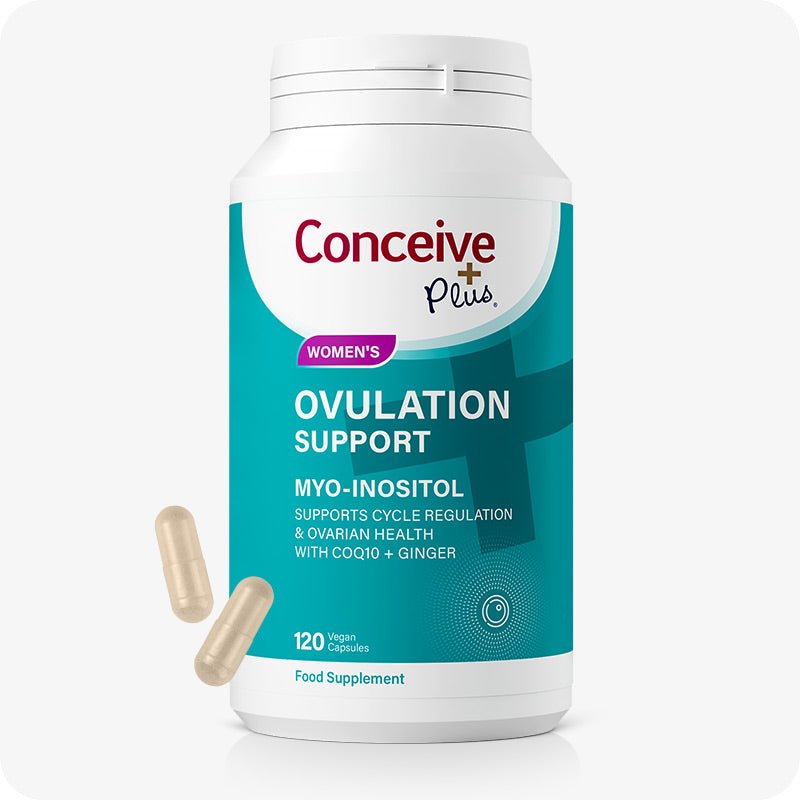
Managing PCOS requires a multi-faceted approach. Conceive Plus women's fertility supplements are formulated with Myo-Inositol and key nutrients shown to support hormonal balance and ovulation in women with PCOS.
PCOS manifests differently in each woman, which is one reason it often goes unrecognised. However, there are several common symptoms to be aware of:
Menstrual Irregularities
One of the hallmark signs of PCOS is irregular, infrequent, or absent menstrual periods. Women with PCOS may have fewer than 8 periods per year, or go months without a period. This irregularity is a direct result of disrupted ovulation. When ovulation doesn't occur regularly, the menstrual cycle becomes unpredictable — which naturally makes conception more challenging.
Signs of Elevated Androgens
Elevated male hormones can cause a range of physical symptoms:
- Hirsutism — excess hair growth on the face, chest, back, or stomach
- Acne — particularly on the face, chest, and upper back
- Alopecia — thinning hair or hair loss on the scalp
- Oily skin
Metabolic Symptoms
Many women with PCOS experience metabolic challenges, including:
- Insulin resistance — affecting around 65–70% of women with PCOS
- Weight gain — particularly around the abdomen
- Difficulty losing weight
- Fatigue and low energy
- Difficulty with blood sugar regulation
Other Symptoms
Some women also report mood disturbances — anxiety and depression are significantly more prevalent in women with PCOS, with research suggesting up to 34% of women with the condition experience depression. Sleep problems, including sleep apnoea, can also be associated with PCOS, particularly in women who carry excess weight.
The Hormonal Imbalances Behind PCOS
To truly understand PCOS and its impact on fertility, it helps to understand the hormonal mechanisms involved. PCOS is fundamentally a disorder of hormonal signalling, and multiple hormones are typically dysregulated.
LH and FSH Imbalance
In a normal menstrual cycle, the pituitary gland releases follicle-stimulating hormone (FSH) to stimulate follicle development in the ovaries, followed by a surge of luteinising hormone (LH) to trigger ovulation. In PCOS, the ratio of LH to FSH is often elevated — with LH levels being two to three times higher than FSH. This imbalance disrupts normal follicle development and prevents ovulation from occurring reliably.
Elevated Androgens
High levels of LH stimulate the ovarian theca cells to produce excessive amounts of androgens, particularly testosterone and androstenedione. These androgens interfere with normal follicle maturation, preventing follicles from developing fully enough to release an egg. They also contribute to the characteristic physical symptoms of PCOS such as acne and excess hair growth.
Insulin Resistance and Hyperinsulinaemia
Insulin resistance is central to the pathophysiology of PCOS in the majority of affected women. When cells become resistant to insulin's effects, the pancreas compensates by producing more insulin. These elevated insulin levels (hyperinsulinaemia) further stimulate androgen production in the ovaries and reduce levels of sex hormone-binding globulin (SHBG) — a protein that normally binds to testosterone and keeps it inactive. The result is even higher free testosterone levels in the blood.
AMH (Anti-Müllerian Hormone)
Women with PCOS typically have elevated levels of AMH, a hormone produced by ovarian follicles. While high AMH is often considered a marker of good ovarian reserve, in PCOS the elevated levels reflect an accumulation of small, immature follicles rather than a healthy ovarian reserve. Paradoxically, this abundance of immature follicles is actually associated with impaired ovulation.
PCOS and Fertility: What It Means for Conception
The primary fertility challenge posed by PCOS is irregular or absent ovulation. Conception requires a healthy egg to be released and fertilised, so if ovulation is infrequent or unpredictable, the window of opportunity for conception is naturally reduced.
The Good News About PCOS Fertility
Here's what the research actually shows about PCOS and fertility outcomes:
- A landmark study published in Human Reproduction found that up to 80% of women with PCOS who received ovulation induction treatment achieved pregnancy
- The NHS reports that most women with PCOS are able to get pregnant with treatment
- Many women with PCOS conceive naturally, particularly those with milder forms of the syndrome
- IVF success rates in women with PCOS are comparable to or slightly higher than women without the condition, due to their typically good ovarian reserve
Factors That Affect Fertility in PCOS
Not all women with PCOS experience the same degree of fertility challenge. Several factors influence fertility outcomes:
- Degree of menstrual irregularity — women with very infrequent periods face greater challenges than those with only mildly irregular cycles
- Body weight — excess weight significantly worsens insulin resistance and hormonal imbalances in PCOS
- Insulin resistance severity — greater insulin resistance is associated with more pronounced hormonal disruption
- Partner's fertility — male factor infertility is present in roughly 40–50% of couples experiencing difficulty conceiving, so a semen analysis is always recommended
- Age — as with all women, egg quality and quantity decline with age, making earlier assessment and intervention beneficial
Treatment Options for PCOS-Related Infertility
The good news is that there are multiple evidence-based treatments available for women with PCOS who are trying to conceive. The appropriate treatment pathway depends on individual circumstances, and a GP or fertility specialist can help determine the best approach.
Lifestyle Intervention as First-Line Treatment
For women with PCOS who are overweight or obese, lifestyle modification — including dietary changes, increased physical activity, and weight loss — is the recommended first-line treatment. Research consistently shows that even modest weight loss of 5–10% of body weight can significantly improve hormonal balance, restore ovulation, and improve fertility outcomes.
A systematic review published in Obesity Reviews found that weight loss of just 5% was sufficient to restore regular ovulation in a significant proportion of overweight women with PCOS. For women who are not overweight, lifestyle modifications focused on blood sugar regulation and stress reduction are still highly beneficial.
Letrozole — The Preferred Ovulation Induction Agent
Letrozole (an aromatase inhibitor) has become the preferred first-line pharmacological treatment for ovulation induction in women with PCOS, having largely replaced clomiphene citrate (clomid) in recent years. A major randomised controlled trial published in the New England Journal of Medicine found that letrozole was associated with significantly higher live birth rates than clomiphene in women with PCOS.
Letrozole works by temporarily reducing oestrogen levels, which prompts the pituitary to release more FSH, stimulating ovarian follicle development. It is typically taken for 5 days early in the menstrual cycle.
Clomiphene Citrate (Clomid)
Clomiphene has been used for ovulation induction for decades and remains effective for many women. It works by blocking oestrogen receptors in the hypothalamus, tricking the brain into producing more FSH. Around 70–85% of women with PCOS will ovulate with clomiphene, and approximately 40–50% will conceive within 6 cycles.
Metformin
Metformin, an insulin-sensitising medication originally developed for type 2 diabetes, is often used in PCOS management. By improving insulin sensitivity, metformin can reduce androgen levels, improve ovulation frequency, and support menstrual regularity. It is particularly beneficial for women with significant insulin resistance and may be used alongside letrozole or clomiphene for better outcomes.
Gonadotrophin Injections
For women who don't respond to oral ovulation induction, gonadotrophin injections (FSH injections) can directly stimulate the ovaries to develop follicles. These require careful monitoring through ultrasound and blood tests to minimise the risk of ovarian hyperstimulation syndrome (OHSS) and multiple pregnancy.
Laparoscopic Ovarian Drilling (LOD)
A surgical procedure where small punctures are made in the ovaries using a laser or heated needle, LOD can help restore normal ovulation in women with PCOS who haven't responded to other treatments. It works by destroying some of the androgen-producing tissue in the ovaries, thereby reducing androgen levels and improving the LH/FSH ratio.
IVF (In Vitro Fertilisation)
IVF is typically considered when other treatments have been unsuccessful. Women with PCOS often respond well to IVF due to their good ovarian reserve, but they are at higher risk of ovarian hyperstimulation syndrome (OHSS) and therefore require careful stimulation protocols. Newer approaches, including gentle stimulation and the use of GnRH antagonist protocols with freeze-all cycles, have significantly reduced OHSS risk.
Lifestyle Changes That Support PCOS Fertility
Alongside medical treatments, a range of lifestyle modifications can meaningfully improve hormonal balance, ovulation frequency, and fertility outcomes in women with PCOS.
Diet and Blood Sugar Balance
Given the central role of insulin resistance in PCOS, dietary choices that support stable blood sugar levels are particularly important. Research supports a low glycaemic index (GI) diet for women with PCOS — this means choosing foods that cause a slower, more gradual rise in blood sugar:
- Prioritise whole grains over refined carbohydrates (e.g., brown rice, oats, quinoa)
- Increase fibre intake through vegetables, legumes, and fruit
- Include lean protein at every meal to support satiety and blood sugar stability
- Choose healthy fats from sources like avocado, nuts, seeds, and olive oil
- Reduce ultra-processed foods, sugary drinks, and refined sugars
- Consider a Mediterranean-style eating pattern, which has been shown to support hormonal health and reduce inflammation
Exercise
Regular physical activity improves insulin sensitivity, reduces androgen levels, and supports healthy weight management in PCOS. A combination of aerobic exercise (e.g., brisk walking, cycling, swimming) and resistance training appears to be most beneficial. Aim for at least 150 minutes of moderate-intensity activity per week, as recommended by the NHS.
Important caveat: excessive high-intensity exercise can paradoxically worsen hormonal balance in PCOS by elevating cortisol levels. Consistency and moderation are key.
Stress Management
Chronic stress triggers the release of cortisol, which can exacerbate insulin resistance, disrupt hormonal balance, and interfere with ovulation. Mind-body practices such as yoga, meditation, and mindfulness have shown promise in reducing stress hormones and improving quality of life in women with PCOS.
Sleep
Poor sleep quality worsens insulin resistance and disrupts the hormonal rhythms that regulate ovulation. Prioritising 7–9 hours of quality sleep per night is genuinely beneficial for PCOS management.
Supplements That May Support PCOS Fertility
Several nutritional supplements have been studied for their potential to improve hormonal balance, ovulation, and fertility in women with PCOS. Always consult with your healthcare provider before starting any supplement regimen.
Myo-Inositol
Myo-inositol is perhaps the most extensively studied supplement for PCOS fertility. A B-vitamin-like compound, myo-inositol acts as an insulin sensitiser and plays a key role in FSH signalling in the ovaries. Multiple randomised controlled trials have demonstrated that myo-inositol supplementation can:
- Improve insulin sensitivity and reduce fasting insulin levels
- Reduce androgen levels (testosterone and DHEAS)
- Improve ovulation frequency and menstrual regularity
- Improve oocyte (egg) quality in women undergoing IVF
- Support healthy pregnancy outcomes
A combination of myo-inositol and D-chiro-inositol in a 40:1 ratio (reflecting physiological concentrations) has shown particular promise in clinical trials.
Folate (Folic Acid / Methylfolate)
Adequate folate intake is essential for all women trying to conceive, both for its role in preventing neural tube defects and for supporting healthy egg maturation. Women with PCOS may benefit from methylfolate (the active form of folate) rather than standard folic acid, particularly if they carry the MTHFR gene variant that impairs folate metabolism.
Vitamin D
Vitamin D deficiency is extremely prevalent in women with PCOS — studies suggest that 67–85% of women with PCOS are vitamin D deficient. Vitamin D plays a role in insulin signalling, ovarian function, and follicle development. Supplementation has been shown to improve menstrual regularity and insulin sensitivity in deficient women with PCOS.
N-Acetyl Cysteine (NAC)
NAC is an antioxidant precursor to glutathione that has shown promising results in PCOS. Clinical trials have found that NAC can improve insulin sensitivity, reduce androgen levels, and support ovulation — with some studies suggesting it is as effective as metformin for improving metabolic parameters in PCOS.
Omega-3 Fatty Acids
Omega-3s (EPA and DHA from fish oil) have anti-inflammatory properties and have been shown to improve insulin sensitivity, reduce triglycerides, and modestly improve androgen levels in women with PCOS. They also support egg quality and early embryo development.
Magnesium
Magnesium plays an important role in insulin signalling, and deficiency is common in women with insulin resistance. Supplementation may help improve insulin sensitivity and reduce symptoms of PCOS.
Zinc
Zinc supports healthy hormone balance and has been shown to reduce hirsutism (excess hair growth) and improve other androgen-related symptoms in PCOS. It also plays an important role in egg development and early embryo health.
Real Stories: PCOS and Successful Conception
While statistics are reassuring, sometimes it's the real experiences of women who have been in your position that provide the most powerful encouragement. PCOS is incredibly common, and the fertility community is filled with stories of women who have overcome its challenges to build their families.
Many women report that a combination of lifestyle changes and targeted supplementation helped restore their cycles and support natural conception. Others have gone on to successful pregnancies following ovulation induction treatment or IVF. The key consistent message: PCOS is not a life sentence of childlessness. It is a condition that, with the right knowledge and support, can be managed effectively.
The most important step is not to delay seeking support. If you've been trying to conceive for 12 months without success (or 6 months if you're over 35), see your GP to begin investigations. For women who know they have PCOS, many doctors recommend beginning investigations sooner — after 6 months of trying, or even proactively if your cycles are very irregular.
When to Seek Medical Help for PCOS and Fertility
Understanding when to seek help is crucial for not losing valuable time. Here are some clear guidelines:
- If you have irregular or absent periods — see your GP before you start trying to conceive, or immediately when you decide you want to start trying
- If you've been diagnosed with PCOS — discuss your fertility plans with your GP so you can plan ahead
- If you've been trying to conceive for 12 months with no success (under 35) — seek fertility evaluation
- If you're over 35 and have been trying for 6 months — seek fertility evaluation
- If you're over 40 — seek evaluation as soon as you decide you want to conceive
In the UK, your GP is the first port of call. They can arrange initial investigations including blood tests (hormone profile, AMH, thyroid function, prolactin) and a transvaginal ultrasound to assess your ovaries. If PCOS-related fertility issues are identified, referral to a fertility clinic may be recommended.
PCOS, Pregnancy, and Beyond
It's important to be aware that PCOS doesn't necessarily end at conception. Women with PCOS have a somewhat higher risk of certain pregnancy complications, including:
- Gestational diabetes
- Pregnancy-induced hypertension
- Preeclampsia
- Miscarriage (though current evidence on PCOS-specific miscarriage risk is mixed)
These risks underline the importance of receiving appropriate prenatal care and maintaining a healthy lifestyle throughout pregnancy. Working closely with your healthcare team ensures that any complications can be identified and managed early.
The long-term health implications of PCOS also extend beyond reproductive years. Women with PCOS have an increased risk of type 2 diabetes, cardiovascular disease, and endometrial cancer (due to prolonged periods without ovulation). This makes ongoing health monitoring and lifestyle management important throughout life — not just when trying to conceive.
Frequently Asked Questions About PCOS and Fertility
Can I get pregnant naturally with PCOS?
Yes, absolutely. Many women with PCOS conceive naturally, particularly those with milder forms of the condition. If you ovulate occasionally, conception is possible — tracking ovulation with ovulation predictor kits (OPKs) can help you identify your fertile window. Lifestyle modifications and supplements can also help improve ovulation frequency and regularity, increasing your chances of natural conception.
How long does it typically take to get pregnant with PCOS?
This varies enormously depending on the individual. Some women with PCOS conceive within their first few cycles of trying, while others may require medical intervention. With ovulation induction treatment, many women conceive within 3–6 treatment cycles. The key is not to wait too long before seeking help, particularly if your cycles are very irregular.
Does PCOS get worse with age?
Interestingly, PCOS symptoms often improve somewhat as women approach perimenopause, partly because androgen levels naturally decline with age. However, fertility does decline with age for all women regardless of PCOS status, so age is still an important factor in fertility planning. The metabolic aspects of PCOS — insulin resistance, cardiovascular risk — can worsen with age if not managed.
Will losing weight cure PCOS?
Weight loss won't cure PCOS, but it can significantly improve symptoms and fertility outcomes in women who are overweight. Even a 5–10% reduction in body weight has been shown to restore ovulation in many women with PCOS. However, it's important to note that PCOS affects women of all body weights, and thin women with PCOS are just as deserving of support and treatment.
Can the contraceptive pill cause PCOS?
No — the contraceptive pill does not cause PCOS. However, because the pill regulates periods and suppresses androgen-related symptoms, PCOS sometimes becomes apparent after stopping the pill. The underlying condition was there all along, but the pill was masking its symptoms. If your periods don't return within 3 months of stopping the pill, it's worth seeing your GP.
Is IVF more difficult with PCOS?
IVF is not inherently more difficult for women with PCOS, but it does require careful management. Women with PCOS are at higher risk of ovarian hyperstimulation syndrome (OHSS) due to their high antral follicle count. Experienced fertility clinics use carefully tailored protocols to minimise this risk. Overall, IVF success rates in women with PCOS are comparable to or slightly better than average.
What supplements are most helpful for PCOS fertility?
The most evidence-supported supplement for PCOS fertility is myo-inositol, which has been shown in multiple trials to improve insulin sensitivity, reduce androgens, and support ovulation. Vitamin D, folate, omega-3 fatty acids, N-acetyl cysteine (NAC), and magnesium also have supporting evidence. Always discuss supplementation with your healthcare provider.
Does stress cause PCOS?
Stress doesn't cause PCOS, but it can significantly worsen its symptoms. Chronic stress elevates cortisol, which worsens insulin resistance and can disrupt the hormonal signals needed for regular ovulation. Managing stress through exercise, mindfulness, adequate sleep, and social support is an important part of PCOS management.
Can PCOS affect pregnancy tests?
PCOS itself doesn't affect pregnancy test accuracy. However, some women with PCOS have elevated LH levels, which can occasionally cause a false positive on ovulation predictor kits (since these test for LH). Pregnancy tests, which detect hCG, are not affected by the hormonal changes of PCOS.
Is PCOS hereditary?
There is a clear genetic component to PCOS — if your mother or sister has PCOS, you are at increased risk. Studies suggest that first-degree relatives of women with PCOS have a 20–40% risk of having the condition themselves. However, genetics don't determine destiny; lifestyle factors play an important role in how severely PCOS manifests and can be managed.
Moving Forward With Hope and Knowledge
A PCOS diagnosis can initially feel overwhelming, particularly when you're hoping to start a family. But the most important thing to understand is that PCOS is one of the most treatable causes of infertility. With the right medical support, lifestyle adjustments, and targeted nutritional supplementation, the vast majority of women with PCOS go on to have successful pregnancies.
Knowledge is power. Understanding your own hormonal profile, working with healthcare professionals who specialise in PCOS, making evidence-based lifestyle changes, and supporting your body with the right nutrients can all make a meaningful difference to your fertility journey.
You are not alone in this. PCOS affects millions of women in the UK, and the medical and fertility communities have made enormous strides in understanding and treating this condition. The path to parenthood may look a little different for women with PCOS, but for the vast majority, it is absolutely achievable.
Taking Control of Your PCOS Journey
With the right support, thousands of women with PCOS go on to conceive naturally. Conceive Plus is here to help with evidence-based fertility supplements designed for your unique needs.