PCOS and Fertility: Your Complete Guide to Getting Pregnant with Polycystic Ovary Syndrome


PCOS and Fertility: Your Complete Guide to Getting Pregnant with Polycystic Ovary Syndrome
If you've been diagnosed with polycystic ovary syndrome (PCOS) and are trying to conceive, you're not alone. PCOS is one of the most common hormonal conditions affecting women of reproductive age, and it's also one of the leading causes of irregular ovulation and fertility challenges. Yet here's what many women don't hear enough: PCOS does not mean you cannot have a baby. With the right knowledge, lifestyle changes, and medical support, the majority of women with PCOS do go on to conceive and carry healthy pregnancies.
This comprehensive guide covers everything you need to know — from understanding the hormonal imbalances driving your symptoms, to evidence-based supplements, medical treatments, and practical strategies for tracking ovulation when your cycles are irregular. Whether you're just starting your fertility journey or have been trying for a while, this article is here to give you clear, empathetic, and science-backed information every step of the way.
What Is PCOS and Why Does It Affect Fertility?
Polycystic ovary syndrome is a hormonal disorder characterised by a combination of symptoms that can include irregular or absent periods, elevated levels of androgens (male hormones), and the presence of multiple small follicles on the ovaries visible on ultrasound. Despite the name, not everyone with PCOS has cysts, and not everyone with ovarian cysts has PCOS. The diagnosis is typically made when two of the three Rotterdam criteria are met: irregular or infrequent ovulation, clinical or biochemical signs of hyperandrogenism, and polycystic ovarian morphology on ultrasound.
PCOS affects roughly 1 in 10 women of reproductive age in the UK, and it accounts for approximately 70–80% of anovulatory infertility — that is, infertility caused by failure to ovulate. The fundamental fertility problem in PCOS is that the hormonal environment disrupts the normal maturation and release of eggs. Instead of one dominant follicle developing and releasing a mature egg each month, multiple small follicles begin to develop but none reaches full maturity. Ovulation may happen rarely, unpredictably, or not at all, making it very difficult to time conception.
The good news is that PCOS-related infertility is highly treatable. The ovaries still contain eggs — the challenge is simply prompting them to be released. This is why interventions ranging from lifestyle modification to fertility medications can be so effective for women with PCOS.
The Hormonal Imbalances Behind PCOS
Understanding the hormonal picture in PCOS helps explain both the symptoms and the treatments. In PCOS, several hormonal axes become dysregulated, creating a self-reinforcing cycle that suppresses ovulation.
Insulin resistance is present in approximately 65–70% of women with PCOS, and it plays a central role. When cells become resistant to insulin, the pancreas compensates by producing more. These elevated insulin levels stimulate the ovaries to produce excess testosterone and other androgens. High androgens, in turn, disrupt the normal follicle development process and contribute to the hallmark symptoms of PCOS including acne, excess hair growth (hirsutism), and scalp hair thinning.
Luteinising hormone (LH) is often chronically elevated in PCOS, while follicle-stimulating hormone (FSH) remains relatively low. Normally, a mid-cycle surge in LH triggers ovulation. In PCOS, the constantly elevated LH baseline blunts this surge and prevents the normal LH peak that would release a mature egg. The altered LH:FSH ratio — often above 2:1 or even 3:1 in PCOS — is a useful diagnostic marker and reflects the disrupted hypothalamic-pituitary signalling.
Oestrogen levels may appear normal or even slightly elevated in PCOS, but the pattern is wrong. In a normal cycle, oestrogen rises in a coordinated rhythm that drives endometrial development and triggers the LH surge. In PCOS, oestrogen tends to be chronically elevated without the cyclical peaks and troughs, which further disrupts feedback to the brain and pituitary gland.
Anti-Müllerian hormone (AMH) is a marker of ovarian reserve — essentially, how many eggs you have. Women with PCOS often have significantly higher AMH levels than women without PCOS, reflecting the large number of small follicles in their ovaries. While high AMH sounds positive (more eggs), in PCOS it contributes to the problem: those follicles produce a persistently high AMH signal that suppresses normal FSH-driven follicle selection and prevents any one follicle from becoming dominant.
This hormonal tangle — insulin resistance driving androgen excess, disrupted LH/FSH ratios, and high AMH — creates the environment in which ovulation becomes irregular or impossible. Addressing these imbalances is the cornerstone of restoring fertility in PCOS.
Lifestyle Changes That Can Dramatically Improve Fertility with PCOS
Before reaching for medication, lifestyle modification is the first-line recommendation for most women with PCOS who are trying to conceive. The evidence here is robust: even modest changes in weight, diet, and exercise can restore ovulation in many women with PCOS within a matter of months.
Weight management: In women with PCOS who are overweight or obese, losing just 5–10% of body weight has been shown in multiple studies to significantly improve ovulation rates, reduce androgen levels, lower insulin, and improve pregnancy outcomes. A landmark study published in the New England Journal of Medicine found that lifestyle intervention was as effective as the fertility medication clomifene in achieving live births in overweight women with PCOS. Even if you don't reach a "normal" BMI, incremental weight loss matters.
Exercise: Regular physical activity improves insulin sensitivity independent of weight loss, which is hugely significant for PCOS. Both aerobic exercise (brisk walking, swimming, cycling) and resistance training have demonstrated benefits. The current UK guidance recommends at least 150 minutes of moderate-intensity activity per week. For PCOS specifically, high-intensity interval training (HIIT) has shown particular promise in improving metabolic markers, though consistency in any form of movement is more important than intensity.
Stress reduction: Chronic stress elevates cortisol, which can further disrupt hormonal signalling and suppress reproductive function. Mind-body practices such as yoga, mindfulness, and cognitive behavioural therapy (CBT) have been studied in women with PCOS and show improvements in anxiety, quality of life, and hormone levels. Managing the emotional burden of PCOS and fertility treatment is not a "nice to have" — it is a meaningful part of treatment.
Sleep: Poor sleep quality and sleep disorders are more common in women with PCOS, and inadequate sleep worsens insulin resistance. Prioritising 7–9 hours of quality sleep each night is a simple but evidence-supported step in managing PCOS.
Diet for PCOS: What the Evidence Actually Says
Diet is one of the most frequently discussed topics in PCOS management, and with good reason. Because insulin resistance is so central to PCOS pathophysiology, dietary approaches that improve insulin sensitivity tend to show the most benefit.
Low-glycaemic index (low-GI) diet: The glycaemic index ranks foods based on how quickly they raise blood sugar. High-GI foods cause rapid glucose and insulin spikes, which are particularly problematic in PCOS. A low-GI diet — rich in wholegrains, legumes, vegetables, and fibre — produces more gradual glucose rises and has been shown in randomised controlled trials to improve insulin sensitivity, lower androgens, and regularise menstrual cycles in women with PCOS. This doesn't mean cutting carbohydrates entirely; it means choosing smarter carbohydrates.
Mediterranean diet: The Mediterranean dietary pattern, characterised by high intake of vegetables, fruits, legumes, whole grains, olive oil, nuts, and fish, with moderate consumption of dairy and low intake of red meat and processed foods, has been associated with improved hormonal profiles in women with PCOS and reduced risk of metabolic syndrome. Its anti-inflammatory properties are thought to be particularly beneficial.
Anti-inflammatory foods: Chronic low-grade inflammation is increasingly recognised as a feature of PCOS, even in lean women. Foods with anti-inflammatory properties — such as oily fish (salmon, sardines, mackerel), turmeric, green tea, berries, and dark leafy greens — may help reduce this inflammatory burden.
What to reduce: Ultra-processed foods, added sugars, refined carbohydrates (white bread, pastries, sugary drinks), and excessive dairy have all been associated with worsening insulin resistance and androgen levels in PCOS. You don't need to be perfect, but reducing these categories consistently makes a genuine difference.
Meal timing: Emerging evidence suggests that front-loading calories earlier in the day — eating a larger breakfast and lighter dinner — may improve insulin sensitivity and reproductive hormone profiles in women with PCOS. While more research is needed, this approach aligns with what we know about circadian rhythms and metabolic health.
Supporting ovulation with PCOS
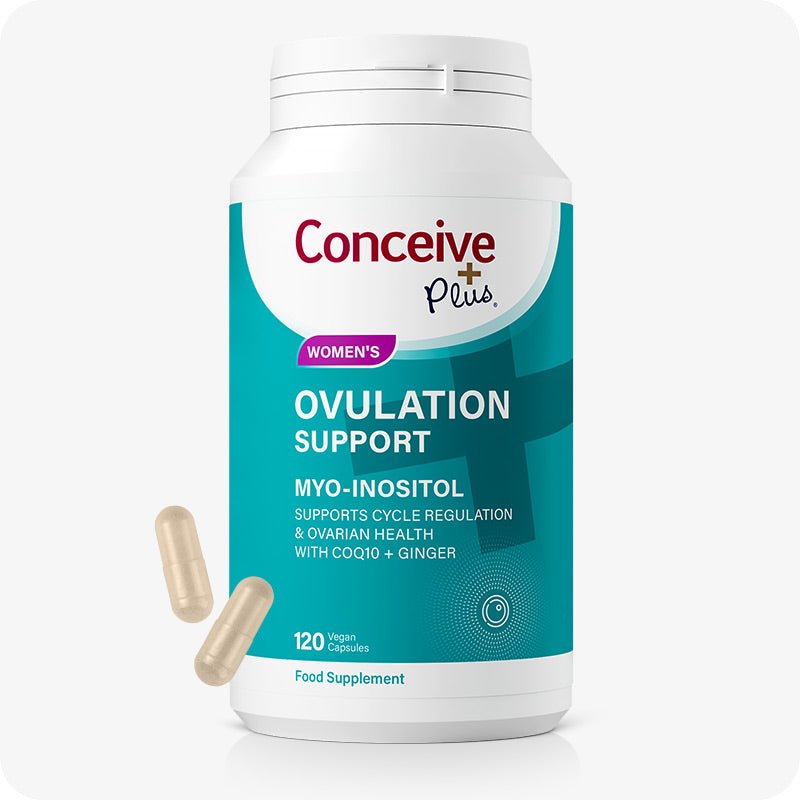
Conceive Plus Ovulation Support contains a clinically researched 40:1 ratio of Myo-Inositol to D-Chiro-Inositol — shown to help restore ovulatory function and hormone balance in women with PCOS.
Shop Ovulation Support →Myo-Inositol and D-Chiro-Inositol: The Most Studied Supplements for PCOS Fertility
Of all the supplements studied for PCOS, inositol — and specifically the combination of myo-inositol (MI) and D-chiro-inositol (DCI) — has the most robust evidence base and is increasingly recommended by fertility specialists and gynaecologists.
Inositol is a naturally occurring compound involved in insulin signalling pathways. In women with PCOS, the conversion of myo-inositol to D-chiro-inositol in the ovaries is impaired, leading to suboptimal insulin signalling within the follicle and disrupted egg maturation. Supplementing with both forms of inositol in the correct ratio helps restore this signalling pathway.
The critical finding has been about the ratio of MI to DCI. The ratio in healthy human plasma is approximately 40:1 (myo-inositol to D-chiro-inositol). Early studies used DCI alone or in high doses, but this was found to paradoxically impair egg quality by over-aromatising androstenedione in follicles. The 40:1 ratio was identified as optimal for maintaining follicle health while improving insulin signalling. This physiological ratio is now considered the gold standard in clinical practice.
A systematic review and meta-analysis published in Frontiers in Endocrinology analysed 14 randomised controlled trials involving over 1,400 women with PCOS and found that myo-inositol supplementation significantly improved menstrual regularity, reduced androgen levels, lowered fasting insulin, and improved ovulation rates compared to placebo. Studies comparing inositol to metformin — the standard insulin-sensitising drug prescribed in PCOS — have found comparable or superior outcomes for inositol with a better side-effect profile.
A 2023 double-blind RCT published in the Journal of Clinical Medicine found that women with PCOS who took MI:DCI at the 40:1 ratio for 12 weeks had significantly higher ovulation rates and improved oocyte quality compared to placebo. Pregnancy rates in women undergoing IVF who supplemented with the 40:1 MI:DCI ratio were also improved in multiple trials.
Other supplements with supporting evidence in PCOS include:
- Vitamin D: Deficiency is extremely common in women with PCOS and is associated with worse insulin resistance, higher androgens, and lower fertility rates. Supplementation is strongly advisable, particularly in the UK where sun exposure is limited.
- N-acetyl cysteine (NAC): An antioxidant precursor to glutathione, NAC has shown promise in improving insulin sensitivity and ovulation in PCOS in small RCTs.
- Omega-3 fatty acids: Anti-inflammatory properties and evidence of modest improvements in testosterone and triglycerides in PCOS.
- Folate/folic acid: Essential for all women trying to conceive; 400mcg daily (or 5mg if higher-risk) is recommended by the NHS from at least 12 weeks before conception through the first trimester.
- Magnesium: Often deficient in insulin-resistant states including PCOS, and involved in glucose metabolism and hormone regulation.
Tracking Ovulation with PCOS: What Works and What Doesn't
One of the most frustrating aspects of PCOS for women trying to conceive is not knowing when — or whether — ovulation is happening. Standard ovulation prediction methods are often unreliable in PCOS, but with the right approach, it is possible to identify your fertile window.
Basal body temperature (BBT) charting: Taking your temperature first thing in the morning before getting up can help you identify the slight rise (approximately 0.2°C) that occurs after ovulation due to rising progesterone. The limitation in PCOS is that BBT tells you ovulation has occurred rather than predicting it in advance, so it's most useful for tracking patterns over several cycles and confirming whether you're ovulating at all. Apps like Fertility Friend or Natural Cycles can help you chart and interpret your data.
Ovulation predictor kits (OPKs): Standard OPKs detect the LH surge that triggers ovulation. The problem in PCOS is that LH is often chronically elevated, meaning you may get multiple positive readings throughout your cycle or falsely positive results on days far from ovulation. Advanced OPKs such as the Clearblue Advanced Digital Fertility Monitor, which tracks both oestrogen and LH, are more reliable in PCOS as they look for the pattern of rising oestrogen followed by the LH peak rather than an isolated LH threshold. Even so, interpret results with care if you have PCOS.
Cervical mucus monitoring: As ovulation approaches, cervical mucus becomes clear, slippery, and stretchy — similar in texture to raw egg white. In PCOS, this sign can still be a reliable indicator of approaching ovulation, though oestrogen fluctuations can sometimes produce misleading mucus patterns. Combining mucus observation with BBT charting provides a more complete picture.
Ultrasound monitoring: For women having fertility treatment, transvaginal ultrasound scans (follicle tracking) are the gold standard for monitoring follicle development and confirming ovulation. These are performed in fertility clinics and allow your doctor to see exactly what your ovaries are doing in real time. If you've been trying to conceive for 12 months without success (or 6 months if you're over 35), ask your GP for a referral to a fertility clinic for monitored cycles.
Progesterone blood tests: A blood test for progesterone taken 7 days before your expected period (day 21 in a 28-day cycle, but adjusted for your cycle length) can confirm whether ovulation occurred. A level above 30 nmol/L strongly suggests ovulation. If your cycles are irregular, this test may need to be timed differently; your GP can advise.
Medical Treatments for PCOS-Related Infertility
When lifestyle changes and supplements haven't resulted in conception, or when there is clear anovulation, medical fertility treatments are highly effective for PCOS. The following represents the current standard of care as recommended by NICE and the European Society of Human Reproduction and Embryology (ESHRE).
Letrozole (Femara): Letrozole, an aromatase inhibitor originally developed as a breast cancer treatment, is now the first-line ovulation induction agent for women with PCOS in the UK and internationally. A landmark RCT published in the New England Journal of Medicine in 2014 (the PPCOS II trial) definitively showed that letrozole was superior to clomifene in ovulation rates (61.7% vs 48.3%) and live birth rates (27.5% vs 19.1%) in women with PCOS. Letrozole works by temporarily reducing oestrogen, which stimulates the pituitary to release more FSH, prompting stronger follicle development. It is taken for 5 days early in the cycle, typically at a dose of 2.5mg–7.5mg.
Clomifene citrate (Clomid): Clomifene was for many years the standard first-line treatment and remains widely used. It works by blocking oestrogen receptors in the hypothalamus, tricking the brain into producing more FSH. Ovulation occurs in approximately 70–85% of women with PCOS who take clomifene, and cumulative pregnancy rates over multiple cycles reach 40–45%. It is generally well-tolerated, though side effects can include hot flushes, mood changes, visual disturbances, and an increased risk of multiple pregnancy. If clomifene has not led to conception after 6 ovulatory cycles, treatment should be reviewed.
Metformin: This insulin-sensitising drug, commonly prescribed for type 2 diabetes, is sometimes used alongside ovulation induction drugs or as a standalone treatment in PCOS. Metformin can help restore menstrual regularity in some women and improves the response to letrozole and clomifene. It may also reduce the risk of ovarian hyperstimulation syndrome (OHSS) during IVF. However, as a sole fertility treatment for anovulatory PCOS, it is less effective than letrozole or clomifene and is therefore used as an adjunct rather than a first choice.
Gonadotrophins (injectable FSH): If oral ovulation induction fails, injectable gonadotrophins can be used to directly stimulate follicle development. In PCOS, these must be used at very low doses with careful monitoring because the ovaries are particularly sensitive and there is a high risk of OHSS and multiple pregnancy. This treatment is always conducted in a specialist fertility clinic with regular ultrasound monitoring.
Laparoscopic ovarian surgery (ovarian drilling): A surgical option for PCOS where the gynaecologist uses a laparoscope to create small punctures in the ovary using heat or laser. This reduces androgen-producing tissue and can restore normal ovulation in many women for months to years. It is typically considered when medication has not worked, and it carries the advantage of avoiding multiple pregnancy risk. Results are comparable to gonadotrophin treatment in appropriately selected patients.
IVF (In Vitro Fertilisation): IVF is generally reserved for PCOS when other treatments have failed or when there are additional fertility factors involved. Women with PCOS typically have excellent egg numbers and respond well to stimulation, but the risk of OHSS means gentle, modified protocols (such as antagonist protocols or freeze-all cycles) are preferred. Live birth rates from IVF in women with PCOS are broadly comparable to — and often slightly better than — age-matched women without PCOS, owing to higher egg numbers. If you are considering IVF on the NHS in the UK, eligibility criteria vary by integrated care board (ICB) and are worth checking with your GP.
Take the next step in your fertility journey
Conceive Plus Ovulation Support is formulated with the evidence-based 40:1 Myo-Inositol ratio trusted by women with PCOS worldwide. Start your journey today.
Explore Conceive Plus →Emotional Wellbeing: The Hidden Challenge of PCOS and Fertility
The psychological impact of PCOS — and especially of trying to conceive with PCOS — is significant and often underestimated in clinical settings. Studies consistently show higher rates of depression and anxiety in women with PCOS compared to the general population, and fertility challenges amplify this burden considerably.
Feeling grief, frustration, anger, or isolation when your body doesn't behave the way you expect is entirely normal. Watching friends and family announce pregnancies while you navigate blood tests, scans, and medication can be profoundly painful. It's important to acknowledge these feelings rather than push them down.
Evidence-based strategies for managing the emotional load include:
- Counselling and therapy: CBT has the strongest evidence base for fertility-related anxiety and depression. Many fertility clinics offer psychological support, and charities such as Fertility Network UK provide free counselling services.
- Peer support: Online communities and in-person support groups for PCOS and fertility (such as Verity PCOS UK) offer connection with others who truly understand the experience. Shared knowledge and solidarity can be genuinely therapeutic.
- Setting boundaries around conversation: It's okay to tell family members that you'd prefer not to discuss your fertility journey at social events. You don't owe anyone a running update on your reproductive health.
- Mindfulness-based practices: Mindfulness-based cognitive therapy (MBCT) and yoga nidra have both been studied in fertility populations and show reductions in cortisol and perceived stress.
Your mental health matters not just for its own sake, but because chronic stress genuinely affects hormonal function. Looking after your emotional wellbeing is part of your fertility care, not separate from it.
Frequently Asked Questions About PCOS and Fertility
Q: Can I get pregnant naturally with PCOS?
A: Yes, absolutely. Many women with PCOS conceive naturally, especially if they have some ovulation occurring (even if irregular). Lifestyle changes, dietary modification, and targeted supplements can significantly improve ovulation frequency and the chances of natural conception. That said, if you've been trying for 12 months (or 6 months if you're over 35) without success, it's worth seeking medical support.
Q: How long does it typically take to get pregnant with PCOS?
A: This varies widely depending on the severity of PCOS, age, BMI, other fertility factors, and whether ovulation is occurring. Women with mild PCOS who are ovulating intermittently may conceive within a few months of optimising lifestyle and diet. Women with severe anovulation may need medical treatment. Overall, with appropriate treatment, the majority of women with PCOS do conceive within 1–2 years.
Q: Does PCOS cause miscarriage?
A: Women with PCOS have a modestly elevated risk of early miscarriage, thought to be related to elevated LH levels, insulin resistance, and potentially egg quality. However, the absolute risk remains manageable, and many women with PCOS carry healthy pregnancies to term. Managing insulin resistance through lifestyle and supplementation may help reduce this risk. If you have experienced recurrent miscarriages, ask your GP for a referral for investigation.
Q: Is myo-inositol safe to take when trying to conceive?
A: Yes. Myo-inositol and D-chiro-inositol are naturally occurring compounds with an excellent safety profile. They have been studied extensively in women with PCOS who are trying to conceive and during early pregnancy. The 40:1 MI:DCI ratio is well-tolerated and considered safe. As with any supplement, discuss with your doctor or midwife before continuing into pregnancy.
Q: What is the best diet for PCOS fertility?
A: The evidence most strongly supports a low-glycaemic index, anti-inflammatory dietary pattern — similar to the Mediterranean diet. This means prioritising vegetables, legumes, wholegrains, fish, olive oil, and nuts, while minimising ultra-processed foods, refined sugars, and excess saturated fat. There is no single "PCOS diet" that works for everyone, but improving insulin sensitivity through food choices is the consistent goal.
Q: Will losing weight cure my PCOS?
A: Weight loss (in those who are overweight) can significantly reduce PCOS symptoms and improve fertility, but it does not cure PCOS. PCOS is a lifelong condition driven by genetics and underlying physiology. However, reaching a healthy weight and maintaining insulin sensitivity through lifestyle can bring PCOS into what clinicians call "remission" — where symptoms become minimal and cycles regularise. Lean women with PCOS also benefit from lifestyle measures focused on diet quality and exercise.
Q: Can I take the pill to "regulate" my cycle and then come off it to get pregnant?
A: The combined oral contraceptive pill is sometimes used to manage PCOS symptoms (particularly irregular periods and acne) when pregnancy is not desired. However, it does not treat the underlying hormonal imbalances — it simply suppresses them. After stopping the pill, PCOS symptoms typically return. The pill does not improve underlying fertility, and there is no evidence that "regulating" the cycle with hormonal contraception before trying to conceive improves pregnancy rates. If you're ready to try to conceive, it's worth stopping the pill and focusing on the lifestyle and supplement strategies described above.
Q: How does PCOS affect IVF outcomes?
A: Women with PCOS often have more eggs available for IVF due to their larger antral follicle count and higher ovarian reserve. This generally translates to more embryos, which is advantageous. The main risk is ovarian hyperstimulation syndrome (OHSS), a potentially serious response to stimulation medication. Careful dosing, antagonist protocols, trigger shot selection (using GnRH agonist rather than hCG), and freeze-all strategies dramatically reduce this risk. Overall, cumulative live birth rates from IVF are generally good in women with PCOS.
Q: What should I ask my GP if I have PCOS and want to get pregnant?
A: Ask for a full fertility assessment including day 2–5 hormones (FSH, LH, oestradiol, testosterone, AMH), a day 21 progesterone to check for ovulation, a pelvic ultrasound, vitamin D and fasting insulin levels, and a semen analysis for your partner. If you've been trying for more than 12 months (6 months if over 35), ask for a referral to a fertility specialist. Also ask about folic acid dosage (you may need 5mg rather than the standard 400mcg if you have a higher BMI or other risk factors) and discuss whether letrozole or metformin might be appropriate for you.
Q: Is PCOS hereditary?
A: PCOS has a strong genetic component. First-degree relatives (sisters, daughters) of women with PCOS have approximately a 20–40% chance of also having the condition. The exact genes involved are still being studied, but the predisposition to insulin resistance and androgen excess appears to run in families. If you have PCOS, your daughters may also be at higher risk and should be monitored.