Age and Female Fertility: What Every Woman Needs to Know


Age and Female Fertility: What Every Woman Needs to Know
Among the many factors that influence a woman's ability to conceive, age is the one that operates on its own timeline — quietly, relentlessly, and without negotiation. Understanding how age affects female fertility, what the science actually says about the decline, and what practical steps you can take to support your reproductive health at every stage is essential knowledge for any woman planning a family. This guide provides a clear, evidence-based overview.
How Age Affects Egg Quality and Ovarian Reserve
A woman is born with her lifetime supply of eggs — approximately 1–2 million at birth, declining to around 300,000–500,000 at puberty. Throughout a woman's reproductive life, this reserve steadily diminishes. By the time a woman reaches her mid-30s, the rate of decline accelerates significantly. Beyond quantity, egg quality — the structural integrity and chromosomal health of eggs — also declines with age. The primary mechanism is the accumulation of errors in the spindle apparatus that segregates chromosomes during meiosis, leading to higher rates of aneuploidy (abnormal chromosome number).
The Fertility Timeline: What Research Tells Us by Decade
20s: Peak fertility. Ovarian reserve is high, egg quality is at its best, and the monthly probability of conception is approximately 20–25%. Miscarriage rates are at their lowest (around 10%).
Early 30s (30–34): Fertility remains strong, with conception rates only modestly reduced compared to the 20s. Most women in this age group who try consistently will conceive within 12 months.
Mid-to-late 30s (35–39): The decline becomes clinically meaningful. The term "advanced maternal age" is applied from 35, reflecting genuinely increased risks of longer time to conception, miscarriage (rising to 20–25% by age 37), and chromosomal abnormalities. The monthly probability of natural conception drops to approximately 10–15%.
40s: By age 40, the monthly natural conception probability is around 5–10%. Miscarriage rates rise to 35–40%. By age 43–44, natural conception rates are very low and assisted conception becomes the most viable route for most women.
Key Fertility Tests to Assess Your Ovarian Reserve
Age is a population-level predictor — individual variation is significant. The only way to know your personal ovarian reserve status is through specific fertility testing.
Anti-Müllerian Hormone (AMH): Produced by small follicles in the ovaries, AMH is the best current marker of ovarian reserve. It can be measured at any point in the menstrual cycle with a simple blood test.
Antral Follicle Count (AFC): Performed via transvaginal ultrasound, this counts the number of small antral follicles visible at the start of a cycle. Directly correlates with the number of eggs likely to respond to stimulation.
Day 3 FSH: Elevated FSH on day 3 of the menstrual cycle indicates the pituitary is working harder to recruit follicles — a sign of declining ovarian reserve.
Nutrition and Supplementation Strategies for Age-Related Fertility Support
While age-related egg quality decline cannot be fully reversed, targeted nutritional interventions can meaningfully support mitochondrial function in ageing eggs, reduce oxidative damage, and improve the cellular environment in which eggs mature.
CoQ10 (Ubiquinol): Mitochondrial dysfunction is a primary driver of age-related egg quality decline. Supplementing with 400–600 mg of ubiquinol daily has been shown to improve egg quality in older women. Studies at the University of Toronto have demonstrated reduced aneuploidy rates and improved embryo development with CoQ10 supplementation.
Methylfolate (5-MTHF): Essential for DNA synthesis and methylation, methylfolate supports the genomic stability of developing eggs. The methylated form is preferable for women with MTHFR variants.
Vitamin D: Ovarian cells have vitamin D receptors, and adequate vitamin D levels are associated with better IVF outcomes, improved AMH levels, and more regular cycles. The majority of UK women are deficient, particularly in winter months.
Omega-3 fatty acids: Anti-inflammatory and essential for cellular membrane integrity. Associated with improved embryo quality and endometrial receptivity.
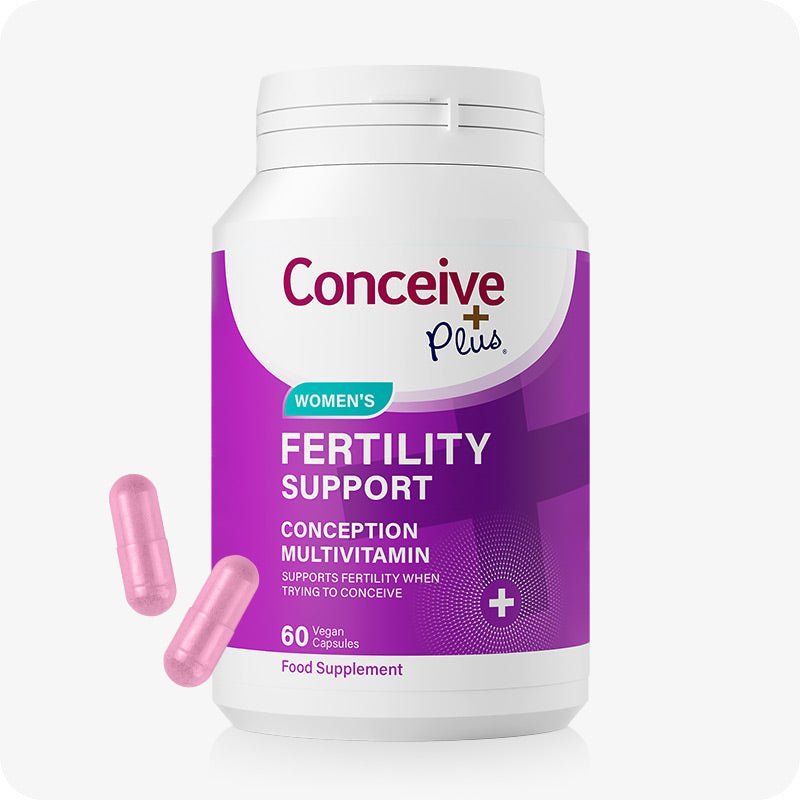
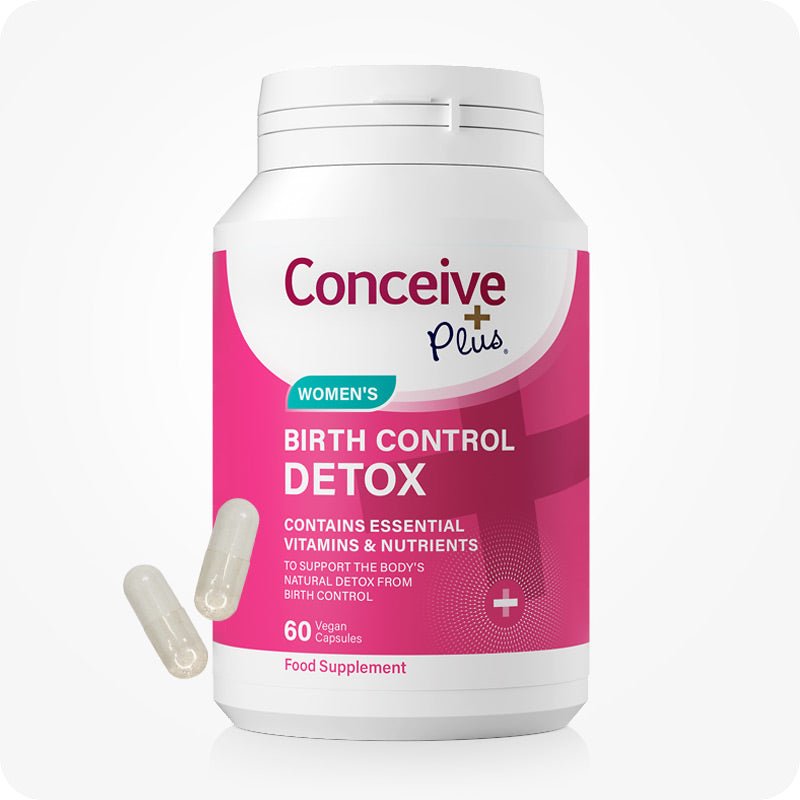
Conceive Plus women's fertility supplements are formulated to support reproductive health with the key nutrients — including methylfolate, vitamin D, CoQ10, and antioxidants — that research identifies as most relevant for women trying to conceive at every age.
Ovulation and Cycle Changes with Age
Many women notice changes in their menstrual cycle in their late 30s and early 40s. Cycles may shorten (from 28 days to 25–26), the luteal phase may become slightly shorter, and ovulation may become less predictable. These changes reflect the hormonal shifts associated with declining ovarian reserve. Tracking ovulation carefully becomes increasingly important with advancing age — using OPKs, BBT charting, and monitoring cervical mucus changes.
When to Seek Fertility Help Based on Age
Standard guidance from NICE and reproductive medicine societies:
- Under 35: Seek evaluation after 12 months of regular unprotected intercourse
- 35–37: Seek evaluation after 6 months
- 38–40: Seek evaluation after 3–6 months, or immediately if any known fertility factors exist
- Over 40: Seek evaluation without waiting
Assisted Conception Options for Older Women
IUI (Intrauterine Insemination): Generally considered a viable first step up to around age 38–39.
IVF: Success rates per cycle using own eggs: approximately 25–30% at age 35, 15–20% at age 38, 10–13% at age 40, and under 5% at age 43–44 with own eggs. Preimplantation Genetic Testing (PGT-A) can identify chromosomally normal embryos and improve implantation rates in older women.
Egg donation: Using donor eggs eliminates the age-related egg quality issue — success rates remain high into the mid-to-late 40s.
Egg freezing: Vitrification of eggs preserves them at their current quality. The best outcomes occur when eggs are frozen before age 36.
Emotional Wellbeing When Age Is a Factor in Your Fertility Journey
The intersection of age and fertility carries unique emotional weight. Research increasingly shows that stress itself — through the HPA axis and elevated cortisol — can modestly impact reproductive hormone balance and implantation. Acupuncture, mindfulness-based stress reduction (MBSR), and fertility-specific counselling have all shown benefits for emotional wellbeing during this process.
Frequently Asked Questions: Age and Female Fertility
At what age does female fertility start to decline?
Fertility begins to gradually decline from the late 20s, with a more pronounced decline from age 35. The steepest decline occurs between 37 and 42. However, significant individual variation means some women in their early 40s conceive naturally while others in their mid-30s struggle.
Can supplements reverse age-related fertility decline?
No supplement can reverse egg depletion or restore chromosomal integrity. However, targeted supplementation — particularly CoQ10, antioxidants, and vitamin D — can support mitochondrial function in remaining eggs, potentially improving egg quality within a woman's existing biological context.
What is the oldest age at which women have naturally conceived?
Natural conception in the mid-to-late 40s, while rare, does occur. Most specialists encourage women over 42 to explore assisted reproduction sooner rather than later given the statistical realities.
Does having irregular periods affect age-related fertility differently?
Irregular periods may indicate ovulatory dysfunction, which compounds age-related fertility challenges. Conditions like PCOS, thyroid disorders, or hyperprolactinaemia can further reduce the already-declining fertility of older women.
Is AMH the most accurate test for fertility?
AMH is the best current marker of ovarian reserve (the quantity of remaining eggs), but it does not measure egg quality, predict pregnancy outcomes, or indicate how quickly you will conceive. It is a useful tool for counselling and timing treatment, but should always be interpreted by a clinician in context.
Can men's age affect fertility too?
Yes. Advanced paternal age (generally defined as over 40–45) is associated with reduced sperm motility, increased DNA fragmentation, and higher rates of de novo genetic mutations in offspring. The male partner's age should not be overlooked in fertility evaluations.
What lifestyle factors can extend fertility?
No lifestyle intervention can pause the biological clock. However, maintaining a healthy weight, not smoking, limiting alcohol, managing chronic conditions, and optimal nutritional status all support reproductive health and the quality of eggs you do have.
Should I freeze my eggs as a precaution?
Egg freezing is a reasonable option for women who know they want children but are not yet in a position to try. The best outcomes occur when eggs are frozen before 36. It is not a guarantee of future pregnancy, but it can provide meaningful additional options. Consultation with a reproductive specialist at age 32–35 for proactive discussion is advisable.