Ovulation Tracking: The Complete Guide to Understanding Your Fertile Window


Ovulation Tracking: The Complete Guide to Understanding Your Fertile Window
Ovulation tracking is one of the most powerful tools available to anyone trying to conceive — yet it's also one of the most misunderstood. With a wealth of methods ranging from simple calendar calculations to sophisticated hormone testing, the science of identifying your fertile window has never been more accessible. But knowing which methods are reliable, how to interpret your results, and how to combine different approaches takes more than a quick Google search.
This comprehensive guide walks you through everything you need to know about ovulation tracking: the biology, the best methods, the common mistakes, and the evidence-based strategies that give you the best possible chance of conception each cycle.
The Biology of Ovulation: What's Actually Happening
Ovulation is the release of a mature egg from one of your ovaries — an event that happens just once per menstrual cycle. Understanding the biology is the foundation of effective ovulation tracking.
The menstrual cycle is divided into two main phases by ovulation:
- Follicular phase: Begins on Day 1 of your period. Follicle-stimulating hormone (FSH) triggers the development of multiple ovarian follicles. Usually one becomes dominant and produces rising levels of oestrogen.
- Ovulation: The oestrogen surge triggers a sharp rise in luteinising hormone (LH) — the LH surge. This surge causes the dominant follicle to rupture and release the egg, usually 24–36 hours after the LH peak.
- Luteal phase: Begins after ovulation. The ruptured follicle becomes the corpus luteum, producing progesterone to maintain the uterine lining. If fertilisation doesn't occur, the corpus luteum breaks down, progesterone falls, and your period begins.
The egg survives for just 12–24 hours after release. Sperm, however, can survive in fertile cervical mucus for up to 5 days. This means your fertile window extends from approximately 5 days before ovulation to 1 day after — with conception most likely in the 2–3 days immediately preceding ovulation.
This biology is why ovulation tracking matters so much: without knowing when you ovulate, you're essentially guessing — and the fertile window is surprisingly narrow.
The Calendar Method: A Starting Point, Not a Solution
🌟 Recommended by Fertility Clinics Worldwide
Conceive Plus is clinically formulated to support your fertility journey — from sperm health and ovulation support to specialised lubricants and prenatal vitamins.
Explore Conceive Plus Products →The rhythm method, or calendar method, involves predicting future ovulation based on past cycle lengths. The assumption is that ovulation occurs approximately 14 days before the next period — meaning in a 28-day cycle, ovulation would occur around Day 14.
The problem: most women don't have perfectly regular 28-day cycles. Research from the Clue menstrual tracking app, analysing over 1.5 million cycles, found that only 13% of cycles were exactly 28 days. The majority varied between 21 and 35 days, and even cycle-to-cycle variation within individuals was significant.
The calendar method can give you a rough fertile window to target, but as a standalone ovulation tracking method, it's unreliable for precision timing. It works best as a framework alongside other methods.
Basal Body Temperature Charting: Confirming Ovulation After It Happens
Basal body temperature (BBT) is your lowest resting temperature, taken first thing in the morning before any activity. After ovulation, progesterone causes a rise in BBT of 0.2–0.5°C (0.4–1.0°F) that persists until your period begins.
What BBT charting tells you:
- Confirmation that ovulation occurred (the temperature shift confirms it retrospectively)
- Your approximate cycle pattern over multiple months
- Signs of potential hormonal irregularities (slow risers, unstable luteal phase)
What BBT charting doesn't tell you:
- When you're about to ovulate (it only confirms after the fact)
- Your exact fertile window in real time
To use BBT effectively: take your temperature at the same time every morning, before getting out of bed, using a basal thermometer accurate to 0.1°C. Record results on a chart or app. After several months, patterns emerge that can help you predict your fertile window in future cycles.
BBT is most useful when combined with another prospective method like cervical mucus observation or OPKs.
Ovulation Predictor Kits (OPKs): Detecting the LH Surge
Ovulation predictor kits (OPKs) detect the surge in luteinising hormone (LH) that precedes ovulation by 24–36 hours. They're one of the most popular and reliable methods for real-time ovulation tracking.
How OPKs work: You test your urine (or saliva, in some kits) and the test detects LH above a threshold level. A positive result indicates the LH surge is occurring, meaning ovulation is likely within the next 24–36 hours.
Types of OPKs:
- Standard test strips: Inexpensive, sensitive, and widely available. A result is positive when the test line is as dark or darker than the control line.
- Digital OPKs: Give clear smiley face/circle results, reducing interpretation ambiguity. More expensive but easier to read.
- Quantitative hormone monitors: Devices like Clearblue Advanced or Mira track FSH and oestrogen in addition to LH, giving you a wider fertility window picture and identifying your peak fertility days with greater precision.
Tips for accurate OPK use:
- Test at the same time each day — afternoon testing (between noon and 8pm) is often recommended as LH surges in the morning and builds through the day
- Don't test first thing in the morning (diluted urine can miss the surge)
- Reduce fluid intake for 2 hours before testing
- Test daily from Day 10 in a standard cycle; earlier if you have short cycles
- If you have PCOS, interpret OPKs cautiously — elevated baseline LH can cause false positives
Shop Ovulation Support Supplements →
Cervical Mucus Monitoring: Nature's Ovulation Indicator
Your body produces a natural ovulation tracking signal every cycle: changes in cervical mucus. Learning to observe and interpret these changes — a method known as the Billings Ovulation Method or Creighton Model in structured forms — is a highly effective and completely free fertility awareness tool.
The cervical mucus pattern across a cycle:
- Post-period (early follicular): Little or no mucus; the vaginal sensation is dry
- Rising oestrogen: Mucus appears — initially sticky, white or yellow, and crumbly
- Approaching ovulation: Mucus becomes increasingly creamy, white, and moist
- Peak fertility: Mucus becomes clear, stretchy, and slippery — the "egg white cervical mucus" (EWCM) that's most sperm-permeable. This is your most fertile phase.
- Post-ovulation: Mucus rapidly becomes thick and sticky again as progesterone rises, forming the cervical plug
Studies have shown that women who correctly identify their peak mucus days achieve pregnancy rates of 20–25% per cycle — comparable to medically-timed intercourse. The key is practice and consistency: keep a daily mucus journal for at least 3 cycles before relying on this method alone.
Combining Methods for Maximum Accuracy
No single ovulation tracking method is perfect. The most effective approach combines multiple indicators, often called the "Symptothermal Method" (STM):
- OPKs for real-time LH surge detection (look ahead)
- Cervical mucus monitoring for a 4–5 day fertile window view
- BBT charting for cycle-to-cycle pattern analysis and ovulation confirmation
- Calendar tracking as background context
A 2019 review in Human Reproduction found that the STM, when taught and applied correctly, has a typical-use effectiveness rate of over 98% for avoiding pregnancy — which also means it can identify the fertile window with comparable accuracy for conception timing.
For technology-assisted tracking, apps like Natural Cycles, Clue, Ovia, and Glow can help you log multiple parameters and generate predictive fertile window estimates that become more accurate over time.
Ovulation Tracking When Cycles Are Irregular
Irregular cycles are one of the most common challenges in ovulation tracking. If your cycle length varies significantly from month to month — or if you have a diagnosed condition like PCOS, thyroid disorder, or hypothalamic amenorrhoea — standard methods need adjustment.
Strategies for irregular cycles:
- Start testing OPKs earlier and test more frequently (twice daily during suspected fertile periods)
- Prioritise cervical mucus monitoring, which responds to actual hormone levels rather than calendar assumptions
- Consider a quantitative hormone monitor that tracks the full hormonal picture, not just the LH peak
- Ask your GP or gynaecologist about blood tests to confirm ovulation (Day 21 progesterone, or timing adjusted to your cycle length)
- Ultrasound follicle tracking at a fertility clinic gives you definitive real-time ovulation confirmation
Women with PCOS face a particular challenge: the LH levels are often chronically elevated, causing false-positive OPK results. Pairing OPKs with mucus monitoring and BBT is especially important in this group.
Ovulation Symptoms: What Your Body May Be Telling You
Some women experience physical symptoms around ovulation that can supplement their ovulation tracking:
- Mittelschmerz: A dull ache or twinge of pain on one side of the lower abdomen at ovulation. Occurs in about 20% of women and can last from a few minutes to 48 hours.
- Breast tenderness: Oestrogen and progesterone changes can cause breast sensitivity around ovulation and in the luteal phase
- Increased libido: Many women report naturally increased sexual desire around ovulation — an evolutionary adaptation for conception
- Light spotting: Some women experience light spotting at ovulation from the follicle rupture
- Bloating: Hormonal changes can cause temporary water retention around ovulation
These symptoms are not reliable enough to use as standalone ovulation tracking tools, but as additional data points alongside objective measures, they add useful context.
Frequently Asked Questions: Ovulation Tracking
Q: How long is the fertile window?
A: The fertile window is approximately 6 days — the 5 days leading up to ovulation and the day of ovulation itself. Conception is most likely in the 3 days before and including ovulation day.
Q: Can stress affect ovulation?
A: Yes. Chronic psychological stress can suppress the hypothalamic-pituitary axis and disrupt or delay ovulation. Acute stress can also shift your cycle, making ovulation tracking results less predictable during stressful periods.
Q: What if I don't see a positive OPK?
A: If you've tested correctly and haven't detected an LH surge, there are several possibilities: you tested at the wrong time and missed the surge, your LH surge was brief, you're not ovulating this cycle (anovulation), or you have an underlying hormonal condition. See your GP if this persists for multiple cycles.
Q: How accurate are fertility apps for ovulation prediction?
A: Accuracy varies significantly. Apps based on calendar algorithms alone are less reliable than those incorporating actual logged data (mucus, BBT, test results). A 2020 study found that some AI-powered fertility apps accurately predicted the fertile window in around 70–80% of cycles — better than calendar alone but not as reliable as physical monitoring.
Q: Does ovulation always happen on Day 14?
A: No. Day 14 is an average based on a 28-day cycle. In reality, ovulation can occur anywhere from Day 11 to Day 21 — or later in longer cycles. This is why calendar-only methods are unreliable.
Q: Can I ovulate twice in one cycle?
A: Usually no, but superfetation (a second ovulation in the same cycle) is a rare phenomenon. Fraternal (non-identical) twins are the result of two separate eggs being fertilised, which can happen when two follicles mature and release eggs in the same cycle — though this usually happens within a narrow window, not weeks apart.
Q: How does Conceive Plus Ovulation Support help with ovulation?
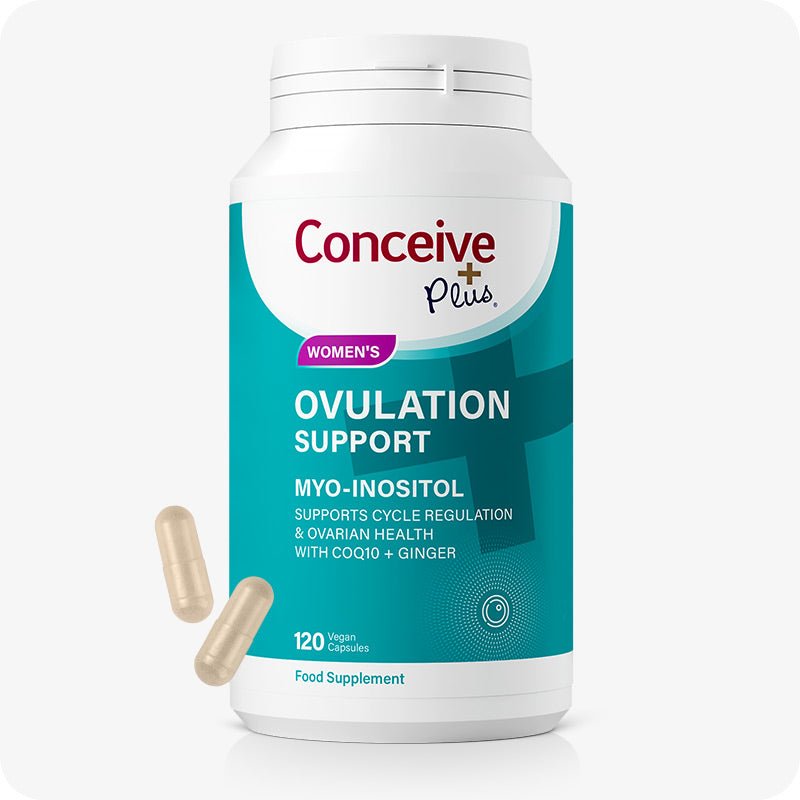
A: Conceive Plus Ovulation Support is formulated with myo-inositol, vitamin D, folate, and other nutrients clinically associated with improved ovulation regularity — particularly beneficial for women with irregular cycles or hormonal imbalances.
Q: Should I still try to conceive if I didn't detect an LH surge?
A: Yes — if you're unsure whether you ovulated, it's reasonable to continue having regular intercourse (every 2–3 days) throughout your cycle, particularly if you observe fertile cervical mucus signs.
Q: Does sex frequency affect my chances of conception?
A: Research suggests that having sex every 1–2 days during the fertile window maximises conception chances. Daily sex does not significantly improve results over every-other-day frequency for most couples, as this allows sperm concentration to replenish while still maintaining sperm in the reproductive tract during the fertile window.
Q: When should I see a fertility specialist about ovulation issues?
A: If you've been trying for 12 months without success (6 months if you're 35 or older), if you consistently cannot detect ovulation, or if you have symptoms of ovulatory disorders (very irregular or absent periods), see your GP for a referral to a reproductive specialist.
Mastering ovulation tracking takes time and practice, but the investment pays dividends. Understanding your cycle puts you in control — turning the complex biology of conception into a process you can observe, measure, and act on strategically. Combine your tracking knowledge with high-quality fertility support from Conceive Plus, and you're giving your conception journey every possible advantage.
Scientifically formulated supplements designed for women trying to conceive.
Explore Conceive Plus Supplements →
Ready to Support Your Fertility Journey?
Conceive Plus offers a complete range of clinically-backed fertility products — from sperm-friendly lubricants to targeted supplements for women and men. Trusted by couples and fertility specialists worldwide.
Shop Conceive Plus Now →