Fertility Supplements: The Evidence-Based Guide to Nutrients That Actually Support Conception


Fertility supplements have become a major category in reproductive health, with the global market now worth hundreds of millions of pounds annually. For couples trying to conceive (TTC), the promise of a tablet that can improve egg quality, boost sperm count, or regulate ovulation is an attractive proposition — particularly after months of trying without success.
But which fertility supplements actually have evidence behind them? Which are hype, and which can genuinely move the needle on the key factors that determine conception success — egg quality, sperm parameters, ovulation regularity, hormonal balance, and uterine receptivity?
This guide is a thorough, evidence-based review of the most clinically relevant fertility supplements for women and men — what the research shows, what doses matter, and how to build a supplementation protocol that gives your conception journey the best possible support.
Why Fertility Supplements Matter: The Nutritional Foundation of Conception
Conception is one of the most nutritionally demanding processes the human body undertakes. Egg maturation (oocyte development) is a three-month process that requires intensive cellular energy production, antioxidant protection against oxidative damage, and precise hormonal signalling. Sperm development (spermatogenesis) takes approximately 74 days, during which the developing sperm cells are highly vulnerable to nutrient deficiencies, oxidative stress, and DNA damage.
The fundamental premise of fertility supplementation is that nutritional deficiencies — even subclinical ones that do not produce obvious symptoms — can meaningfully impair the reproductive system. Vitamin D deficiency, for example, is associated with reduced fertility in both men and women. Zinc deficiency impairs sperm production and testosterone synthesis. Folate deficiency increases the risk of neural tube defects and is associated with impaired oocyte quality and early pregnancy loss.
Modern diets, despite their caloric abundance, are frequently deficient in the specific micronutrients that the reproductive system depends on. Fertility supplements address this gap — providing the nutrients that food alone may not reliably supply in the doses that reproductive function requires.
Optimise Your Body for Conception
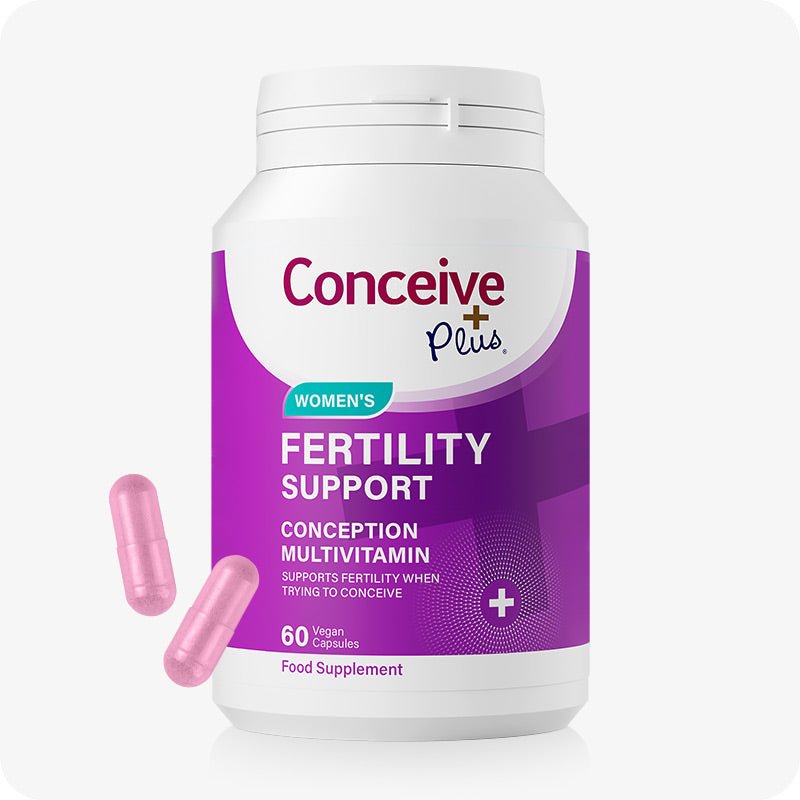
Conceive Plus Women's Fertility Support provides the evidence-based nutrients your body needs for healthy ovulation and egg quality — including methylfolate, myo-inositol, CoQ10, vitamin D3, and zinc — all in clinically meaningful doses.
Best Fertility Supplements for Women
Methylfolate (5-MTHF) — The bioavailable form of folate is the single most important fertility supplement for women. Folate is essential for DNA synthesis during cell division, which means it is critical during both oocyte development and early embryo development. The MTHFR genetic variant, carried by approximately 30–60% of the population, impairs the conversion of folic acid to its active form — making methylfolate supplementation particularly important for this group. Standard dose: 400–800mcg daily; begin at least three months before trying to conceive.
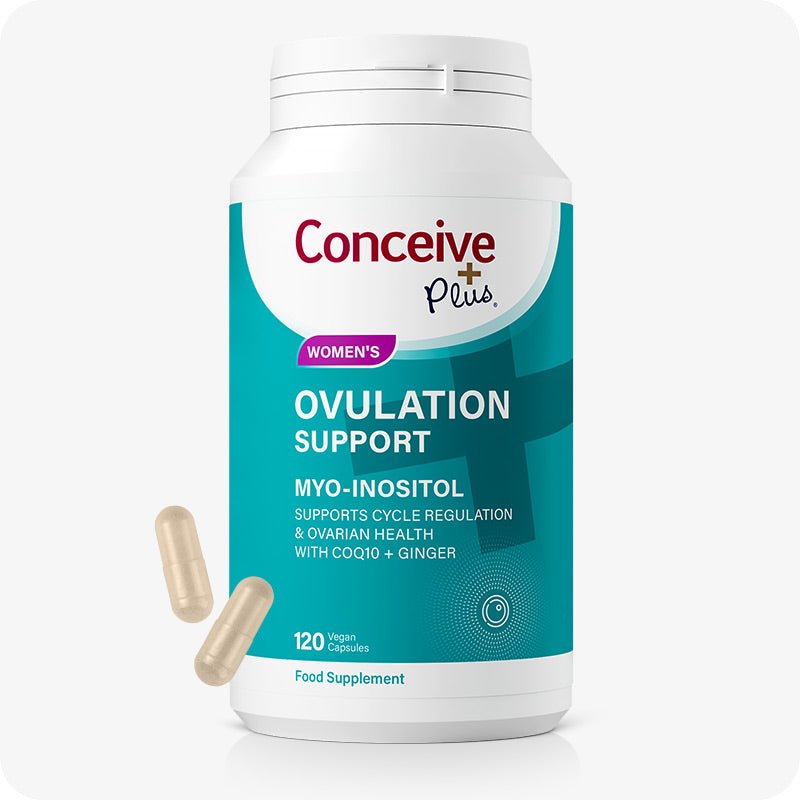
Myo-Inositol — A B-vitamin-like compound that plays a central role in FSH signalling and insulin sensitivity. In women with PCOS — who make up approximately 15–20% of women of reproductive age — myo-inositol supplementation has demonstrated significant improvements in ovulation frequency, oocyte quality, and clinical pregnancy rates. A randomised controlled trial published in the European Review for Medical and Pharmacological Sciences found that myo-inositol supplementation improved oocyte quality and embryo development in women undergoing IVF. Dose: 2,000–4,000mg daily, typically combined with D-chiro-inositol in a 40:1 ratio.
Coenzyme Q10 (CoQ10) — A mitochondrial cofactor that is essential for cellular energy production (ATP synthesis). As women age, CoQ10 levels decline — which is thought to contribute to the age-related decline in egg quality. Mitochondria are particularly concentrated in oocytes because egg maturation and early embryo development are among the most energetically demanding processes in biology. Supplementation with CoQ10 has been shown in clinical trials to improve oocyte quality, fertilisation rates, and embryo development. The ubiquinol form (the reduced, active form of CoQ10) has superior bioavailability. Dose: 200–600mg daily of ubiquinol.
Vitamin D3 — Vitamin D receptors are present in the ovaries, uterus, and endometrium, and vitamin D plays a role in follicular development, endometrial receptivity, and immune tolerance of the embryo. Deficiency (below 50 nmol/L) is extremely common in the UK and is associated with reduced fertility, longer time to pregnancy, and increased risk of miscarriage. Supplementation corrects deficiency and supports the full range of vitamin D's reproductive functions. Dose: 1,000–2,000 IU daily (or higher if deficiency is confirmed by blood test).
Zinc — Essential for folliculogenesis (follicle development), oocyte maturation, and ovulation. Zinc is also required for progesterone production and implantation. Deficiency is common in women on plant-based diets and is associated with longer time to conception. Dose: 15–25mg daily.
Omega-3 Fatty Acids (DHA/EPA) — Omega-3s are incorporated into cell membranes throughout the body, including oocytes and embryonic cells. They support endometrial blood flow, reduce inflammatory markers associated with implantation failure, and may improve egg quality. DHA is particularly important for early fetal brain and retinal development. Dose: 1,000–2,000mg combined EPA/DHA daily from marine sources or algae.
Vitamin B6 — Essential for progesterone synthesis and corpus luteum function. Deficiency is associated with shortened luteal phase and premenstrual syndrome. Dose: 25–50mg daily.
A Complete Fertility Support System for Both Partners
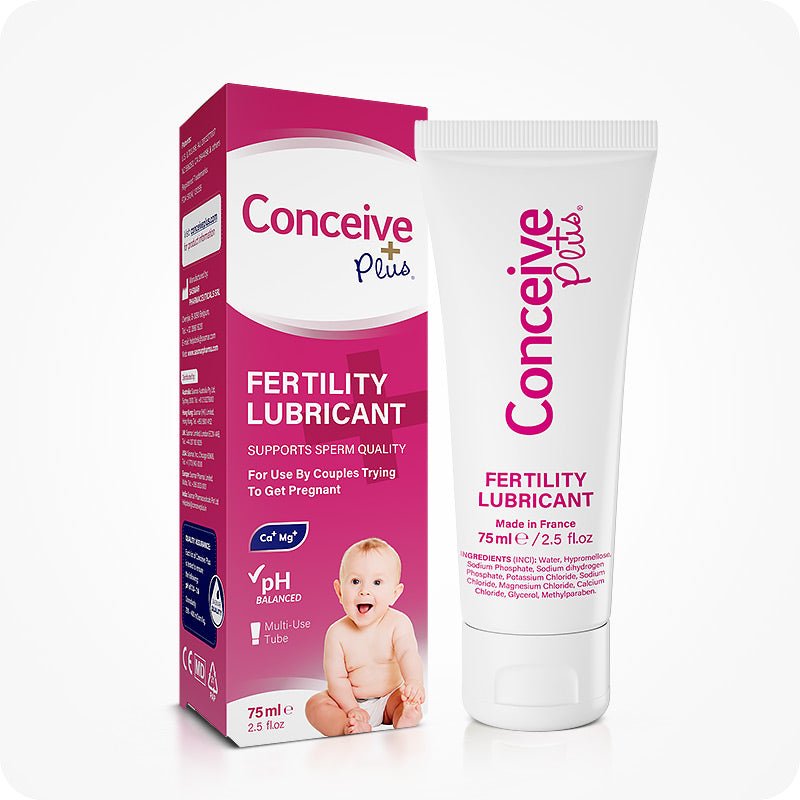
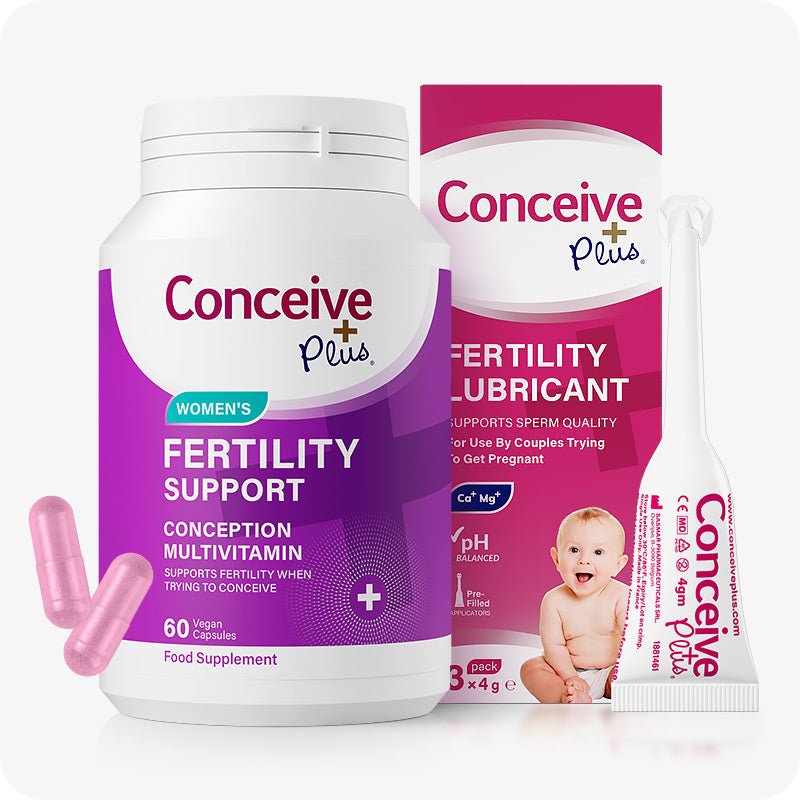
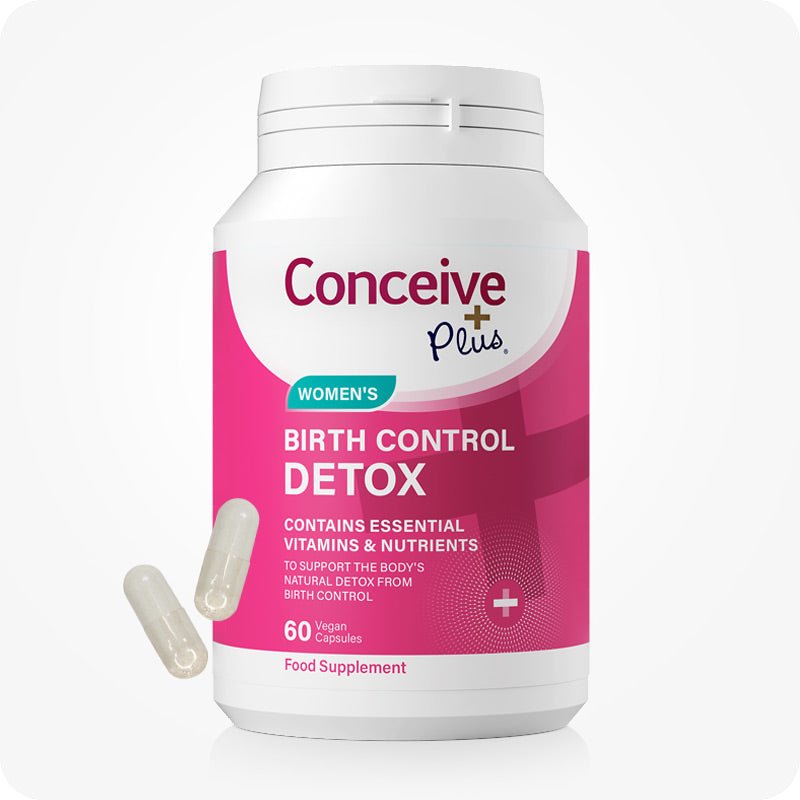
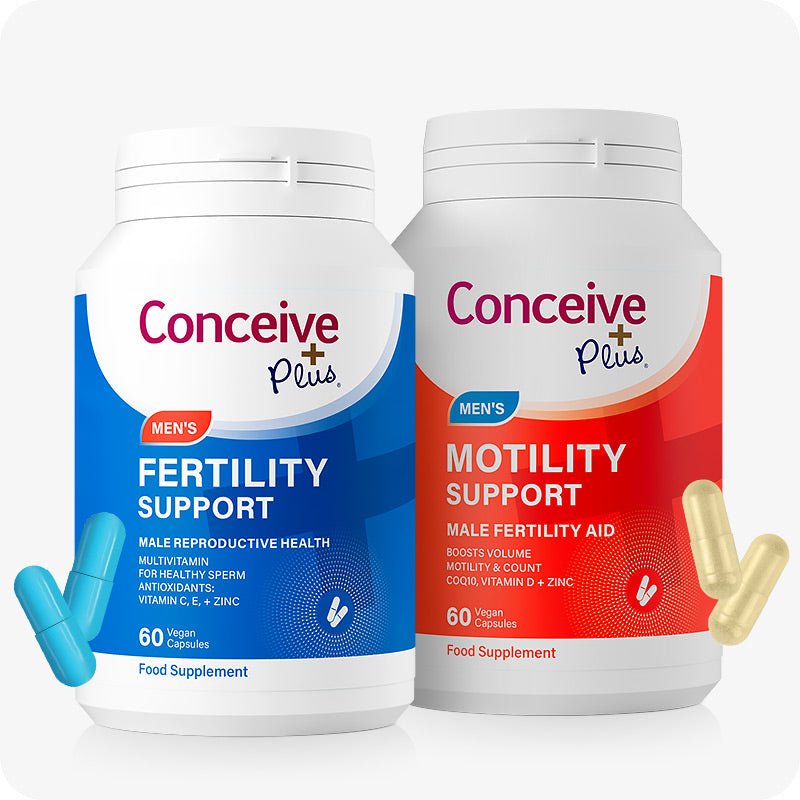
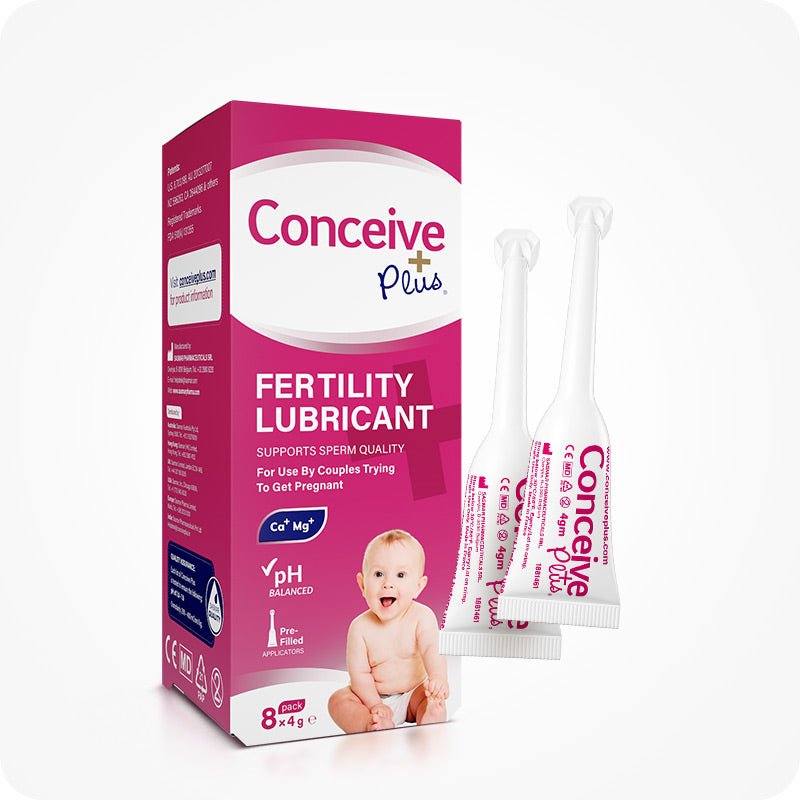
When both partners optimise their nutrition, conception chances improve significantly. Conceive Plus offers a complete range of scientifically formulated fertility supplements for women and men, plus our fertility-friendly lubricant.
Best Fertility Supplements for Men
L-Carnitine — A key nutrient in sperm metabolism. Sperm mitochondria require L-carnitine to transport fatty acids into the mitochondrial matrix for energy production. L-carnitine supplementation has been shown in multiple randomised controlled trials to improve sperm motility — the characteristic most directly linked to fertilisation success. A meta-analysis in the Asian Journal of Andrology found significant improvements in total and progressive sperm motility with L-carnitine supplementation. Dose: 1,500–3,000mg daily.
Coenzyme Q10 — As with women, CoQ10 is essential for sperm mitochondrial energy production. The flagellar movement that propels sperm through the female reproductive tract is powered by mitochondria — and CoQ10 is essential for mitochondrial ATP synthesis. Clinical trials have demonstrated that CoQ10 supplementation (ubiquinol form) improves sperm count, motility, and morphology. Dose: 200–400mg daily of ubiquinol.
Zinc — The highest concentration of zinc in the male body is found in the testes. Zinc is essential for testosterone synthesis, sperm production, DNA integrity, and the structural integrity of the sperm flagellum. Deficiency is associated with oligospermia (low sperm count) and reduced testosterone. Dose: 20–40mg daily.
Selenium — A component of glutathione peroxidase, the primary antioxidant enzyme in sperm cells. Selenium is incorporated into a structural protein in the sperm midpiece that protects mitochondria during sperm maturation. Deficiency is associated with impaired sperm motility and morphology. Dose: 100–200mcg daily.
Vitamin C — A water-soluble antioxidant that is highly concentrated in seminal fluid. Vitamin C protects sperm DNA from oxidative damage — a leading cause of male factor infertility. Supplementation has been shown to reduce sperm DNA fragmentation. Dose: 500–1,000mg daily.
Vitamin E — Works synergistically with selenium as a fat-soluble antioxidant protecting sperm cell membranes. Often combined with vitamin C in fertility supplement formulations. Dose: 200–400 IU daily.
Folate/Methylfolate — Men also require folate for DNA synthesis during sperm production. Folate deficiency is associated with increased sperm DNA fragmentation and higher rates of chromosomal abnormalities in sperm. Dose: 400–800mcg daily.
When to Start Fertility Supplements
The timing of supplementation matters significantly. Egg development begins approximately 90 days before ovulation, and sperm take approximately 74 days to mature. This means the nutritional environment of the previous three months directly affects the quality of eggs and sperm in any given cycle.
The evidence-based recommendation is to begin fertility supplements at least three months before starting to try to conceive. For couples already trying, starting now still provides meaningful benefit — even if the full effect takes several cycles to manifest.
For women undergoing IVF or other assisted reproduction, beginning supplementation three to six months before egg retrieval is particularly important, as oocyte quality at retrieval is directly influenced by the nutritional environment during follicle development.
Choosing a Fertility Supplement: What to Look For
Not all fertility supplements are created equal. Key factors to evaluate when choosing:
- Methylfolate vs folic acid: Choose methylfolate (5-MTHF) over synthetic folic acid — particularly if you have not tested for the MTHFR variant
- Ubiquinol vs ubiquinone: For CoQ10, ubiquinol (the reduced form) has significantly higher bioavailability, particularly important for women over 35
- Dose: Many supermarket prenatal vitamins contain doses well below what clinical research uses. Confirm doses match the evidence
- Third-party testing: Choose supplements with GMP certification and ideally independent quality testing
- Form: Some nutrients (like magnesium) are better absorbed in specific forms (glycinate vs oxide). Look for chelated mineral forms where available
Frequently Asked Questions
Q: Which fertility supplements actually work?
The strongest evidence exists for methylfolate, myo-inositol, CoQ10, vitamin D3, and zinc for women; and for L-carnitine, CoQ10, zinc, selenium, and vitamin C for men. These nutrients have multiple randomised controlled trials supporting their role in fertility.
Q: When should I start taking fertility supplements?
Start at least three months before trying to conceive. Egg development and sperm maturation each take approximately 74–90 days, so the nutritional environment of the previous three months directly affects egg and sperm quality.
Q: Do I need a separate fertility supplement or can I use a standard prenatal?
Standard prenatals often do not include nutrients like CoQ10, myo-inositol, or L-carnitine. A fertility-specific supplement or combination of targeted supplements is preferable to a generic prenatal for couples actively trying to conceive.
Q: Can men take fertility supplements?
Absolutely. Male factor infertility contributes to approximately 50% of cases. L-carnitine, CoQ10, zinc, selenium, and vitamin C all have strong evidence for improving sperm count, motility, and DNA integrity.
Q: How long does it take for fertility supplements to work?
Allow at least three months (one complete cycle of egg or sperm development) before expecting to see measurable improvements in fertility parameters.
Q: Are fertility supplements safe during pregnancy?
The supplements most relevant to fertility (methylfolate, vitamin D, omega-3s, zinc) are all safe and beneficial during pregnancy. However, always review your full supplement protocol with a healthcare provider once pregnant.
The landscape of fertility supplements is one where evidence genuinely separates the effective from the ineffective. Methylfolate, CoQ10, myo-inositol, and vitamin D for women — alongside L-carnitine, CoQ10, zinc, and selenium for men — represent the core of what reproductive science supports. Starting early, choosing quality formulations, and maintaining consistency across several months gives these nutrients the best opportunity to meaningfully support your conception journey.