Fertility Testing in the UK: Your Complete 2026 Guide to NHS and Private Options


When you have been trying to conceive for a while without success, one of the most empowering decisions you can make is to seek answers. Fertility testing — whether at home or through the NHS or a private clinic — gives you and your partner concrete information to work with, replacing uncertainty with facts. This guide walks you through every type of fertility test available in the UK in 2026, what the results mean, and how to use that information to move forward.
According to the NHS, approximately 1 in 7 couples in the UK have difficulty conceiving — that is around 3.5 million people. Yet despite this prevalence, many couples delay seeking fertility testing for years, often due to uncertainty about when to go, what to expect, or concern about what they might find. The data is clear: early testing leads to earlier diagnosis and better outcomes.
This comprehensive guide covers everything you need to know about fertility testing in the UK — from at-home ovulation and sperm tests, to GP referrals, NHS fertility investigations, and private clinic assessments. Whether you are just beginning to think about conception or have been trying for some time, understanding your options is the critical first step.
1. When Should You Consider Fertility Testing?
Understanding when to seek testing is the first step. Current NHS and NICE guidelines recommend:
- After 12 months of regular unprotected intercourse if the woman is under 35
- After 6 months if the woman is 35 or older
- Sooner than this — or immediately — in several specific circumstances
You should seek testing earlier if any of the following apply:
- Irregular, very long (>35 days), very short (<21 days), or absent periods
- Known or suspected polycystic ovary syndrome (PCOS)
- Known or suspected endometriosis
- History of pelvic inflammatory disease (PID) or STIs that may have caused tubal damage
- Previous abdominal or pelvic surgery
- Recurrent miscarriage (2 or more pregnancy losses)
- Known male factor issues (previous testicular problems, varicocele, prior abnormal semen analysis)
- Either partner has previously received chemotherapy or radiotherapy
- A family history of premature menopause or Turner syndrome
- You are over 40 and have only recently started trying
There is no need to wait 12 months to have a conversation with your GP if you have genuine concerns. GPs are obligated under NICE guidelines to take fertility concerns seriously and to begin initial investigations.
2. Starting at Home: At-Home Fertility Testing Options
Recommended by Fertility Experts
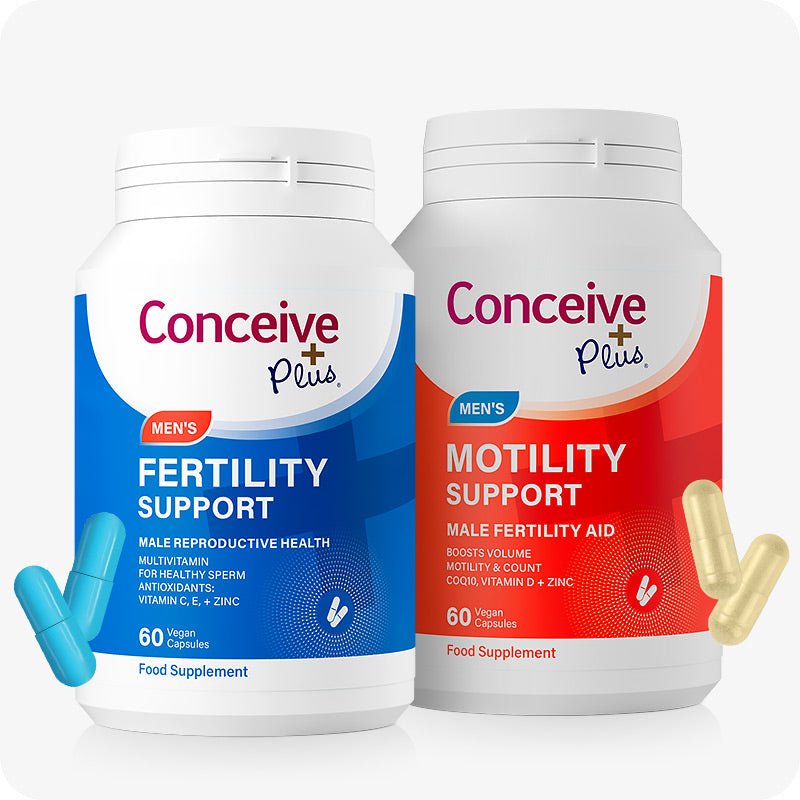
Conceive Plus Men's Fertility Support
Designed to support healthy sperm production, motility, and overall male reproductive health with clinically studied nutrients.
Shop Now →Before a GP or clinic appointment, at-home tests provide an accessible and low-cost starting point for assessing key fertility indicators. The UK at-home fertility testing market has grown substantially, with options now available for ovulation, sperm health, and hormone levels.
Ovulation Predictor Kits (OPKs)
OPKs detect the LH surge that precedes ovulation by approximately 12–36 hours, helping you identify your most fertile days. They are available from most UK pharmacies and online (Clearblue, First Response, Femometer, Inito). Digital OPKs are more reliable at interpreting results than traditional line-reading versions.
What OPKs tell you: Whether you are having an LH surge, indicating imminent ovulation. They do not confirm that ovulation actually occurred.
Limitations: Women with PCOS frequently have chronically elevated LH, leading to misleading positives. Women with very long or irregular cycles may need to test over more days to capture the surge.
An important note: OPKs work best as a complement to cervical mucus monitoring and basal body temperature (BBT) charting, not as a standalone method.
Basal Body Temperature (BBT) Charting
A rise of approximately 0.2°C in your resting (basal) temperature confirms that progesterone has risen following ovulation. Charted over 2–3 cycles, BBT patterns reveal whether ovulation is occurring, the length of your luteal phase, and cycle regularity. Dedicated fertility thermometers and apps (Tempdrop, Natural Cycles, Kindara) make this method more accessible than ever.
At-Home Sperm Tests
Several at-home sperm tests are now available in the UK — allowing men to check basic sperm parameters without a clinic visit:
- ExSeed: Smartphone-based motility analysis — one of the most comprehensive at-home options
- YO Sperm Test: Measures motile sperm concentration using your smartphone
- Testhim and Mojo Fertility: Laboratory-based kits you collect at home and post for analysis
At-home sperm tests provide a useful initial screen but should not replace a full clinical semen analysis (SA) if there is any concern.
At-Home Hormone Testing
Services such as Thriva, Medichecks, and Monitor My Health offer finger-prick blood tests for key fertility hormones, including AMH (anti-Müllerian hormone, a measure of ovarian reserve), FSH, LH, thyroid hormones, and vitamin D. Results are reported with clinical commentary. These tests are not diagnostic but can flag potential issues and guide GP discussions.
3. Going to Your GP: The First Clinical Fertility Assessment
Your GP is the first port of call for fertility concerns in the NHS pathway. At your initial appointment, they will:
- Take a detailed medical and gynaecological history
- Discuss both partners' health, lifestyle, medications, and any known risk factors
- Initiate referral-appropriate investigations
Initial Tests Your GP Will Arrange
For women:
- Day 2–5 FSH and LH: Assesses ovarian function and pituitary signaling. Elevated FSH (generally >10 IU/L) may indicate diminished ovarian reserve.
- Day 21 (midluteal) progesterone: A level of ≥30 nmol/L confirms ovulation has occurred. This test must be timed correctly to your cycle — 7 days before your expected period, not necessarily on Day 21 if your cycle is not 28 days.
- Rubella immunity: All women planning pregnancy should check immunity; vaccination before conception is recommended if not immune.
- Chlamydia screening: Chlamydia is the most common STI in the UK and often has no symptoms; untreated, it can cause tubal scarring and infertility.
- Thyroid function (TSH): Thyroid disorders are common in women and can cause cycle irregularities, anovulation, and early pregnancy loss.
- Full blood count: To check for anaemia, which can affect fertility and pregnancy outcomes.
For men:
- Semen analysis (SA): The cornerstone of male fertility assessment. This should be performed at an accredited laboratory, not an at-home test. Measures sperm concentration, total count, total motility, progressive motility, morphology (using Kruger strict criteria), and semen volume. WHO 2021 reference values provide the benchmark for assessment.
- If the initial SA is abnormal, a repeat sample should be taken 2–4 weeks later (to account for natural variability in sperm production).
4. NHS Fertility Investigations: What Happens Next
If initial GP testing reveals concerns, or if 12 months of trying have passed without conception, your GP can refer you to a secondary care fertility clinic via the NHS. NHS eligibility criteria for fertility treatment vary by Clinical Commissioning Group (CCG) / Integrated Care Board (ICB) in England, and by region in Wales, Scotland, and Northern Ireland. However, the diagnostic investigations are generally available before treatment eligibility criteria apply.
Comprehensive Female Fertility Investigations
Anti-Müllerian Hormone (AMH): AMH is produced by small antral follicles in the ovaries and is one of the most reliable markers of ovarian reserve — your remaining egg supply. It can be measured at any point in the cycle. Normal AMH varies by age, but generally:
- >15 pmol/L: Good/normal ovarian reserve
- 8–15 pmol/L: Low-normal
- <8 pmol/L: Low ovarian reserve (may affect response to stimulation)
- <3 pmol/L: Very low (consistent with diminished ovarian reserve or premature ovarian insufficiency)
Antral Follicle Count (AFC) Ultrasound: A transvaginal ultrasound performed early in the cycle counts the number of small (2–10 mm) follicles visible in both ovaries. This provides a direct physical assessment of ovarian reserve. A total AFC of ≥10 is considered normal; <5–7 may indicate low reserve.
Pelvic Ultrasound: Assesses uterine structure, identifies fibroids, polyps, or Müllerian anomalies, and evaluates the ovaries for polycystic appearance (PCOS criteria).
Hysterosalpingography (HSG): An X-ray procedure using contrast dye to visualise the uterine cavity and confirm fallopian tube patency (whether the tubes are open). Blocked tubes are a leading cause of infertility; HSG identifies this definitively.
Hysteroscopy: A camera examination of the uterine cavity under sedation or local anaesthetic. Allows direct visualisation and biopsy or treatment of uterine abnormalities (polyps, adhesions, septa) that could impair implantation.
Laparoscopy: A keyhole surgical procedure under general anaesthetic that provides the most definitive diagnosis of endometriosis, pelvic adhesions, and tubal damage. Reserved for cases where other investigations suggest significant pathology.
Further Male Fertility Investigations
If semen analysis reveals concerns, further investigations may include:
- Sperm DNA fragmentation testing: Measures damage to genetic material inside sperm. A DNA fragmentation index (DFI) >25–30% is associated with poor IVF/ICSI outcomes and recurrent miscarriage.
- Hormonal blood panel: FSH, LH, testosterone, prolactin, thyroid function. Identifies hormonal causes of impaired spermatogenesis.
- Karyotyping and Y-chromosome microdeletion analysis: If severe oligospermia or azoospermia is found, to identify genetic causes.
- Scrotal ultrasound: To identify varicocele (the most common correctable cause of male infertility), testicular atrophy, or structural abnormalities.
5. Private Fertility Testing and Clinics in the UK
For those who want faster access to testing and treatment than the NHS pathway currently provides, private fertility clinics in the UK offer comprehensive assessments typically within 2–4 weeks of first contact. Notable accredited clinic groups include CARE Fertility, The Fertility Partnership, Lister Fertility Clinic, London Women's Clinic, and Create Fertility.
What to expect from a private fertility consultation:
- Initial consultation with a reproductive medicine specialist: typically £150–300
- AMH blood test: typically £60–100
- Full hormone panel including AMH, FSH, LH, oestradiol, thyroid, prolactin: typically £150–250
- Pelvic/transvaginal ultrasound with AFC: typically £150–250
- Semen analysis (at an accredited laboratory): typically £100–200
- HSG: typically £400–700
Many private clinics offer fertility MOT packages that bundle several key investigations at a discounted overall price. These typically include an initial consultation, AMH, basic hormone panel, pelvic ultrasound, and semen analysis.
When choosing a private clinic, look for HFEA (Human Fertilisation and Embryology Authority) licensing, published and transparent success rate data (available on the HFEA website), and the availability of a fertility counsellor as part of the care team.
6. Understanding Your Results: Key Numbers Explained
Receiving fertility test results can feel overwhelming — here is a concise guide to interpreting the most common findings:
- Elevated FSH (>10 IU/L on Day 2–5): May indicate the pituitary is working harder to stimulate follicle growth, suggesting reduced ovarian reserve. Repeat testing is often advised as FSH can fluctuate cycle to cycle.
- Low AMH: Indicates fewer remaining eggs; does not mean pregnancy is impossible, but may affect response to ovarian stimulation. Should be interpreted alongside AFC and clinical context.
- Low Day 21 progesterone (<30 nmol/L): Suggests ovulation may not have occurred. Ensure the test was timed correctly (7 days before your next expected period).
- Abnormal semen analysis: Results below WHO 2021 reference values (sperm concentration <16 million/mL, total motility <42%, morphology <4% normal forms) warrant repeat testing and further investigation.
- Elevated TSH (>2.5 mIU/L when TTC): Many fertility specialists now recommend levothyroxine supplementation for TTC women with TSH above this threshold, even within the NHS "normal" range.
- Polycystic ovarian morphology on ultrasound: Consistent with PCOS if combined with oligomenorrhoea or biochemical hyperandrogenism; isolated ultrasound finding alone is not diagnostic.
7. How Conceive Plus Supports Your Fertility Testing Journey
While awaiting test results or after receiving a diagnosis, there is plenty you can do to optimise your reproductive health. Evidence-based supplementation and lifestyle changes can meaningfully improve fertility markers — and for many couples, targeted preparation in the months before treatment significantly improves outcomes.
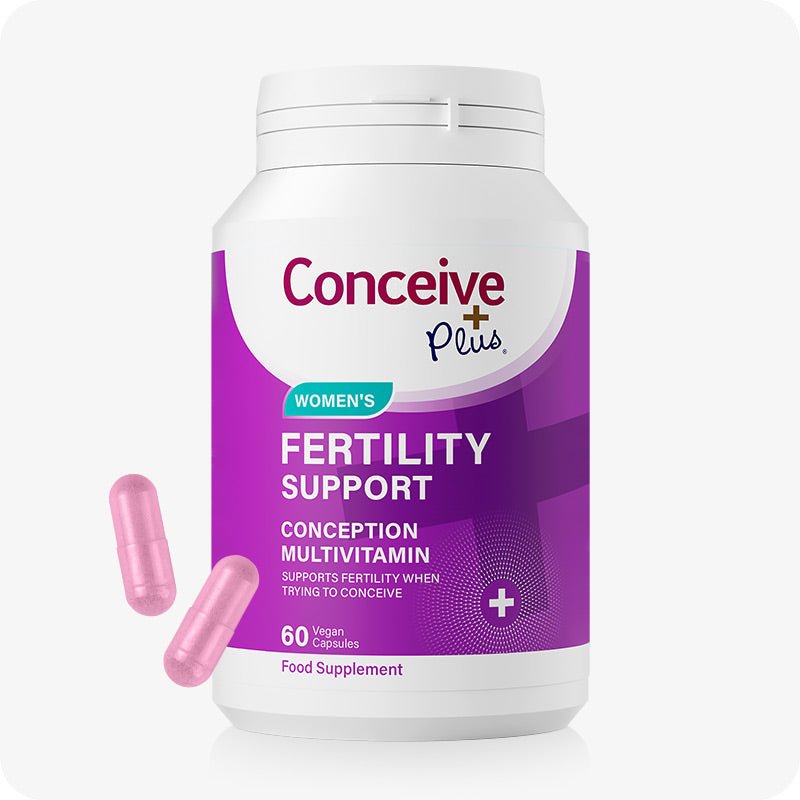
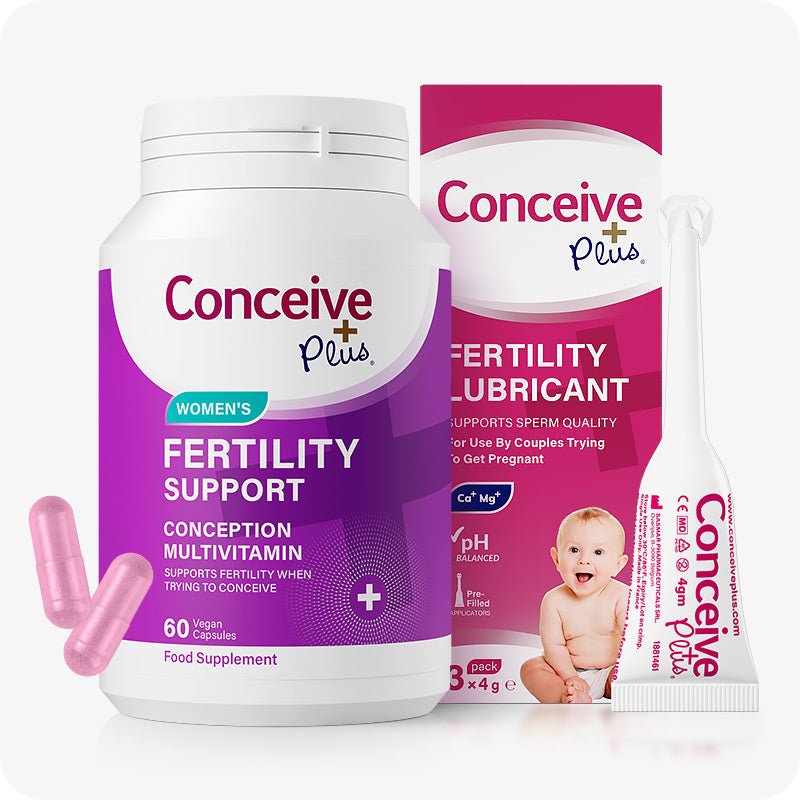
Conceive Plus Women's Fertility Support provides a comprehensive micronutrient foundation — including methylfolate (the bioavailable form of folic acid), CoQ10 for egg quality, vitamin D3, omega-3 support, and key minerals — specifically formulated for women trying to conceive in the UK.
Conceive Plus Men's Fertility Support addresses the key drivers of sperm quality with zinc, selenium, CoQ10, vitamins C and E, and L-carnitine — the nutrients most consistently shown to improve semen parameters in clinical trials.
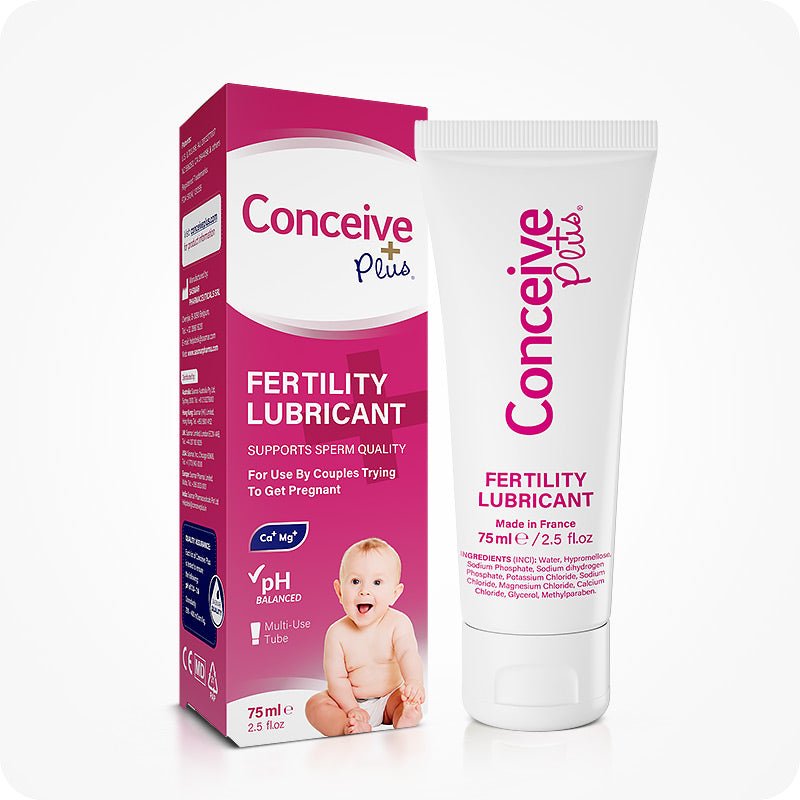
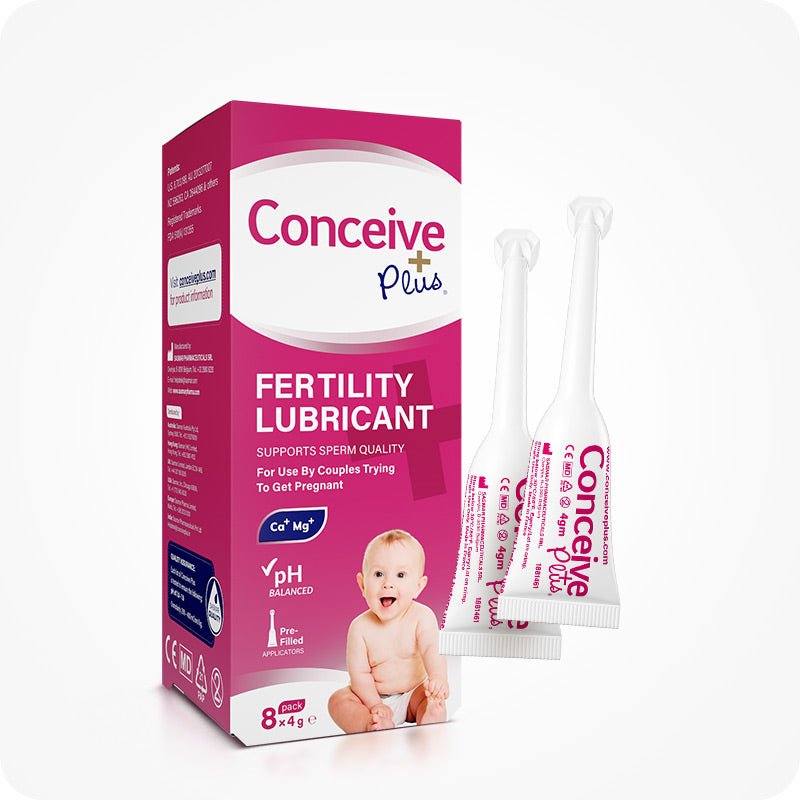
If vaginal dryness is a concern during conception-timed intercourse — common when tracking cycles, under stress, or taking antihistamines — ensure you use a sperm-safe lubricant. Many standard UK lubricants impair sperm motility. Conceive Plus Fertility Lubricant is specifically designed to be safe for sperm.
Shop Maximum Fertility Bundle →Frequently Asked Questions: Fertility Testing in the UK
Q1: Can I get fertility testing on the NHS without trying for a year?
Yes — if you have a medical reason to suspect a fertility issue (irregular periods, PCOS diagnosis, history of chlamydia, recurrent miscarriage, male factor concerns), your GP can initiate investigations earlier than the 12-month threshold. Be clear and specific about your symptoms or history; GP fertility referrals depend on clinical assessment.
Q2: What is AMH and why does it matter?
AMH (anti-Müllerian hormone) is the best available blood test for measuring ovarian reserve — your remaining egg supply. It reflects the number of small antral follicles in your ovaries and correlates with how you are likely to respond to ovarian stimulation in fertility treatment. Low AMH does not mean you cannot conceive naturally, but it is important information for planning your fertility journey and timeline.
Q3: How long does NHS fertility testing take?
Initial GP blood tests can often be arranged within 1–2 weeks. A GP referral to a secondary care fertility clinic typically takes 8–26 weeks, depending on your NHS Trust and area. Full investigation at the fertility clinic takes a further 2–3 months. For faster results, a private clinic can typically complete all initial investigations within 4–6 weeks of your first appointment.
Q4: How is sperm quality assessed?
A semen analysis (SA) is the standard test. It measures sperm concentration (count per mL), total sperm count, total and progressive motility, morphology (the proportion of normally shaped sperm), semen volume, and pH. It should be done at an accredited HFEA laboratory. Two samples taken 2–4 weeks apart provide a more reliable picture, as sperm production can vary week to week.
Q5: Is HSG (hysterosalpingography) painful?
HSG involves injecting dye through the cervix and can cause cramping — similar to period pain in intensity for most women. Some find it more uncomfortable, particularly if there is any tubal narrowing. Taking over-the-counter ibuprofen an hour beforehand is usually recommended. The procedure takes 15–20 minutes and you can typically return to normal activities the same day.
Q6: What does a "high sperm count" mean for fertility?
A higher sperm count improves the odds of conception, but count alone is not the full picture. Motility (movement) and morphology (shape) are equally — or sometimes more — important. A man with a lower-than-normal count but excellent motility and morphology may have good fertility. Conversely, a high count with very poor motility or morphology can still be associated with difficulty conceiving.
Q7: Can I improve my fertility between testing and treatment?
Absolutely — and the evidence strongly supports doing so. Three to six months of targeted nutrition, supplementation (folate, CoQ10, omega-3s, vitamin D for women; zinc, selenium, CoQ10, vitamins C and E for men), lifestyle changes (sleep, exercise, stress management), and avoiding harmful exposures (smoking, excess alcohol, heat to the testes) can meaningfully improve egg quality, sperm parameters, and overall reproductive health before treatment begins.
Q8: What is the difference between having your fertility tested at the GP vs a private clinic?
GP testing covers the most fundamental investigations (hormones, semen analysis) but may not include AMH, full AFC ultrasound, or tubal assessment on the first referral. A private clinic consultation typically includes a more comprehensive initial panel, specialist interpretation, and faster access to further investigations like HSG or hysteroscopy if needed.
Q9: My GP says everything is "normal" but I still haven't conceived — what next?
"Normal" basic GP tests do not rule out all causes of infertility. Sperm DNA fragmentation, subtle egg quality issues, mild endometriosis, immunological factors, and early uterine abnormalities may not appear on basic investigations. If standard GP tests are normal and you have been trying for 12+ months (or 6+ if over 35), request a referral to a secondary care fertility clinic for comprehensive investigation.
Q10: At what age does female fertility decline most rapidly?
Female fertility begins declining gradually from the late 20s, with more significant decline from around age 35 and sharper decline from 37–38 onwards. By 40, monthly conception probability is approximately 5% per cycle for most women, compared to approximately 20–25% per cycle at age 25. This decline is primarily driven by reduction in egg quantity and quality. This is why testing ovarian reserve earlier — rather than waiting until problems are apparent — gives couples the most options.
Conclusion: Knowledge Is Power — Start Testing, Start Planning
Fertility testing in the UK in 2026 has never been more accessible. From at-home OPKs and sperm tests to NHS GP referrals and comprehensive private clinic assessments, you have more options than any previous generation for understanding your reproductive health. The key is not to wait until urgency forces action — proactive testing gives you time to address issues, make lifestyle changes, and plan.
Whether your results come back with a clear diagnosis or are reassuringly normal, knowledge is always better than uncertainty. Use what you learn to have better conversations with your healthcare team, to make targeted changes to your health and supplement routine, and to approach your conception journey with clarity and confidence.
Conceive Plus is here to support every step — from supplementation and fertility lubricants to educational resources designed for couples navigating the trying-to-conceive journey in the UK.
Explore Conceive Plus Products →Trusted by Couples in Over 70 Countries
Support Male Fertility From the Inside Out
Male fertility is just as important as female fertility in the conception journey. Conceive Plus Men's range delivers targeted nutritional support to promote healthy sperm and overall reproductive wellbeing.
Shop Men's Range →