How to Track Ovulation Naturally: A Complete UK Guide


How to Track Ovulation Naturally: A Complete UK Guide
Understanding your menstrual cycle and identifying your fertile window is one of the most powerful steps any couple can take when trying to conceive. Whether you have regular 28-day cycles or irregular timing, learning how to track ovulation accurately can dramatically improve your chances of conception. This comprehensive guide explores every evidence-based method available to UK couples — from low-cost natural techniques to digital fertility monitors.
Why Ovulation Tracking Matters When Trying to Conceive
The average menstrual cycle lasts between 21 and 35 days, but ovulation itself — the release of a mature egg — typically lasts just 12 to 24 hours. However, sperm can survive in the female reproductive tract for up to 5 days when fertile cervical mucus is present. This means your actual fertile window is approximately 5–6 days per cycle: the 3–5 days before ovulation, the day of ovulation itself, and potentially one day after.
Many couples significantly reduce their conception chances by relying on calendar counting alone. Unless your cycles are extremely regular (within 1–2 days variation month-to-month), calendar-only timing frequently misses the actual fertile window. Studies from the Journal of Obstetrics and Gynaecology consistently show that cycle-based timing without biological confirmation results in couples missing the fertile window in up to 40% of cycles.
Tracking ovulation biologically — using hormonal, physical, or thermal signals — removes this uncertainty and dramatically improves timing accuracy.
Method 1: Ovulation Predictor Kits (OPKs)
Ovulation predictor kits detect the LH (luteinising hormone) surge that triggers ovulation. When LH spikes, ovulation typically follows within 24–36 hours, giving you a clear advance signal of your most fertile period.
OPKs are widely available across the UK at Boots, Superdrug, and online retailers. They work similarly to pregnancy tests — you dip a stick or strip into urine and wait for the result line. When the test line is as dark or darker than the control line, your LH surge has been detected.
Tips for accurate OPK use:
- Test at the same time each day — late morning to early afternoon typically produces the most reliable results
- Reduce fluid intake for 2 hours before testing to avoid diluting the sample
- Begin testing a few days before your expected ovulation (approximately 16–18 days before your next period)
- Some women with PCOS have persistently elevated LH — digital OPKs may provide clearer readouts in this case
Digital OPKs (such as Clearblue Advanced) detect both oestrogen rise and the LH peak, giving a 4-day fertile window indication rather than just the LH surge peak — particularly useful for planning intercourse timing.
Method 2: Cervical Mucus Monitoring
Your cervical mucus (CM) changes predictably throughout your cycle in response to oestrogen fluctuations. Learning to recognise these patterns gives you a reliable, cost-free fertility signal:
- Post-period (days 1–5 post-bleed): Dry or no mucus
- Early follicular (days 5–9): Thick, white, creamy — non-fertile
- Pre-ovulatory (days 9–14): Increasing, becoming wetter and more transparent
- Peak fertility: Raw egg-white consistency — clear, stretchy, slippery. This is your most fertile mucus. Intercourse in this phase maximises sperm survival.
- Post-ovulatory: Mucus abruptly becomes thick and white again following ovulation — a sign the fertile window has closed
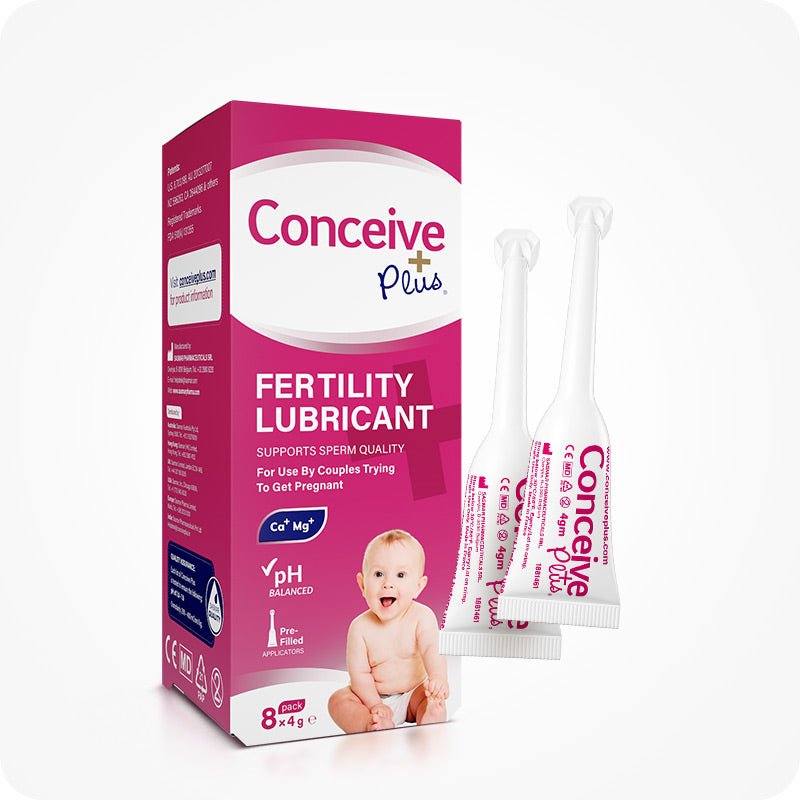
Some women produce limited fertile-quality cervical mucus due to hormonal factors, PCOS, thyroid conditions, or as a side effect of certain medications (including antihistamines and clomiphene). In these cases, using a fertility-supportive lubricant like Conceive Plus can help supplement natural mucus and maintain sperm viability during the fertile window.
Method 3: Basal Body Temperature (BBT) Charting
Basal body temperature (BBT) is your resting temperature taken first thing in the morning, before any activity. Progesterone released after ovulation causes a small but measurable temperature rise of 0.2–0.5°C that persists until your next period.
BBT charting works best when used retrospectively — it confirms that ovulation has occurred but doesn't predict it in advance. For planning intercourse, BBT is most useful when combined with OPKs or CM monitoring to build a comprehensive picture of your cycle over several months.
Getting started with BBT:
- Take your temperature at the same time every morning before getting up
- Use a dedicated basal thermometer (reads to 0.01°C)
- Record on an app like Fertility Friend or Ovia, or on paper charts
- Look for a sustained rise of at least 0.2°C lasting 3+ consecutive days to confirm ovulation
- Note that illness, alcohol, poor sleep, and travel can affect BBT readings
Method 4: Fertility Monitors and Apps
Dedicated fertility monitors like the Clearblue Connected Fertility Monitor and Mira Fertility Tracker quantify hormone levels in urine, giving you a personalised fertility profile rather than a simple positive/negative readout. These devices are particularly valuable for women with irregular cycles or PCOS.
Fertility apps (Natural Cycles — which carries CE Mark and MHRA registration for contraception — and Clue) use algorithm-based cycle prediction that improves in accuracy over multiple cycles of data entry. While convenient, algorithm-only apps without biological measurement have limitations, particularly for irregular cycles.
The most reliable approach is to combine at least two methods: for example, CM monitoring + OPK, or BBT charting + digital OPK. Cross-referencing two biological signals significantly improves identification of your true fertile window.
Understanding Irregular Cycles and Ovulation Timing
If your cycles vary by more than 5–7 days month to month, predicting ovulation from cycle length alone becomes very unreliable. Irregular cycles may indicate:
- PCOS (polycystic ovary syndrome) — affects 1 in 10 UK women and can cause anovulatory cycles (cycles without ovulation)
- Thyroid dysfunction (both hypothyroidism and hyperthyroidism affect cycle regularity)
- Perimenopause or diminished ovarian reserve
- Stress, significant weight change, or excessive exercise
- Prolactin elevation (often asymptomatic)
If cycles are consistently irregular, or if you've been trying to conceive for 12+ months without success (or 6+ months if over 35), speak to your GP. Blood tests (Day 3 FSH/LH/oestrogen and Day 21 progesterone) and a pelvic ultrasound can identify most common causes.
The Role of Fertility-Supportive Lubricants in Ovulation Tracking
One often-overlooked aspect of optimising your fertile window is what happens during intercourse itself. Standard commercial lubricants — including KY Jelly and many massage oils — are toxic to sperm, dramatically reducing motility within minutes of contact. This can nullify perfectly timed intercourse.
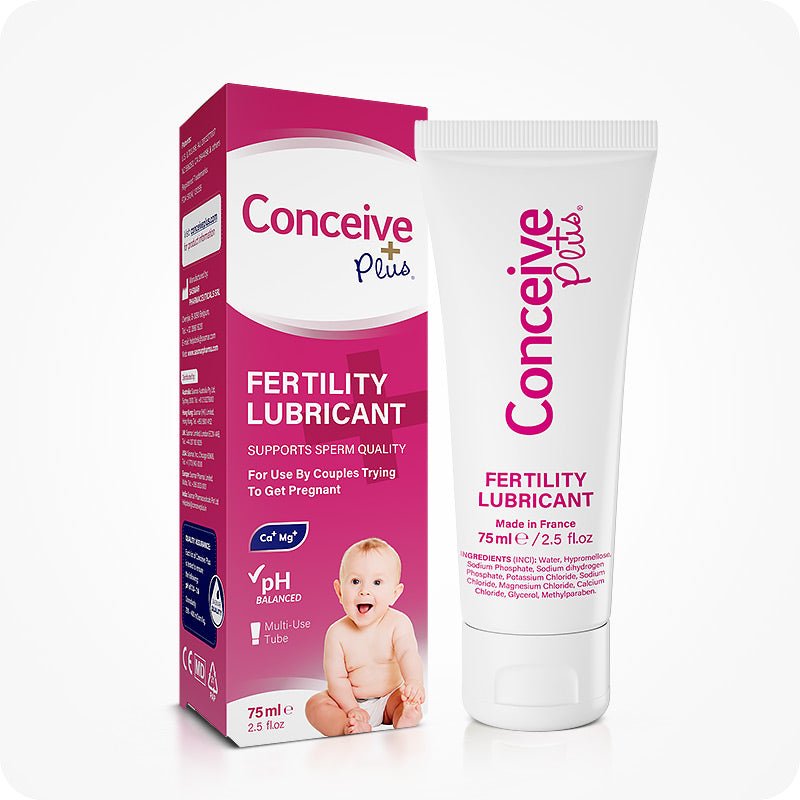
Conceive Plus fertility lubricant is specifically formulated to match the properties of natural fertile cervical mucus. Its unique Ca²⁺/Mg²⁺ ionic formula actively supports sperm function, while its pH-balanced, isotonic composition ensures sperm viability throughout the journey to the egg.
Used alongside accurate ovulation tracking, Conceive Plus helps ensure that when timing is right, biology is too.
🌿 Support every fertile moment.
Discover Conceive Plus fertility lubricant and supplements at conceiveplus.co.uk/collections/fertility-lubricants. Delivered discreetly to your door across the UK.
When to See a Doctor About Ovulation
Ovulation tracking is an empowering tool, but it has limits. Seek medical advice if:
- You never detect a clear LH surge despite testing consistently for 2–3 cycles
- Your luteal phase (time from ovulation to period) is consistently under 10 days
- Your periods are absent or very infrequent (fewer than 8 per year)
- Your BBT shows no thermal shift despite confirmed-negative LH readings, suggesting anovulation
- You're over 35 and have been trying for 6+ months
- You have a known condition (PCOS, endometriosis, thyroid disorder) affecting ovulation
Your GP can refer you to a fertility specialist (NHS or private) for further investigation. In the meantime, continue tracking — the data you've gathered will be valuable clinical information.
💚 Give your fertile window the support it deserves.
Shop Conceive Plus ovulation support supplements and fertility lubricant at conceiveplus.co.uk. Trusted by UK couples and recommended by fertility professionals.
Frequently Asked Questions About Ovulation Tracking
Q: How do I know if I'm ovulating?
A: The most reliable confirmation of ovulation is a sustained BBT rise of 0.2°C+ for 3+ consecutive days after a detected LH surge on an OPK. If your luteal progesterone (day 21 test, or 7 days after ovulation) is above 30 nmol/L, this also confirms ovulation occurred.
Q: Can you get pregnant without a fertile mucus sign?
A: Yes, though it's less likely. Some women have adequate fertile mucus that's not visible externally. Using a fertility lubricant like Conceive Plus can supplement natural mucus production for better sperm survival even if visible mucus signs are limited.
Q: How many days before my period do I ovulate?
A: Ovulation typically occurs 12–16 days before the next period regardless of cycle length. In a 28-day cycle this means day 12–16. In a 35-day cycle, this shifts to day 19–23. Tracking biologically (not by calendar) gives you accurate, cycle-specific information.
Q: Are ovulation apps accurate?
A: Apps that use biological data (temperature, CM observations, or hormone levels) become increasingly accurate over multiple cycles. Calendar-only apps that simply predict based on average cycle length are significantly less reliable, particularly for irregular cycles.
Q: What's the difference between ovulation pain and period cramps?
A: Some women experience mittelschmerz — a one-sided, brief twinge or ache during ovulation on the side of the ovulating ovary. This is typically much milder and shorter-lived than period cramps. It can serve as an additional ovulation signal when reliably experienced.
Q: Can stress affect ovulation?
A: Yes. Significant psychological or physiological stress can suppress or delay ovulation by affecting hypothalamic-pituitary signalling. Chronic stress may cause anovulatory cycles. Moderate lifestyle stress in most healthy women does not prevent ovulation but may shift its timing.
Q: How long should I track before seeing a pattern?
A: Most fertility specialists recommend tracking for 3 cycles before drawing conclusions, as cycle length and ovulation timing can vary naturally between months. Digital apps typically need 3–6 cycles of data to generate accurate predictions.
Q: Can I track ovulation if I have PCOS?
A: Yes, though it's more challenging. LH can be persistently elevated in PCOS, making standard OPKs harder to interpret. Digital quantitative OPKs (like Mira) or progesterone tracking are more reliable. Working with a fertility specialist is strongly recommended for PCOS-related ovulation tracking.