Ovulation Tracking: The Complete Guide for Couples Trying to Conceive


Ovulation Tracking: The Complete Guide for Couples Trying to Conceive
Understanding your ovulation cycle is one of the most powerful tools available to couples trying to conceive. Ovulation tracking removes much of the guesswork from timing intercourse, helping you identify the specific days each month when conception is biologically possible. Whether you've just started trying or are several months into your journey, mastering ovulation tracking can significantly improve your chances of success.
In this comprehensive guide, we cover every major method of ovulation tracking — from basal body temperature charting to ovulation predictor kits to cervical mucus observation — along with how Conceive Plus supports you through each phase of your cycle.
Why Ovulation Tracking Matters
Most people are surprised to learn that natural conception is only possible on roughly 6 days per month — the five days before ovulation and the day of ovulation itself. Outside this window, the egg is simply unavailable, and sperm (which survive 3–5 days in a healthy cervical environment) won't be in position to fertilise it.
Research from the National Institute of Environmental Health Sciences found that couples who correctly identified their fertile window and timed intercourse accordingly had pregnancy rates of around 38% in a given month — significantly higher than those who relied on estimated cycle averages alone.
Ovulation tracking is particularly valuable if your cycles are irregular, you've been trying for several months without success, or you're returning to TTC after a break, postpartum period, or hormonal contraception.
Method 1: Basal Body Temperature (BBT) Charting
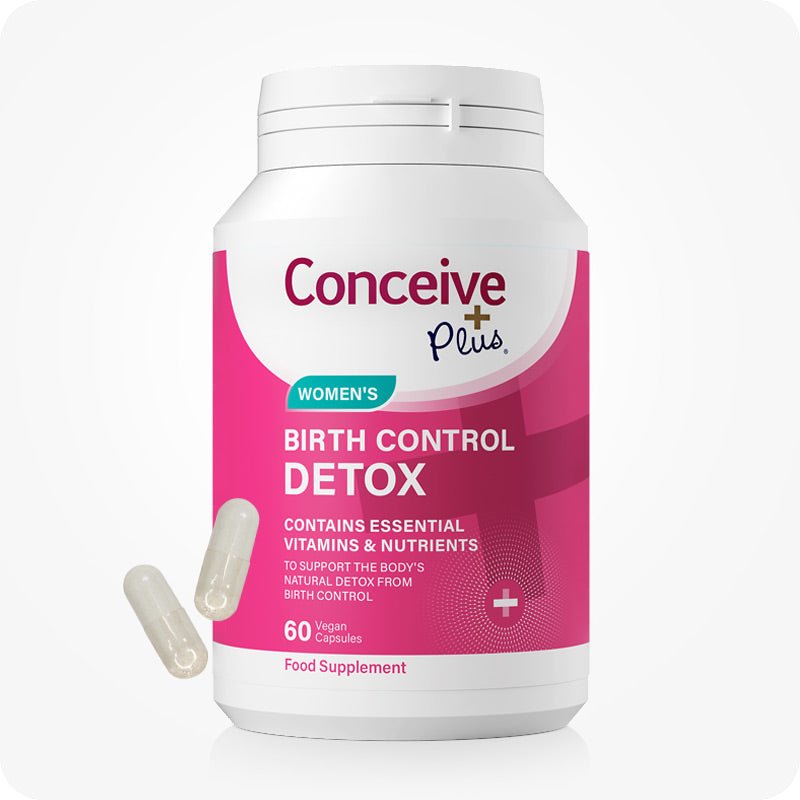
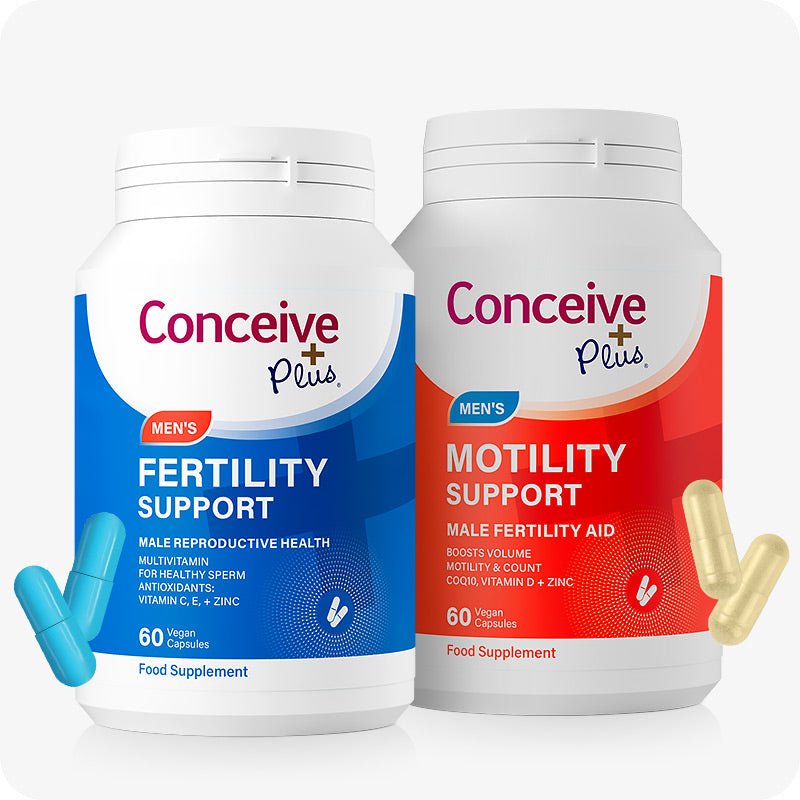
Trusted by couples worldwide, Conceive Plus offers a complete range of fertility supplements and lubricants — formulated by fertility specialists.
Explore Conceive Plus Products →
Basal body temperature is your body's temperature at complete rest — ideally measured first thing in the morning before you get out of bed. After ovulation, progesterone causes a sustained rise in BBT of 0.2–0.5°C (0.4–1.0°F) that persists until your next period.
How to chart BBT:
- Take your temperature at the same time every morning (±30 minutes), before any activity
- Use a basal body thermometer accurate to 0.1°C
- Record readings in an app (Fertility Friend, Premom, Natural Cycles) or paper chart
- Look for a sustained rise that signals ovulation has occurred
Limitations: BBT charting confirms ovulation after it has happened, making it primarily useful for predicting future cycles rather than current-cycle timing. It's also sensitive to illness, alcohol, poor sleep, and travel.
Method 2: Ovulation Predictor Kits (OPKs)
OPKs detect the luteinising hormone (LH) surge that triggers ovulation. A positive OPK typically means ovulation will occur within 24–48 hours — making this the most actionable real-time ovulation tracking method.
Types of OPKs:
- Standard test strips: Affordable, available in bulk. Require interpretation of line darkness (test line must equal or exceed control line).
- Digital OPKs: Display a smiley face or clear/peak symbol. Easier to read but more expensive.
- Advanced digital monitors (e.g. Clearblue Advanced): Track both oestrogen and LH, giving you additional "high fertility" days before the peak.
When to start testing: Begin approximately 3–4 days before your expected ovulation (cycle length minus 17 days is a common rule of thumb). Test once or twice daily — afternoon testing (between 12pm and 8pm) is often recommended as LH tends to surge mid-morning.
Method 3: Cervical Mucus Monitoring
Cervical mucus changes predictably throughout the menstrual cycle under the influence of oestrogen and progesterone. Learning to read these changes is a free, real-time fertility signal.
Mucus phases:
- Post-period (Days 1–5): Dry or minimal discharge
- Pre-fertile (Days 6–10): Sticky, white or yellow, crumbly texture
- Approaching ovulation (Days 10–13): Creamy, lotion-like, increasing in volume
- Peak fertility (ovulation day ±1): Clear, slippery, stretchy — like raw egg white. This is your most fertile mucus.
- Post-ovulation: Mucus dries and becomes tacky or disappears
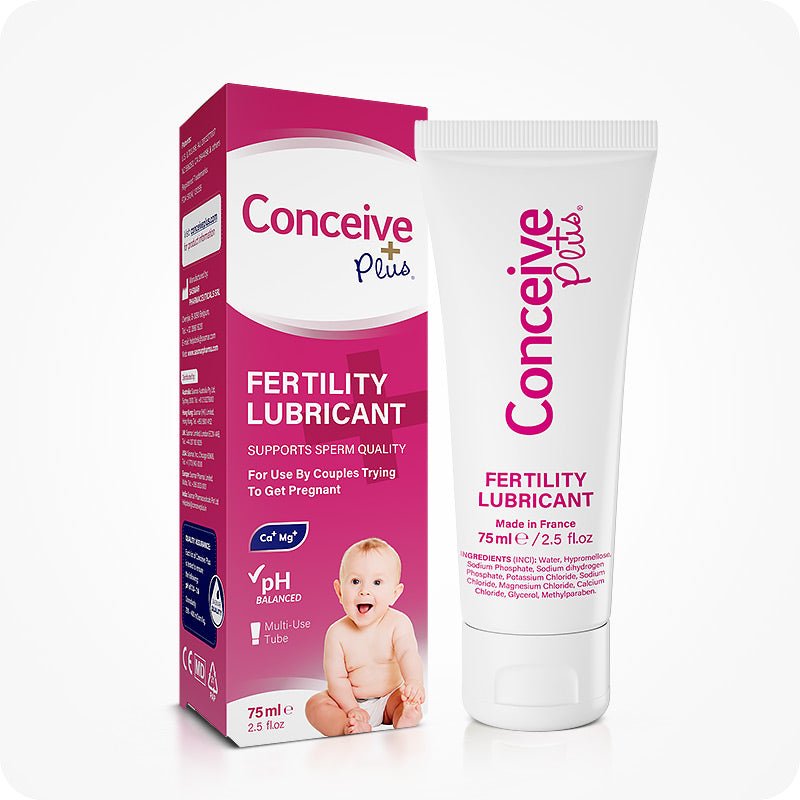
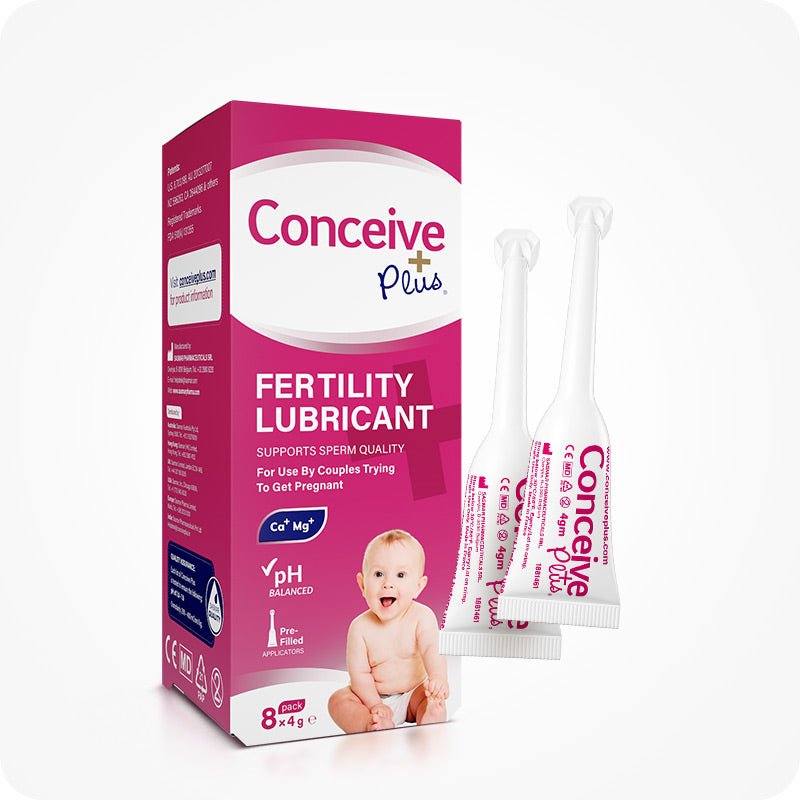
Egg-white cervical mucus (EWCM) is the gold standard signal. It creates an optimal environment for sperm transport — the same environment a well-formulated fertility lubricant like Conceive Plus is designed to mimic on days when natural mucus is insufficient.
Method 4: Hormone Monitoring Devices
Advanced fertility monitors like the Mira, Clearblue Connected, and OvuSense go beyond simple LH detection to measure hormone levels over time, giving you a personalised fertility curve rather than a binary positive/negative result.
Mira Fertility Monitor: Uses urine test wands to quantify actual LH, oestrogen, FSH, and progesterone levels. Particularly useful for women with PCOS, who often have elevated baseline LH that makes standard OPKs unreliable.
OvuSense: A vaginal sensor worn overnight that tracks core temperature changes with high precision, identifying a progesterone rise earlier than wrist-worn wearables.
These devices come at higher upfront cost but provide richer data — especially valuable for couples with irregular cycles or unexplained infertility.
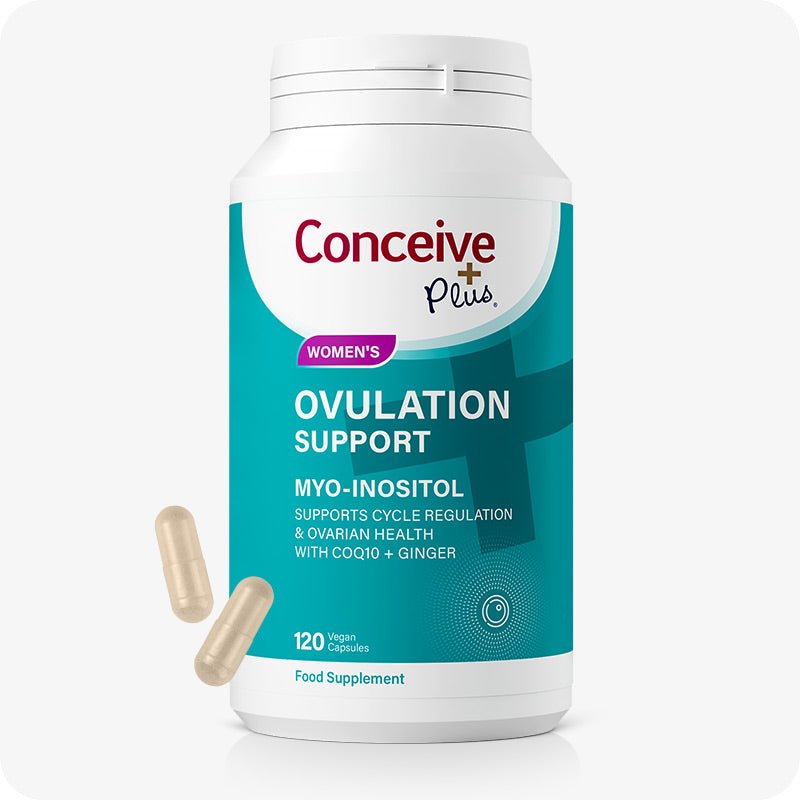
Our specially formulated supplement contains inositol, CoQ10, and key vitamins to support regular ovulation and reproductive hormone balance.
Shop Ovulation Support Supplements →
Combining Methods for Maximum Accuracy
No single ovulation tracking method is perfect. Each has strengths and weaknesses, and combining two or three gives you a much clearer picture:
- OPK + BBT: The most popular combination. OPKs predict when ovulation is approaching; BBT confirms it has happened, helping you calibrate your predictions month over month.
- OPK + Cervical Mucus: Cervical mucus gives you a natural cross-check. When your OPK turns positive and you're producing EWCM, you're at peak fertility.
- All three: For women with irregular cycles or conditions like PCOS, using BBT, OPKs, and cervical mucus together — plus an app to integrate the data — gives the most reliable picture.
Ovulation Tracking With PCOS and Irregular Cycles
Women with polycystic ovary syndrome (PCOS) face specific challenges with ovulation tracking. PCOS often involves chronically elevated LH, which can cause false positives on standard OPKs. Irregular cycle length makes predicting the start date for testing difficult.
Strategies for PCOS ovulation tracking:
- Use a quantitative monitor (Mira) that measures your personal LH baseline rather than comparing to a fixed threshold
- Track cervical mucus carefully as an independent signal
- Consider supplementing with inositol (myo-inositol and D-chiro-inositol), which multiple clinical trials show can restore more regular ovulation in women with PCOS
- Consult your GP or gynaecologist about letrozole or clomifene citrate if cycles remain anovulatory
Conceive Plus Ovulation Support contains myo-inositol and D-chiro-inositol in the clinically researched 40:1 ratio, alongside CoQ10, folate, and vitamin D — making it an ideal supplement companion for women with PCOS tracking ovulation.
How Long Should You Track Before Seeing a Doctor?
The general guidance from the NHS is to seek GP advice after 12 months of regular unprotected intercourse without conception (or 6 months if you're over 35). However, if your ovulation tracking reveals no ovulation (no LH surge, no BBT rise) for 3 or more consecutive cycles, it's worth seeking advice sooner.
Red flags that warrant earlier investigation:
- No positive OPK in 3+ cycles of diligent testing
- Cycles shorter than 21 days or longer than 35 days
- No temperature rise on BBT for multiple cycles
- Periods that are very light, very heavy, or very painful
- Any previous diagnosis of PCOS, endometriosis, or thyroid disorder
Frequently Asked Questions About Ovulation Tracking
Q: How many days before ovulation should I have intercourse?
Ideally, have intercourse every 1–2 days during your fertile window — the 5 days before ovulation and the day of. If you use OPKs, the day of your first positive and the following day are your highest-priority days.
Q: Can stress affect ovulation timing?
Yes. Significant physical or emotional stress can suppress the LH surge or delay ovulation entirely — a phenomenon called stress-induced anovulation. This can make ovulation tracking more difficult and is one reason why managing stress during TTC is recommended.
Q: Does ovulation always occur on Day 14?
No — Day 14 is an average based on a theoretical 28-day cycle. In reality, ovulation can occur anywhere from Day 11 to Day 21 depending on your cycle length and individual hormonal patterns. Ovulation tracking is the only reliable way to know your personal timing.
Q: Is it possible to have an LH surge but not ovulate?
Yes. Luteinised unruptured follicle (LUF) syndrome is a condition where an LH surge occurs but the follicle doesn't release the egg. It's relatively rare but is more common in women with endometriosis. An ultrasound scan during the cycle can confirm whether ovulation actually occurred.
Q: Can I track ovulation if I have very irregular periods?
Yes, but it requires more patience and more data. Start testing OPKs earlier and continue longer. Apps that use multiple data inputs (BBT + OPK + mucus) tend to give better predictions for irregular cycles than those relying on cycle length alone.
Q: How long does the egg live after ovulation?
The egg is viable for only 12–24 hours after ovulation. This is why the 2–3 days before ovulation are actually more important for conception timing than the day of ovulation itself — sperm need time to be in position.
Q: Does Conceive Plus lubricant affect OPK readings?
No. Conceive Plus fertility lubricant is pH-balanced and does not interfere with OPK testing. Use your lubricant as normal and take your OPK test from a urine sample, not from vaginal fluid.
Q: Can I use ovulation tracking to avoid pregnancy?
Ovulation tracking methods form the basis of Fertility Awareness Methods (FAM) for contraception, but these require precise, consistent practice over many cycles. They are not recommended as primary contraception without proper training. Consult a healthcare provider for guidance on FAM as contraception.
Q: What supplement helps with regular ovulation?
Myo-inositol, D-chiro-inositol, CoQ10, vitamin D, and folate have all shown clinical evidence for supporting regular ovulation, particularly in women with PCOS or poor egg quality. Conceive Plus Ovulation Support combines these key nutrients in one daily formula.
Q: How soon after a positive OPK should we try to conceive?
Have intercourse on the day of your positive OPK and ideally the following day as well. Ovulation typically occurs 24–48 hours after the LH surge detected by the OPK, so these are your highest-probability days.
Conclusion: Ovulation Tracking Is Your TTC Superpower
Ovulation tracking transforms conception from a matter of chance into a matter of informed timing. Whether you start with a simple packet of OPK test strips or invest in a sophisticated hormone monitor, the data you gather gives you something invaluable: knowledge of your own body's fertile window.
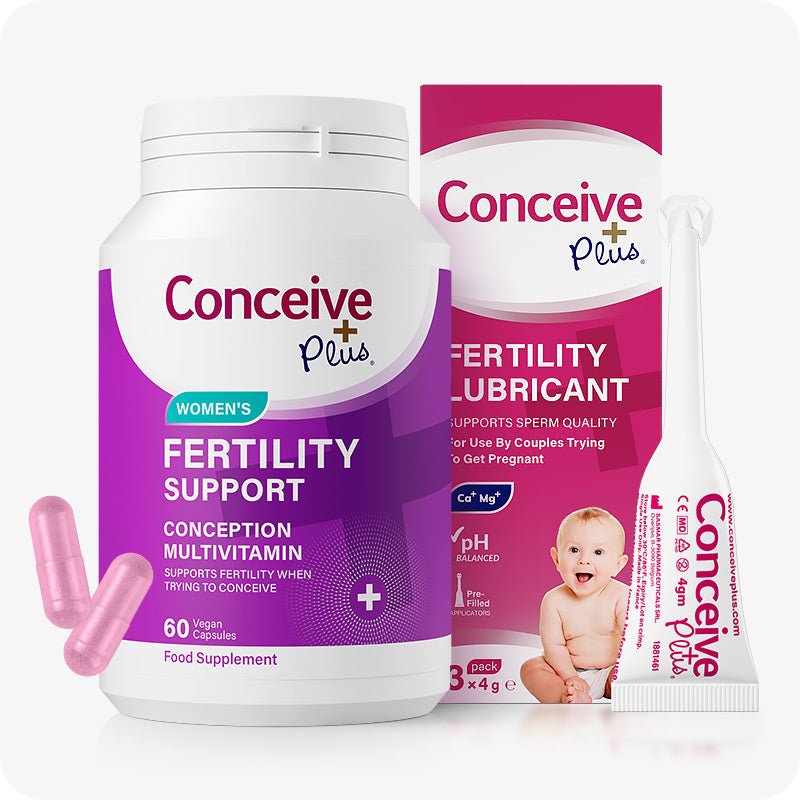
Combine your ovulation tracking with a complete fertility support routine — a pH-balanced fertility lubricant for intercourse, ovulation-supporting supplements, and lifestyle optimisations — and you're giving your body the best possible foundation for conception.
Conceive Plus is here to support every step of that journey, with products designed by fertility specialists and trusted by couples across the UK and worldwide.
Join thousands of couples worldwide who trust Conceive Plus. Our scientifically formulated fertility range is available online with fast shipping.
Shop Conceive Plus Now →