Ovulation Tracking Guide: How to Find Your Fertile Window and Maximise Your Chances of Conceiving


Ovulation Tracking Guide: How to Find Your Fertile Window and Maximise Your Chances of Conceiving
Understanding your fertility goes far beyond simply knowing when your period arrives. The science of ovulation tracking has transformed how couples approach trying to conceive — giving them the precision tools to identify their most fertile days and time intercourse or insemination for maximum effectiveness. Whether you've just started your TTC journey or have been trying for months, mastering ovulation tracking is one of the most powerful steps you can take.
In this comprehensive guide, we cover every method of ovulation tracking, the biology behind your fertile window, how to combine approaches for maximum accuracy, and how Conceive Plus supports your fertility naturally throughout your cycle.
Understanding the Menstrual Cycle and Ovulation
The menstrual cycle is typically 21–35 days, with ovulation occurring roughly 14 days before your next period — not necessarily 14 days after your last period begins. This distinction is critical and a common source of confusion.
Your cycle has two phases:
- Follicular phase: From day 1 of your period to ovulation. Oestrogen rises, follicles develop in the ovary, and the uterine lining thickens.
- Luteal phase: From ovulation to the start of your next period. Typically 12–14 days and relatively fixed. Progesterone dominates.
Ovulation itself — the release of a mature egg — lasts only 12–24 hours. However, sperm can survive in the reproductive tract for up to 5 days, which means your fertile window spans approximately 6 days: the 5 days before ovulation and the day of ovulation itself. The two most fertile days are the day of ovulation and the day before.
Method 1: Ovulation Predictor Kits (OPKs)
✨ Ready to support your fertility journey? Discover the full range of Conceive Plus fertility supplements — formulated by fertility specialists, trusted by thousands of couples worldwide.
Ovulation predictor kits detect the luteinising hormone (LH) surge that triggers ovulation approximately 24–48 hours before the egg is released. This is the most popular and scientifically validated home ovulation tracking method.
Standard LH tests show a positive when LH reaches a threshold level. Digital OPKs (like Clearblue Advanced) also detect oestrogen (as oestrone-3-glucuronide) and show a flashing smiley for "high fertility" days before the peak — giving you a wider window to time intercourse.
How to use OPKs effectively:
- Begin testing from day 10 of your cycle (earlier if your cycles are short)
- Test once daily, ideally between 10am and 8pm — avoid first morning urine
- Limit fluid intake 2 hours before testing to avoid diluting LH levels
- Once you get a positive, plan to have sex that day and the following day
- If you have PCOS, multiple LH surges or elevated baseline LH may create false positives — digital tests that measure oestrogen are more reliable in this case
Method 2: Basal Body Temperature (BBT) Charting
Basal body temperature — your lowest resting temperature — rises slightly (0.2–0.5°C) after ovulation due to progesterone. BBT charting confirms that ovulation occurred but cannot predict it in advance. It's most valuable when used over several cycles to identify your personal ovulation pattern.
BBT charting tips:
- Use a basal thermometer (reads to 0.01°C) — regular thermometers aren't precise enough
- Take your temperature at the same time every morning, before getting out of bed or speaking
- Log data in a dedicated app (Fertility Friend, Kindara, Natural Cycles)
- Look for a sustained rise of 0.2°C or more across 3 consecutive days — this confirms ovulation has occurred
- Note that illness, alcohol, travel, and poor sleep can cause false temperature elevations
Method 3: Cervical Mucus Monitoring
Oestrogen causes cervical mucus to become progressively more fertile as ovulation approaches. Learning to read your cervical mucus is free, requires no equipment, and provides real-time fertility information your body is already producing.
Fertile mucus progression:
- Post-period: Dry or little mucus
- Pre-ovulation: Sticky, white/cloudy mucus
- Approaching ovulation: Creamy, lotion-like mucus
- Peak fertility: Clear, stretchy, "egg white" mucus (EWCM) — the classic fertile sign
- Post-ovulation: Returns to thick, dry, or sticky
EWCM is the body's natural sperm-friendly medium — it protects sperm and facilitates their journey to the egg. If you notice EWCM, intercourse should occur that day. Combining EWCM observation with OPKs gives exceptional accuracy.
Method 4: Fertility Monitors
Advanced fertility monitors like the Clearblue Connected and Mira Fertility Tracker measure LH and oestrogen quantitatively, building a personalised hormone map over time. These are particularly valuable for women with irregular cycles, PCOS, or who haven't conceived with standard OPKs.
The Mira Fertility Tracker measures actual hormone concentrations (not just threshold levels) and uses an AI algorithm to predict ovulation based on your individual hormonal pattern — not a generic population average. Studies show personalised hormone analysis identifies fertile windows more accurately than threshold-based tests.
Method 5: Cycle Tracking Apps
Apps like Natural Cycles, Clue, Ovia Fertility, and Glow use algorithms based on your cycle length history, BBT data, and OPK inputs to predict fertile days. They're valuable as organisational tools and for pattern recognition but should not be used as sole fertility predictors — particularly in the early months when the app doesn't yet have enough personal data.
Combining Methods for Maximum Accuracy
The most effective ovulation tracking approach combines multiple methods:
- Track cycle length for 2–3 months to identify your average cycle
- Begin OPK testing from day 10 (or earlier for short cycles)
- Monitor cervical mucus daily
- Take BBT each morning and log it
- Use a fertility app to identify patterns across cycles
When your OPK shows an LH surge AND you observe EWCM, you're in your peak fertile window. Having intercourse on this day and the day before gives you the best statistical chance of conception in that cycle.
How Conceive Plus Supports Your Fertile Window
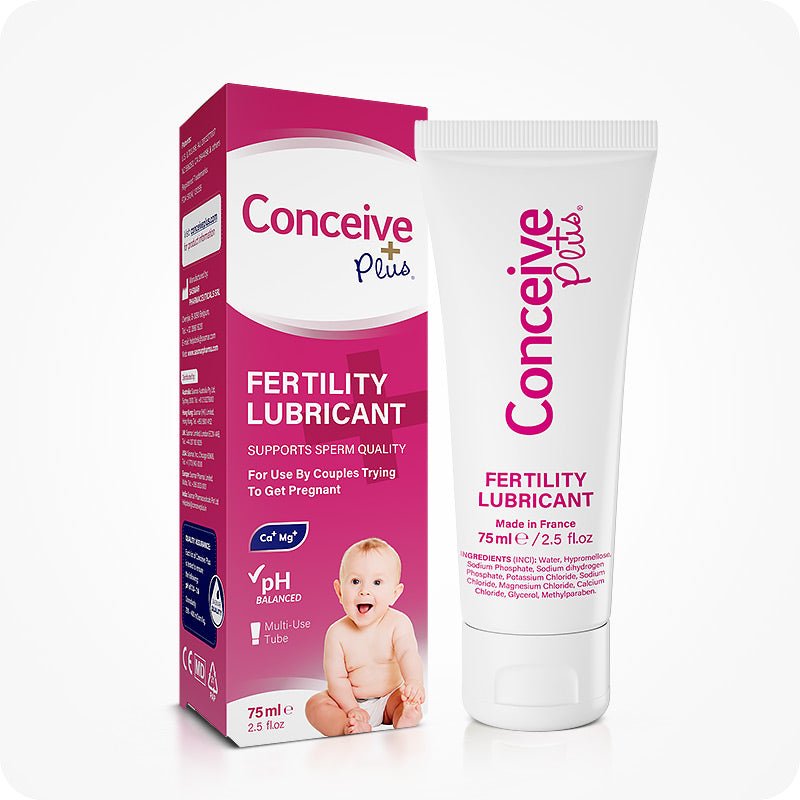
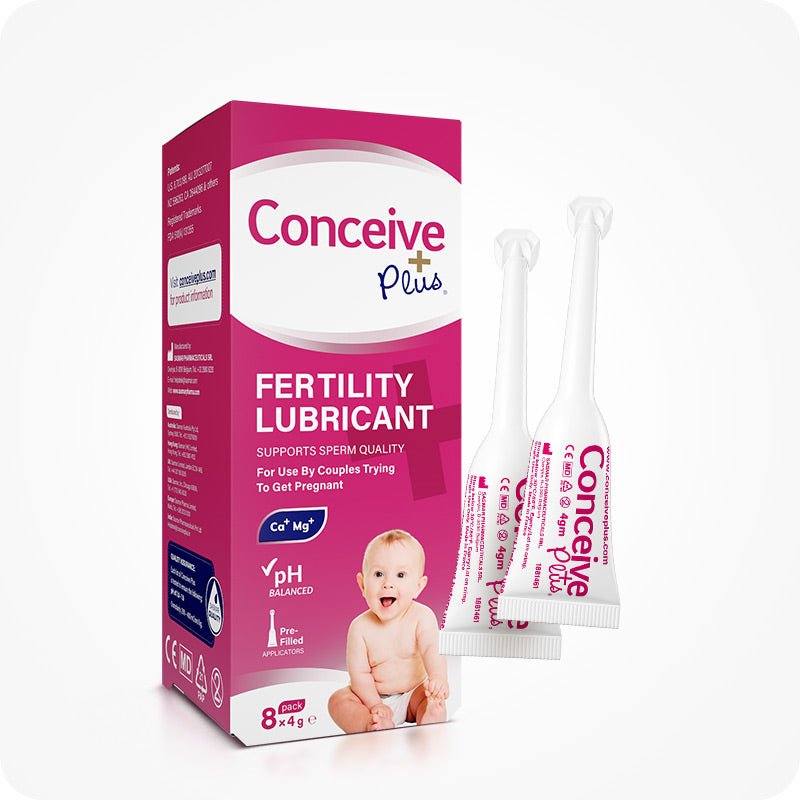
Accurately identifying your fertile window is only part of the equation. Once you know when to time intercourse, ensuring the reproductive environment is optimised matters enormously. Conceive Plus fertility lubricant is specifically formulated to be sperm-friendly — maintaining a pH and osmolality compatible with sperm survival and motility, unlike most standard lubricants which can harm sperm.
Independently verified to ISO 29943 standards, Conceive Plus lubricant contains calcium and magnesium ions that naturally support the reproductive environment. It's used by fertility clinics across the UK and recommended by reproductive specialists worldwide. Use Conceive Plus during your fertile window to ensure that nothing in your environment works against your chances — only with it.
Ovulation Tracking With Irregular Cycles
Irregular cycles make standard ovulation tracking more challenging, but not impossible. If your cycles vary by more than 7 days, consider:
- Starting OPK testing earlier (day 8–10) and continuing until you get a positive or reach day 21
- Using a quantitative monitor (Mira) rather than threshold-based OPKs
- Getting tested for PCOS, thyroid dysfunction, or hyperprolactinaemia, which commonly cause irregular cycles
- Working with a fertility specialist on medicated cycle monitoring with ultrasound follicular tracking
PCOS is one of the most common causes of irregular or absent ovulation. Women with PCOS often have multiple follicles that partially develop without one becoming dominant — leading to elevated LH levels that can cause false positives on standard OPKs. Inositol supplementation, combined with targeted lifestyle changes, has the strongest evidence base for restoring ovulation in PCOS.
FAQ: Ovulation Tracking
Q: When does ovulation occur in a 28-day cycle?
A: In a textbook 28-day cycle, ovulation occurs around day 14. However, cycles vary significantly between women — your ovulation day is determined by when your luteal phase begins (typically 14 days before your period), not a fixed day 14.
Q: Can I get pregnant if I don't know when I ovulate?
A: Yes, but tracking significantly improves your odds. Couples who time intercourse to their fertile window have a 20–30% chance of conception per cycle, compared to much lower rates with random timing.
Q: How many days after my LH surge do I ovulate?
A: Typically 24–48 hours after the LH surge is detected. This is why you should have sex the day of the positive OPK and the following day.
Q: Is cervical mucus monitoring as reliable as OPKs?
A: Both have strong evidence bases. Cervical mucus monitoring is free, real-time, and doesn't require supplies, but has a learning curve. OPKs are more objective. Combined, they're more accurate than either alone.
Q: My OPKs are always negative. What does this mean?
A: It could mean you're testing too early or late, diluting urine with excess fluids, or having an anovulatory cycle (no ovulation). Persistent negative OPKs warrant investigation by your GP or a gynaecologist.
Q: Does stress affect ovulation?
A: Yes. Chronic stress elevates cortisol, which can suppress GnRH (the master reproductive hormone), delaying or preventing ovulation. Stress management is a legitimate fertility intervention.
Q: Can I use lubricant during my fertile window?
A: Only sperm-friendly lubricants. Standard lubricants, saliva, and oil-based products can immobilise or damage sperm. Conceive Plus is specifically formulated to be safe for sperm and is recommended during your fertile window.
Q: How long after coming off the pill does ovulation return?
A: For most women, ovulation returns within 1–3 months after stopping the combined pill. The mini-pill (progestogen-only) typically resolves faster. In some cases, it can take 6–12 months for a regular pattern to establish. Tracking is especially valuable during this period.
Q: Does age affect when I ovulate?
A: Age doesn't change the timing of ovulation significantly, but it does affect egg quality and ovarian reserve. Women over 35 may have fewer eggs available per cycle and lower rates of successful fertilisation and implantation, even when they ovulate normally.
Q: Can I track ovulation while breastfeeding?
A: Yes, but it's more complex. Prolactin from breastfeeding suppresses ovulation in many women (lactational amenorrhoea). As feeding frequency decreases, ovulation typically returns — sometimes without a warning period first. Begin OPK testing and BBT tracking when you resume menstruation or want to conceive while breastfeeding.
✨ Ready to support your fertility journey? Discover the full range of Conceive Plus fertility supplements — formulated by fertility specialists, trusted by thousands of couples worldwide.