Ovulation Tracking Methods: A Complete Guide for UK Couples TTC


Ovulation Tracking Methods: A Complete Guide for UK Couples Trying to Conceive
If you're trying to conceive in the UK, understanding your fertile window is one of the most powerful tools at your disposal. Timed intercourse during ovulation can significantly increase your monthly chances of conception — but first you need to know when you ovulate. This comprehensive guide covers every major ovulation tracking method, their accuracy, cost, and how to combine them for the best results.
The average couple has approximately a 15–25% chance of conceiving each cycle when intercourse is well-timed. That probability drops sharply when timing is off. Research consistently shows that many couples significantly underestimate or overestimate when their fertile window occurs, costing them months of trying unnecessarily.
The Biology Behind Ovulation
Ovulation occurs when a mature follicle in the ovary releases an egg, which then travels down the fallopian tube. This egg is viable for fertilisation for approximately 12–24 hours. However, sperm can survive in the female reproductive tract for up to 5 days in the right conditions. This means the fertile window spans roughly 5–6 days — from 5 days before ovulation to the day of ovulation itself.
Identifying this window reliably is the goal of all ovulation tracking methods. Crucially, ovulation timing varies significantly between women and even cycle-to-cycle in the same woman. The classic "ovulate on day 14" rule applies only to a minority of women — those with textbook 28-day cycles who actually ovulate on day 14. Most women, particularly those with cycles shorter than 26 or longer than 30 days, ovulate on a different day entirely.
Ovulation Prediction Kits (OPKs): The Gold Standard for Home Testing
Ready to support your conception journey? Shop Conceive Plus UK →
Ovulation prediction kits detect the LH (luteinising hormone) surge that triggers ovulation, typically 24–36 hours before an egg is released. They are widely available across the UK at Boots, Superdrug, and online pharmacies.
Basic strip tests are the most affordable option (often £5–£10 for 10 strips). They require interpretation of line darkness — the test line must be as dark or darker than the control line to indicate a positive surge. Best value for those who understand how to read them accurately.
Digital OPKs (e.g. Clearblue Digital) display a clear smiley face for positive results. More expensive per test but eliminate interpretation errors. Clearblue Advanced also detects oestrogen rise, giving a 2-day "High" reading before the peak LH surge — expanding the detectable fertile window from 2 days to up to 4 days.
Accuracy: OPKs are accurate at detecting the LH surge (97%+ sensitivity in clinical studies). The limitation is they confirm the surge has happened — not that ovulation definitely followed. In women with PCOS, multiple LH surges can occur without ovulation, making OPKs less reliable as standalone tools.
Basal Body Temperature (BBT) Charting
Basal body temperature is your body's resting temperature. After ovulation, progesterone causes a subtle rise of 0.2–0.5°C that persists until menstruation. Tracking this rise confirms that ovulation has occurred.
To chart BBT: take your temperature every morning before getting out of bed, at the same time each day, using a basal thermometer accurate to 0.1°C. Log on a chart or fertility app (Fertility Friend, Premom) and look for a sustained rise (3+ days) above your previous 6 temperatures.
Limitations: BBT charting tells you ovulation has already happened, not when it's about to. It must be combined with another method for prospective timing. BBT is best used to confirm your ovulation pattern over several cycles. Sleep disruption, alcohol, illness, and travel all affect readings and must be noted.
Cervical Mucus Monitoring
Cervical mucus (CM) changes throughout the cycle in response to oestrogen. As ovulation approaches, CM becomes more abundant, clear, and stretchy — resembling raw egg white (EWCM: egg white cervical mucus). This signals peak fertility. After ovulation, CM typically becomes dry or creamy and loses the stretchy quality.
Monitoring CM is free, evidence-based, and part of the Fertility Awareness Method (FAM). It requires practice to interpret correctly, and CM can be affected by lubricants, infections, and hydration levels. Regular lubricants interfere with CM observation and harm sperm — use a fertility-specific lubricant like Conceive Plus if dryness is an issue during the fertile window.
Fertility Monitors: Advanced Technology for UK Couples
Fertility monitors track multiple hormones to identify your complete fertile window. Popular UK options include:
Clearblue Advanced Fertility Monitor: Tracks both oestrogen and LH, identifying up to 6 fertile days per cycle. Clinical studies show this monitor identifies more fertile days than basic OPKs. Monitor costs ~£80–100; refill sticks ~£30–40 at Boots and Superdrug.
Mira Fertility Tracker: Measures actual LH concentration (quantitative, not just positive/negative), giving a hormonal curve of your surge. Particularly useful for women with irregular cycles or PCOS where surge amplitude matters. Device ~£150; wands ~£45 for 10.
Inito Fertility Monitor: Measures LH, oestrogen, PdG (progesterone metabolite confirming ovulation), and FSH. The FSH reading can flag potential ovarian reserve concerns. Device ~£120.
Cycle Tracking Apps
Apps like Natural Cycles, Clue, Ovia, and Flo have become ubiquitous fertility tracking tools. Most use period start dates to predict fertile windows. More sophisticated apps allow OPK results and BBT data input to refine predictions significantly.
Accuracy reality check: Algorithm-only apps match actual ovulation dates only ~21% of the time in women with irregular cycles who don't input additional data. Natural Cycles, which requires BBT input, has better real-world efficacy and is CE-marked in the UK. Apps work best as data organisers for information collected through other methods.
Combining Methods for Maximum Accuracy
For couples serious about conception timing, the most effective approach combines methods. OPK + BBT uses OPKs to identify the surge in real time and BBT to confirm ovulation occurred — building a detailed picture over several cycles. OPK + CM monitoring identifies approaching peak fertility through mucus changes while confirming the LH surge. An advanced monitor combined with BBT is the gold standard for home tracking.
How Conceive Plus Supports Your Fertile Window
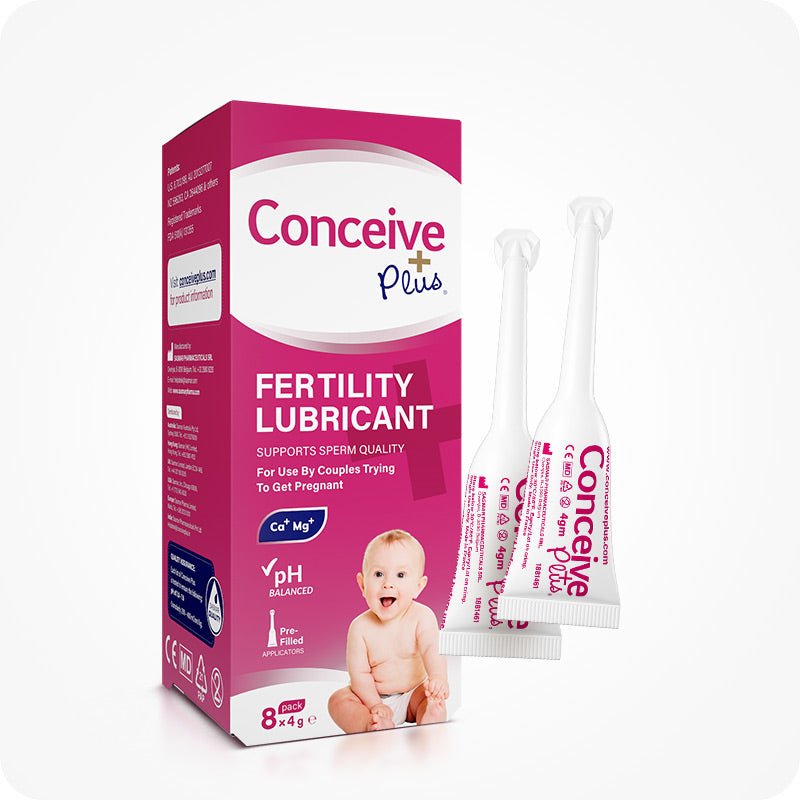
Timing intercourse correctly is half the battle. Ensuring conditions are right for sperm survival is the other. Many UK couples don't realise that common lubricants can significantly damage sperm motility — water-based conventional lubricants reduce sperm motility by 60–80% in some studies.
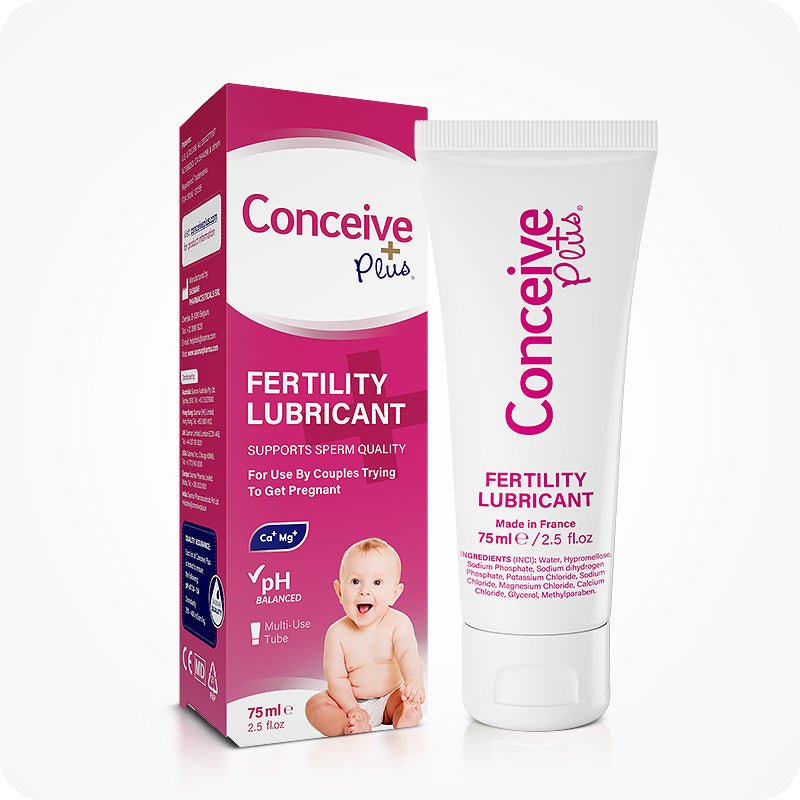
Conceive Plus fertility lubricant is specifically formulated to be sperm-safe, with pH and osmolality that match natural cervical mucus. It contains calcium and magnesium ions that support sperm capacitation — the process sperm must undergo before they can fertilise an egg. Using Conceive Plus during your identified fertile window ensures lubrication supports rather than hinders your conception efforts.
Frequently Asked Questions
Q: How do I know if I'm actually ovulating?
A: The most reliable confirmation is a BBT temperature rise sustained for 3+ days, combined with a positive OPK 24–36 hours earlier. Your GP can order a Day 21 progesterone blood test to confirm ovulation biochemically.
Q: Can I miss my LH surge?
A: Yes, particularly testing only once daily. Some women have a short, sharp surge that can be missed. Testing twice daily (morning and afternoon) during your expected fertile window significantly reduces this risk.
Q: What about irregular cycles?
A: Women with irregular cycles benefit most from OPKs and advanced fertility monitors. If cycles vary by more than 5–7 days monthly, speak with your GP to rule out PCOS or thyroid issues.
Q: Can stress affect ovulation timing?
A: Yes. Chronic or acute stress can disrupt the hormonal cascade required for ovulation, potentially delaying or suppressing it. This is why cycle-to-cycle variation in ovulation timing is common in busy modern life.
Q: Does Conceive Plus affect OPK results?
A: No. Conceive Plus is applied vaginally; OPKs test urine. They are entirely independent.
Q: Can I use Conceive Plus during IUI in the UK?
A: Many UK fertility clinics recommend Conceive Plus for patients in natural IUI cycles. Always confirm with your clinic before using any product during a treatment cycle.
Q: How long should I track before seeing patterns?
A: Fertility specialists recommend tracking for 3–4 cycles before drawing conclusions about your ovulation pattern. Single-cycle data can be misleading.
Q: Is it possible to ovulate without LH showing positive?
A: An LH surge must occur for ovulation. If you're testing at the right frequency and not detecting a surge, it may indicate anovulation — worth discussing with your GP if it persists for 2+ cycles.
Q: What's the best OPK brand in the UK?
A: Clearblue Advanced Digital is excellent for beginners (clear digital results, detects oestrogen and LH). Wondfo or Pregmate strips are best value for experienced trackers who can read line darkness accurately.
Q: Where can I buy Conceive Plus in the UK?
A: Directly from conceiveplus.co.uk with UK delivery.
Trusted by fertility clinics and couples worldwide
Shop Conceive Plus UK →