Sperm Health: The Complete Guide to Understanding and Improving Male Fertility


Sperm Health: The Complete Guide to Understanding and Improving Male Fertility
Sperm health is one of the most significant — and most frequently overlooked — factors in a couple's ability to conceive. Male factor fertility issues contribute to roughly half of all cases where a couple struggles to get pregnant, yet sperm health often goes unexamined until conception has already proven difficult. Understanding what healthy sperm looks like, what threatens it, and what genuinely improves it gives couples trying to conceive a major strategic advantage.
This comprehensive guide covers everything you need to know about sperm health: the key parameters assessed on a semen analysis, the lifestyle and environmental factors that affect sperm quality, the supplements with the strongest clinical evidence, and what to do if your sperm health needs improvement.
What Does Sperm Health Actually Mean?
Sperm health isn't a single measure — it's a composite of several parameters assessed together. A semen analysis typically evaluates count (concentration), motility (progressive and total), morphology (shape using strict Kruger criteria), volume, and pH. Beyond standard parameters, sperm DNA fragmentation is increasingly recognised as critical — high fragmentation rates are associated with poor embryo quality, recurrent implantation failure, and miscarriage even when standard sperm health parameters look normal.
The WHO 2021 reference values define normal sperm health as: concentration ≥16 million/mL, total motility ≥42%, progressive motility ≥30%, morphology ≥4% normal forms, and volume ≥1.4mL.
What Harms Sperm Health?
Ready to support your fertility journey?
Conceive Plus offers clinically-backed fertility supplements and lubricants designed for couples trying to conceive. Shop the range →
Sperm health is surprisingly modifiable — significantly more so than egg quality in women, because sperm are produced continuously from stem cells (spermatogonia) in the testes. A new cohort of sperm takes approximately 74 days to mature, which means changes to lifestyle or supplementation show up in sperm health results about 2–3 months later.
Heat: The testes reside outside the body for a reason — sperm production requires temperatures approximately 2–4°C below core body temperature. Prolonged heat exposure (hot baths, saunas, laptop use on the lap, tight underwear) can measurably suppress sperm health. Studies show that scrotal temperature elevation of just 1°C can reduce sperm motility by up to 40%.
Oxidative Stress: Reactive oxygen species (ROS) — generated by environmental toxins, smoking, obesity, and inflammation — damage sperm DNA and cell membranes. Oxidative stress is now believed to be the most common cause of poor sperm health, present in up to 80% of infertile men.
Smoking: Cigarette smoke directly damages sperm DNA. Smokers have significantly lower counts, reduced motility, more morphological abnormalities, and higher DNA fragmentation than non-smokers. Stopping smoking results in measurable sperm health improvement within one full spermatogenesis cycle.
Obesity: Excess adipose tissue converts testosterone to oestrogen via aromatase, creating a hormonal environment unfavourable to sperm production. Obesity is independently associated with lower count, reduced motility, and higher DNA fragmentation — all key sperm health markers.
Diet and Lifestyle Optimisation for Sperm Health
Diet is one of the most powerful levers for improving sperm health. The Mediterranean diet — rich in antioxidants, healthy fats, lean protein, and low in processed foods — is consistently associated with better sperm health parameters in observational studies.
Specific foods that support sperm health: walnuts (a randomised controlled trial showed 75g daily for 12 weeks significantly improved sperm vitality, motility, and morphology), lycopene-rich cooked tomatoes (strong affinity for testicular tissue), dark leafy greens (high in folate for sperm DNA synthesis), and fatty fish (DHA for sperm tail membrane integrity).
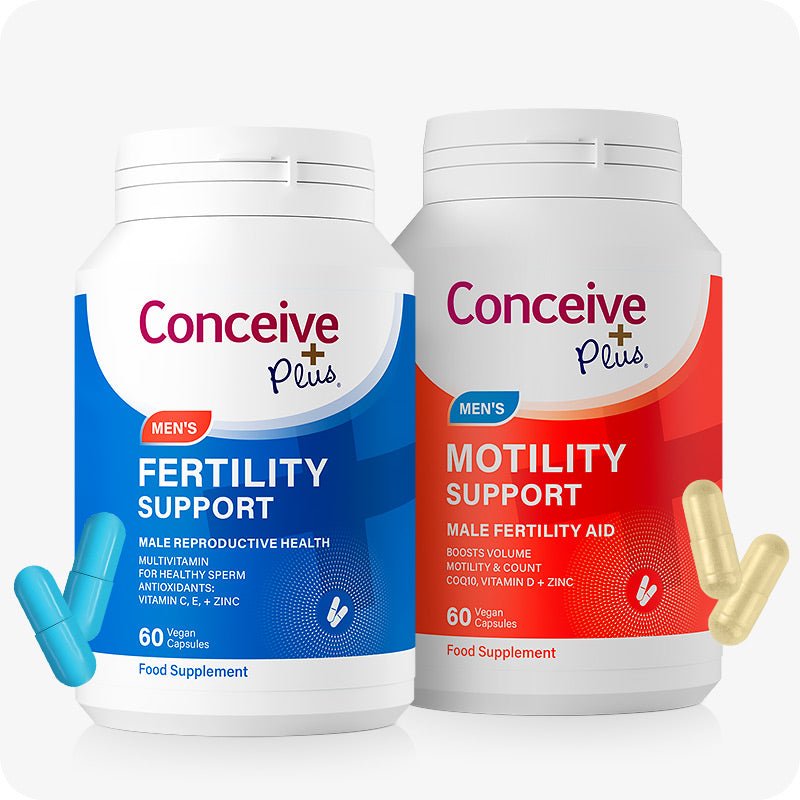
Conceive Plus male fertility supplements combine the key nutrients for comprehensive sperm health support. Visit conceiveplus.co.uk/collections/fertility-supplements for the full range.
Supplements with the Strongest Evidence for Sperm Health
Zinc: Essential for testosterone production, sperm maturation, and DNA synthesis. Zinc deficiency is a well-documented cause of reduced sperm health. Supplementation (66–132mg zinc sulphate daily in studies) improves count, motility, and morphology.
Folate: Works synergistically with zinc. A landmark study found folate + zinc supplementation increased total normal sperm count by 74% in subfertile men. Folate supports DNA replication in rapidly dividing sperm precursor cells — a direct contributor to sperm health.
CoQ10: Sperm motility is powered by mitochondria in the midpiece. CoQ10 is the central electron carrier in mitochondrial ATP production. Multiple RCTs show CoQ10 supplementation (300–600mg daily) improves sperm health parameters including motility and concentration. Ubiquinol form shows superior bioavailability for sperm health benefit.
L-Carnitine and Acetyl-L-Carnitine: L-carnitine is the primary energy substrate for mature sperm and is found in very high concentrations in the epididymis. Clinical trials consistently show improvement in sperm health motility with L-carnitine supplementation.
Selenium: Essential for the structural integrity of sperm tails and protection against oxidative damage affecting sperm health. Selenium deficiency is associated with poor morphology and motility. The combination of selenium with vitamin E shows synergistic sperm health benefit.
How Long Does It Take to Improve Sperm Health?
Because spermatogenesis takes approximately 74 days, and sperm maturation adds another 12–21 days, the full cycle from stem cell to mature sperm is about 90 days. Any lifestyle change or supplementation you make today won't show up meaningfully in a sperm health assessment for approximately 2–3 months.
This has a practical implication: if you're planning to try to conceive, start your sperm health optimisation protocol now — don't wait until conception has already become difficult. Beginning supplements, stopping smoking, reducing heat exposure, and improving diet 3–6 months before trying gives sperm health the best chance of being optimal when it counts.
When Should a Man Get a Sperm Health Assessment?
Many fertility specialists now recommend a semen analysis (sperm health check) earlier — particularly because it's a non-invasive, relatively inexpensive test. A sperm health assessment should be prioritised at the start of trying to conceive if there is any known risk factor: prior chemotherapy or radiation, varicocele, undescended testicle history, previous STI, significant illness, or long-term anabolic steroid use.
Conceive Plus male fertility supplements are designed to support all key sperm health parameters. Available at conceiveplus.co.uk/collections/fertility-supplements.
Frequently Asked Questions About Sperm Health
Q: Can sperm health improve with supplements?
A: Yes, significantly in many cases. CoQ10, L-carnitine, zinc, folate, and antioxidants all have RCT evidence for improving count, motility, morphology, and/or DNA integrity — key sperm health parameters. Allow 2–3 months to see the full sperm health effect.
Q: Does wearing boxers instead of briefs actually improve sperm health?
A: There is evidence that boxer shorts are associated with higher sperm concentration — a 2018 Harvard study found men wearing boxers had 25% higher sperm concentrations than those in tighter underwear, related to scrotal temperature regulation and sperm health.
Q: How quickly does heat damage sperm health?
A: Acute heat exposure can temporarily impair sperm health quality within days. The effects typically reverse within one full spermatogenesis cycle (~2–3 months). Repeated heat exposure causes cumulative sperm health harm.
Q: Does sperm health affect the risk of miscarriage?
A: High sperm DNA fragmentation is associated with increased risk of miscarriage, even when standard sperm health parameters are normal. If there is a history of recurrent miscarriage and male sperm health has not been investigated, a DNA fragmentation index (DFI) test is worth requesting.
Q: Is it possible to have good sperm count but poor sperm health DNA integrity?
A: Yes. Standard sperm health semen analysis assesses count, motility, and morphology, but not DNA integrity. High fragmentation can coexist with seemingly normal sperm health parameters.
Q: How often should we have intercourse when trying to conceive for best sperm health outcomes?
A: For men with normal sperm health parameters, having intercourse every 1–2 days during the fertile window optimises conception chances. Very frequent ejaculation can temporarily reduce count; abstinence beyond 5–7 days increases the proportion of older, lower sperm health quality sperm.
Q: Can stress affect sperm health quality?
A: Yes. Chronic psychological stress elevates cortisol and suppresses testosterone, negatively affecting sperm health production and quality. Managing stress is a legitimate component of a sperm health protocol.
Q: What foods most rapidly improve sperm health?
A: Walnuts, cooked tomatoes, dark leafy greens, and fatty fish have the strongest specific evidence for supporting sperm health. Combined with an overall Mediterranean dietary pattern, these foods create the optimal nutritional environment for sperm health improvement.
Start Your Conceive Plus Journey Today
Trusted by thousands of couples worldwide. Science-backed fertility support for both partners.
Shop Conceive Plus Now →