Timing Intercourse for Conception: Your Complete Guide to Getting Pregnant Faster


Timing Intercourse for Conception: Your Complete Guide to Getting Pregnant Faster
One of the most powerful — and frequently misunderstood — strategies for getting pregnant faster is timing intercourse for conception correctly. Many couples trying to conceive (TTC) unknowingly miss their fertile window each month, reducing their chances of pregnancy to near zero for that cycle. The good news is that understanding your cycle and strategically timing intercourse can dramatically improve your monthly odds of conception.
This guide covers everything you need to know: identifying your fertile window, the best days to have sex when trying to conceive, the signs of ovulation to watch for, and the supporting strategies — including fertility-friendly lubricant — that give every cycle the best possible outcome.
Understanding the Female Fertile Window
The fertile window is the period during each menstrual cycle when intercourse can result in pregnancy. Because sperm can survive in the female reproductive tract for up to 5 days (and sometimes longer in optimal cervical mucus conditions), and because an egg survives only 12–24 hours after ovulation, the fertile window is approximately 6 days long — the 5 days before ovulation plus the day of ovulation itself.
This means timing intercourse for conception isn't just about the day you ovulate — it's about building up sperm in the reproductive tract before the egg arrives. Having sex in the days leading up to ovulation can be just as important as having sex on ovulation day itself.
In a typical 28-day cycle, ovulation occurs around day 14. However, cycle lengths vary significantly between women — and within the same woman from cycle to cycle. Only relying on calendar calculations can lead to missed fertile windows, particularly for anyone with irregular cycles.
Identifying Ovulation: The Key to Timing Intercourse for Conception
Ready to Give Your Fertility Journey Every Advantage?
Conceive Plus is trusted by couples and fertility specialists worldwide. pH-balanced, sperm-friendly, and enriched with calcium and magnesium ions.
Shop Conceive Plus Now →To time intercourse effectively, you need to know when you're ovulating. Here are the most reliable methods:
Ovulation Predictor Kits (OPKs)
OPKs detect the luteinising hormone (LH) surge that occurs 24–36 hours before ovulation. When your OPK shows a positive result (typically when the test line is as dark as or darker than the control line), ovulation is imminent. This is the signal to prioritise intercourse in the next 12–36 hours.
Basal Body Temperature (BBT) Tracking
Your resting temperature drops slightly just before ovulation and then rises by approximately 0.2–0.5°C after ovulation occurs. BBT tracking requires taking your temperature every morning before getting out of bed. While it confirms that ovulation has occurred, it's most useful for identifying patterns over multiple cycles rather than predicting ovulation in real time.
Cervical Mucus Monitoring
As ovulation approaches, cervical mucus (CM) changes in a characteristic way. It transitions from dry or sticky in the days after menstruation to creamy, then to raw egg-white consistency (clear, stretchy, slippery) at peak fertility. This egg-white cervical mucus (EWCM) indicates that ovulation is imminent and provides the sperm-friendly environment that supports fertilisation.
Fertility Monitors
Advanced fertility monitors track both LH and oestrogen (and sometimes progesterone) to give a broader picture of your fertile window. These devices are particularly helpful for women with irregular cycles or those who have difficulty reading standard OPKs.
The Best Schedule for Intercourse When Trying to Conceive
Once you have a sense of when you're likely to ovulate, the question is: how often should you have sex, and on which days?
Every Other Day During the Fertile Window
Research consistently shows that having intercourse every other day (every 48 hours) throughout the fertile window is an effective approach. This maintains a consistent supply of sperm in the reproductive tract without the potential for sperm count depletion from daily ejaculation in men with lower sperm reserves.
Daily Sex During Peak Fertility
For couples where male sperm count and health is not a concern, having sex daily for the 2–3 days leading up to and including ovulation day can maximise the chances of sperm being present when the egg is released. Studies show that in couples with normal sperm parameters, daily intercourse during the fertile window does not significantly reduce per-cycle conception rates compared to every-other-day intercourse.
Don't Skip Ovulation Day
While having sex before ovulation is valuable (allowing sperm to be waiting for the egg), ovulation day itself should not be missed. If your OPK turns positive in the morning, have intercourse that day and the following day if possible.
Common Mistakes in Timing Intercourse for Conception
Even couples who understand the basics of fertile windows often make timing errors that reduce their monthly success rates. Here are the most common mistakes:
Waiting for a Positive OPK to Start
Some couples only begin having sex when they see a positive OPK. While this captures ovulation day and the day after, it misses the crucial days before ovulation when having sperm already present in the fallopian tubes can increase the chance of fertilisation. Start having sex 4–5 days before your expected ovulation date, then continue through the positive OPK and 1–2 days after.
Only Having Sex Once During the Fertile Window
A single encounter during the fertile window gives you a chance of conception, but probability dramatically increases with multiple exposures. Having sex 3–4 times across the 5–6 day fertile window substantially improves monthly conception odds.
Excessive Stress Around "Performance"
Fertility-focused intercourse can become stressful and mechanical, which can ironically reduce libido and arousal — particularly important for women, as arousal promotes natural lubrication and uterine contractions that may aid sperm transport. It's important to maintain intimacy and not let conception attempts feel like scheduled obligations.
Using the Wrong Lubricant
Standard lubricants are acidic (pH 3.5–5.0) and can kill or immobilize sperm within minutes of exposure. If you use lubricant during intercourse — whether for comfort or due to reduced natural lubrication — always choose a fertility-safe option like Conceive Plus, which is pH-balanced to match fertile cervical mucus and won't harm sperm function.
Male Factors in Timing Intercourse for Conception
Timing is primarily about maximising the overlap between viable sperm and a viable egg, so the health and quantity of sperm matters enormously. Here's how male fertility factors interact with timing:
Abstinence Period
The ideal abstinence period before attempting conception is 2–5 days. Abstaining for fewer than 2 days may not allow sperm counts to replenish optimally. Abstaining for more than 5–7 days can result in a higher proportion of older, less motile sperm. For timing purposes, the goal is fresh, abundant, healthy sperm during the fertile window.
Sperm Lifespan
Healthy sperm can survive up to 5 days in fertile cervical mucus. This is why having intercourse several days before ovulation is valuable — by the time the egg is released, there may be sperm already waiting in the fallopian tubes.
Temperature and Lifestyle Factors
Elevated scrotal temperature from tight clothing, hot baths, laptops on laps, or heated car seats in the week before the fertile window can temporarily reduce sperm quality. Men trying to conceive should avoid sustained heat exposure to the genital area in the days before and during the fertile window.
Fertility Lubricant and Timing: The Missing Piece
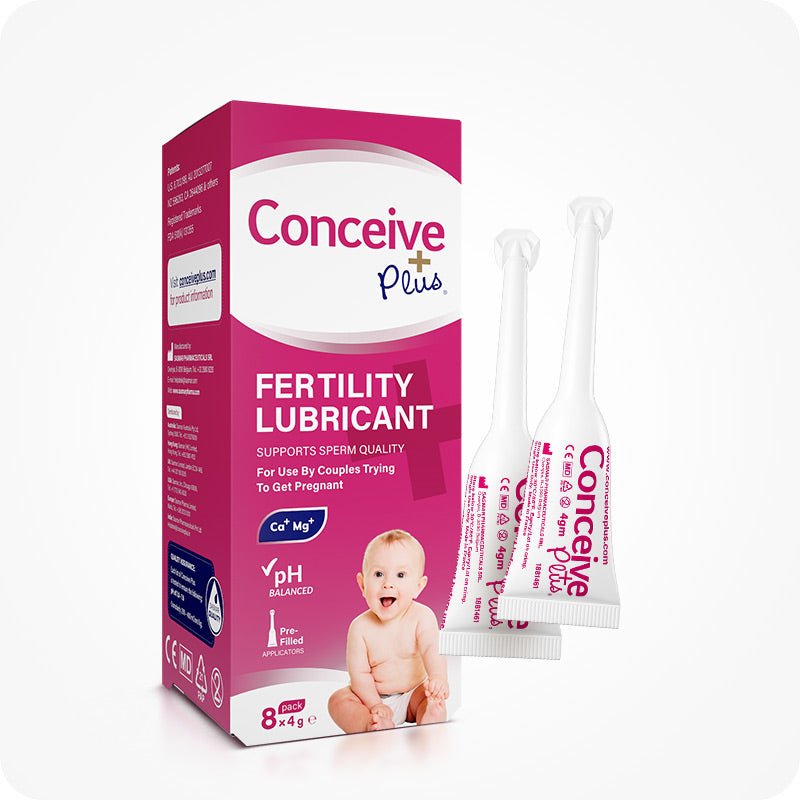
Once your timing is optimised, ensuring that the environment within the vaginal tract is sperm-friendly during those critical encounters is essential. This is where the choice of lubricant becomes directly relevant to your conception strategy.
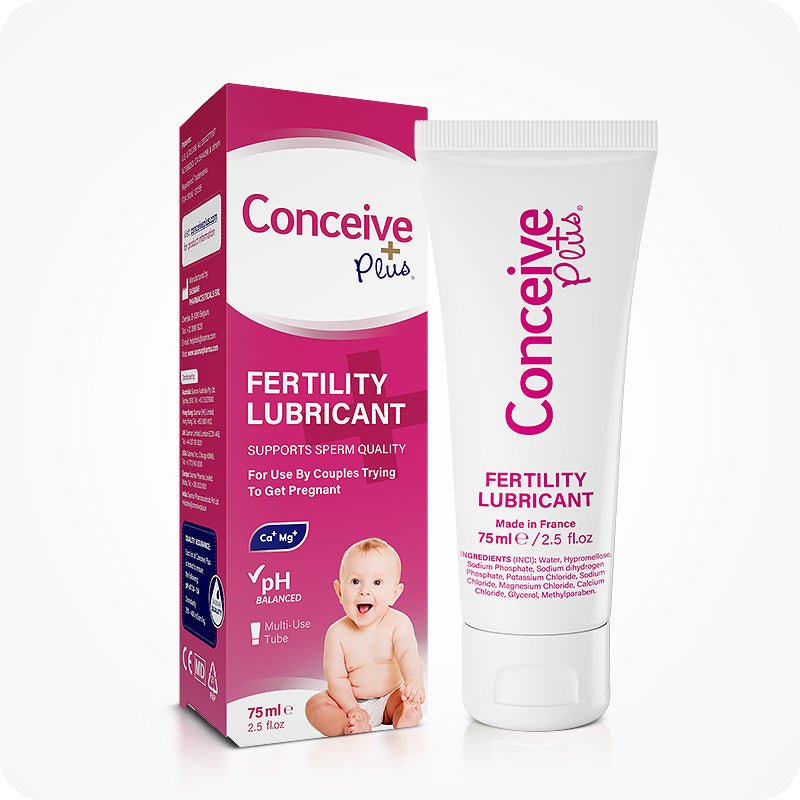
Conceive Plus fertility lubricant is specifically formulated to:
- Match the pH of fertile cervical mucus (approximately 7.0) rather than the typical vaginal pH of 3.8–4.5
- Maintain isotonic osmolality (260–340 mOsm/kg) to prevent osmotic damage to sperm
- Contain calcium and magnesium ions that support sperm capacitation — the process sperm must undergo to successfully fertilise an egg
- Provide a lubricating environment that mimics and complements natural cervical mucus
By using Conceive Plus during timed intercourse, you're ensuring that every carefully planned encounter gives sperm the optimal chemical environment to survive, travel, and fertilise.
Tracking Apps and Technology for Timing Intercourse
Modern fertility tracking technology has made timing intercourse for conception more accessible than ever. Here are the most useful tools:
Period Tracking Apps
Apps like Clue, Flo, and Ovia allow you to log your cycle, symptoms, OPK results, and BBT data to predict your fertile window. While algorithm-based predictions aren't as reliable as OPKs for real-time ovulation prediction, they're useful for understanding your cycle patterns over time.
Advanced Fertility Monitors
Devices like Clearblue Advanced Fertility Monitor and Natural Cycles (the hormone tracking version) measure hormone levels in urine or via wearable sensors to give accurate, personalised fertile window predictions. These are particularly valuable for women with irregular cycles.
Wearable Fertility Trackers
Wearables like Ava and Tempdrop track multiple physiological signals (resting pulse rate, skin temperature, heart rate variability) throughout the night to identify the fertile window. They offer the advantage of passive data collection without the need for morning temperature taking.
When to Seek Additional Help
Optimal timing intercourse for conception gives most couples their best natural chance of pregnancy. However, if you've been trying consistently for 12 months (or 6 months if you're over 35) without success, it's time to consult a fertility specialist. Timing is one piece of the puzzle — but underlying factors like ovulation disorders, tubal blockages, sperm issues, or hormonal imbalances may also need to be addressed.
Frequently Asked Questions About Timing Intercourse for Conception
Q: What is the best time of day to have intercourse when trying to conceive?
A: There's no definitively proven "best" time of day, but some research suggests that sperm quality may be slightly better in morning hours due to natural testosterone rhythms. More importantly, having sex during your fertile window on the right days matters far more than the time of day.
Q: Can you get pregnant outside of the fertile window?
A: Technically, sperm must meet an egg within roughly 12–24 hours of ovulation for fertilisation to occur, and sperm can survive up to 5 days in fertile cervical mucus. So practically, pregnancy can only occur from intercourse within the 5–6 day fertile window. Outside of this window, conception is not possible in that cycle.
Q: How many days before ovulation should I start having sex?
A: Ideally, begin having sex 4–5 days before your predicted ovulation date, continuing through ovulation day and 1–2 days after. This covers the full fertile window and maximises the probability of sperm being present when the egg is released.
Q: Does position matter when timing intercourse for conception?
A: There is no scientific evidence that specific sexual positions increase conception rates. After ejaculation, sperm immediately begin travelling through the cervix regardless of position. Lying down briefly after intercourse is a common suggestion but has no proven benefit based on current research.
Q: Can stress affect the timing of ovulation?
A: Yes. Psychological and physical stress can delay or suppress ovulation, shifting your fertile window later in the cycle or causing anovulatory cycles (cycles without ovulation). This is one reason why tracking ovulation with OPKs rather than relying solely on calendar calculation is important during stressful periods.
Q: How long should it take to get pregnant if timing is correct?
A: Even with perfect timing, the monthly probability of natural conception for a healthy couple under 35 is approximately 20–25% per cycle. This means it can take several months even with optimal timing, and this is entirely normal. Most couples (approximately 80–85%) will conceive within 12 months of trying consistently.
Q: Is it better to have sex every day or every other day during the fertile window?
A: Both approaches are effective. For most couples, every other day is recommended as it maintains consistent sperm availability without the risk of depletion. Daily sex is acceptable for couples where male sperm parameters are confirmed to be normal.
Q: Can lubricant interfere with conception timing?
A: Standard lubricants can harm sperm and reduce conception odds, regardless of perfect timing. Always use a fertility-safe lubricant like Conceive Plus if lubrication is needed during your fertile window encounters.
Conclusion: Timing Is Everything — Make Every Encounter Count
Mastering the art of timing intercourse for conception is one of the most impactful steps any couple can take on their TTC journey. By understanding your fertile window, using reliable ovulation detection methods, following an evidence-based intercourse schedule, and ensuring the right environment for sperm function with Conceive Plus fertility lubricant, you give every cycle its maximum chance of success.
Your fertility journey deserves every advantage. Timing is the foundation — build everything else on top of it.
Start Your Journey With Conceive Plus
Join hundreds of thousands of couples worldwide who trust Conceive Plus to support their path to parenthood. Clinically endorsed, fertility-specialist recommended.
Explore All Conceive Plus Products →