Ovulation Tracking Methods: A Complete Guide for UK Women Trying to Conceive


Ovulation Tracking Methods: The Complete Guide for UK Women Trying to Conceive
Understanding your cycle is one of the most powerful things you can do when trying to conceive. Accurate ovulation tracking methods allow you to pinpoint your fertile window — the narrow 24–48 hour period when conception is possible — and time intercourse for maximum effect. This guide covers every evidence-based method available to women in the UK today.
The good news: with modern tools and a bit of consistency, most women can identify their fertile window with remarkable accuracy. Combined with fertility-supportive products like Conceive Plus, you can give every cycle your best shot.
Why Ovulation Tracking Matters
Many couples underestimate how narrow the conception window actually is. An egg survives for just 12–24 hours after ovulation. Sperm can live up to 5 days in fertile cervical mucus — which is why timing intercourse in the days before ovulation (not just on the day itself) is so important.
Research published in the New England Journal of Medicine found that pregnancies occurred almost exclusively when intercourse took place within the 6-day window ending on the day of ovulation. Outside this window, the probability of conception dropped to near zero.
Yet many couples who've been trying for months are simply missing their window — either through bad luck or because they don't know exactly when they ovulate.
Method 1: Ovulation Predictor Kits (OPKs)
Ready to support your fertility journey?
Shop Conceive Plus →OPKs are the most popular and widely used ovulation tracking method in the UK. They detect the luteinising hormone (LH) surge that occurs 24–36 hours before ovulation, giving you advance warning of your most fertile days.
How they work: You urinate on a test strip (or into a cup and dip the strip), and compare the test line to the control line. A positive result means your LH is surging and ovulation is imminent.
Accuracy: OPKs are 97–99% accurate at detecting the LH surge when used correctly.
Tips for best results:
- Test at the same time each day — mid-afternoon (around 2 PM) tends to give the strongest readings
- Avoid drinking large amounts of fluid for 2 hours before testing (dilutes the sample)
- Start testing 2–3 days before your expected ovulation date
- Use digital tests if line-reading feels confusing
Downside: Some women with PCOS have persistently elevated LH, making OPKs harder to interpret. Women approaching perimenopause may also have higher baseline LH.
Method 2: Basal Body Temperature (BBT) Tracking
Basal body temperature tracking is one of the oldest ovulation tracking methods — but it has an important limitation: it confirms ovulation has already occurred rather than predicting it.
After ovulation, progesterone causes a slight rise in BBT of around 0.2°C. By tracking your temperature daily (before getting out of bed), you can identify this shift over time and predict your likely ovulation date in future cycles.
How to do it:
- Use a dedicated basal thermometer (reads to 0.1°C)
- Take your temperature at the same time every morning, before moving or speaking
- Record readings in an app (Fertility Friend, Ovia, or Natural Cycles are popular in the UK)
- Look for a sustained rise of 0.2–0.5°C lasting 3+ days to confirm ovulation
Best use: Combine with OPKs for a more complete picture. BBT tells you your pattern; OPKs give you advance warning.
Method 3: Cervical Mucus Monitoring
Your body produces different types of cervical mucus throughout the cycle, and learning to read these changes is a highly effective fertility tracking method.
The progression:
- Post-period: Dry or minimal mucus — low fertility
- Pre-ovulation: Sticky, cloudy, white or yellow mucus — moderate fertility
- Approaching ovulation: Creamy, lotion-like mucus — increasing fertility
- Peak fertility: Clear, slippery, stretchy "egg white" mucus (EWCM) — maximum fertility
The egg white phase typically lasts 2–4 days and coincides with maximum fertility. This is when to prioritise intercourse.
Important note: Vaginal lubricants can mask natural mucus observations. If you're using Conceive Plus, observe your mucus before applying the lubricant to maintain accurate tracking.
Method 4: Fertility Monitors
Devices like the Clearblue Advanced Fertility Monitor take OPK technology further by also detecting oestrogen levels, identifying up to 6 fertile days per cycle rather than just 1–2.
These monitors cost more upfront (£80–£150 for the device plus test stick costs) but provide a richer picture of your fertility pattern. Many UK women find them particularly useful if they have irregular cycles.
How Conceive Plus Supports Your Ovulation Tracking Efforts
Tracking your fertile window is only one part of optimising your chances of conception. Once you know when you're ovulating, you need to create the best possible environment for sperm to reach and fertilise the egg.
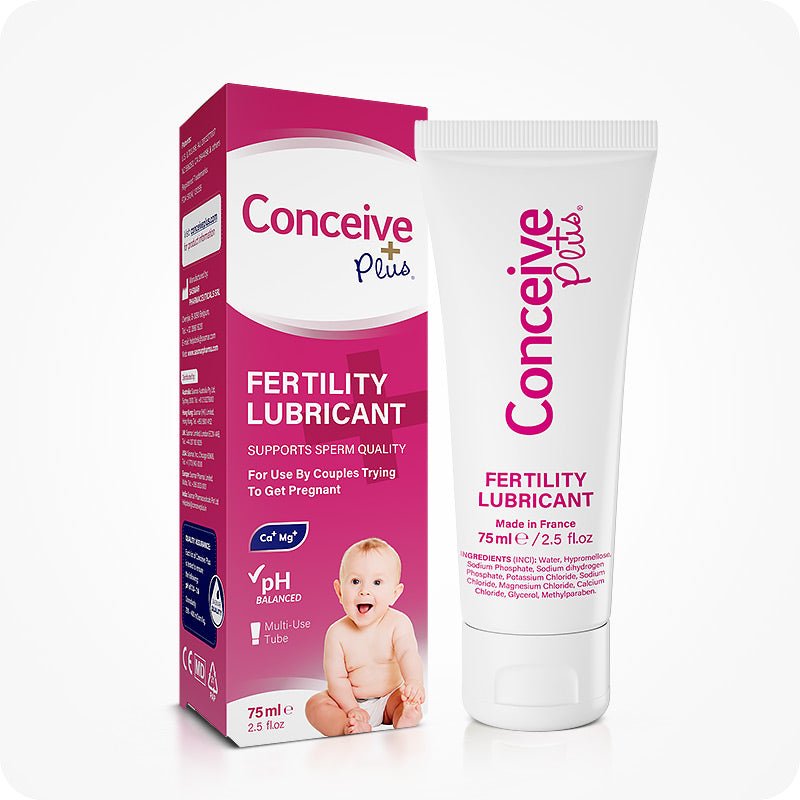
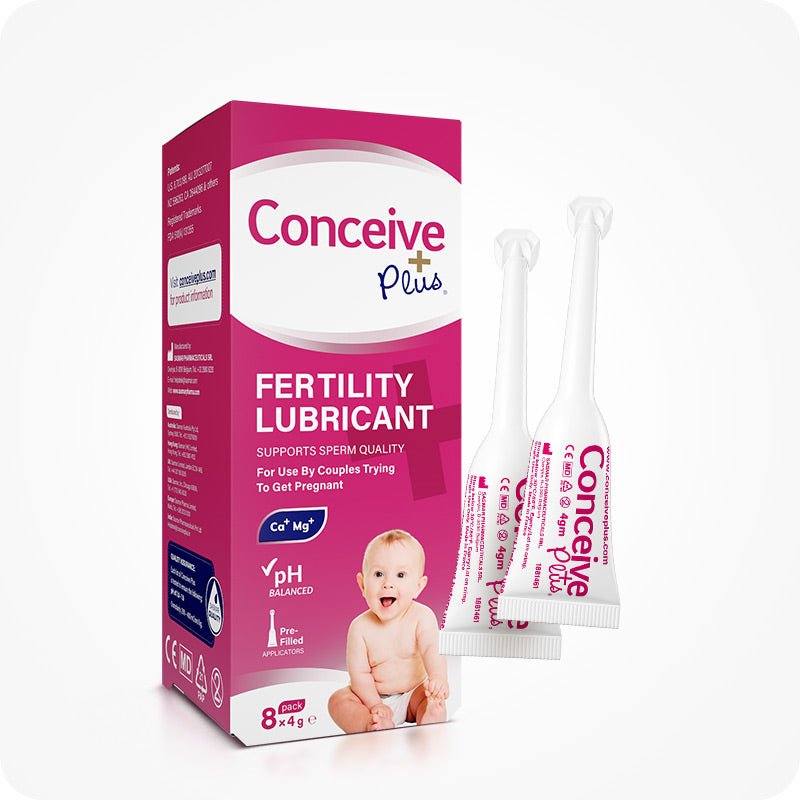
This is where Conceive Plus comes in. Standard lubricants — including popular high-street brands — are often too acidic and hyperosmolar for sperm, killing them before they can reach the egg. Conceive Plus is formulated to match fertile-quality cervical mucus, with the same pH (7.0–8.5) and osmolality as the natural environment sperm need to thrive.
Used together with accurate ovulation tracking, Conceive Plus helps ensure that when you get the timing right, the conditions are optimised for success.
Cycle Irregularity: What It Means for Tracking
Not everyone has a textbook 28-day cycle. Cycle length varies naturally from 21 to 35 days, and ovulation can occur anywhere from day 11 to day 21 in a typical cycle. This variation makes generic advice like "have sex on day 14" inaccurate for most women.
If your cycles are irregular (varying by more than 7–9 days), consider:
- Extending your OPK testing window
- Combining multiple tracking methods for more certainty
- Consulting your GP about possible underlying causes (PCOS, thyroid issues, etc.)
- Using a fertility-specific app that accommodates irregular cycles
Combining Methods for Best Results
No single method is perfect for every woman. The most accurate approach combines:
- OPKs for advance warning of the LH surge
- Cervical mucus observation as a cross-check
- BBT tracking to confirm ovulation and refine next cycle predictions
- A tracking app to visualise patterns over time
Most fertility specialists recommend giving any tracking method at least 3 cycles to get a clear picture of your individual pattern.
Frequently Asked Questions
Q: How accurate are ovulation tracking methods?
A: OPKs are 97–99% accurate at detecting the LH surge. BBT is reliable for confirming ovulation retrospectively. Combining methods gives the best overall accuracy.
Q: Can stress affect ovulation?
A: Yes. Significant physical or emotional stress can delay or suppress ovulation, making tracking more difficult and less predictable.
Q: My OPK never shows a clear positive — what should I do?
A: Try testing more frequently (twice daily), try a different OPK brand, or speak to your GP about possible PCOS or other hormonal issues.
Q: How many days before ovulation should I start having intercourse?
A: The most fertile days are the 2 days before ovulation and the day of ovulation. Starting 3–4 days before your predicted ovulation date covers all bases.
Q: Does Conceive Plus affect OPK readings?
A: No. Conceive Plus is applied internally and doesn't interfere with urine-based OPK tests.
Q: Can I use fertility apps alone without OPKs?
A: Apps that use cycle history alone are less accurate than OPKs for identifying your actual fertile window. Apps that incorporate OPK data or BBT readings are more reliable.
Q: Is the Clearblue fertility monitor worth the cost?
A: For women with irregular cycles or who have been trying for several months, the extended fertile window detection (6 days vs 2 days) can be valuable. It's a good investment if simpler methods haven't worked.
Q: Does age affect how easy it is to track ovulation?
A: In your mid-to-late 30s, cycles may become shorter and more irregular. LH levels naturally rise, which can make OPK interpretation less straightforward. BBT and mucus monitoring remain reliable.
Q: Where can I buy Conceive Plus in the UK?
A: Conceive Plus is available from Boots, Amazon UK, and directly from conceiveplus.co.uk.
Q: Should I see a doctor before starting ovulation tracking?
A: Not necessarily. Ovulation tracking is safe and informative for anyone trying to conceive. See your GP if you've been tracking for 3+ cycles without a clear positive result, or after 12 months (6 months if over 35) of trying.
Thousands of couples trust Conceive Plus. Join them today.
Explore Products →