Ovulation Tracking: The Complete Guide to Knowing Your Most Fertile Days


Ovulation Tracking: The Complete Guide to Knowing Your Most Fertile Days
Understanding your cycle is the single most powerful thing you can do to improve your chances of conception. Ovulation tracking tells you not just when you ovulate, but when your fertile window opens — giving you the best possible opportunity to time intercourse for pregnancy. This guide covers every method available in 2026, from basal body temperature charting to the latest digital ovulation tracking tools.
Why Ovulation Tracking Is Essential When Trying to Conceive
Conception requires sperm to meet an egg — but that window is surprisingly narrow. The human egg survives for only 12–24 hours after ovulation, while sperm can survive in fertile cervical mucus for up to 5 days. This creates a fertile window of approximately 6 days: the 5 days before ovulation and the day of ovulation itself.
Without ovulation tracking, couples often time intercourse incorrectly — missing the fertile window entirely, or concentrating effort in the post-ovulatory phase when conception is impossible. Studies show that couples who accurately identify and target their fertile window conceive up to 2.5× faster than those timing intercourse by calendar alone.
Understanding Your Menstrual Cycle
Ovulation occurs at the midpoint of a menstrual cycle, but "midpoint" is a statistical average — not a rule. A 28-day cycle woman does not necessarily ovulate on Day 14. Cycle length varies both between women and month-to-month in the same woman, making calendar methods alone unreliable for ovulation tracking.
The cycle has two phases separated by ovulation:
- Follicular phase: Day 1 (first day of menstruation) to ovulation. Length varies widely — this is where cycle-to-cycle differences accumulate.
- Luteal phase: Ovulation to next menstruation. Relatively fixed at 12–16 days in most women.
This asymmetry is why ovulation tracking matters: if you know your luteal phase is consistently 14 days and your cycle is 32 days, you ovulate around Day 18 — not Day 16.
Method 1: Basal Body Temperature (BBT) Charting
Basal body temperature rises by 0.2–0.5°C after ovulation due to the thermogenic effect of progesterone. BBT charting involves measuring your temperature every morning before getting out of bed, recording it daily, and looking for the sustained thermal shift that confirms ovulation.
How to do it:
- Use a BBT thermometer (reads to 2 decimal places)
- Take temperature at the same time each morning, before any activity
- Record on a chart or app — identify the post-ovulation thermal shift after 3 consecutive elevated readings
Key limitation: BBT charting confirms ovulation after it has occurred. It is most useful for identifying your typical ovulation timing across cycles, not for real-time fertile window prediction.
Method 2: LH Ovulation Test Strips (OPKs)
Luteinising hormone (LH) surges 24–36 hours before ovulation — the body's chemical trigger that causes the dominant follicle to release the egg. Ovulation predictor kits (OPKs) detect LH in urine, allowing you to anticipate ovulation 1–2 days in advance.
How to use OPKs:
- Begin testing from Day 10 of a typical 28-day cycle (earlier for shorter cycles)
- Test once or twice daily, ideally mid-morning to afternoon (not first morning urine, which can dilute or miss the LH peak)
- A positive result = LH surge detected → target intercourse over the next 12–36 hours
Advanced digital OPKs (such as Clearblue Advanced) detect both LH and oestrogen (which rises 2–4 days before LH), extending the trackable fertile window and helping women with PCOS (who may have multiple LH surges) identify the true ovulation peak.
Method 3: Cervical Mucus Monitoring
Cervical mucus changes predictably across the cycle under the influence of oestrogen and progesterone. Observing and recording these changes is known as the Billings Ovulation Method or, in broader form, the Creighton Model.
Cervical mucus pattern:
- Post-menstruation: Dry or minimal mucus
- Pre-ovulation: Sticky, white/cloudy, low sperm penetrability
- Peak fertility: Clear, stretchy, raw-egg-white consistency ("spinnbarkeit") — maximum oestrogen effect; highly permeable to sperm
- Post-ovulation: Thick, dry, white — progesterone effect creates hostile environment for sperm
Peak-quality cervical mucus is strongly correlated with the fertile window. When mucus is egg-white in quality, this typically coincides with the 2–3 days before and day of ovulation — exactly when Conceive Plus fertility lubricant is most useful as a supplement to natural mucus that may be insufficient in quantity.
Method 4: Fertility Monitors and Apps
Smart ovulation tracking has advanced significantly. Devices like the Mira Analyzer measure actual LH levels (not just positive/negative), providing quantitative data for women with PCOS or unusual cycle patterns. Hormone-based home testing (oestrogen + LH + progesterone) gives a complete hormonal picture.
Fertility apps like Natural Cycles (FDA-cleared as a contraception method, also used for conception tracking) use BBT + algorithm to predict fertile windows. Apps combining multiple data streams — BBT, OPK results, cycle history, and even sleep data — provide increasingly accurate fertile window predictions.
Combining Methods for Maximum Accuracy
The most accurate ovulation tracking approach combines OPKs (for real-time LH surge detection) with BBT charting (for cycle pattern learning) and cervical mucus monitoring (for additional real-time fertility confirmation). This triple-check approach is particularly valuable for:
- Women with irregular cycles (including PCOS)
- Women coming off hormonal contraception (cycles may be irregular for 2–6 months)
- Women over 35 (shorter luteal phases, earlier ovulation are common)
- Couples who have been trying for more than 3 months without success
Conceive Plus and Ovulation Tracking: The Perfect Partnership
Accurate ovulation tracking tells you exactly when to have intercourse for maximum conception probability — but the environment in which sperm travel matters just as much as timing. Many couples use personal lubricants for comfort, unaware that most lubricants are harmful to sperm.
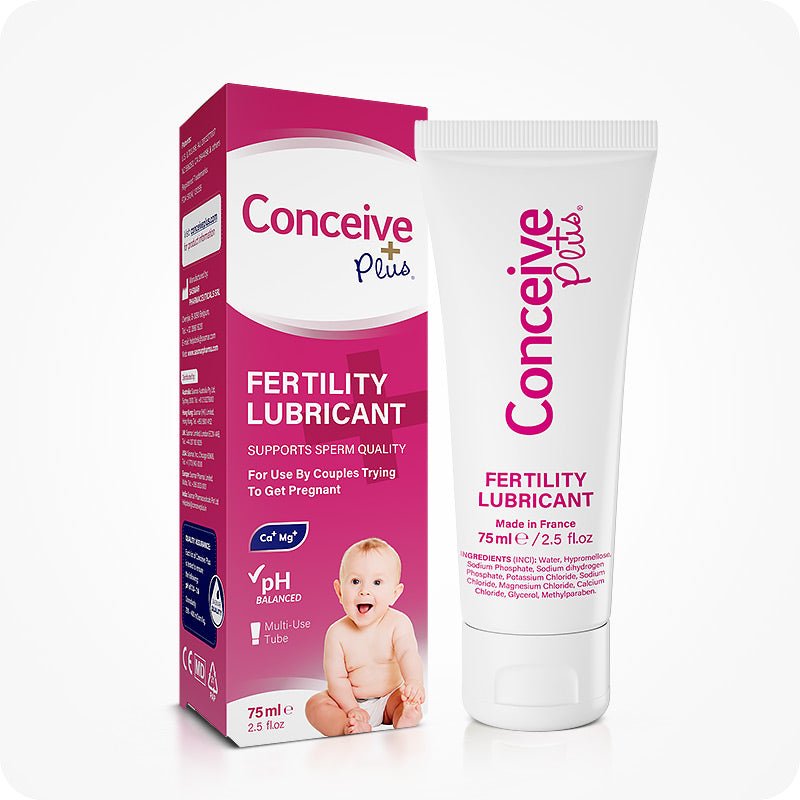
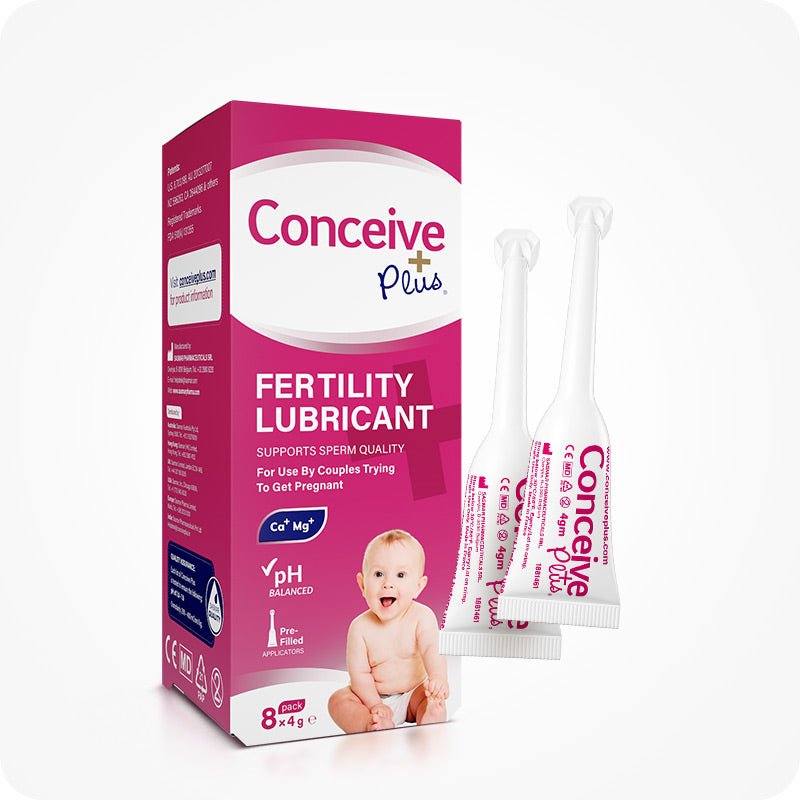
Conceive Plus fertility lubricant is formulated to support sperm survival and motility during intercourse, matching the pH and osmolality of fertile cervical mucus. When cervical mucus is insufficient (a common issue in women with PCOS, those coming off the pill, or those under stress), Conceive Plus acts as a supportive medium — maintaining the sperm-friendly environment your fertile window demands.
Used in combination with precise ovulation tracking, Conceive Plus ensures that when you're in your fertile window, sperm have the best possible conditions for the journey to the egg.
Make the most of your fertile window. Explore Conceive Plus fertility lubricant — the sperm-friendly lubricant trusted by couples across the UK.
Frequently Asked Questions About Ovulation Tracking
Q: How accurate is ovulation tracking?
A: When methods are combined (OPKs + BBT + mucus), ovulation tracking accuracy is very high — detecting the fertile window in 90–95% of cycles. Single-method approaches are less reliable, particularly in women with irregular cycles.
Q: Can I track ovulation with PCOS?
A: PCOS makes ovulation tracking more challenging because LH can surge multiple times without triggering ovulation, and cycles are often irregular. Quantitative LH monitors (like Mira) and the combination of OPKs with BBT confirmation are most useful for PCOS. A progesterone test on Day 21 (or 7 days post-suspected ovulation) can confirm whether ovulation actually occurred.
Q: How many days before ovulation is the fertile window?
A: The fertile window spans 5 days before ovulation and the day of ovulation itself — 6 days total. Sperm can survive in favourable cervical mucus for up to 5 days, so having intercourse even several days before ovulation can result in pregnancy.
Q: Does stress affect ovulation tracking results?
A: Stress can delay or suppress ovulation by disrupting the hormonal cascade (CRH → cortisol → suppressed GnRH → blunted LH surge). This can cause OPKs to show negative results for longer than usual, and BBT charts may show an extended follicular phase. Tracking through these months is still valuable — it simply means ovulation happens later than usual.
Q: What if I never get a positive OPK?
A: If you're testing twice daily throughout the expected fertile period and never get a positive result, consider: testing at the wrong time of day, cycles where the LH surge is very brief, PCOS causing anovulatory cycles, or premature ovarian insufficiency. Consult a GP for a progesterone blood test and ultrasound follicle tracking to investigate.
Q: Should I use Conceive Plus every day or only during my fertile window?
A: Conceive Plus is designed for use during intercourse and is most beneficial during your fertile window — the days when conception is possible. Using it during your tracked peak fertile days ensures sperm-friendly conditions precisely when they matter most.
Q: Can ovulation tracking apps replace OPKs and BBT?
A: Apps alone — without data input from OPKs or BBT — rely on statistical averages that may not match your individual cycle. Apps are most powerful as data aggregators, combining your manually input OPK results and BBT readings to produce personalised fertile window predictions. They don't replace physical ovulation testing; they enhance the analysis.
Q: How long should I track before seeing a pattern?
A: Most women can identify their ovulation timing pattern within 2–3 cycles of consistent tracking. Women with irregular cycles may need 4–6 cycles to establish a reliable baseline. Tracking is always worthwhile, even in the first cycle — OPKs and cervical mucus monitoring provide real-time information regardless of cycle history.
Support your fertile window with the right tools. Shop Conceive Plus — the fertility lubricant recommended by clinicians and loved by couples across the UK.