Ovulation Tracking with PCOS and Irregular Cycles: A Complete Guide for the UK


Ovulation tracking is one of the most powerful tools available to couples trying to conceive — but it comes with a steep learning curve, especially if you have irregular cycles or PCOS. This guide walks through every method available in the UK, helping you find the combination that works best for your body.
Why Ovulation Tracking Matters More Than You Think
Many couples spend months trying to conceive without realising they're missing their fertile window entirely. The truth is, the human fertile window is surprisingly short: sperm can survive 3–5 days in fertile cervical mucus, but the egg is only viable for 12–24 hours after ovulation. That makes accurate timing absolutely critical.
Research published in the New England Journal of Medicine found that conception rates dropped sharply when intercourse didn't occur in the 5 days preceding ovulation. Tracking eliminates the guesswork — and for women with irregular cycles or PCOS, it's not optional, it's essential.
Understanding Your Cycle: The Foundation of Ovulation Tracking
Join thousands of couples who trust Conceive Plus for science-backed fertility support.
Shop Now →Before you can track ovulation effectively, you need to understand what you're tracking. A typical cycle runs 21–35 days, with ovulation usually occurring around day 14 in a 28-day cycle — but this is an average, not a rule. Many women ovulate significantly earlier or later.
Your cycle has four phases: menstruation, the follicular phase (when follicles develop), ovulation itself (when the egg is released), and the luteal phase (the two weeks after ovulation). Tracking methods aim to identify the transition from follicular to ovulation phase — your peak fertile window.
In the UK, the NHS acknowledges that cycle length can vary significantly even in women without underlying conditions, and recommends tracking for at least 3 cycles before drawing conclusions about your personal pattern.
Ovulation Predictor Kits (OPKs): The UK Standard
OPKs are the most widely used ovulation tracking method in the UK, available from Boots, Superdrug, Amazon, and most pharmacies. They detect the luteinising hormone (LH) surge that triggers ovulation 24–36 hours before the egg is released.
Types available in the UK:
- Strip tests (e.g., Easy@Home, Wondfо): Lowest cost, require visual interpretation of line darkness, suitable for experienced trackers
- Digital OPKs (e.g., Clearblue Digital): Show a smiley face for positive, eliminating subjectivity — ideal for beginners
- Advanced digital OPKs (e.g., Clearblue Advanced): Detect both oestrogen rise (giving "high" fertility) and LH surge (giving "peak" fertility), identifying up to 5 fertile days per cycle
Limitations for PCOS: Women with PCOS often have chronically elevated LH levels, which can cause false positives on standard OPKs. If you're getting multiple high readings without a clear peak, consult your GP or use the advanced digital version, which also tracks oestrogen to contextualise LH readings.
Basal Body Temperature (BBT) Tracking
BBT tracking involves taking your temperature every morning before getting out of bed, using a thermometer accurate to 0.01°C. After ovulation, progesterone causes a sustained temperature rise of 0.2–0.5°C that persists until your period.
The catch: BBT tracking is retrospective — it confirms ovulation has occurred rather than predicting it. For timing intercourse, you need to chart several cycles first to identify your pattern, then use the BBT rise as a confirmation tool alongside OPKs.
Apps like Natural Cycles (the first CE-marked contraception app in the UK, which can also be used to track fertility) use algorithm-based BBT interpretation to predict future fertile windows based on your personal data.
Cervical Mucus Observation
Your cervical mucus changes throughout the cycle in predictable ways. As ovulation approaches, it becomes increasingly slippery and stretchy — often described as resembling raw egg whites. This fertile-quality mucus helps sperm travel toward the egg and can sustain them for several days.
After ovulation, progesterone causes mucus to become thick, dry, or absent again.
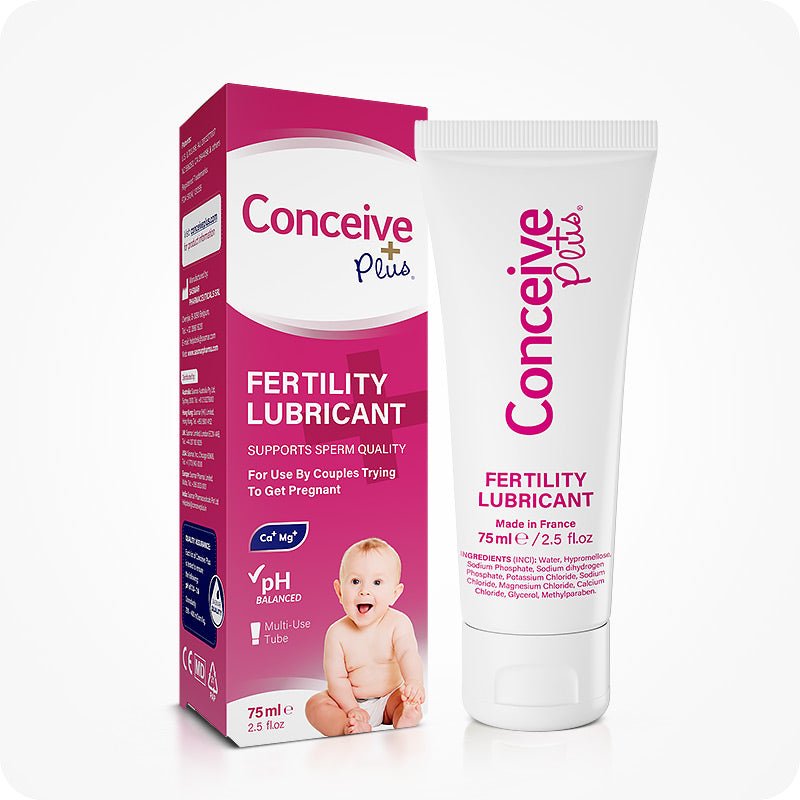
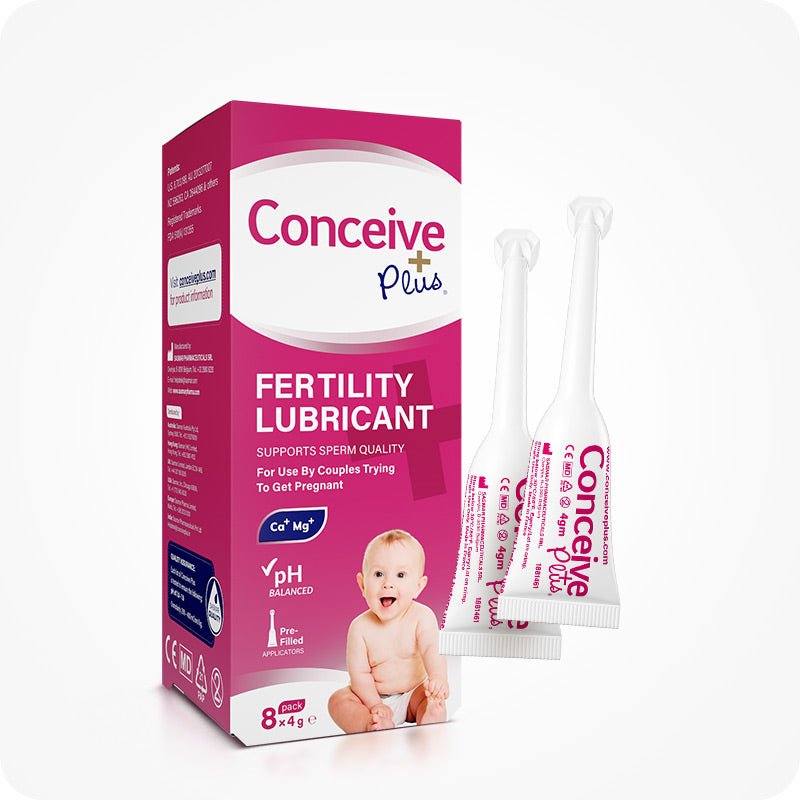
For women with PCOS, cervical mucus observation can be unreliable due to hormonal disruption, but when combined with OPKs, it provides valuable corroboration. If you consistently notice little to no fertile mucus, a fertility-supportive lubricant like Conceive Plus can help replicate the supportive environment that fertile mucus provides.
Fertility Monitors and Apps
Beyond basic OPKs, several more sophisticated tracking options are available in the UK:
- Clearblue Connected Ovulation System: Connects to a smartphone app, storing your data and learning your cycle patterns
- Mira Fertility Monitor: Quantifies your exact LH concentration rather than just positive/negative, particularly useful for PCOS where LH patterns are atypical
- Ava Fertility Bracelet: Wearable that tracks multiple physiological parameters (heart rate, temperature, HRV) to predict fertile days — UK-available
- OvuSense: A vaginal sensor worn overnight that measures core body temperature with high precision — developed and clinically validated in the UK, with specific studies in PCOS populations
Tracking Ovulation with PCOS: Specific Strategies
PCOS requires a modified approach to ovulation tracking:
- Start testing earlier: Begin OPK testing from day 8–10 of your cycle regardless of cycle length
- Test twice daily: Test at 10am–12pm and 6pm–8pm to catch LH surges that peak briefly
- Use quantitative monitors: Mira or other quantitative devices are better than simple yes/no OPKs for PCOS
- Combine methods: Never rely on a single method alone — use OPK + BBT + cervical mucus observation together
- Track for longer: With irregular cycles, track across 6+ cycles before assuming a pattern
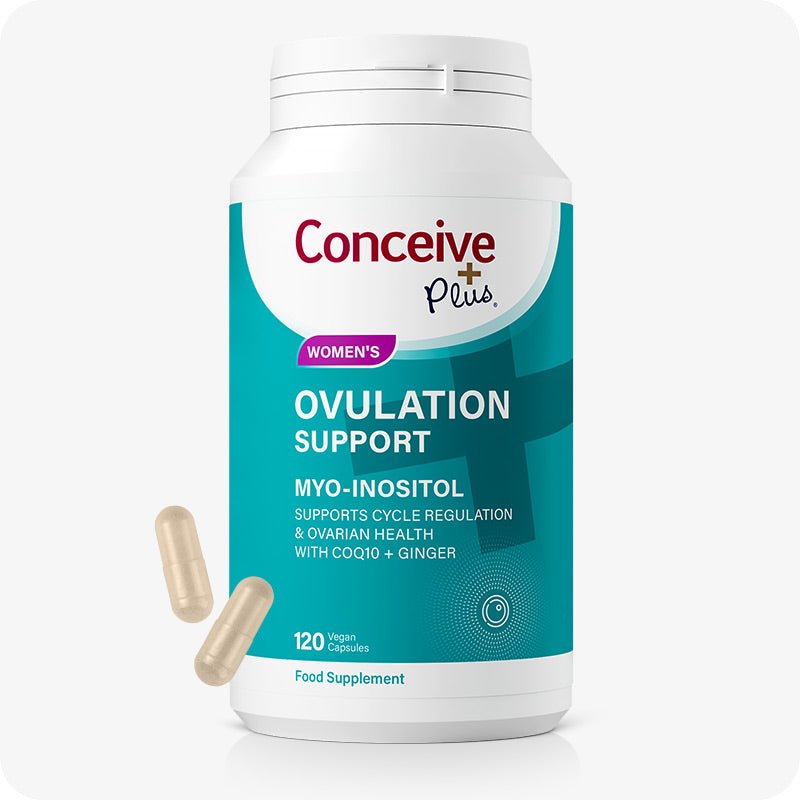
- Consider inositol: Myo-inositol and D-chiro-inositol supplements have clinical evidence for improving ovulatory function in PCOS
FAQ: Ovulation Tracking in the UK
Q: How long should I track before seeing a specialist?
If you're under 35 and have been trying to conceive for 12 months without success, or over 35 and trying for 6 months, the NHS recommends speaking to your GP. With PCOS, many specialists suggest seeking evaluation sooner — after 6 months regardless of age.
Q: Are OPKs accurate for PCOS?
Standard OPKs can give false positives in PCOS due to elevated baseline LH. Advanced digital OPKs or quantitative monitors like Mira provide more reliable results by tracking oestrogen alongside LH.
Q: Can I use ovulation tracking as contraception?
Fertility Awareness Methods (FAM) can be used for contraception when taught properly, but standard OPKs alone are not reliable for this purpose. The Natural Cycles app is the only CE-marked digital contraception in the UK.
Q: What if my temperature doesn't rise after what I think is ovulation?
A clear BBT rise is the strongest confirmation of ovulation. If you're not seeing a sustained rise, it may indicate anovulation (cycles without ovulation), which is common in PCOS. Discuss with your GP or a fertility specialist.
Q: Does stress affect ovulation tracking results?
Yes — significant stress can delay or suppress ovulation, affecting BBT and cervical mucus patterns. Illness and travel can also affect BBT readings. Discard anomalous readings and note them in your tracking app.
Q: How many cycles should I track before trying to conceive?
Tracking for 2–3 cycles before actively trying gives you a pattern baseline. However, if you've been tracking while trying to conceive, the data is still valuable — share your charts with your doctor for a more informed consultation.
Q: Is fertility lubricant necessary when tracking ovulation?
It's a valuable addition. Even if you've identified your fertile window precisely, sperm still need supportive conditions to survive and reach the egg. Conceive Plus is specifically formulated to mimic fertile cervical mucus, supporting sperm regardless of your body's natural mucus quality.
Q: Can I get ovulation tracking support on the NHS?
GPs can refer for blood tests to confirm ovulation (Day 21 progesterone test) and can offer referral to NHS fertility services after appropriate waiting periods. Some CCGs fund OPK strips through community pharmacies for women with PCOS.
Once you've found your fertile window, give sperm the best possible environment with Conceive Plus — the UK's leading fertility lubricant, formulated to match fertile cervical mucus.
Shop Conceive Plus UK →