PCOS and Fertility: The Complete Guide to Conceiving with Polycystic Ovary Syndrome


Polycystic ovary syndrome (PCOS) is one of the most common endocrine disorders in women of reproductive age, affecting between 8 and 13% of women globally — approximately 116 million women worldwide. It is the leading cause of anovulatory infertility — the type of infertility caused by irregular or absent ovulation — and accounts for approximately 80% of anovulatory infertility cases. Yet despite its prevalence, PCOS is frequently misunderstood, misdiagnosed, and managed suboptimally.
This guide provides a comprehensive, evidence-based overview of PCOS and its relationship with fertility: what PCOS is, how it affects conception, the full range of medical and lifestyle interventions available, and the nutritional strategies with the strongest evidence for supporting conception with PCOS.
What Is PCOS?
PCOS is a complex hormonal condition characterised by a combination of features. The internationally accepted Rotterdam criteria require at least two of the following three features for diagnosis:
Oligo/anovulation: Infrequent or absent ovulation, typically manifesting as irregular or absent periods (oligomenorrhoea or amenorrhoea). In PCOS, the normal monthly process of follicle development, dominant follicle selection, and ovulation is disrupted. Multiple small follicles develop but none achieves dominance, resulting in a cycle that fails to culminate in ovulation.
Clinical or biochemical hyperandrogenism: Elevated androgen levels (testosterone, DHEA-S, androstenedione) or their clinical manifestations — acne, hirsutism (excess facial or body hair), or scalp hair thinning (androgenic alopecia).
Polycystic ovarian morphology: On ultrasound, the ovaries contain an increased number of small antral follicles — the current threshold is 20 or more follicles per ovary in either ovary, or an ovarian volume exceeding 10 mL — in the absence of a dominant follicle or corpus luteum. This follicle accumulation reflects the arrested folliculogenesis characteristic of PCOS.
PCOS is not a single condition but a spectrum. Some women have primarily the hormonal features with regular periods; others have predominantly metabolic features with severe insulin resistance; others have primarily the ultrasound features with minimal symptoms. This heterogeneity is important because management strategies need to be tailored to the individual's specific PCOS phenotype.
Optimise Your Body for Conception
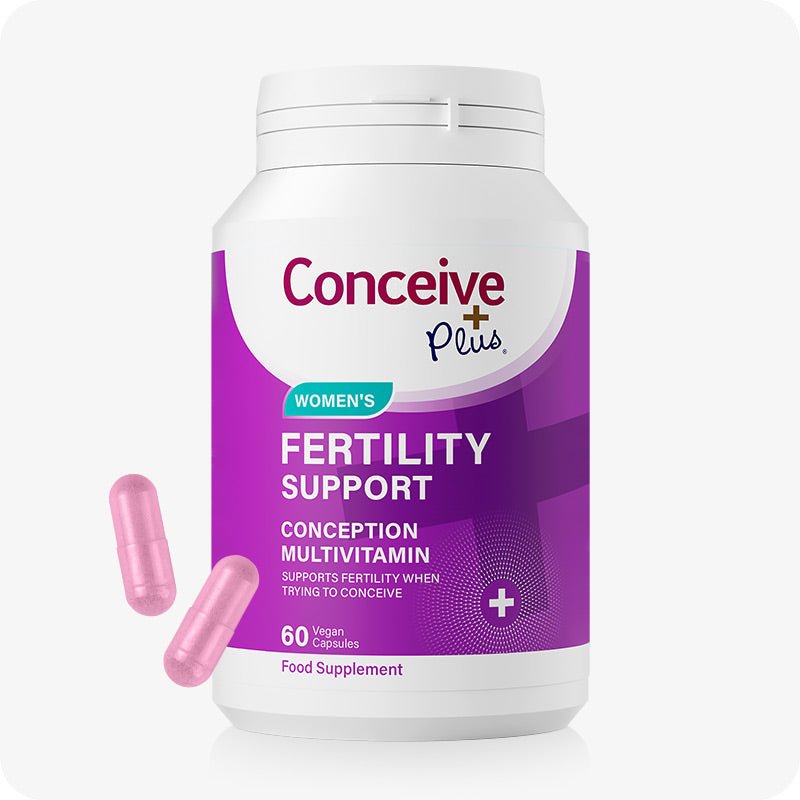
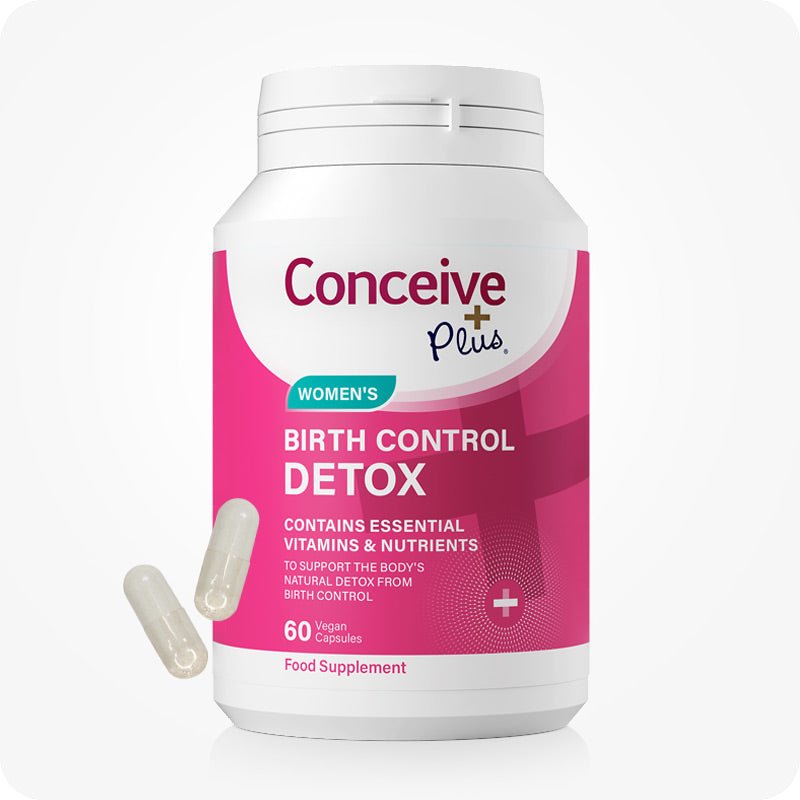
Conceive Plus Women's Fertility Support provides the evidence-based nutrients your body needs for healthy ovulation and egg quality — including methylfolate, myo-inositol, CoQ10, vitamin D3, and zinc.
The Hormonal Mechanisms of PCOS
Understanding PCOS requires understanding its hormonal architecture, which involves a cascade of interconnected dysregulations:
Insulin resistance: Approximately 70 to 80% of women with PCOS have some degree of insulin resistance — impaired cellular response to insulin requiring the pancreas to produce more insulin to maintain normal blood glucose. Elevated insulin has direct effects on the ovaries, stimulating excess androgen production by the theca cells. This hyperinsulinaemia-driven hyperandrogenism is a central driver of the PCOS hormonal environment.
Elevated LH: The ratio of LH (luteinising hormone) to FSH (follicle-stimulating hormone) is often elevated in PCOS. Elevated LH further stimulates androgen production by theca cells and disrupts the normal FSH-dominant follicular phase needed for dominant follicle selection and ovulation. The disrupted LH pulsatility pattern — caused by altered GnRH secretion from the hypothalamus — perpetuates the anovulatory cycle.
Low SHBG: Sex hormone-binding globulin (SHBG) is produced by the liver and binds androgens in circulation, making them inactive. Insulin suppresses SHBG production. Women with PCOS and high insulin levels have low SHBG, which means a higher proportion of circulating testosterone is free (biologically active) — amplifying the androgenic effects even when total testosterone is only mildly elevated.
Ovarian follicle arrest: The combination of elevated androgens and disrupted FSH signalling prevents the dominant follicle from reaching maturity. Multiple follicles develop in parallel but none achieves the dominance and oestrogen surge needed to trigger the LH surge that causes ovulation. The arrested follicles accumulate in the ovary — creating the polycystic appearance on ultrasound.
PCOS and Fertility: Understanding the Impact
The primary fertility impact of PCOS is anovulation. Women with PCOS who ovulate irregularly or infrequently have fewer opportunities for conception per year than women with regular 28-day cycles. A woman who ovulates 12 times per year has 12 potential conception attempts; a woman with PCOS who ovulates 4 to 6 times per year has substantially fewer opportunities.
However, several important nuances modify this picture:
Ovarian reserve is typically high: Women with PCOS typically have a higher-than-average antral follicle count and elevated AMH (anti-Müllerian hormone) levels — reflecting the large pool of small follicles in polycystic ovaries. This means ovarian reserve is not reduced in PCOS (as it is in conditions like premature ovarian insufficiency or endometriosis). The issue is not egg quantity but ovulation regularity.
Egg quality concerns: Whether PCOS affects egg quality is debated. Some studies suggest that the elevated androgen environment in the follicle during development may affect oocyte quality. In IVF cycles, women with PCOS produce more eggs per cycle (due to high antral follicle count) but may have slightly lower fertilisation rates. Overall, many women with PCOS achieve successful IVF cycles.
Endometrial effects: Anovulatory cycles in PCOS mean the endometrium is exposed to unopposed oestrogen without the progesterone surge that follows ovulation. Chronic anovulation can lead to endometrial thickening and increases the long-term risk of endometrial hyperplasia. Ensuring regular progestogen exposure — either through ovulation or progestogen supplementation — is important for endometrial health in anovulatory PCOS.
Support Every Attempt with Conceive Plus
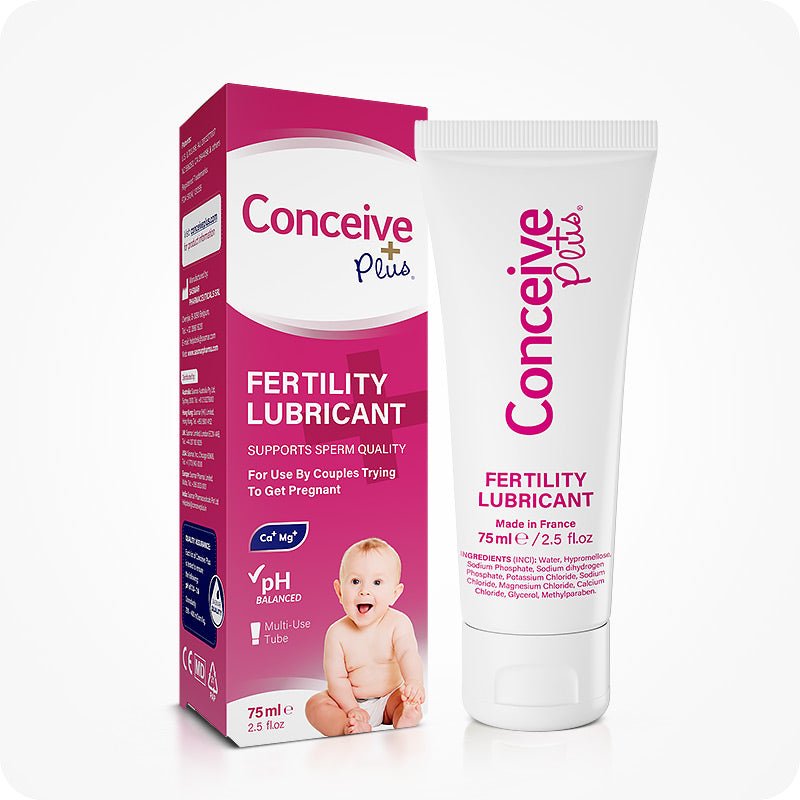
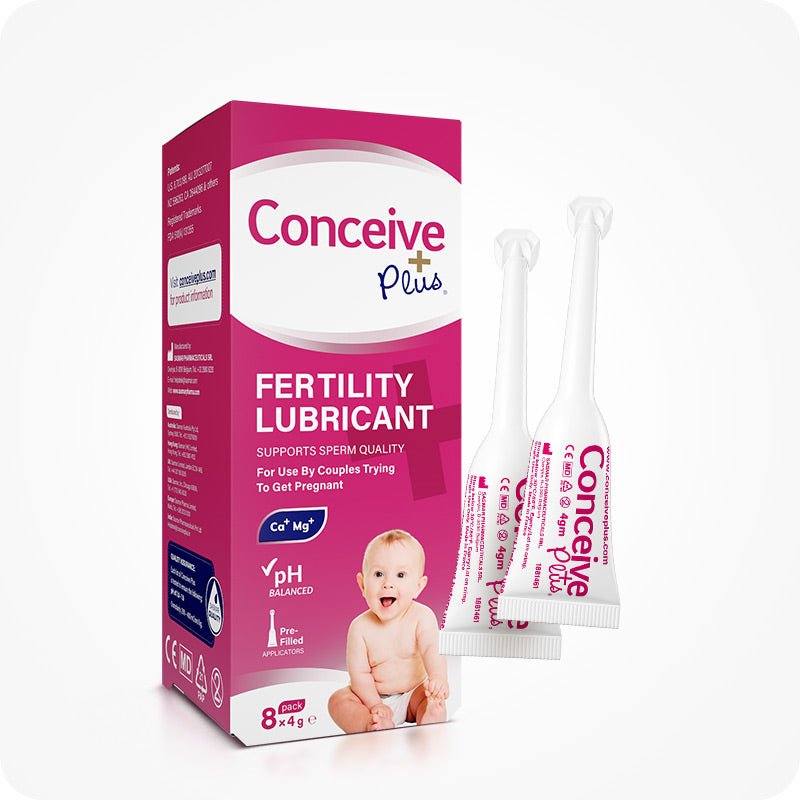
Our fertility-friendly lubricant is scientifically formulated to support sperm motility while providing the comfort you need during your fertile window. Unlike standard lubricants that can harm sperm, Conceive Plus contains the calcium and magnesium ions naturally found in the female reproductive tract.
Lifestyle Modification: The First-Line Treatment for PCOS Fertility
For overweight or obese women with PCOS (approximately 60 to 70% of those affected in Western countries), lifestyle modification is the first-line treatment for fertility. The evidence for weight loss as a fertility intervention in overweight PCOS is among the strongest in all of reproductive medicine:
A randomised trial published in the British Medical Journal found that weight loss of 5 to 10% of body weight in overweight women with PCOS restored ovulation in over 80% of cases — without any medication. Weight loss reduces insulin resistance, which reduces hyperinsulinaemia, which reduces ovarian androgen production, which restores the normal hormonal environment for folliculogenesis and ovulation.
Even modest weight loss — 5 to 7% of body weight — produces clinically meaningful improvements in menstrual regularity, androgen levels, insulin sensitivity, and ovulation rates in overweight women with PCOS. The mechanism is primarily through reduced insulin levels: as insulin falls, SHBG rises, free testosterone falls, LH pulsatility normalises, and the conditions for dominant follicle selection and ovulation are restored.
For women with lean PCOS (normal BMI, approximately 20 to 30% of PCOS cases), weight loss is not applicable, but lifestyle optimisation remains relevant: a low-glycaemic diet reduces postprandial insulin spikes, regular exercise improves insulin sensitivity independently of weight loss, and stress management reduces cortisol-driven androgen production.
The Low-Glycaemic Diet and PCOS
Because insulin resistance is central to PCOS pathophysiology, dietary strategies that reduce insulin secretion have a strong mechanistic rationale and emerging clinical evidence:
Low-glycaemic index (GI) diet: A low-GI diet replaces rapidly digested carbohydrates (white bread, white rice, sugary foods) with slowly digested carbohydrates (vegetables, legumes, whole grains, berries) that produce lower postprandial insulin spikes. A systematic review found that a low-GI diet significantly improved insulin sensitivity, androgen levels, and menstrual regularity in women with PCOS compared to standard dietary advice.
Reduce refined sugar: Fructose and glucose from added sugar directly stimulate insulin secretion and, via liver metabolism, worsen insulin resistance and SHBG suppression. Eliminating added sugar is one of the highest-impact single dietary changes for PCOS management.
Adequate protein: Protein at meals slows gastric emptying and reduces postprandial glucose spikes. Aim for a source of protein with every meal — eggs, legumes, fish, poultry, or dairy — to support insulin management.
Mediterranean pattern: The Mediterranean diet — rich in vegetables, fruits, legumes, whole grains, olive oil, and fish — is consistently associated with improved insulin sensitivity, reduced inflammation, and better metabolic health in PCOS. It broadly encompasses all the principles above.
Myo-Inositol: The Most Evidence-Based Supplement for PCOS Fertility
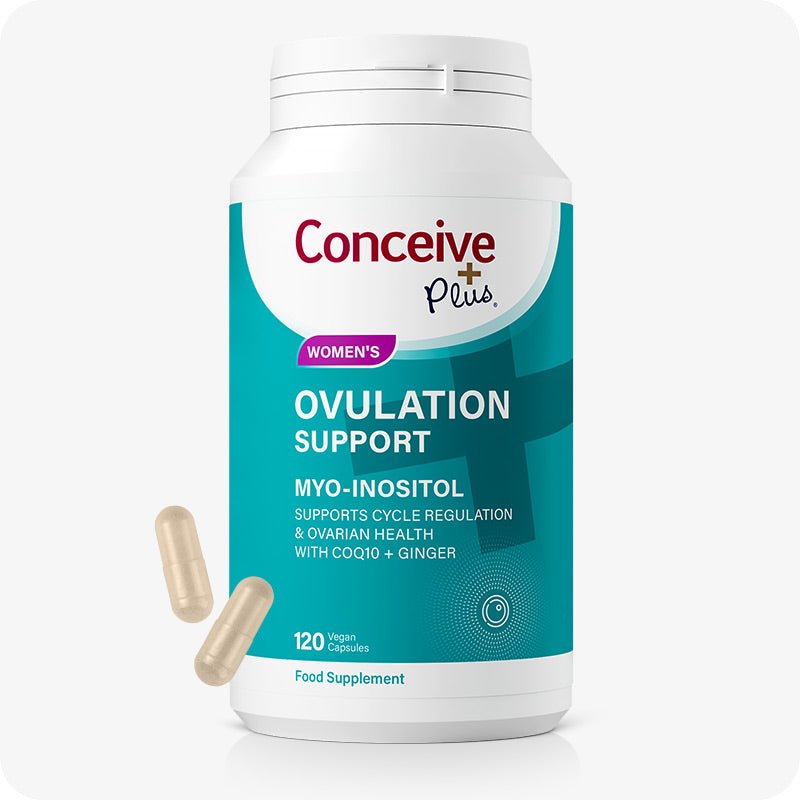
Inositol — particularly the myo-inositol isomer — has the strongest supplement evidence base for PCOS of any single nutritional intervention. Myo-inositol is a naturally occurring compound that acts as a secondary messenger for insulin signalling in cells. Women with PCOS have been found to have impaired inositol metabolism, resulting in reduced cellular insulin signalling efficiency.
Multiple randomised controlled trials have demonstrated that myo-inositol supplementation (typically 2 to 4 g/day) significantly improves insulin sensitivity, reduces androgen levels, restores menstrual regularity, and improves ovulation rates in women with PCOS. A meta-analysis published in the European Journal of Clinical Nutrition concluded that myo-inositol significantly reduced testosterone levels and improved insulin resistance in PCOS.
Combining myo-inositol with D-chiro-inositol (the other physiologically active isomer) at a 40:1 ratio — which mirrors the physiological ratio in the body — has shown additive benefits in some studies, including improvements in oocyte quality in IVF cycles.
Myo-inositol also has a secondary mechanism relevant to PCOS fertility: it is required for FSH receptor signalling in the ovarian follicle. By improving FSH receptor sensitivity, inositol may help overcome the follicular resistance that prevents dominant follicle maturation in PCOS.
Medical Interventions for PCOS Fertility
When lifestyle modification does not restore ovulation within three to six months, or when the couple has other complicating factors, medical intervention for ovulation induction is the next step:
Letrozole (Femara): Now the first-line medical ovulation induction agent for PCOS, recommended over clomiphene by NICE and ASRM since 2019. Letrozole is an aromatase inhibitor that temporarily reduces oestrogen, triggering a compensatory FSH rise that stimulates follicular development. A landmark randomised trial (PPCOS II) found letrozole produced higher cumulative ovulation rates and live birth rates than clomiphene in women with PCOS. Letrozole is typically taken orally for days 3 to 7 of the cycle at doses of 2.5 to 7.5 mg/day.
Clomiphene citrate: The traditional first-line agent, now superseded by letrozole in most guidelines. Clomiphene works by blocking oestrogen receptors at the pituitary, increasing FSH secretion. It causes ovulation in 70 to 80% of women with PCOS but has a side effect of producing anti-oestrogenic effects on the endometrium and cervical mucus — which may limit its effectiveness. Cervical mucus thinning with clomiphene is why a fertility-friendly lubricant is often recommended for women on clomiphene cycles.
Gonadotrophin injections: For women who do not respond to letrozole or clomiphene, injectable FSH preparations can be used to directly stimulate follicular development. These require careful ultrasound monitoring to avoid ovarian hyperstimulation syndrome (OHSS), to which women with PCOS — with their high follicle counts — are particularly susceptible.
Laparoscopic ovarian drilling (LOD): A surgical procedure in which the ovarian surface is punctured with diathermy or laser to destroy androgen-producing tissue and restore normal hormonal balance. LOD can restore regular ovulation in approximately 60 to 80% of women who respond. It is considered when women fail oral ovulation induction or wish to avoid gonadotrophins, and carries the advantage of restoring natural ovulatory cycles that can last months to years.
Metformin: An insulin-sensitising medication that can improve menstrual regularity and ovulation rates in PCOS, particularly in women with significant insulin resistance. Metformin is not as effective as letrozole for ovulation induction but may add benefit when combined with lifestyle changes or ovulation induction agents, and reduces OHSS risk during IVF.
Supplements for PCOS Fertility
Beyond myo-inositol, several other supplements have evidence for supporting fertility in PCOS:
Methylfolate (5-MTHF): All women trying to conceive should supplement folate to protect against neural tube defects. Women with PCOS may have elevated homocysteine levels due to insulin resistance and folate metabolism disruption — making the active methylfolate form particularly important.
Vitamin D: Vitamin D deficiency is remarkably prevalent in women with PCOS — some studies report deficiency in over 70% of PCOS patients. Vitamin D improves insulin sensitivity, supports AMH regulation, and improves menstrual regularity. Supplementation at 1,000 to 4,000 IU daily (depending on baseline levels) is warranted for most women with PCOS, particularly in northern latitudes.
Chromium: An essential trace mineral that enhances insulin receptor signalling. Small randomised trials have found chromium picolinate supplementation (200 to 1,000 mcg/day) reduces insulin resistance and improves metabolic markers in PCOS.
Zinc: Has anti-androgenic activity and supports insulin metabolism. Women with PCOS have been found to have lower zinc levels than controls in multiple studies. Zinc supplementation has been shown to reduce hirsutism and improve menstrual regularity.
NAC (N-acetyl cysteine): An antioxidant with insulin-sensitising properties. Several clinical trials have found NAC comparable to metformin for improving insulin sensitivity and ovulation rates in PCOS.
Magnesium: Insulin resistance and magnesium deficiency are bidirectionally linked. Magnesium is required for insulin receptor function, and low magnesium worsens insulin resistance. Supplementation at 200 to 400 mg/day is commonly recommended for PCOS.
Frequently Asked Questions
Q: Can I get pregnant with PCOS?
Yes. Most women with PCOS can conceive, though it may take longer than for women without PCOS due to irregular ovulation. With lifestyle modification, supplements, and if needed, ovulation induction medication, the majority of women with PCOS achieve pregnancy. PCOS is one of the most treatable causes of infertility.
Q: How do I know if I have PCOS?
PCOS is diagnosed using the Rotterdam criteria: you need at least two of three features — irregular or absent periods, signs of excess androgens (acne, hirsutism, hair loss), or polycystic ovaries on ultrasound. Blood tests measuring hormones (LH, FSH, testosterone, AMH) and a pelvic ultrasound are typically used in diagnosis.
Q: Does weight loss always help PCOS fertility?
Weight loss helps most women with overweight or obese PCOS — even a 5 to 10% reduction in body weight can restore ovulation in 80%+ of cases. However, approximately 20 to 30% of women with PCOS have a normal BMI (lean PCOS). For these women, weight loss is not applicable, but insulin-sensitising strategies (low-GI diet, inositol, exercise) remain relevant.
Q: What is myo-inositol and does it work for PCOS?
Myo-inositol is a naturally occurring compound that improves insulin signalling in cells. Women with PCOS have impaired inositol metabolism. Multiple RCTs have found that myo-inositol (2 to 4 g/day) significantly improves insulin resistance, reduces androgens, restores menstrual regularity, and improves ovulation rates in PCOS. It is the single supplement with the strongest evidence for PCOS.
Q: Should I track ovulation with PCOS?
Ovulation tracking is recommended but requires a different approach with PCOS. LH test strips may give false positives in PCOS (elevated LH can mimic the ovulatory surge). BBT charting or using a fertility monitor that measures oestrogen in addition to LH can provide more reliable ovulation detection. Ultrasound-monitored cycles with a fertility specialist are the most accurate.
Q: Is PCOS inherited?
PCOS has a significant genetic component. If your mother or sister has PCOS, your risk is substantially higher than the general population. The exact genetic mechanisms are complex and not fully understood, but PCOS tends to cluster in families. Insulin resistance also has a strong hereditary component that contributes to PCOS susceptibility.
Q: Can PCOS go away on its own?
PCOS does not typically resolve entirely on its own, as it has a genetic basis. However, symptoms and severity can change significantly with lifestyle modification, weight management, and treatment. Some women find their PCOS symptoms improve substantially after weight loss or after pregnancy. The condition often continues after menopause in a different form (primarily the metabolic components).
Q: What is letrozole and is it better than Clomid for PCOS?
Letrozole (brand name Femara) is an aromatase inhibitor originally developed for breast cancer that is now the preferred first-line medical ovulation induction treatment for PCOS. A major clinical trial (PPCOS II) found letrozole produced significantly higher live birth rates and fewer multiple pregnancies than clomiphene (Clomid) in women with PCOS. Most fertility guidelines now recommend letrozole first.
Q: Does PCOS affect egg quality?
This is an area of ongoing research. The evidence is mixed — some studies find reduced egg quality in PCOS (possibly due to the elevated androgen environment during follicle development), while others find no difference. Most women with PCOS have high egg quantity (high AMH and follicle count) which partially compensates for any quality concerns in IVF cycles.
Q: What is the difference between PCOS and polycystic ovaries?
Polycystic ovarian morphology (PCOM) refers to having ovaries with many small follicles visible on ultrasound — present in 20 to 30% of women of reproductive age. PCOS is the full syndrome that includes additional features: irregular periods and/or evidence of excess androgens. Having polycystic-looking ovaries on ultrasound alone, without the other features, does not constitute a PCOS diagnosis.
Conclusion
PCOS and fertility is a topic where evidence-based intervention makes a profound difference. Unlike many fertility challenges where options are limited, PCOS responds meaningfully to lifestyle modification, targeted supplementation, and medical treatment. Restoring ovulation — the primary goal in PCOS fertility management — is achievable for the vast majority of women.
The foundation is insulin management: a low-glycaemic diet, regular exercise, and myo-inositol supplementation address the core hormonal dysregulation of PCOS. Add vitamin D, zinc, magnesium, and methylfolate to complete the nutritional support. If natural ovulation does not restore with lifestyle changes, letrozole or other medical interventions offer effective, well-established paths to conception.
PCOS is the most common and one of the most treatable causes of female infertility. With the right support and strategy, it is far from the obstacle it once seemed.
Optimise Your Body for Conception
Conceive Plus Women's Fertility Support provides the evidence-based nutrients your body needs for healthy ovulation and egg quality — including methylfolate, myo-inositol, CoQ10, vitamin D3, and zinc.