Ovulation Tracking for Conception: Your Complete Guide to Identifying Your Fertile Window


Ovulation Tracking for Conception: Your Complete Guide to Identifying Your Fertile Window
Understanding your fertile window is one of the most powerful things you can do when trying to conceive. Ovulation tracking—the process of identifying the days each month when pregnancy is possible—can dramatically increase your chances of conception by ensuring you're timing intercourse at the right time. This comprehensive guide covers every method available, the science behind ovulation, and how to build an effective tracking routine.
The reality is that conception is only possible during a narrow window each cycle. A mature egg lives for just 12–24 hours after ovulation. Sperm, however, can survive in fertile cervical mucus for up to 5 days. This means your genuine fertile window is approximately 5–6 days long—the 5 days before ovulation and the day of ovulation itself.
Miss this window, and conception isn't possible that cycle. Hit it consistently, and you give yourself the best possible chance. That's the power of ovulation tracking.
The Biology of Ovulation: What's Actually Happening in Your Body
To track ovulation effectively, it helps to understand what's happening hormonally. The menstrual cycle is divided into phases driven by a cascade of hormones:
Follicular Phase (Days 1–14 in a typical 28-day cycle): Starting with menstruation, the pituitary gland releases Follicle Stimulating Hormone (FSH), which stimulates several follicles in the ovaries to begin maturing. As follicles grow, they produce increasing amounts of estrogen. Eventually, one follicle becomes dominant.
The LH Surge: Rising estrogen triggers a surge of Luteinizing Hormone (LH) from the pituitary gland. This surge is the most reliable ovulation predictor—it typically occurs 24–36 hours before the egg is released.
Ovulation: The dominant follicle ruptures, releasing the mature egg into the fallopian tube. The egg is viable for 12–24 hours.
Luteal Phase (Days 15–28): The ruptured follicle becomes the corpus luteum, which produces progesterone to prepare the uterine lining for implantation. If fertilisation doesn't occur, progesterone falls, the uterine lining sheds, and menstruation begins.
Understanding this sequence helps you recognise which signals correspond to which phase—and which methods are most likely to predict ovulation accurately.
Ovulation Predictor Kits (OPKs): The Gold Standard for LH Detection
🌟 Ready to give your conception journey the best possible start?
Conceive Plus is trusted by thousands of couples and recommended by fertility clinics worldwide. Shop the full range today.
Shop Conceive Plus →Ovulation predictor kits (OPKs) detect the LH surge in urine, giving you advance notice that ovulation is imminent. Because the LH surge peaks 24–36 hours before ovulation, a positive OPK tells you that your most fertile time has begun.
How to use OPKs effectively:
- Begin testing a few days before your expected ovulation (typically day 10 for a 28-day cycle)
- Test at the same time each day—afternoon (early-to-mid afternoon, around 2–4 PM) is recommended as LH peaks earlier in the day
- Reduce fluid intake for 2 hours before testing to avoid diluting the LH concentration
- A positive result (test line as dark or darker than the control line) means ovulation is likely within 24–36 hours
- Have intercourse on the day of the positive OPK and the following day
Digital vs. standard OPKs: Standard strip OPKs require you to judge line darkness, which can be subjective. Digital OPKs display a clear smiley face or symbol for positive/negative, eliminating ambiguity. Advanced digital monitors (like Clearblue Advanced) also detect estrogen rise, giving a wider "high fertility" window before the LH surge peak.
OPK considerations for PCOS: Women with Polycystic Ovary Syndrome may have chronically elevated LH, leading to multiple "positive" OPK readings that don't correspond to actual ovulation. If you have PCOS, consider combining OPKs with another method (BBT or ultrasound confirmation).
Basal Body Temperature (BBT) Tracking: Confirming Ovulation Has Occurred
Basal body temperature (BBT) tracking involves measuring your temperature each morning before getting out of bed. After ovulation, progesterone causes a slight but measurable temperature rise—typically 0.2–0.5°C—that persists until your next period.
How BBT tracking works:
- Take your temperature at the same time every morning before rising, talking, or eating
- Use a basal thermometer (accurate to 0.1°C) for reliable readings
- Chart your temperatures daily—most women use a fertility app
- Look for a sustained rise of 0.2°C or more over 3 consecutive days to confirm ovulation occurred
Key limitation: BBT confirms ovulation has already happened—it doesn't predict it in advance. BBT is therefore most useful for retrospective analysis (understanding your typical cycle pattern) rather than real-time prediction. After 2–3 cycles of BBT charting, you'll understand your personal ovulation timing, which helps you anticipate your fertile window in future cycles.
Cervical Mucus Monitoring: Reading Your Body's Natural Fertility Signs
Your cervical mucus (CM) changes dramatically throughout your cycle in response to hormone fluctuations. Learning to recognise these changes is a free, effective way to identify your fertile window.
CM throughout the cycle:
- Post-menstruation: Dry or minimal mucus—low fertility
- Early follicular: Sticky, white/cloudy mucus—low to moderate fertility
- Approaching ovulation: Creamy, lotion-like mucus—increasing fertility
- Peak fertility (around ovulation): Clear, stretchy, raw-egg-white consistency (EWCM)—highest fertility
- Post-ovulation: Returns to sticky or dry—fertility window closed
Egg white cervical mucus (EWCM) is your most fertile-quality mucus. It acts as a transport medium for sperm, allowing them to survive and swim efficiently toward the egg. When you observe EWCM, begin having intercourse immediately—you're at or near peak fertility.
Fertility Apps and Cycle Tracking: Technology-Assisted Ovulation Prediction
Fertility apps have transformed ovulation tracking for many couples. The best apps combine multiple data inputs—cycle length, BBT, CM observations, OPK results, and symptoms—to generate increasingly accurate ovulation predictions.
Popular fertility tracking apps:
- Natural Cycles — FDA-cleared, algorithm-based BBT analysis
- Ovia Fertility — Comprehensive input tracking with personalised insights
- Clue — Clean interface with ovulation prediction and cycle analysis
- Glow — Community features alongside cycle tracking
- Kindara — Detailed BBT charting with optional Bluetooth thermometer
The accuracy of app predictions depends heavily on the quantity and quality of data you input. Apps based solely on average cycle length can be significantly inaccurate, especially for women with irregular cycles. Pairing an app with OPK testing and BBT charting yields much more reliable results.
Wearable Fertility Monitors: Advanced Continuous Tracking
A new generation of wearable devices offers continuous hormone and physiological tracking to predict ovulation with greater precision:
- Tempdrop — Worn on the upper arm overnight, tracks BBT without requiring you to wake at the same time
- Oura Ring — Tracks skin temperature, HRV, and sleep; some women use temperature data to identify ovulation
- Mira Fertility Monitor — Quantitative urine hormone testing (LH and estrogen) rather than qualitative strip reading
These devices are particularly valuable for women with irregular schedules, shift workers, or those who find traditional BBT charting difficult to maintain consistently.
When to Have Intercourse Based on Your Tracking
Once you've identified your fertile window through tracking, timing intercourse effectively is straightforward:
- Optimal frequency: Every day or every other day during your fertile window maximises exposure without reducing sperm quality
- Key days: The day before ovulation and the day of ovulation are the highest-fertility days
- Start early: Begin having intercourse 3–5 days before predicted ovulation to take advantage of sperm's 5-day survival window
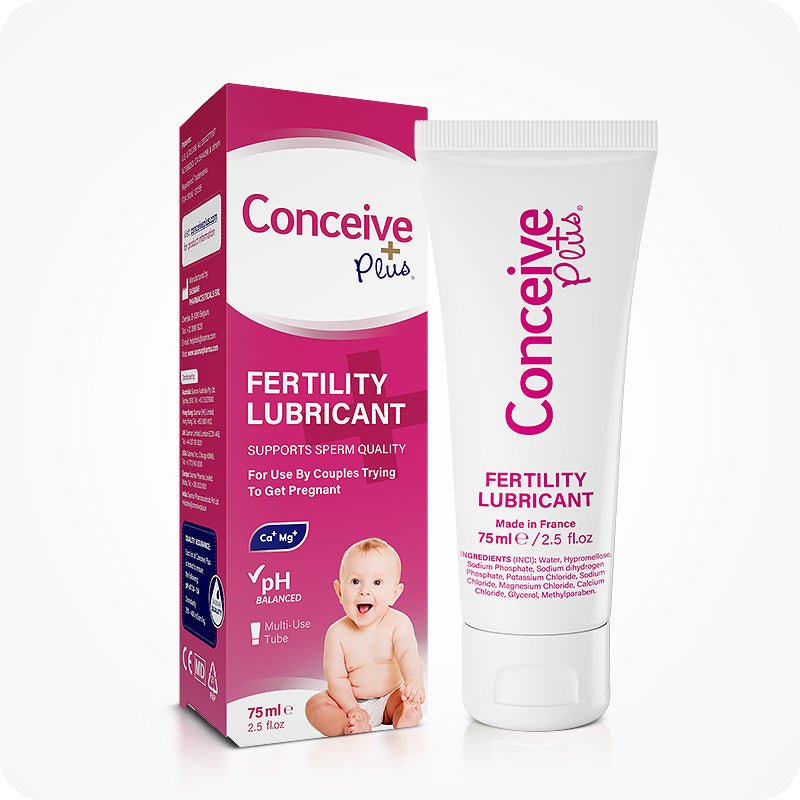
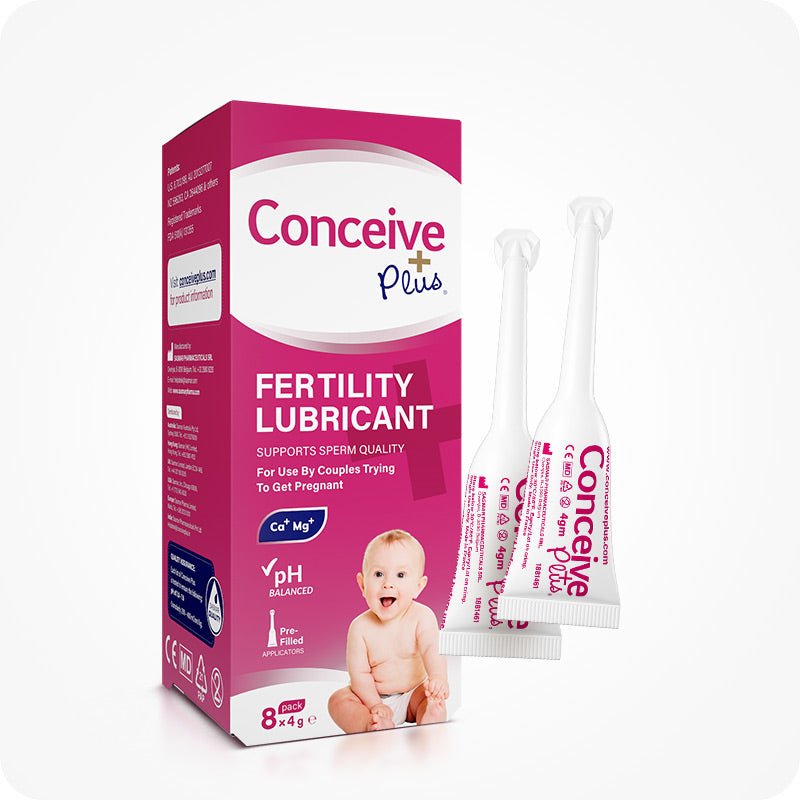
- Use a fertility-friendly lubricant: Standard lubricants can significantly impair sperm motility. Choose a sperm-safe option like Conceive Plus that supports sperm survival in the reproductive tract
Studies show that conception rates are highest when intercourse occurs in the 1–2 days preceding ovulation. With accurate tracking and consistent timing, cumulative conception rates within 6 months can reach 80% or higher in couples without underlying fertility issues.
Irregular Cycles and Ovulation Tracking
Standard cycle-length-based predictions break down for women with irregular cycles. If your cycle varies by more than 7 days from month to month, you'll need to rely more heavily on physical signs and OPK testing rather than calendar prediction.
Causes of irregular cycles include PCOS, thyroid disorders, excessive exercise, low body weight, stress, and perimenopause. If your cycles are significantly irregular, it's worth consulting your GP or a gynaecologist to investigate underlying causes—addressing these can improve cycle regularity and fertility simultaneously.
For tracking purposes with irregular cycles:
- Begin OPK testing earlier in the cycle (from day 8–10)
- Test twice daily during the anticipated fertile window
- Combine OPKs with CM monitoring for confirmation
- Use BBT to confirm ovulation occurred each cycle
Frequently Asked Questions About Ovulation Tracking
Q: How accurate are OPKs for predicting ovulation?
A: OPKs are highly accurate at detecting the LH surge—typically 97–99% accurate. However, the LH surge doesn't always guarantee ovulation occurs (this is more common in women with PCOS). Combining OPKs with BBT confirmation provides the most reliable picture.
Q: Can stress affect ovulation?
A: Yes. Chronic stress can disrupt the hormonal cascade driving ovulation, potentially delaying it or causing anovulatory cycles. This is one reason why fertility is often impacted during highly stressful periods.
Q: How long is the fertile window?
A: Technically 5–6 days (the 5 days before ovulation plus the day of ovulation), though the highest-fertility days are the 1–2 days immediately before ovulation.
Q: I've been tracking for 3 months and still not pregnant—what should I do?
A: Continue tracking and ensure you're timing intercourse correctly. If you're under 35 and haven't conceived after 12 months of regular unprotected intercourse, see a doctor. If you're 35+, seek evaluation after 6 months.
Q: Does Conceive Plus work better when used at ovulation?
A: Conceive Plus should be used during intercourse throughout your fertile window—not just at ovulation. Using it during the days before ovulation ensures sperm are in an optimal environment during their journey to the egg.
Q: Can I ovulate twice in a cycle?
A: Technically, multiple ovulation can occur within a 24-hour window (this is how non-identical twins are conceived). However, you cannot ovulate again after progesterone has risen—so a second ovulation weeks later is not possible in a normal cycle.
Q: What if I never see egg white cervical mucus?
A: Some women produce less EWCM but still ovulate normally. Dehydration, antihistamines, and clomiphene can reduce mucus production. Using a fertility lubricant like Conceive Plus can help compensate for insufficient natural mucus during intercourse.
Q: Is it normal for ovulation to be late some months?
A: Yes—even in women with regular cycles, ovulation can be delayed by illness, stress, travel, or other factors. This is why tracking your own body's signals (OPKs, CM, BBT) is more reliable than calendar prediction alone.
Start Your Journey with Conceive Plus
Join thousands of couples who trust Conceive Plus to support their path to parenthood. Clinically backed, fertility-focused, and available worldwide.
Shop Now at Conceive Plus →