How to Support Your Partner During TTC: A Comprehensive Guide for 2026


The journey toward parenthood is often framed as something that happens primarily to a woman's body, but the most successful outcomes happen when it's treated as a shared biological and emotional project. It's common to feel like a bystander while your partner manages the exhausting mental load of cycle tracking and temperature checks. With 1 in 5 women in the United States facing difficulty getting pregnant, the pressure on a relationship can feel immense. If you've felt the weight of her stress or felt uncertain about your own role, you aren't alone. Learning how to support your partner during TTC is about moving from the sidelines into a position of active, informed partnership.
We believe that conception is a team effort that deserves a professional and reassuring space for both individuals to thrive. You'll discover how to transition into an equal partner through practical strategies, emotional intelligence, and science-backed health optimizations. We'll explore how to share the tracking burden, why your own reproductive health is just as critical as hers, and how to maintain a resilient relationship bond. This guide provides a clear roadmap for optimizing your natural conception chances while building a foundation of mutual support that will last long after the pregnancy test turns positive.
Key Takeaways
- Learn how to shift from a passive observer to a proactive partner by sharing the mental and logistical load of cycle tracking and daily management.
- Understand the biological significance of the 90-day preconception window and why both partners must focus on health optimization to see tangible results.
- Explore effective strategies for how to support partner during TTC while protecting your emotional bond and reclaiming intimacy from the stress of scheduling.
- Implement the "Equal Knowledge" rule by attending clinical appointments as a team to ensure a shared understanding of every step in your fertility journey.
- Discover the importance of the vaginal environment and how maintaining a precise pH balance can support sperm longevity during the fertile window.
Redefining TTC Support: From Passive Bystander to Proactive Partner
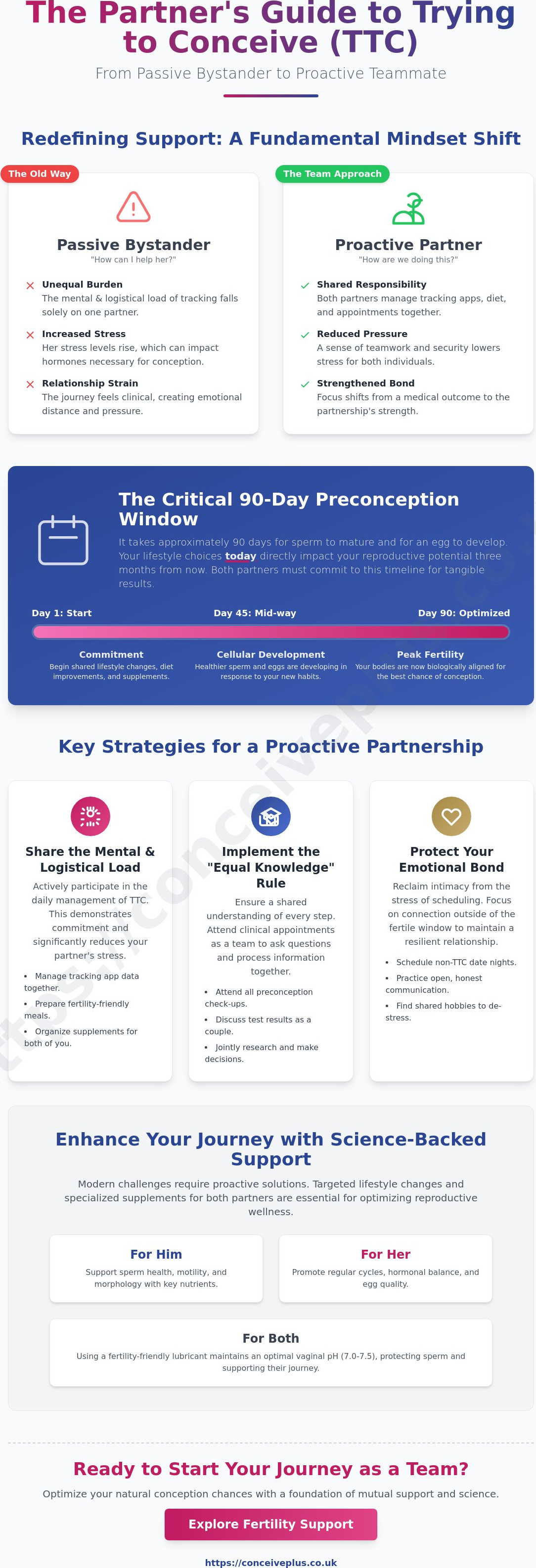
Support in the context of Trying to Conceive (TTC) is often misunderstood as a secondary or auxiliary role. True support involves the equal distribution of physical, mental, and logistical labor between both partners. For too long, the "burden of tracking" has fallen almost exclusively on the person with the cycle, which creates a significant mental load. When one person carries the weight of basal body temperature checks, ovulation strips, and window calculations, the relationship can start to feel like a clinical project rather than a shared dream. Learning how to support partner during TTC effectively means stepping away from the role of a passive observer and becoming a co-lead in the biological project of conception.
This imbalance ignores the fundamental biological reality that conception requires optimal conditions from both individuals. A deeper look at Understanding Infertility confirms that reproductive health is a shared responsibility, not a solo mission. By stepping into a proactive role, you ensure that the emotional and physical environment is as supportive as possible. Understanding how to support partner during TTC also requires recognizing that her stress levels directly impact the hormonal balance necessary for successful implantation. Taking ownership of the logistics is a powerful way to lower that stress and foster a sense of security.
To better understand how a supportive presence can transform the journey, watch this helpful video:
The Shift to a 'Team' Mindset
Shifting from "how can I help her?" to "how are we doing this?" creates a vital psychological change. It removes the isolated sense of blame that often emerges when a cycle doesn't result in pregnancy. Proactive involvement reduces the performance pressure many men feel by focusing on shared actions:
- Managing the tracking app data together to stay informed on the fertile window.
- Preparing fertility-friendly meals as a standard household routine.
- Scheduling and attending all preconception check-ups as a pair.
When logistics are shared, the focus returns to the strength of the partnership rather than just the medical outcome.
Why Proactive Support Matters in 2026
In 2026, environmental stressors like microplastics and endocrine disruptors impact reproductive health for both sexes. The old "wait and see" approach is no longer the clinical standard; early optimization is now essential for success. Proactive support ensures both partners address these modern challenges through targeted lifestyle changes, such as utilizing fertility support supplements, and shared accountability. TTC partnership is a holistic commitment to reproductive wellness.
Physical Alignment: Optimising Health and Fertile Window Tracking
Biological changes don't happen overnight. It takes approximately 90 days for sperm to mature and for an egg to reach the final stages of development before ovulation. This means the lifestyle choices you make today influence your reproductive potential three months from now. Understanding how to support partner during TTC starts with recognizing this biological timeline. It isn't about a single healthy meal or one week of vitamins. It's about a consistent, three-month commitment to cellular health. When both partners align their physical habits, they create a synchronized environment that is much more conducive to conception.
Nutrition plays a pivotal role in this alignment. You should look beyond general "healthy eating" and focus on targeted strategies like those found in The Ultimate Diet for Trying to Conceive to understand how specific food groups impact reproductive hormones. This shared approach removes the feeling that one person is "on a diet" while the other is a bystander. It creates a unified household culture where health optimization is the standard, not the exception.
Shared Nutritional Goals and Supplements
Antioxidants are essential for protecting reproductive cells from oxidative stress. While much focus is traditionally placed on the female partner, sperm health is equally sensitive to nutritional gaps. Zinc supports testosterone levels and sperm motility, while Folic Acid and Myo-Inositol are vital for egg quality and regular ovulation. To make this process seamless, many couples choose His & Hers fertility support bundles. This ensures both partners receive targeted nutrients without the guesswork. Reducing alcohol and processed sugars together makes these changes feel like a supportive lifestyle shift rather than a restriction.
Mastering the Fertile Window Together
Tracking shouldn't be a solitary task. When one person holds all the data, it creates an "initiator" burden that can lead to resentment or feelings of isolation. Sharing access to tracking apps allows both of you to stay informed without constant verbal reminders. You can use an ovulation calculator to identify your most fertile days. It's vital to distinguish between the actual day of ovulation and the broader "fertile window," which typically lasts about six days. Consistency during this window is more effective than focusing solely on a single 24-hour peak. Knowing how to support partner during TTC means being as aware of the calendar as she is, ensuring the logistical weight is shared equally.
By aligning your physical habits and tracking efforts, you create a supportive ecosystem for conception. If you're looking for comprehensive ways to start this journey together, exploring specialized fertility bundles can provide the structure you need to succeed.
Navigating the Emotional Landscape: Resiliency and Connection
The emotional weight of trying to conceive often exceeds the physical demands of tracking and supplements. It's a rollercoaster defined by high hope, intense anticipation, and, occasionally, profound disappointment. Learning how to support partner during TTC requires you to become an emotional anchor during these fluctuations. Validating her feelings of frustration or sadness is more important than offering immediate solutions. Active listening is your most potent tool in these moments. When a cycle is unsuccessful, avoid the temptation to "fix" the situation with platitudes. Instead, hold space for her grief and acknowledge that the process is difficult. For deeper insights into maintaining your mental well-being, you can explore our guide on Managing Stress While Trying to Conceive.
Managing the 'Two-Week Wait' Anxiety
The period between ovulation and a missed period, known as the Two-Week Wait (TWW), is often the most stressful phase for couples. This is when the "what ifs" become overwhelming and every physical sensation is scrutinized. You can provide stability by planning "non-TTC" dates that have nothing to do with fertility. Whether it's a weekend hike or a specific hobby you both enjoy, these distractions keep the relationship grounded in the present. It's also helpful to establish a "testing rule" early on. Decide together when and how to take a pregnancy test. Having a pre-agreed plan prevents impulsive testing and ensures you face the results as a unified team.
Protecting Intimacy from the 'Clinical' Trap
One of the most common hurdles for couples is that sex begins to feel like a chore or a medical necessity. To combat this, you must consciously separate "baby-making sex" from "connection sex." Knowing how to support partner during TTC means initiating intimacy at times when the fertile window isn't the primary focus. This preserves the romantic bond and prevents the "performance pressure" often felt by both partners. Physical touch that isn't sexual, like holding hands or long hugs, is equally vital. It reinforces that you value her as a partner, not just as a co-parent. By maintaining this distinction, you protect the core of your relationship from becoming lost in the clinical logistics of conception.
Medical Logistics and Proactive Testing
Attending doctor's appointments together is a non-negotiable element of true partnership. It isn't merely about providing a ride to the clinic; it's about being an active participant in the medical dialogue. When you sit in the consultation room together, you eliminate the "telephone game" where technical information gets lost or misinterpreted during the journey home. This shared presence reinforces the fact that fertility is a joint health status rather than an individual issue. It allows you to hear the same advice, ask clarifying questions, and make informed decisions as a unified team.
The "Equal Knowledge" rule is a vital component of how to support partner during TTC. This rule dictates that both partners should have a comprehensive understanding of every test result and clinical recommendation. When diagnostic data is shared equally, it prevents one person from feeling like the "patient" while the other remains a detached observer. This is particularly important when addressing male fertility. Approximately half of all infertility cases involve male factor challenges, yet semen analysis is often treated as a last resort. Normalizing this testing early in the process provides a complete picture of your shared reproductive health and allows for early intervention if motility or count issues are detected.
Attending Consultations as a Unified Front
During a preconception check-up, the sheer volume of information can be overwhelming. You can significantly reduce your partner's cognitive load by taking detailed notes on the doctor's instructions. Ask the GP about specific lifestyle adjustments and ensure you both understand the clinical what to avoid when trying to conceive. Being an advocate for one another in a medical setting ensures that your concerns are heard and that you leave the appointment with a clear, actionable plan. This proactive stance transforms a potentially stressful medical visit into a moment of shared empowerment.
The Logistics of Home Testing
Logistical support extends to the daily management of home fertility aids. Taking ownership of the "inventory" is a practical way to show how to support partner during TTC. By monitoring the supply of ovulation kits and pregnancy tests, you ensure she never has to worry about a midnight run to the pharmacy or a missed tracking day. Proactive testing allows you to identify potential biological challenges early, replacing anxious uncertainty with a clear and manageable medical strategy. Managing these supplies and understanding how to interpret the results together keeps the focus on your shared goal.
To ensure you have the most reliable tools for your journey, explore our scientifically developed range of fertility support and testing products designed for couples.
Enhancing the Journey with Science-Backed Fertility Support
Supporting your partner's body means understanding the subtle physiological factors that influence conception. Many couples don't realize that standard lubricants can be counterproductive. Most over-the-counter options are formulated with a low pH and high salt concentrations that can damage or even kill sperm cells. Learning how to support partner during TTC involves making informed choices about the products you use during your most intimate moments. Science-backed support ensures that your efforts aren't accidentally undermined by environmental factors within the reproductive tract.
Conceive Plus serves as the bridge between standard intimacy and optimized conception. It's designed to mimic the natural fertile fluids that the body produces during the ovulation window. By incorporating a specialized fertility lubricant into your routine, you're actively helping to maintain the ideal pH balance required for sperm survival. The inclusion of calcium and magnesium ions is particularly critical. These minerals are naturally present in human semen and cervical mucus, acting as essential electrolytes that provide the energy sperm need to swim. Without these ions, sperm can lose their vitality before they ever reach the egg.
The Role of Fertility-Friendly Lubricants
There's a distinct difference between products labeled as "sperm-safe" and those that are truly "fertility-friendly." While a sperm-safe product simply avoids killing sperm on contact, a fertility-friendly lubricant like Conceive Plus actually supports the journey. Using pre-filled applicators ensures the lubricant is placed deep within the vaginal vault, providing coverage exactly where it's needed most. You can make the application a natural, stress-free part of foreplay. This simple shift in your intimacy ritual shows how to support partner during TTC by taking the lead on comfort and biological optimization simultaneously.
Targeted Support for Ovulation and Motility
True partnership means addressing fertility from both sides of the equation at the same time. While ovulation support vitamins help your partner maintain cycle regularity and hormonal balance, your own contribution is just as significant. Utilizing motility support ensures that you are doing your part to optimize the "team" effort. This dual-pronged approach removes the pressure from one individual and reinforces the shared nature of your goal. It creates a sense of shared responsibility that can significantly lower the stress levels for both of you. Support is the fuel that keeps your shared journey moving forward. Conception is a journey of two; your combined efforts form the foundation of your future family.
Building Your Future Together
Transitioning from a bystander to an active participant changes the entire dynamic of your conception journey. By sharing the mental load of tracking and prioritizing mutual health optimization, you move beyond mere assistance into a true partnership. This collaborative approach doesn't just increase your chances of success; it protects the emotional bond that brought you together in the first place. Each proactive step you take, from attending medical consultations to managing daily supplements, reinforces a foundation of shared responsibility.
Science provides the essential tools to bridge the gap between effort and outcome. Understanding how to support partner during TTC means choosing products that respect the body's delicate biology. Our patented formula is trusted by doctors and fertility clinics in over 70 countries because it's pH balanced to mimic natural fertile fluids. By providing essential Calcium and Magnesium ions, we help create the optimal environment for sperm longevity and motility. You don't have to navigate this path alone when you have the right support systems in place.
Shop the Bestselling Conceive Plus Fertility Range to Support Your Journey Together
Your commitment to this shared goal is the most powerful asset you possess. Stay patient, stay connected, and trust in the strength of your partnership as you move toward this new chapter.
Frequently Asked Questions
How can I support my partner after a negative pregnancy test?
The most effective way to offer support is to provide a reassuring presence without attempting to immediately fix the disappointment. Acknowledge that her feelings of sadness or frustration are entirely valid. You don't need to have the right words; often, simply being there and asking what she needs, whether it's space or a distraction, is enough. Small gestures of care can help rebuild a sense of security and partnership during a difficult moment.
Is it normal for TTC to affect our sex life?
It's completely normal for the intimacy dynamic to shift and feel more clinical or scheduled. The pressure of the fertile window can lead to "performance anxiety" for both partners. To protect your bond, try to separate "baby-making sex" from "connection sex" by initiating intimacy outside of the ovulation window. Focusing on non-sexual physical touch, such as long hugs or holding hands, helps maintain your romantic connection without the weight of expectations.
What are the best vitamins for men to take when trying to conceive?
Targeted nutrients like Zinc, Selenium, and Folic Acid are essential for optimizing sperm parameters. Conceive Plus Men's Fertility Support and Conceive Plus Motility Support are specifically formulated to provide these antioxidants. These ingredients help protect sperm from oxidative stress and improve overall count and movement. By taking these supplements, you demonstrate a proactive commitment to the shared physical demands of the conception process while optimizing your own reproductive health.
How do I talk to my partner about seeing a fertility specialist?
Start the conversation by emphasizing that seeking professional advice is a joint effort to gather more information for the team. Frame the specialist visit as a way to gain clarity and reduce future uncertainty. Understanding how to support partner during TTC involves being the one to initiate these logistical steps. This prevents her from feeling like she's the only one driving the medical timeline or carrying the burden of managing the journey alone.
Can standard lubricants stop you from getting pregnant?
Standard lubricants often have a low pH and high salt content that can create a hostile environment for sperm. These products can act as a barrier or significantly reduce sperm motility and survival. Using a specialized product like Conceive Plus Fertility Lubricant ensures the vaginal environment remains sperm-friendly. It's formulated to match fertile cervical mucus, providing the necessary Calcium and Magnesium ions to support sperm longevity and vitality during the fertile window.
How much water should we drink when trying to conceive?
Adequate hydration is critical for producing high-quality cervical mucus and maintaining healthy semen volume. You should both aim for consistent hydration, typically around 2 to 3 liters of water daily. Water helps transport essential nutrients to the reproductive organs and ensures that the body's natural fluids are at the correct viscosity for sperm transport. This simple lifestyle adjustment provides a foundational level of support for your biological systems.
How do I help my partner stay positive during the two-week wait?
The most effective strategy is to provide a balance of emotional validation and active distraction. Acknowledge that the anxiety of waiting is a normal response to the process. Learning how to support partner during TTC means recognizing this period as a time for "non-TTC" activities. Plan a weekend outing or a new hobby together that has nothing to do with fertility to help keep the relationship grounded in the present moment.
Should I stop drinking alcohol while we are TTC?
Reducing or eliminating alcohol intake is a wise decision for both partners to optimize cellular health. Alcohol can disrupt hormonal balance and increase oxidative stress, which may negatively impact both egg quality and sperm motility. Making this change together shows solidarity and ensures that you are both providing the best possible environment for conception. It's a shared lifestyle adjustment that prioritizes the long-term goal of a healthy pregnancy over temporary habits.